
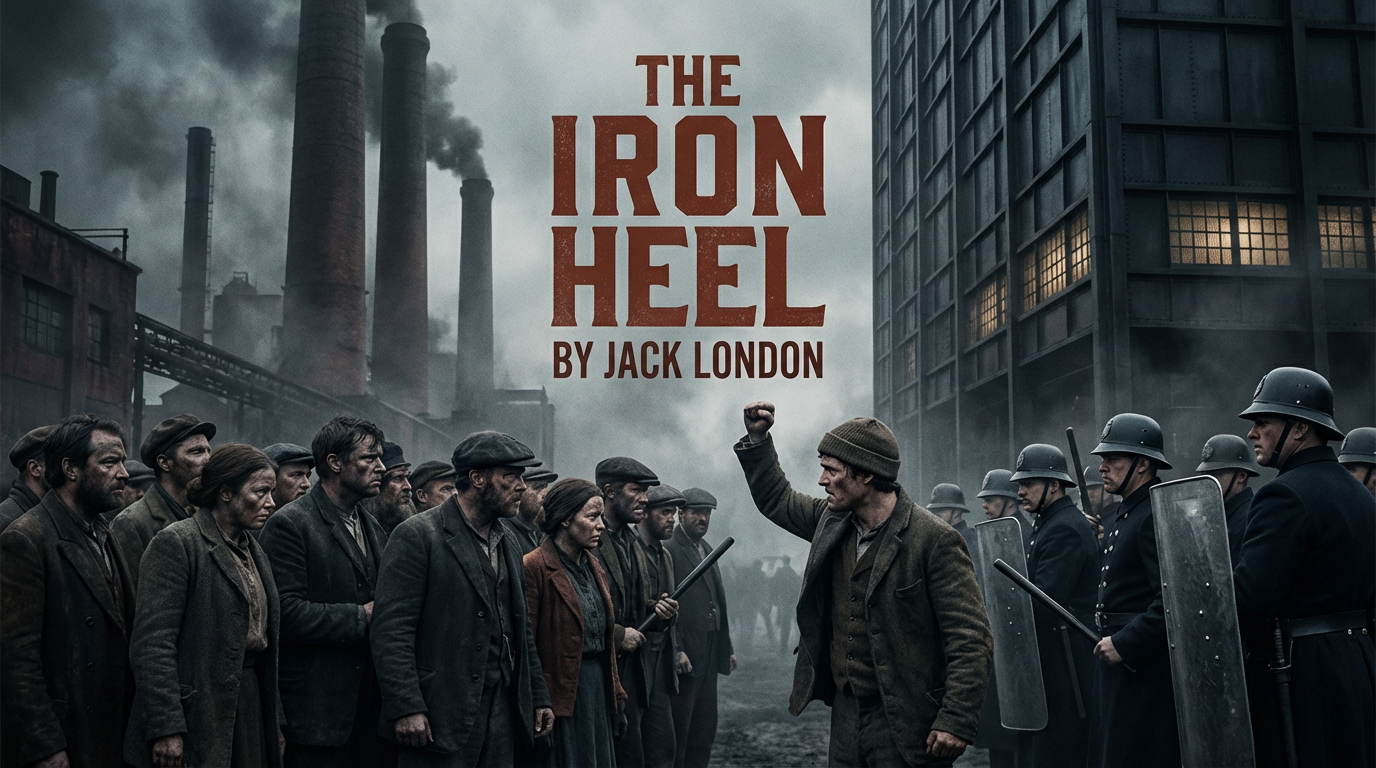
An excerpt from the original text.(complete · 2631 words)
A LOST OLIGARCH
But in remembering the old life I have run ahead of my story into the
new life. The wholesale jail delivery did not occur until well along
into 1915. Complicated as it was, it was carried through without a
hitch, and as a very creditable achievement it cheered us on in our
work. From Cuba to California, out of scores of jails, military
prisons, and fortresses, in a single night, we delivered fifty-one of
our fifty-two Congressmen, and in addition over three hundred other
leaders. There was not a single instance of miscarriage. Not only did
they escape, but every one of them won to the refuges as planned. The
one comrade Congressman we did not get was Arthur Simpson, and he had
already died in Cabañas after cruel tortures.
The eighteen months that followed was perhaps the happiest of my life
with Ernest. During that time we were never apart. Later, when we went
back into the world, we were separated much. Not more impatiently do I
await the flame of to-morrow’s revolt than did I that night await the
coming of Ernest. I had not seen him for so long, and the thought of a
possible hitch or error in our plans that would keep him still in his
island prison almost drove me mad. The hours passed like ages. I was
all alone. Biedenbach, and three young men who had been living in the
refuge, were out and over the mountain, heavily armed and prepared for
anything. The refuges all over the land were quite empty, I imagine, of
comrades that night.
Just as the sky paled with the first warning of dawn, I heard the
signal from above and gave the answer. In the darkness I almost
embraced Biedenbach, who came down first; but the next moment I was in
Ernest’s arms. And in that moment, so complete had been my
transformation, I discovered it was only by an effort of will that I
could be the old Avis Everhard, with the old mannerisms and smiles,
phrases and intonations of voice. It was by strong effort only that I
was able to maintain my old identity; I could not allow myself to
forget for an instant, so automatically imperative had become the new
personality I had created.
Once inside the little cabin, I saw Ernest’s face in the light. With
the exception of the prison pallor, there was no change in him—at
least, not much. He was my same lover-husband and hero. And yet there
was a certain ascetic lengthening of the lines of his face. But he
could well stand it, for it seemed to add a certain nobility of
refinement to the riotous excess of life that had always marked his
features. He might have been a trifle graver than of yore, but the
glint of laughter still was in his eyes. He was twenty pounds lighter,
but in splendid physical condition. He had kept up exercise during the
whole period of confinement, and his muscles were like iron. In truth,
he was in better condition than when he had entered prison. Hours
passed before his head touched pillow and I had soothed him off to
sleep. But there was no sleep for me. I was too happy, and the fatigue
of jail-breaking and riding horseback had not been mine.
While Ernest slept, I changed my dress, arranged my hair differently,
and came back to my new automatic self. Then, when Biedenbach and the
other comrades awoke, with their aid I concocted a little conspiracy.
All was ready, and we were in the cave-room that served for kitchen and
dining room when Ernest opened the door and entered. At that moment
Biedenbach addressed me as Mary, and I turned and answered him. Then I
glanced at Ernest with curious interest, such as any young comrade
might betray on seeing for the first time so noted a hero of the
Revolution. But Ernest’s glance took me in and questioned impatiently
past and around the room. The next moment I was being introduced to him
as Mary Holmes.
To complete the deception, an extra plate was laid, and when we sat
down to table one chair was not occupied. I could have cried with joy
as I noted Ernest’s increasing uneasiness and impatience. Finally he
could stand it no longer.
“Where’s my wife?” he demanded bluntly.
“She is still asleep,” I answered.
It was the crucial moment. But my voice was a strange voice, and in it
he recognized nothing familiar. The meal went on. I talked a great
deal, and enthusiastically, as a hero-worshipper might talk, and it was
obvious that he was my hero. I rose to a climax of enthusiasm and
worship, and, before he could guess my intention, threw my arms around
his neck and kissed him on the lips. He held me from him at arm’s
length and stared about in annoyance and perplexity. The four men
greeted him with roars of laughter, and explanations were made. At
first he was sceptical. He scrutinized me keenly and was half
convinced, then shook his head and would not believe. It was not until
I became the old Avis Everhard and whispered secrets in his ear that
none knew but he and Avis Everhard, that he accepted me as his really,
truly wife.
It was later in the day that he took me in his arms, manifesting great
embarrassment and claiming polygamous emotions.
“You are my Avis,” he said, “and you are also some one else. You are
two women, and therefore you are my harem. At any rate, we are safe
now. If the United States becomes too hot for us, why I have qualified
for citizenship in Turkey.”[1]
[1] At that time polygamy was still practised in Turkey.
Life became for me very happy in the refuge. It is true, we worked hard
and for long hours; but we worked together. We had each other for
eighteen precious months, and we were not lonely, for there was always
a coming and going of leaders and comrades—strange voices from the
under-world of intrigue and revolution, bringing stranger tales of
strife and war from all our battle-line. And there was much fun and
delight. We were not mere gloomy conspirators. We toiled hard and
suffered greatly, filled the gaps in our ranks and went on, and through
all the labour and the play and interplay of life and death we found
time to laugh and love. There were artists, scientists, scholars,
musicians, and poets among us; and in that hole in the ground culture
was higher and finer than in the palaces of wonder-cities of the
oligarchs. In truth, many of our comrades toiled at making beautiful
those same palaces and wonder-cities.[2]
[2] This is not braggadocio on the part of Avis Everhard. The flower
of the artistic and intellectual world were revolutionists. With the
exception of a few of the musicians and singers, and of a few of the
oligarchs, all the great creators of the period whose names have come
down to us, were revolutionists.
Nor were we confined to the refuge itself. Often at night we rode over
the mountains for exercise, and we rode on Wickson’s horses. If only he
knew how many revolutionists his horses have carried! We even went on
picnics to isolated spots we knew, where we remained all day, going
before daylight and returning after dark. Also, we used Wickson’s cream
and butter,[3] and Ernest was not above shooting Wickson’s quail and
rabbits, and, on occasion, his young bucks.
[3] Even as late as that period, cream and butter were still crudely
extracted from cow’s milk. The laboratory preparation of foods had not
yet begun.
Indeed, it was a safe refuge. I have said that it was discovered only
once, and this brings me to the clearing up of the mystery of the
disappearance of young Wickson. Now that he is dead, I am free to
speak. There was a nook on the bottom of the great hole where the sun
shone for several hours and which was hidden from above. Here we had
carried many loads of gravel from the creek-bed, so that it was dry and
warm, a pleasant basking place; and here, one afternoon, I was
drowsing, half asleep, over a volume of Mendenhall.[4] I was so
comfortable and secure that even his flaming lyrics failed to stir me.
[4] In all the extant literature and documents of that period,
continual reference is made to the poems of Rudolph Mendenhall. By his
comrades he was called “The Flame.” He was undoubtedly a great genius;
yet, beyond weird and haunting fragments of his verse, quoted in the
writings of others, nothing of his has come down to us. He was
executed by the Iron Heel in 1928 A.D.
I was aroused by a clod of earth striking at my feet. Then from above,
I heard a sound of scrambling. The next moment a young man, with a
final slide down the crumbling wall, alighted at my feet. It was Philip
Wickson, though I did not know him at the time. He looked at me coolly
and uttered a low whistle of surprise.
“Well,” he said; and the next moment, cap in hand, he was saying, “I
beg your pardon. I did not expect to find any one here.”
I was not so cool. I was still a tyro so far as concerned knowing how
to behave in desperate circumstances. Later on, when I was an
international spy, I should have been less clumsy, I am sure. As it
was, I scrambled to my feet and cried out the danger call.
“Why did you do that?” he asked, looking at me searchingly.
It was evident that he had no suspicion of our presence when making the
descent. I recognized this with relief.
“For what purpose do you think I did it?” I countered. I was indeed
clumsy in those days.
“I don’t know,” he answered, shaking his head. “Unless you’ve got
friends about. Anyway, you’ve got some explanations to make. I don’t
like the look of it. You are trespassing. This is my father’s land,
and—”
But at that moment, Biedenbach, ever polite and gentle, said from
behind him in a low voice, “Hands up, my young sir.”
Young Wickson put his hands up first, then turned to confront
Biedenbach, who held a thirty-thirty automatic rifle on him. Wickson
was imperturbable.
“Oh, ho,” he said, “a nest of revolutionists—and quite a hornet’s nest
it would seem. Well, you won’t abide here long, I can tell you.”
“Maybe you’ll abide here long enough to reconsider that statement,”
Biedenbach said quietly. “And in the meanwhile I must ask you to come
inside with me.”
“Inside?” The young man was genuinely astonished. “Have you a catacomb
here? I have heard of such things.”
“Come and see,” Biedenbach answered with his adorable accent.
“But it is unlawful,” was the protest.
“Yes, by your law,” the terrorist replied significantly. “But by our
law, believe me, it is quite lawful. You must accustom yourself to the
fact that you are in another world than the one of oppression and
brutality in which you have lived.”
“There is room for argument there,” Wickson muttered.
“Then stay with us and discuss it.”
The young fellow laughed and followed his captor into the house. He was
led into the inner cave-room, and one of the young comrades left to
guard him, while we discussed the situation in the kitchen.
Biedenbach, with tears in his eyes, held that Wickson must die, and was
quite relieved when we outvoted him and his horrible proposition. On
the other hand, we could not dream of allowing the young oligarch to
depart.
“I’ll tell you what to do,” Ernest said. “We’ll keep him and give him
an education.”
“I bespeak the privilege, then, of enlightening him in jurisprudence,”
Biedenbach cried.
And so a decision was laughingly reached. We would keep Philip Wickson
a prisoner and educate him in our ethics and sociology. But in the
meantime there was work to be done. All trace of the young oligarch
must be obliterated. There were the marks he had left when descending
the crumbling wall of the hole. This task fell to Biedenbach, and,
slung on a rope from above, he toiled cunningly for the rest of the day
till no sign remained. Back up the canyon from the lip of the hole all
marks were likewise removed. Then, at twilight, came John Carlson, who
demanded Wickson’s shoes.
The young man did not want to give up his shoes, and even offered to
fight for them, till he felt the horseshoer’s strength in Ernest’s
hands. Carlson afterward reported several blisters and much grievous
loss of skin due to the smallness of the shoes, but he succeeded in
doing gallant work with them. Back from the lip of the hole, where
ended the young man’s obliterated trial, Carlson put on the shoes and
walked away to the left. He walked for miles, around knolls, over
ridges and through canyons, and finally covered the trail in the
running water of a creek-bed. Here he removed the shoes, and, still
hiding trail for a distance, at last put on his own shoes. A week later
Wickson got back his shoes.
That night the hounds were out, and there was little sleep in the
refuge. Next day, time and again, the baying hounds came down the
canyon, plunged off to the left on the trail Carlson had made for them,
and were lost to ear in the farther canyons high up the mountain. And
all the time our men waited in the refuge, weapons in hand—automatic
revolvers and rifles, to say nothing of half a dozen infernal machines
of Biedenbach’s manufacture. A more surprised party of rescuers could
not be imagined, had they ventured down into our hiding-place.
I have now given the true disappearance of Philip Wickson, one-time
oligarch, and, later, comrade in the Revolution. For we converted him
in the end. His mind was fresh and plastic, and by nature he was very
ethical. Several months later we rode him, on one of his father’s
horses, over Sonoma Mountains to Petaluma Creek and embarked him in a
small fishing-launch. By easy stages we smuggled him along our
underground railway to the Carmel refuge.
There he remained eight months, at the end of which time, for two
reasons, he was loath to leave us. One reason was that he had fallen in
love with Anna Roylston, and the other was that he had become one of
us. It was not until he became convinced of the hopelessness of his
love affair that he acceded to our wishes and went back to his father.
Ostensibly an oligarch until his death, he was in reality one of the
most valuable of our agents. Often and often has the Iron Heel been
dumbfounded by the miscarriage of its plans and operations against us.
If it but knew the number of its own members who are our agents, it
would understand. Young Wickson never wavered in his loyalty to the
Cause. In truth, his very death was incurred by his devotion to duty.
In the great storm of 1927, while attending a meeting of our leaders,
he contracted the pneumonia of which he died.[5]
[5] The case of this young man was not unusual. Many young men of the
Oligarchy, impelled by sense of right conduct, or their imaginations
captured by the glory of the Revolution, ethically or romantically
devoted their lives to it. In similar way, many sons of the Russian
nobility played their parts in the earlier and protracted revolution
in that country.
Master this chapter. Complete your experience
Purchase the complete book to access all chapters and support classic literature
As an Amazon Associate, we earn a small commission from qualifying purchases at no additional cost to you.
Available in paperback, hardcover, and e-book formats
Let's Analyse the Pattern
Genuine transformation happens through sustained exposure to different perspectives combined with respectful treatment, not through force or manipulation.
Why This Matters
Connect literature to life
This chapter teaches how to change minds through consistent modeling of values rather than argument or force.
Practice This Today
Next time you encounter someone with opposing views, try demonstrating your values through actions over several interactions rather than debating them directly.
Now let's explore the literary elements.
Key Quotes & Analysis
"Not more impatiently do I await the flame of to-morrow's revolt than did I that night await the coming of Ernest."
Context: Avis reflects on waiting for Ernest's return from prison during the jailbreak operation
This quote reveals the intensity of both personal love and revolutionary fervor in Avis's life. She compares her desperate longing for Ernest to her anticipation of the coming revolution, showing how intertwined her personal and political passions have become.
In Today's Words:
I've never wanted anything as badly as I wanted Ernest to come home safe that night - except maybe for the revolution to finally succeed.
"The old life was so far away that it seemed like a dream, and I had to make a conscious effort to remember how I had once been."
Context: Avis reflects on how completely she has transformed into her revolutionary identity
This shows the profound psychological transformation that comes with total commitment to a cause. Avis has become so thoroughly her new self that her privileged past feels unreal, highlighting how revolutionary activity changes people at their core.
In Today's Words:
My old comfortable life felt so fake and distant that I had to really concentrate just to remember who I used to be.
"We had not converted him by force, but by the beauty of our ideals and the logic of our arguments."
Context: Describing how Philip Wickson genuinely joined the revolutionary cause
This quote emphasizes the revolutionaries' belief in winning through moral persuasion rather than coercion. It suggests that even class enemies can be reached through patient education and genuine human connection.
In Today's Words:
We didn't brainwash him or threaten him - he joined us because our ideas made sense and our cause was right.
Thematic Threads
Identity
In This Chapter
Avis has transformed so completely that she barely remembers her old self, while Philip undergoes his own identity shift from privileged heir to revolutionary
Development
Evolved from earlier chapters showing how extreme circumstances force people to become different versions of themselves
In Your Life:
You might recognize this when major life changes—new job, parenthood, illness—force you to discover capabilities you never knew you had
Class
In This Chapter
Philip's privileged background initially blinds him to inequality, but exposure to different perspectives opens his eyes to systemic injustice
Development
Builds on earlier exploration of how class position shapes worldview and moral understanding
In Your Life:
You see this when people from different economic backgrounds struggle to understand each other's daily realities and constraints
Education
In This Chapter
The revolutionaries choose to educate Philip rather than eliminate him, showing how knowledge can transform enemies into allies
Development
Introduced here as a strategic tool for social change
In Your Life:
You encounter this when deciding whether to write someone off or invest time in helping them understand your perspective
Human Relationships
In This Chapter
The bond between captor and captive evolves into genuine respect and shared purpose through daily interaction
Development
Continues the theme of how extreme circumstances reveal authentic human connections
In Your Life:
You might experience this when someone you initially disliked becomes a close friend after working together on a shared challenge
Personal Growth
In This Chapter
Philip's transformation from privileged oligarch's son to committed revolutionary shows how exposure to new ideas can fundamentally change someone
Development
Extends earlier themes about how crisis situations force character development
In Your Life:
You see this when traveling, changing jobs, or facing hardship opens your mind to possibilities you never considered before
You now have the context. Time to form your own thoughts.
Discussion Questions
- 1
Why did the revolutionaries choose to educate Philip Wickson instead of eliminating him as a threat?
analysis • surface - 2
What specific conditions made Philip's transformation possible - his age, treatment, or exposure to different ideas?
analysis • medium - 3
Where have you seen someone's mind genuinely change about an important issue through patient conversation rather than argument?
application • medium - 4
When you encounter someone with completely opposite views, how could you apply the revolutionaries' approach of 'show rather than tell'?
application • deep - 5
What does Philip's conversion reveal about the difference between changing minds through force versus changing them through respect?
reflection • deep
Critical Thinking Exercise
Map Your Own Conversion Experience
Think of a time when you changed your mind about something important - a person, belief, or situation. Write down what specific factors led to that change. Was it a single dramatic moment or gradual exposure to new information? Did someone argue you into it or did you observe something that contradicted your assumptions?
Consider:
- •Consider how you were treated during this mind-changing process
- •Notice whether the change happened faster or slower than you expected
- •Reflect on what made you open to changing rather than digging in deeper
Journaling Prompt
Write about someone in your life whose views strongly oppose yours. How might you apply Philip's conversion pattern to build a bridge with this person, even if you never fully agree?
Coming Up Next...
Chapter 21: The System That Works
The title 'The Roaring Abysmal Beast' suggests the revolution is about to unleash something powerful and terrifying. The oligarchs may have pushed the people too far, and now they'll face the consequences of their oppression.



