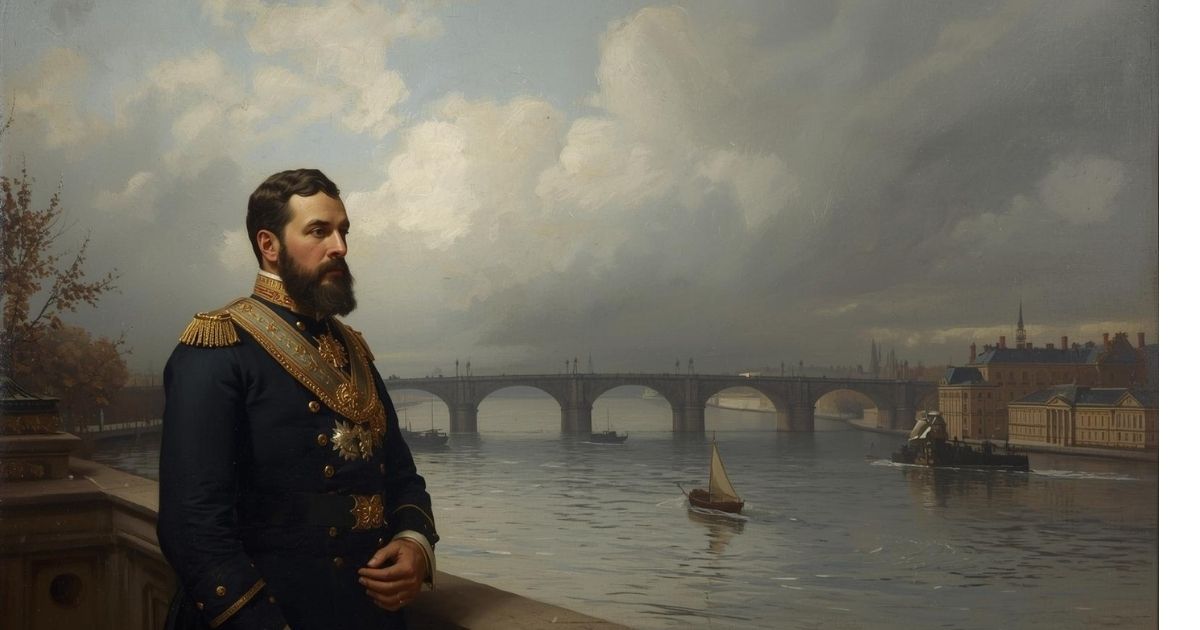
An excerpt from the original text.(complete · 4964 words)
hen the prince ceased speaking all were gazing merrily at him—even
Aglaya; but Lizabetha Prokofievna looked the jolliest of all.
“Well!” she cried, “we have ‘put him through his paces,’ with a
vengeance! My dears, you imagined, I believe, that you were about to
patronize this young gentleman, like some poor protégé picked up
somewhere, and taken under your magnificent protection. What fools we
were, and what a specially big fool is your father! Well done, prince!
I assure you the general actually asked me to put you through your
paces, and examine you. As to what you said about my face, you are
absolutely correct in your judgment. I am a child, and know it. I knew
it long before you said so; you have expressed my own thoughts. I think
your nature and mine must be extremely alike, and I am very glad of it.
We are like two drops of water, only you are a man and I a woman, and
I’ve not been to Switzerland, and that is all the difference between
us.”
“Don’t be in a hurry, mother; the prince says that he has some motive
behind his simplicity,” cried Aglaya.
“Yes, yes, so he does,” laughed the others.
“Oh, don’t you begin bantering him,” said mamma. “He is probably a good
deal cleverer than all three of you girls put together. We shall see.
Only you haven’t told us anything about Aglaya yet, prince; and Aglaya
and I are both waiting to hear.”
“I cannot say anything at present. I’ll tell you afterwards.”
“Why? Her face is clear enough, isn’t it?”
“Oh yes, of course. You are very beautiful, Aglaya Ivanovna, so
beautiful that one is afraid to look at you.”
“Is that all? What about her character?” persisted Mrs. Epanchin.
“It is difficult to judge when such beauty is concerned. I have not
prepared my judgment. Beauty is a riddle.”
“That means that you have set Aglaya a riddle!” said Adelaida. “Guess
it, Aglaya! But she’s pretty, prince, isn’t she?”
“Most wonderfully so,” said the latter, warmly, gazing at Aglaya with
admiration. “Almost as lovely as Nastasia Philipovna, but quite a
different type.”
All present exchanged looks of surprise.
“As lovely as who?” said Mrs. Epanchin. “As Nastasia Philipovna?
Where have you seen Nastasia Philipovna? What Nastasia Philipovna?”
“Gavrila Ardalionovitch showed the general her portrait just now.”
“How so? Did he bring the portrait for my husband?”
“Only to show it. Nastasia Philipovna gave it to Gavrila Ardalionovitch
today, and the latter brought it here to show to the general.”
“I must see it!” cried Mrs. Epanchin. “Where is the portrait? If she
gave it to him, he must have it; and he is still in the study. He never
leaves before four o’clock on Wednesdays. Send for Gavrila
Ardalionovitch at once. No, I don’t long to see him so much. Look
here, dear prince, be so kind, will you? Just step to the study and
fetch this portrait! Say we want to look at it. Please do this for me,
will you?”
“He is a nice fellow, but a little too simple,” said Adelaida, as the
prince left the room.
“He is, indeed,” said Alexandra; “almost laughably so at times.”
Neither one nor the other seemed to give expression to her full
thoughts.
“He got out of it very neatly about our faces, though,” said Aglaya.
“He flattered us all round, even mamma.”
“Nonsense!” cried the latter. “He did not flatter me. It was I who
found his appreciation flattering. I think you are a great deal more
foolish than he is. He is simple, of course, but also very knowing.
Just like myself.”
“How stupid of me to speak of the portrait,” thought the prince as he
entered the study, with a feeling of guilt at his heart, “and yet,
perhaps I was right after all.” He had an idea, unformed as yet, but a
strange idea.
Gavrila Ardalionovitch was still sitting in the study, buried in a mass
of papers. He looked as though he did not take his salary from the
public company, whose servant he was, for a sinecure.
He grew very wroth and confused when the prince asked for the portrait,
and explained how it came about that he had spoken of it.
“Oh, curse it all,” he said; “what on earth must you go blabbing for?
You know nothing about the thing, and yet—idiot!” he added, muttering
the last word to himself in irrepressible rage.
“I am very sorry; I was not thinking at the time. I merely said that
Aglaya was almost as beautiful as Nastasia Philipovna.”
Gania asked for further details; and the prince once more repeated the
conversation. Gania looked at him with ironical contempt the while.
“Nastasia Philipovna,” he began, and there paused; he was clearly much
agitated and annoyed. The prince reminded him of the portrait.
“Listen, prince,” said Gania, as though an idea had just struck him, “I
wish to ask you a great favour, and yet I really don’t know—”
He paused again, he was trying to make up his mind to something, and
was turning the matter over. The prince waited quietly. Once more Gania
fixed him with intent and questioning eyes.
“Prince,” he began again, “they are rather angry with me, in there,
owing to a circumstance which I need not explain, so that I do not care
to go in at present without an invitation. I particularly wish to speak
to Aglaya, but I have written a few words in case I shall not have the
chance of seeing her” (here the prince observed a small note in his
hand), “and I do not know how to get my communication to her. Don’t you
think you could undertake to give it to her at once, but only to her,
mind, and so that no one else should see you give it? It isn’t much of
a secret, but still—Well, will you do it?”
“I don’t quite like it,” replied the prince.
“Oh, but it is absolutely necessary for me,” Gania entreated. “Believe
me, if it were not so, I would not ask you; how else am I to get it to
her? It is most important, dreadfully important!”
Gania was evidently much alarmed at the idea that the prince would not
consent to take his note, and he looked at him now with an expression
of absolute entreaty.
“Well, I will take it then.”
“But mind, nobody is to see!” cried the delighted Gania “And of course
I may rely on your word of honour, eh?”
“I won’t show it to anyone,” said the prince.
“The letter is not sealed—” continued Gania, and paused in confusion.
“Oh, I won’t read it,” said the prince, quite simply.
He took up the portrait, and went out of the room.
Gania, left alone, clutched his head with his hands.
“One word from her,” he said, “one word from her, and I may yet be
free.”
He could not settle himself to his papers again, for agitation and
excitement, but began walking up and down the room from corner to
corner.
The prince walked along, musing. He did not like his commission, and
disliked the idea of Gania sending a note to Aglaya at all; but when he
was two rooms distant from the drawing-room, where they all were, he
stopped as though recalling something; went to the window, nearer the
light, and began to examine the portrait in his hand.
He longed to solve the mystery of something in the face of Nastasia
Philipovna, something which had struck him as he looked at the portrait
for the first time; the impression had not left him. It was partly the
fact of her marvellous beauty that struck him, and partly something
else. There was a suggestion of immense pride and disdain in the face
almost of hatred, and at the same time something confiding and very
full of simplicity. The contrast aroused a deep sympathy in his heart
as he looked at the lovely face. The blinding loveliness of it was
almost intolerable, this pale thin face with its flaming eyes; it was a
strange beauty.
The prince gazed at it for a minute or two, then glanced around him,
and hurriedly raised the portrait to his lips. When, a minute after, he
reached the drawing-room door, his face was quite composed. But just as
he reached the door he met Aglaya coming out alone.
“Gavrila Ardalionovitch begged me to give you this,” he said, handing
her the note.
Aglaya stopped, took the letter, and gazed strangely into the prince’s
eyes. There was no confusion in her face; a little surprise, perhaps,
but that was all. By her look she seemed merely to challenge the prince
to an explanation as to how he and Gania happened to be connected in
this matter. But her expression was perfectly cool and quiet, and even
condescending.
So they stood for a moment or two, confronting one another. At length a
faint smile passed over her face, and she passed by him without a word.
Mrs. Epanchin examined the portrait of Nastasia Philipovna for some
little while, holding it critically at arm’s length.
“Yes, she is pretty,” she said at last, “even very pretty. I have seen
her twice, but only at a distance. So you admire this kind of beauty,
do you?” she asked the prince, suddenly.
“Yes, I do—this kind.”
“Do you mean especially this kind?”
“Yes, especially this kind.”
“Why?”
“There is much suffering in this face,” murmured the prince, more as
though talking to himself than answering the question.
“I think you are wandering a little, prince,” Mrs. Epanchin decided,
after a lengthened survey of his face; and she tossed the portrait on
to the table, haughtily.
Alexandra took it, and Adelaida came up, and both the girls examined
the photograph. Just then Aglaya entered the room.
“What a power!” cried Adelaida suddenly, as she earnestly examined the
portrait over her sister’s shoulder.
“Whom? What power?” asked her mother, crossly.
“Such beauty is real power,” said Adelaida. “With such beauty as that
one might overthrow the world.” She returned to her easel thoughtfully.
Aglaya merely glanced at the portrait—frowned, and put out her
underlip; then went and sat down on the sofa with folded hands. Mrs.
Epanchin rang the bell.
“Ask Gavrila Ardalionovitch to step this way,” said she to the man who
answered.
“Mamma!” cried Alexandra, significantly.
“I shall just say two words to him, that’s all,” said her mother,
silencing all objection by her manner; she was evidently seriously put
out. “You see, prince, it is all secrets with us, just now—all secrets.
It seems to be the etiquette of the house, for some reason or other.
Stupid nonsense, and in a matter which ought to be approached with all
candour and open-heartedness. There is a marriage being talked of, and
I don’t like this marriage—”
“Mamma, what are you saying?” said Alexandra again, hurriedly.
“Well, what, my dear girl? As if you can possibly like it yourself? The
heart is the great thing, and the rest is all rubbish—though one must
have sense as well. Perhaps sense is really the great thing. Don’t
smile like that, Aglaya. I don’t contradict myself. A fool with a heart
and no brains is just as unhappy as a fool with brains and no heart. I
am one and you are the other, and therefore both of us suffer, both of
us are unhappy.”
“Why are you so unhappy, mother?” asked Adelaida, who alone of all the
company seemed to have preserved her good temper and spirits up to now.
“In the first place, because of my carefully brought-up daughters,”
said Mrs. Epanchin, cuttingly; “and as that is the best reason I can
give you we need not bother about any other at present. Enough of
words, now! We shall see how both of you (I don’t count Aglaya) will
manage your business, and whether you, most revered Alexandra Ivanovna,
will be happy with your fine mate.”
“Ah!” she added, as Gania suddenly entered the room, “here’s another
marrying subject. How do you do?” she continued, in response to Gania’s
bow; but she did not invite him to sit down. “You are going to be
married?”
“Married? how—what marriage?” murmured Gania, overwhelmed with
confusion.
“Are you about to take a wife? I ask,—if you prefer that expression.”
“No, no I—I—no!” said Gania, bringing out his lie with a tell-tale
blush of shame. He glanced keenly at Aglaya, who was sitting some way
off, and dropped his eyes immediately.
Aglaya gazed coldly, intently, and composedly at him, without taking
her eyes off his face, and watched his confusion.
“No? You say no, do you?” continued the pitiless Mrs. General. “Very
well, I shall remember that you told me this Wednesday morning, in
answer to my question, that you are not going to be married. What day
is it, Wednesday, isn’t it?”
“Yes, I think so!” said Adelaida.
“You never know the day of the week; what’s the day of the month?”
“Twenty-seventh!” said Gania.
“Twenty-seventh; very well. Good-bye now; you have a good deal to do,
I’m sure, and I must dress and go out. Take your portrait. Give my
respects to your unfortunate mother, Nina Alexandrovna. Au revoir,
dear prince, come in and see us often, do; and I shall tell old
Princess Bielokonski about you. I shall go and see her on purpose. And
listen, my dear boy, I feel sure that God has sent you to Petersburg
from Switzerland on purpose for me. Maybe you will have other things to
do, besides, but you are sent chiefly for my sake, I feel sure of it.
God sent you to me! Au revoir! Alexandra, come with me, my dear.”
Mrs. Epanchin left the room.
Gania—confused, annoyed, furious—took up his portrait, and turned to
the prince with a nasty smile on his face.
“Prince,” he said, “I am just going home. If you have not changed your
mind as to living with us, perhaps you would like to come with me. You
don’t know the address, I believe?”
“Wait a minute, prince,” said Aglaya, suddenly rising from her seat,
“do write something in my album first, will you? Father says you are a
most talented caligraphist; I’ll bring you my book in a minute.” She
left the room.
“Well, au revoir, prince,” said Adelaida, “I must be going too.” She
pressed the prince’s hand warmly, and gave him a friendly smile as she
left the room. She did not so much as look at Gania.
“This is your doing, prince,” said Gania, turning on the latter so soon
as the others were all out of the room. “This is your doing, sir! You
have been telling them that I am going to be married!” He said this in
a hurried whisper, his eyes flashing with rage and his face ablaze.
“You shameless tattler!”
“I assure you, you are under a delusion,” said the prince, calmly and
politely. “I did not even know that you were to be married.”
“You heard me talking about it, the general and me. You heard me say
that everything was to be settled today at Nastasia Philipovna’s, and
you went and blurted it out here. You lie if you deny it. Who else
could have told them? Devil take it, sir, who could have told them
except yourself? Didn’t the old woman as good as hint as much to me?”
“If she hinted to you who told her you must know best, of course; but I
never said a word about it.”
“Did you give my note? Is there an answer?” interrupted Gania,
impatiently.
But at this moment Aglaya came back, and the prince had no time to
reply.
“There, prince,” said she, “there’s my album. Now choose a page and
write me something, will you? There’s a pen, a new one; do you mind a
steel one? I have heard that you caligraphists don’t like steel pens.”
Conversing with the prince, Aglaya did not even seem to notice that
Gania was in the room. But while the prince was getting his pen ready,
finding a page, and making his preparations to write, Gania came up to
the fireplace where Aglaya was standing, to the right of the prince,
and in trembling, broken accents said, almost in her ear:
“One word, just one word from you, and I’m saved.”
The prince turned sharply round and looked at both of them. Gania’s
face was full of real despair; he seemed to have said the words almost
unconsciously and on the impulse of the moment.
Aglaya gazed at him for some seconds with precisely the same composure
and calm astonishment as she had shown a little while before, when the
prince handed her the note, and it appeared that this calm surprise and
seemingly absolute incomprehension of what was said to her, were more
terribly overwhelming to Gania than even the most plainly expressed
disdain would have been.
“What shall I write?” asked the prince.
“I’ll dictate to you,” said Aglaya, coming up to the table. “Now then,
are you ready? Write, ‘I never condescend to bargain!’ Now put your
name and the date. Let me see it.”
The prince handed her the album.
“Capital! How beautifully you have written it! Thanks so much. Au
revoir, prince. Wait a minute,” she added, “I want to give you
something for a keepsake. Come with me this way, will you?”
The prince followed her. Arrived at the dining-room, she stopped.
“Read this,” she said, handing him Gania’s note.
The prince took it from her hand, but gazed at her in bewilderment.
“Oh! I know you haven’t read it, and that you could never be that
man’s accomplice. Read it, I wish you to read it.”
The letter had evidently been written in a hurry:
“My fate is to be decided today” (it ran), “you know how. This day I
must give my word irrevocably. I have no right to ask your help, and I
dare not allow myself to indulge in any hopes; but once you said just
one word, and that word lighted up the night of my life, and became the
beacon of my days. Say one more such word, and save me from utter ruin.
Only tell me, ‘break off the whole thing!’ and I will do so this very
day. Oh! what can it cost you to say just this one word? In doing so
you will but be giving me a sign of your sympathy for me, and of your
pity; only this, only this; nothing more, nothing. I dare not indulge
in any hope, because I am unworthy of it. But if you say but this word,
I will take up my cross again with joy, and return once more to my
battle with poverty. I shall meet the storm and be glad of it; I shall
rise up with renewed strength.
“Send me back then this one word of sympathy, only sympathy, I
swear to you; and oh! do not be angry with the audacity of despair,
with the drowning man who has dared to make this last effort to
save himself from perishing beneath the waters.
“G.L.”
“This man assures me,” said Aglaya, scornfully, when the prince had
finished reading the letter, “that the words ‘break off everything’ do
not commit me to anything whatever; and himself gives me a written
guarantee to that effect, in this letter. Observe how ingenuously he
underlines certain words, and how crudely he glosses over his hidden
thoughts. He must know that if he ‘broke off everything,’ first, by
himself, and without telling me a word about it or having the slightest
hope on my account, that in that case I should perhaps be able to
change my opinion of him, and even accept his—friendship. He must know
that, but his soul is such a wretched thing. He knows it and cannot
make up his mind; he knows it and yet asks for guarantees. He cannot
bring himself to trust, he wants me to give him hopes of myself
before he lets go of his hundred thousand roubles. As to the ‘former
word’ which he declares ‘lighted up the night of his life,’ he is
simply an impudent liar; I merely pitied him once. But he is audacious
and shameless. He immediately began to hope, at that very moment. I saw
it. He has tried to catch me ever since; he is still fishing for me.
Well, enough of this. Take the letter and give it back to him, as soon
as you have left our house; not before, of course.”
“And what shall I tell him by way of answer?”
“Nothing—of course! That’s the best answer. Is it the case that you are
going to live in his house?”
“Yes, your father kindly recommended me to him.”
“Then look out for him, I warn you! He won’t forgive you easily, for
taking back the letter.”
Aglaya pressed the prince’s hand and left the room. Her face was
serious and frowning; she did not even smile as she nodded good-bye to
him at the door.
“I’ll just get my parcel and we’ll go,” said the prince to Gania, as he
re-entered the drawing-room. Gania stamped his foot with impatience.
His face looked dark and gloomy with rage.
At last they left the house behind them, the prince carrying his
bundle.
“The answer—quick—the answer!” said Gania, the instant they were
outside. “What did she say? Did you give the letter?” The prince
silently held out the note. Gania was struck motionless with amazement.
“How, what? my letter?” he cried. “He never delivered it! I might have
guessed it, oh! curse him! Of course she did not understand what I
meant, naturally! Why—why—why didn’t you give her the note, you—”
“Excuse me; I was able to deliver it almost immediately after receiving
your commission, and I gave it, too, just as you asked me to. It has
come into my hands now because Aglaya Ivanovna has just returned it to
me.”
“How? When?”
“As soon as I finished writing in her album for her, and when she asked
me to come out of the room with her (you heard?), we went into the
dining-room, and she gave me your letter to read, and then told me to
return it.”
“To read?” cried Gania, almost at the top of his voice; “to read,
and you read it?”
And again he stood like a log in the middle of the pavement; so amazed
that his mouth remained open after the last word had left it.
“Yes, I have just read it.”
“And she gave it you to read herself—herself?”
“Yes, herself; and you may believe me when I tell you that I would not
have read it for anything without her permission.”
Gania was silent for a minute or two, as though thinking out some
problem. Suddenly he cried:
“It’s impossible, she cannot have given it to you to read! You are
lying. You read it yourself!”
“I am telling you the truth,” said the prince in his former composed
tone of voice; “and believe me, I am extremely sorry that the
circumstance should have made such an unpleasant impression upon you!”
“But, you wretched man, at least she must have said something? There
must be some answer from her!”
“Yes, of course, she did say something!”
“Out with it then, damn it! Out with it at once!” and Gania stamped his
foot twice on the pavement.
“As soon as I had finished reading it, she told me that you were
fishing for her; that you wished to compromise her so far as to receive
some hopes from her, trusting to which hopes you might break with the
prospect of receiving a hundred thousand roubles. She said that if you
had done this without bargaining with her, if you had broken with the
money prospects without trying to force a guarantee out of her first,
she might have been your friend. That’s all, I think. Oh no, when I
asked her what I was to say, as I took the letter, she replied that ‘no
answer is the best answer.’ I think that was it. Forgive me if I do not
use her exact expressions. I tell you the sense as I understood it
myself.”
Ungovernable rage and madness took entire possession of Gania, and his
fury burst out without the least attempt at restraint.
“Oh! that’s it, is it!” he yelled. “She throws my letters out of the
window, does she! Oh! and she does not condescend to bargain, while I
do, eh? We shall see, we shall see! I shall pay her out for this.”
He twisted himself about with rage, and grew paler and paler; he shook
his fist. So the pair walked along a few steps. Gania did not stand on
ceremony with the prince; he behaved just as though he were alone in
his room. He clearly counted the latter as a nonentity. But suddenly he
seemed to have an idea, and recollected himself.
“But how was it?” he asked, “how was it that you (idiot that you are),”
he added to himself, “were so very confidential a couple of hours after
your first meeting with these people? How was that, eh?”
Up to this moment jealousy had not been one of his torments; now it
suddenly gnawed at his heart.
“That is a thing I cannot undertake to explain,” replied the prince.
Gania looked at him with angry contempt.
“Oh! I suppose the present she wished to make to you, when she took you
into the dining-room, was her confidence, eh?”
“I suppose that was it; I cannot explain it otherwise.”
“But why, why? Devil take it, what did you do in there? Why did they
fancy you? Look here, can’t you remember exactly what you said to them,
from the very beginning? Can’t you remember?”
“Oh, we talked of a great many things. When first I went in we began to
speak of Switzerland.”
“Oh, the devil take Switzerland!”
“Then about executions.”
“Executions?”
“Yes—at least about one. Then I told the whole three years’ story of my
life, and the history of a poor peasant girl—”
“Oh, damn the peasant girl! go on, go on!” said Gania, impatiently.
“Then how Schneider told me about my childish nature, and—”
“Oh, curse Schneider and his dirty opinions! Go on.”
“Then I began to talk about faces, at least about the expressions of
faces, and said that Aglaya Ivanovna was nearly as lovely as Nastasia
Philipovna. It was then I blurted out about the portrait—”
“But you didn’t repeat what you heard in the study? You didn’t repeat
that—eh?”
“No, I tell you I did not.”
“Then how did they—look here! Did Aglaya show my letter to the old
lady?”
“Oh, there I can give you my fullest assurance that she did not. I
was there all the while—she had no time to do it!”
“But perhaps you may not have observed it, oh, you damned idiot, you!”
he shouted, quite beside himself with fury. “You can’t even describe
what went on.”
Gania having once descended to abuse, and receiving no check, very soon
knew no bounds or limit to his licence, as is often the way in such
cases. His rage so blinded him that he had not even been able to detect
that this “idiot,” whom he was abusing to such an extent, was very far
from being slow of comprehension, and had a way of taking in an
impression, and afterwards giving it out again, which was very
un-idiotic indeed. But something a little unforeseen now occurred.
“I think I ought to tell you, Gavrila Ardalionovitch,” said the prince,
suddenly, “that though I once was so ill that I really was little
better than an idiot, yet now I am almost recovered, and that,
therefore, it is not altogether pleasant to be called an idiot to my
face. Of course your anger is excusable, considering the treatment you
have just experienced; but I must remind you that you have twice abused
me rather rudely. I do not like this sort of thing, and especially so
at the first time of meeting a man, and, therefore, as we happen to be
at this moment standing at a crossroad, don’t you think we had better
part, you to the left, homewards, and I to the right, here? I have
twenty-five roubles, and I shall easily find a lodging.”
Gania was much confused, and blushed for shame “Do forgive me, prince!”
he cried, suddenly changing his abusive tone for one of great courtesy.
“For Heaven’s sake, forgive me! You see what a miserable plight I am
in, but you hardly know anything of the facts of the case as yet. If
you did, I am sure you would forgive me, at least partially. Of course
it was inexcusable of me, I know, but—”
“Oh, dear me, I really do not require such profuse apologies,” replied
the prince, hastily. “I quite understand how unpleasant your position
is, and that is what made you abuse me. So come along to your house,
after all. I shall be delighted—”
“I am not going to let him go like this,” thought Gania, glancing
angrily at the prince as they walked along. “The fellow has sucked
everything out of me, and now he takes off his mask—there’s something
more than appears, here we shall see. It shall all be as clear as water
by tonight, everything!”
But by this time they had reached Gania’s house.
Master this chapter. Complete your experience
Purchase the complete book to access all chapters and support classic literature
As an Amazon Associate, we earn a small commission from qualifying purchases at no additional cost to you.
Available in paperback, hardcover, and e-book formats
Let's Analyse the Pattern
When fear of loss drives people to manipulate others into providing guarantees before they'll take necessary risks.
Why This Matters
Connect literature to life
This chapter teaches how to recognize when someone disguises emotional blackmail as vulnerability or romantic desperation.
Practice This Today
This week, notice when someone asks you to guarantee outcomes for their choices - that's usually fear trying to eliminate all risk at your expense.
Now let's explore the literary elements.
Key Quotes & Analysis
"We are like two drops of water, only you are a man and I a woman, and I've not been to Switzerland, and that is all the difference between us."
Context: She's telling the prince how similar they are in nature after he accurately reads her character
This shows her directness and lack of pretense. She immediately recognizes a kindred spirit and isn't afraid to say so, despite social conventions about maintaining distance with strangers.
In Today's Words:
We're basically the same person, just different genders and life experiences.
"He is probably a good deal cleverer than all three of you girls put together."
Context: Defending the prince when her daughters start to tease him
She sees past his simple manner to recognize real intelligence. This challenges the assumption that sophistication equals intelligence, and shows how genuine insight often comes from unexpected sources.
In Today's Words:
Don't underestimate him - he's smarter than all of you.
"No answer is the best answer."
Context: Her response to Gania's desperate letter asking for encouragement
This devastatingly clear rejection shows Aglaya's emotional intelligence. She understands that Gania wants reassurance before taking risks, and refuses to enable his manipulation or give him false hope.
In Today's Words:
Silence says everything you need to know.
Thematic Threads
Manipulation
In This Chapter
Gania uses emotional manipulation in his note, presenting his financial trap as romantic vulnerability to pressure Aglaya into giving him guarantees
Development
Building from earlier hints of Gania's calculating nature
In Your Life:
You might recognize this when someone frames their demands as your responsibility to rescue them
Class Anxiety
In This Chapter
Gania's desperation stems from terror of losing financial security, making him willing to manipulate and deceive to keep his options open
Development
Deepening the exploration of how economic pressure corrupts relationships
In Your Life:
You see this when financial stress makes people compromise their values or manipulate others
Authentic Dignity
In This Chapter
Prince Myshkin finally stands up for himself calmly when called an idiot, showing quiet strength without aggression
Development
First major moment of the prince asserting boundaries
In Your Life:
This shows up when you learn to respond to disrespect with calm firmness rather than anger or submission
Clear-Sighted Judgment
In This Chapter
Aglaya sees through Gania's manipulation instantly, recognizing his attempt to secure guarantees before taking risks
Development
Establishing Aglaya as someone who can read people's true motivations
In Your Life:
You might develop this skill of seeing through people's emotional manipulation tactics
Social Currency
In This Chapter
Beauty and social connections become tools in a complex game where everyone is trying to leverage what they have for what they want
Development
Expanding how personal attributes become transactional in social climbing
In Your Life:
You see this in how people use their looks, connections, or skills to gain advantage in relationships or work
You now have the context. Time to form your own thoughts.
Discussion Questions
- 1
What does Gania want from Aglaya in his secret note, and what does her response reveal about his strategy?
analysis • surface - 2
Why does Aglaya say 'no answer is the best answer' instead of just saying no directly?
analysis • medium - 3
Where do you see this pattern of wanting guarantees before taking risks in modern dating, career moves, or family decisions?
application • medium - 4
How should you respond when someone tries to manipulate you into providing certainty for their choices?
application • deep - 5
What does this chapter teach us about the difference between vulnerability and manipulation in relationships?
reflection • deep
Critical Thinking Exercise
Decode the Manipulation Script
Think of a time someone asked you for a guarantee before they would take a risk (or when you did this yourself). Write out the exact words used, then rewrite the same request as honest vulnerability instead of manipulation. Notice how the honest version sounds different - more direct, less guilt-inducing, and gives you real choice.
Consider:
- •Manipulation often disguises demands as emotional appeals
- •Honest requests acknowledge the other person's right to say no
- •Fear-based bargaining usually backfires because it reveals character flaws
Journaling Prompt
Write about a current situation where you're waiting for guarantees before making a move. What are you really afraid of losing, and what would happen if you acted without certainty?
Coming Up Next...
Chapter 8: Living Arrangements and Family Tensions
The prince accompanies Gania home, but tensions remain high. What awaits him in Gania's household, and how will this rocky start to their living arrangement unfold?