A chapter overview excerpt.(~474 words)
, I have passed a miserable night,
So full of fearful dreams, of ugly sights,
That, as I am a Christian faithful man,
I would not spend another such a night
Though 'twere to buy a world of happy days,
So full of dismal terror was the time.
Methought that I had broken from the Tower
And was embarked to cross to Burgundy,
And in my company my brother Gloucester,
Who from my cabin tempted me to walk
Upon the hatches. There we looked toward England
And cited up a thousand heavy times
During the wars of York and Lancaster
That had befallen us. As we paced along
Upon the giddy footing of the hatches,
Methought that Gloucester stumbled, and in falling
Struck me, that thought to stay him, overboard
Into the tumbling billows of the main.
O Lord, methought what pain it was to drown,
What dreadful noise of waters in my ears,
What sights of ugly death within my eyes!
Methought I saw a thousand fearful wracks,
A thousand men that fishes gnawed upon,
Wedges of gold, great anchors, heaps of pearl,
Inestimable stones, unvalued jewels,
All scattered in the bottom of the sea.
Some lay in dead men's skulls, and in the holes
Where eyes did once inhabit, there were crept,
As 'twere in scorn of eyes, reflecting gems
That wooed the slimy bottom of the deep
And mocked the dead bones that lay scattered by.
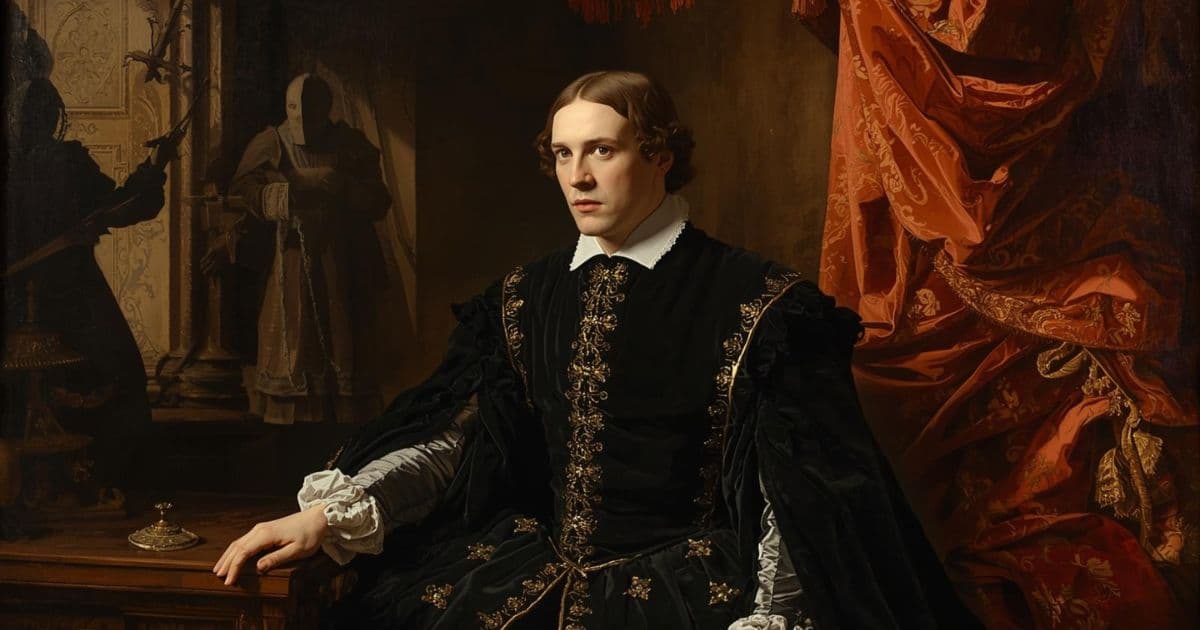
Clarence awakens in the Tower from a terrifying prophetic dream: he was aboard a ship with Richard, who 'stumbled' and pushed him overboard into drowning waters filled with corpses, jewels in dead men's skulls, and bones scattered on the ocean floor. The dream continues beyond death—he crosses the river Styx and encounters the ghost of Warwick and Prince Edward, whom he betrayed and killed, now calling for his torment in Hell. Two murderers arrive with Richard's warrant. Before killing Clarence, they debate—one feels 'dregs of conscience,' the other dismisses it: 'It makes a man a coward... every man that means to live well endeavours to trust to himself and live without it.' Clarence wakes and eloquently pleads for his life, appealing to law, conscience, and brotherhood. He offers them money: 'Go to my brother Gloucester, who shall reward you better for my life than Edward will for tidings of my death.' The murderers reveal the devastating truth: 'Your brother Gloucester hates you... 'tis he that sends us to destroy you.' Clarence refuses to believe it—'he bewept my fortune and hugged me in his arms.' They stab him and drown him in a barrel of malmsey wine. One murderer immediately regrets it—'I would he knew that I had saved his brother'—while the other remains cold. Richard's first major murder is complete, accomplished through proxies, maintaining his plausible deniability while eliminating the first obstacle to his throne.
Master this chapter. Complete your experience
Purchase the complete book to access all chapters and support classic literature
As an Amazon Associate, we earn a small commission from qualifying purchases at no additional cost to you.
Available in paperback, hardcover, and e-book formats
Let's Analyse the Pattern
Using intermediaries to do your dirty work while maintaining plausible deniability and a clean reputation
Why This Matters
Connect literature to life
Some people eliminate obstacles indirectly, using systems and others to do their dirty work while maintaining clean hands.
Practice This Today
Watch for patterns where someone consistently benefits from others' removals without directly causing them. Practice identifying when someone is using systems to eliminate obstacles.
Now let's explore the literary elements.
Key Quotes & Analysis
"O, I have passed a miserable night, So full of fearful dreams, of ugly sights"
Context: Clarence describing his prophetic dream
Clarence's dream foreshadows his death, showing that even the victim senses the danger. But foreknowledge doesn't save him.
In Today's Words:
I had terrible nightmares last night, full of warnings
"Methought that Gloucester stumbled, and in falling Struck me, that thought to stay him, overboard"
Context: Clarence's dream of being pushed overboard by Richard
Clarence's dream accurately predicts his death - Richard (Gloucester) will cause his fall. The dream shows the truth that Clarence can't escape.
In Today's Words:
I dreamed my brother pushed me overboard
Thematic Threads
Betrayal
In This Chapter
Richard betrays his own brother, having him murdered
Development
Family bonds mean nothing to Richard - he'll eliminate anyone
In Your Life:
When someone betrays family or close colleagues, they have no limits
You now have the context. Time to form your own thoughts.
Discussion Questions
- 1
Why does Richard use intermediaries to kill Clarence? What does this reveal about his character?
analysis • medium
Critical Thinking Exercise
The Proxy Pattern
Richard eliminates Clarence through others. Think of someone who consistently benefits from others' removals without directly causing them.
Consider:
- •How do you distinguish between coincidence and pattern?
- •What are the signs of indirect manipulation?
Coming Up Next...
Chapter 5: Act II, Scene 1: King Edward's Death
With Clarence dead, Richard moves to eliminate the next obstacles: the young princes who stand between him and the crown.