A chapter overview excerpt.(~482 words)
ere is the indictment of the good Lord Hastings,
Which in a set hand fairly is engrossed,
That it may be to-day read o'er in Paul's.
And mark how well the sequel hangs together:
Eleven hours I have spent to write it over,
For yesternight by Catesby was it sent me;
The precedent was full as long a-doing:
And yet within these five hours Hastings lived,
Untainted, unexamined, free, at liberty.
Here's a good world the while! Who is so gross
That cannot see this palpable device?
Yet who so bold but says he sees it not?
Bad is the world; and all will come to nought
When such ill dealing must be seen in thought.
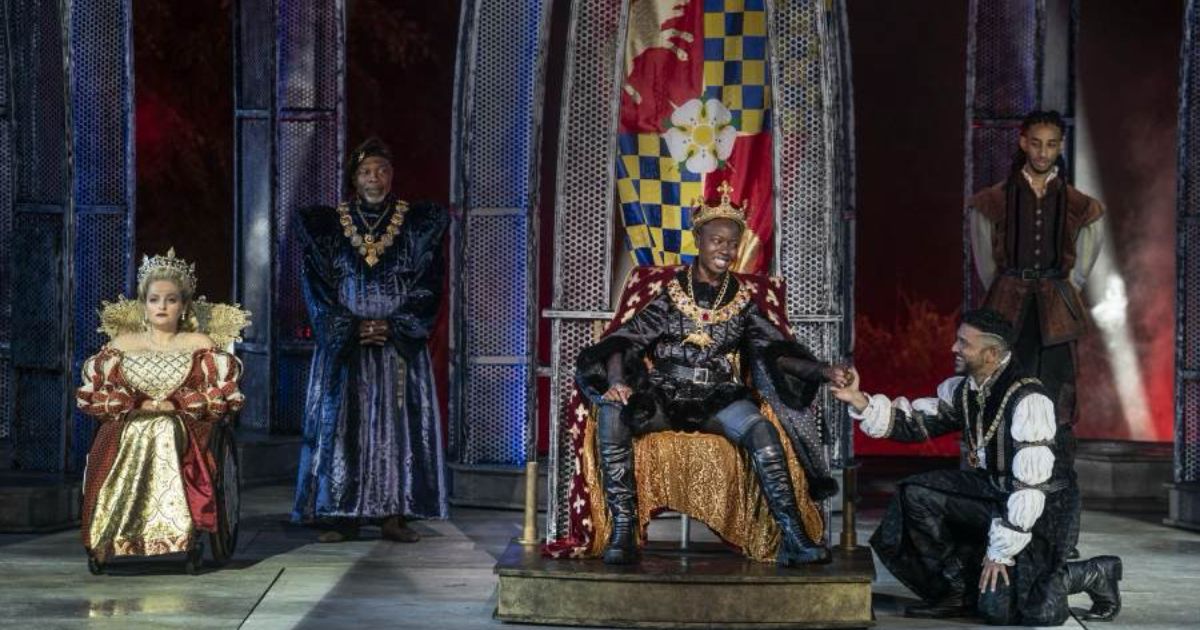
Queen Elizabeth, Anne (now Duchess of Gloucester), and the Duchess of York arrive at the Tower to visit the princes. The Lieutenant denies them entry—Richard has forbidden all visitors. The Queen protests: 'The King? Who's that?' The Lieutenant: 'I mean, the Lord Protector.' The Queen's bitter response: 'The Lord protect him from that kingly title. I am their mother, who shall bar me from them?' All three women demand entry—mother, grandmother, aunt—but the Lieutenant refuses, bound by oath. Stanley arrives with devastating news: Anne must go to Westminster to be crowned Richard's queen. The Queen nearly faints: 'Cut my lace asunder, that my pent heart may have some scope to beat.' She urges Dorset to flee to Richmond: 'Death and destruction dogs thee at thy heels... go cross the seas and live with Richmond, from the reach of hell. Go hie thee from this slaughterhouse.' The Duchess of York laments birthing a monster: 'O my accursed womb, the bed of death: a cockatrice hast thou hatched to the world, whose unavoided eye is murderous.' Anne delivers a devastating speech: She remembers cursing Richard when he courted her over her murdered husband's corpse—she cursed that his future wife would be miserable. Now she IS that wife, and her own curse tortures her: 'For never yet one hour in his bed did I enjoy the golden dew of sleep, but with his timorous dreams was still awaked. Besides, he hates me for my father Warwick, and will (no doubt) shortly be rid of me.' The women part—Dorset to Richmond, Anne to coronation and death, the Duchess to her grave, the Queen to sanctuary. The Queen's final plea to the Tower stones: 'Pity, you ancient stones, those tender babes... use my babies well.' The scene shifts to Richard's coronation. Newly crowned, Richard tests Buckingham: 'Young Edward lives, think now what I would speak.' Buckingham pretends not to understand. Richard becomes explicit: 'Shall I be plain? I wish the bastards dead, and I would have it suddenly performed.' Buckingham hesitates—this crosses even his line: 'Give me some little breath, some pause, dear lord.' Richard has isolated the princes, denied them visitors, and now orders their murder. The final horror begins.
Master this chapter. Complete your experience
Purchase the complete book to access all chapters and support classic literature
As an Amazon Associate, we earn a small commission from qualifying purchases at no additional cost to you.
Available in paperback, hardcover, and e-book formats
Let's Analyse the Pattern
Creating false documents, records, or evidence after a decision to justify that decision, rather than creating evidence before to document truth
Why This Matters
Connect literature to life
Some manipulators create false evidence to justify their actions. This skill helps you spot manufactured documents and records.
Practice This Today
When someone produces evidence, examine the timeline. Was it created before or after the decision? Are there inconsistencies? Does the evidence match the timeline of events?
Now let's explore the literary elements.
Key Quotes & Analysis
"And yet within these five hours Hastings lived, Untainted, unexamined, free, at liberty."
Context: The scrivener realizing the document was created before Hastings' supposed crime
The scrivener exposes the timeline: the document took eleven hours to create, but Hastings was only accused five hours ago. The evidence was manufactured.
In Today's Words:
The document was created before the supposed crime - it's manufactured evidence
"Who is so gross That cannot see this palpable device? Yet who so bold but says he sees it not?"
Context: The scrivener recognizing that everyone sees the manipulation but no one speaks
The scrivener recognizes that the manipulation is obvious, but fear and complicity keep people silent. This is how manipulation succeeds.
In Today's Words:
Everyone can see the manipulation, but no one is brave enough to call it out
Thematic Threads
Corruption
In This Chapter
Evidence is manufactured, not documented
Development
Documents become tools of manipulation
In Your Life:
Watch for evidence created after decisions - it may be manufactured justification
Complicity
In This Chapter
Those who see manipulation often remain silent
Development
Silence enables manipulation
In Your Life:
Recognize when you see manipulation but choose silence - your silence may enable it
You now have the context. Time to form your own thoughts.
Discussion Questions
- 1
What does the scrivener's revelation show about Richard's methods? How does the timeline expose the manipulation?
analysis • deep - 2
Why does the scrivener remain silent even though he recognizes the manipulation? What does this show about complicity?
reflection • medium - 3
Have you witnessed manufactured evidence? How was documentation created to justify predetermined actions?
application • surface
Critical Thinking Exercise
The Evidence Timeline Analysis
The scrivener exposes manufactured evidence by examining the timeline. Think of a time when evidence seemed manufactured.
Consider:
- •How do you verify evidence is genuine versus manufactured?
- •What are the signs of manufactured evidence?
- •How can you examine timelines to expose manipulation?
- •What can you do when you recognize manufactured evidence?
Journaling Prompt
Write about a time when you saw manufactured evidence. How did the timeline expose it? Did you speak out or remain silent? Why?
Coming Up Next...
Chapter 15: Act IV, Scene 2 (cont.): The Princes Murdered
Richard stages his most elaborate performance yet, appearing reluctant to accept the crown while actively seeking it.