A chapter overview excerpt.(~488 words)
hen know that from my soul I love the prince,
And do intend to make him worthy of his birth.
I am his uncle, and his guardian too;
And if I live, I will preserve him safe,
Or shed my blood for him in his defence.
But I am told that he is fled to Richmond,
And there he means to raise a power against us.
Therefore, I must be brief. I pray you, tell me,
Is Hastings, Rivers, Vaughan, Grey, all dead?
They are, my lord.
Then am I in my heart a merry man.
I have not that alacrity of spirit
Nor cheer of mind that I was wont to have.
Set down, set down your honourable load,
If honour may be shrouded in a hearse.
Whilst I awhile obsequiously lament
The untimely fall of virtuous Lancaster.
Poor key-cold figure of a holy king,
Pale ashes of the house of Lancaster,
Thou bloodless remnant of that royal blood!
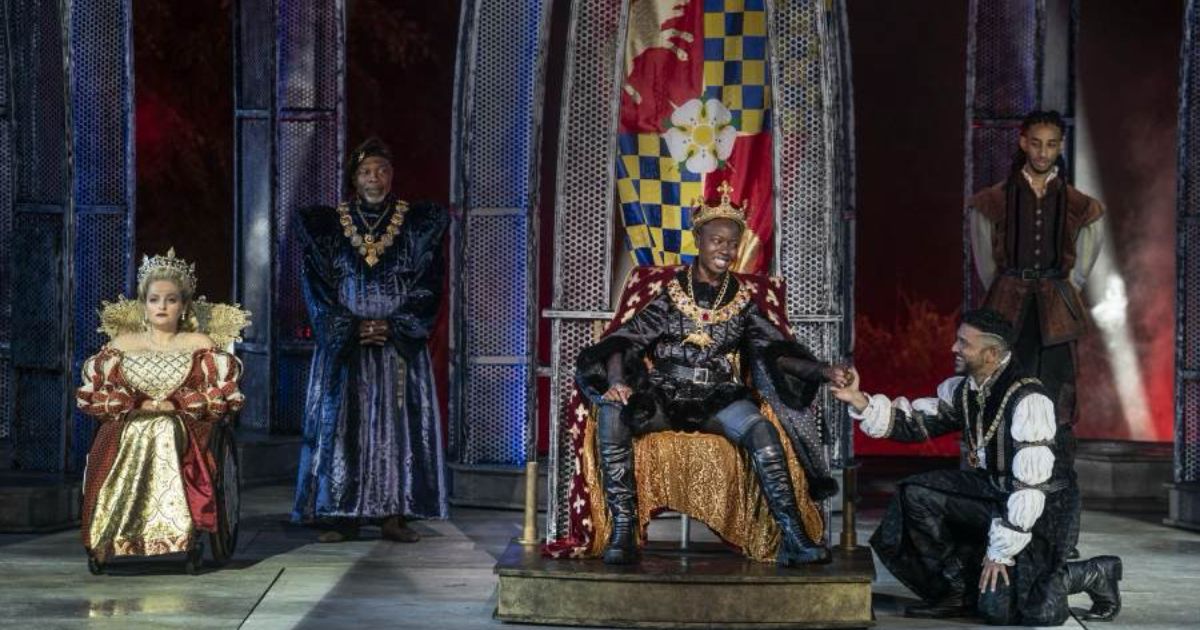
Richard's theatrical masterpiece reaches its climax. Standing between two bishops with prayer book in hand, he performs exquisite reluctance. Buckingham begs him to accept the crown for the good of England. Richard protests: 'Your love deserves my thanks, but my desert unmeritable shuns your high request.' He claims insufficient 'poverty of spirit' and too 'many my defects.' He defends Prince Edward's legitimacy: 'The royal tree hath left us royal fruit... which God defend that I should wring from him.' Buckingham counters with the bastard narrative: Edward had prior contracts with Lady Lucy and Bona of France, making his children illegitimate. The Mayor and citizens (supposedly) entreat Richard. He refuses: 'I cannot, nor I will not yield to you.' Buckingham threatens: if Richard refuses, they'll find another king, disgracing his house. 'Your brother's son shall never reign our king, but we will plant some other in the throne.' Buckingham and the citizens turn to leave. Catesby begs: 'Call him again, sweet prince, accept their suit: if you deny them, all the land will rue it.' Richard performs agonized reluctance: 'Will you enforce me to a world of cares. Call them again, I am not made of stones, but penetrable to your kind entreaties, albeit against my conscience and my soul.' He 'accepts'—on condition that any future scandal is their fault, not his, since they forced the crown upon him. 'Your mere enforcement shall acquittance me from all the impure blots and stains thereof; for God doth know, and you may partly see, how far I am from the desire of this.' Buckingham proclaims: 'Long live King Richard, England's worthy king.' Coronation set for tomorrow. Richard's final line maintains the holy pretense: 'Come, let us to our holy work again.' The performance is complete. Through calculated theater—staged piety, feigned reluctance, conditional acceptance—Richard makes his seizure of the throne appear as reluctant duty forced upon a humble, religious man. Every murder, every lie, every manipulation is concealed beneath layers of performance.
Master this chapter. Complete your experience
Purchase the complete book to access all chapters and support classic literature
As an Amazon Associate, we earn a small commission from qualifying purchases at no additional cost to you.
Available in paperback, hardcover, and e-book formats
Let's Analyse the Pattern
Creating elaborate stories and explanations that make harmful actions appear necessary, noble, or justified, allowing manipulators to maintain their self-image and public image
Why This Matters
Connect literature to life
Manipulators always justify their actions. This skill helps you distinguish between genuine necessity and false justification.
Practice This Today
When someone justifies harmful actions, examine the justification. Is it genuine necessity or narrative manipulation? Does the justification match the action? Are there alternatives that weren't considered?
Now let's explore the literary elements.
Key Quotes & Analysis
"Then know that from my soul I love the prince, And do intend to make him worthy of his birth."
Context: Richard claiming to love and protect the prince
Richard's public declaration of love for the prince is pure performance. He will soon murder the prince. The justification masks the truth.
In Today's Words:
I care deeply about this person (while planning to harm them)
"I have not that alacrity of spirit Nor cheer of mind that I was wont to have."
Context: Richard feigning grief and concern
Richard pretends to be saddened by the deaths, but he orchestrated them. False grief is part of the justification narrative.
In Today's Words:
I'm so troubled by these events (that I caused)
Thematic Threads
Manipulation
In This Chapter
Justification masks evil actions
Development
Narratives make wrong seem right
In Your Life:
Watch for people who always have elaborate justifications for harmful actions - the justification may be the manipulation
Self-Deception
In This Chapter
Richard maintains his self-image through justification
Development
Justification allows self-deception
In Your Life:
Manipulators often believe their own justifications - this makes them more dangerous
You now have the context. Time to form your own thoughts.
Discussion Questions
- 1
How does Richard justify the murders of Hastings, Rivers, Vaughan, and Grey? Are his justifications valid?
analysis • deep - 2
What's the difference between genuine necessity and false justification? How can you tell?
reflection • medium - 3
Have you witnessed false justification? How did someone make harmful actions seem necessary?
application • surface
Critical Thinking Exercise
The Justification Analysis
Richard justifies murder as protection. Think of a time when someone justified harmful actions with elaborate explanations.
Consider:
- •How do you distinguish between genuine necessity and false justification?
- •What are the signs of false justification?
- •How do manipulators use justification narratives?
- •What can you do when you recognize false justification?
Journaling Prompt
Write about a time when someone justified harmful actions. Was the justification genuine or false? How could you tell?
Coming Up Next...
Chapter 14: Act IV, Scenes 1-2: The Princes Imprisoned
A scrivener reveals that documents condemning Hastings were created before his supposed crime, exposing Richard's manufactured evidence.