An excerpt from the original text.(complete · 3035 words)
II.
[Illustration]
Elizabeth had the satisfaction of receiving an answer to her letter as
soon as she possibly could. She was no sooner in possession of it, than
hurrying into the little copse, where she was least likely to be
interrupted, she sat down on one of the benches, and prepared to be
happy; for the length of the letter convinced her that it did not
contain a denial.
/* RIGHT “Gracechurch Street, Sept. 6. */
“My dear Niece,
“I have just received your letter, and shall devote this whole
morning to answering it, as I foresee that a little writing will
not comprise what I have to tell you. I must confess myself
surprised by your application; I did not expect it from you.
Don’t think me angry, however, for I only mean to let you know,
that I had not imagined such inquiries to be necessary on your
side. If you do not choose to understand me, forgive my
impertinence. Your uncle is as much surprised as I am; and nothing
but the belief of your being a party concerned would have allowed
him to act as he has done. But if you are really innocent and
ignorant, I must be more explicit. On the very day of my coming
home from Longbourn, your uncle had a most unexpected visitor. Mr.
Darcy called, and was shut up with him several hours. It was all
over before I arrived; so my curiosity was not so dreadfully racked
as yours seems to have been. He came to tell Mr. Gardiner that he
had found out where your sister and Mr. Wickham were, and that he
had seen and talked with them both--Wickham repeatedly, Lydia once.
From what I can collect, he left Derbyshire only one day after
ourselves, and came to town with the resolution of hunting for
them. The motive professed was his conviction of its being owing to
himself that Wickham’s worthlessness had not been so well known as
to make it impossible for any young woman of character to love or
confide in him. He generously imputed the whole to his mistaken
pride, and confessed that he had before thought it beneath him to
lay his private actions open to the world. His character was to
speak for itself. He called it, therefore, his duty to step
forward, and endeavour to remedy an evil which had been brought on
by himself. If he had another motive, I am sure it would never
disgrace him. He had been some days in town before he was able to
discover them; but he had something to direct his search, which was
more than we had; and the consciousness of this was another
reason for his resolving to follow us. There is a lady, it seems, a
Mrs. Younge, who was some time ago governess to Miss Darcy, and was
dismissed from her charge on some cause of disapprobation, though
he did not say what. She then took a large house in Edward Street,
and has since maintained herself by letting lodgings. This Mrs.
Younge was, he knew, intimately acquainted with Wickham; and he
went to her for intelligence of him, as soon as he got to town. But
it was two or three days before he could get from her what he
wanted. She would not betray her trust, I suppose, without bribery
and corruption, for she really did know where her friend was to be
found. Wickham, indeed, had gone to her on their first arrival in
London; and had she been able to receive them into her house, they
would have taken up their abode with her. At length, however, our
kind friend procured the wished-for direction. They were in ----
Street. He saw Wickham, and afterwards insisted on seeing Lydia.
His first object with her, he acknowledged, had been to persuade
her to quit her present disgraceful situation, and return to her
friends as soon as they could be prevailed on to receive her,
offering his assistance as far as it would go. But he found Lydia
absolutely resolved on remaining where she was. She cared for none
of her friends; she wanted no help of his; she would not hear of
leaving Wickham. She was sure they should be married some time or
other, and it did not much signify when. Since such were her
feelings, it only remained, he thought, to secure and expedite a
marriage, which, in his very first conversation with Wickham, he
easily learnt had never been his design. He confessed himself
obliged to leave the regiment on account of some debts of honour
which were very pressing; and scrupled not to lay all the ill
consequences of Lydia’s flight on her own folly alone. He meant to
resign his commission immediately; and as to his future situation,
he could conjecture very little about it. He must go somewhere, but
he did not know where, and he knew he should have nothing to live
on. Mr. Darcy asked why he did not marry your sister at once.
Though Mr. Bennet was not imagined to be very rich, he would have
been able to do something for him, and his situation must have been
benefited by marriage. But he found, in reply to this question,
that Wickham still cherished the hope of more effectually making
his fortune by marriage, in some other country. Under such
circumstances, however, he was not likely to be proof against the
temptation of immediate relief. They met several times, for there
was much to be discussed. Wickham, of course, wanted more than he
could get; but at length was reduced to be reasonable. Everything
being settled between them, Mr. Darcy’s next step was to make
your uncle acquainted with it, and he first called in Gracechurch
Street the evening before I came home. But Mr. Gardiner could not
be seen; and Mr. Darcy found, on further inquiry, that your father
was still with him, but would quit town the next morning. He did
not judge your father to be a person whom he could so properly
consult as your uncle, and therefore readily postponed seeing him
till after the departure of the former. He did not leave his name,
and till the next day it was only known that a gentleman had called
on business. On Saturday he came again. Your father was gone, your
uncle at home, and, as I said before, they had a great deal of talk
together. They met again on Sunday, and then I saw him too. It
was not all settled before Monday: as soon as it was, the express
was sent off to Longbourn. But our visitor was very obstinate. I
fancy, Lizzy, that obstinacy is the real defect of his character,
after all. He has been accused of many faults at different times;
but this is the true one. Nothing was to be done that he did not
do himself; though I am sure (and I do not speak it to be thanked,
therefore say nothing about it) your uncle would most readily have
settled the whole. They battled it together for a long time, which
was more than either the gentleman or lady concerned in it
deserved. But at last your uncle was forced to yield, and instead
of being allowed to be of use to his niece, was forced to put up
with only having the probable credit of it, which went sorely
against the grain; and I really believe your letter this morning
gave him great pleasure, because it required an explanation that
would rob him of his borrowed feathers, and give the praise where
it was due. But, Lizzy, this must go no further than yourself, or
Jane at most. You know pretty well, I suppose, what has been done
for the young people. His debts are to be paid, amounting, I
believe, to considerably more than a thousand pounds, another
thousand in addition to her own settled upon her, and his
commission purchased. The reason why all this was to be done by him
alone, was such as I have given above. It was owing to him, to his
reserve and want of proper consideration, that Wickham’s character
had been so misunderstood, and consequently that he had been
received and noticed as he was. Perhaps there was some truth in
this; though I doubt whether his reserve, or anybody’s
reserve can be answerable for the event. But in spite of all this
fine talking, my dear Lizzy, you may rest perfectly assured that
your uncle would never have yielded, if we had not given him credit
for another interest in the affair. When all this was resolved
on, he returned again to his friends, who were still staying at
Pemberley; but it was agreed that he should be in London once more
when the wedding took place, and all money matters were then to
receive the last finish. I believe I have now told you everything.
It is a relation which you tell me is to give you great surprise; I
hope at least it will not afford you any displeasure. Lydia came to
us, and Wickham had constant admission to the house. He was
exactly what he had been when I knew him in Hertfordshire; but I
would not tell you how little I was satisfied with her behaviour
while she stayed with us, if I had not perceived, by Jane’s letter
last Wednesday, that her conduct on coming home was exactly of a
piece with it, and therefore what I now tell you can give you no
fresh pain. I talked to her repeatedly in the most serious manner,
representing to her the wickedness of what she had done, and all
the unhappiness she had brought on her family. If she heard me, it
was by good luck, for I am sure she did not listen. I was sometimes
quite provoked; but then I recollected my dear Elizabeth and Jane,
and for their sakes had patience with her. Mr. Darcy was punctual
in his return, and, as Lydia informed you, attended the wedding. He
dined with us the next day, and was to leave town again on
Wednesday or Thursday. Will you be very angry with me, my dear
Lizzy, if I take this opportunity of saying (what I was never bold
enough to say before) how much I like him? His behaviour to us has,
in every respect, been as pleasing as when we were in Derbyshire.
His understanding and opinions all please me; he wants nothing but
a little more liveliness, and that, if he marry prudently, his
wife may teach him. I thought him very sly; he hardly ever
mentioned your name. But slyness seems the fashion. Pray forgive
me, if I have been very presuming, or at least do not punish me so
far as to exclude me from P. I shall never be quite happy till I
have been all round the park. A low phaeton with a nice little pair
of ponies would be the very thing. But I must write no more. The
children have been wanting me this half hour.
“Yours, very sincerely,
“M. GARDINER.”
The contents of this letter threw Elizabeth into a flutter of spirits,
in which it was difficult to determine whether pleasure or pain bore the
greatest share. The vague and unsettled suspicions which uncertainty had
produced, of what Mr. Darcy might have been doing to forward her
sister’s match--which she had feared to encourage, as an exertion of
goodness too great to be probable, and at the same time dreaded to be
just, from the pain of obligation--were proved beyond their greatest
extent to be true! He had followed them purposely to town, he had taken
on himself all the trouble and mortification attendant on such a
research; in which supplication had been necessary to a woman whom he
must abominate and despise, and where he was reduced to meet, frequently
meet, reason with, persuade, and finally bribe the man whom he always
most wished to avoid, and whose very name it was punishment to him to
pronounce. He had done all this for a girl whom he could neither regard
nor esteem. Her heart did whisper that he had done it for her. But it
was a hope shortly checked by other considerations; and she soon felt
that even her vanity was insufficient, when required to depend on his
affection for her, for a woman who had already refused him, as able to
overcome a sentiment so natural as abhorrence against relationship with
Wickham. Brother-in-law of Wickham! Every kind of pride must revolt from
the connection. He had, to be sure, done much. She was ashamed to think
how much. But he had given a reason for his interference, which asked no
extraordinary stretch of belief. It was reasonable that he should feel
he had been wrong; he had liberality, and he had the means of exercising
it; and though she would not place herself as his principal inducement,
she could perhaps believe, that remaining partiality for her might
assist his endeavours in a cause where her peace of mind must be
materially concerned. It was painful, exceedingly painful, to know that
they were under obligations to a person who could never receive a
return. They owed the restoration of Lydia, her character, everything to
him. Oh, how heartily did she grieve over every ungracious sensation she
had ever encouraged, every saucy speech she had ever directed towards
him! For herself she was humbled; but she was proud of him,--proud that
in a cause of compassion and honour he had been able to get the better
of himself. She read over her aunt’s commendation of him again and
again. It was hardly enough; but it pleased her. She was even sensible
of some pleasure, though mixed with regret, on finding how steadfastly
both she and her uncle had been persuaded that affection and confidence
subsisted between Mr. Darcy and herself.
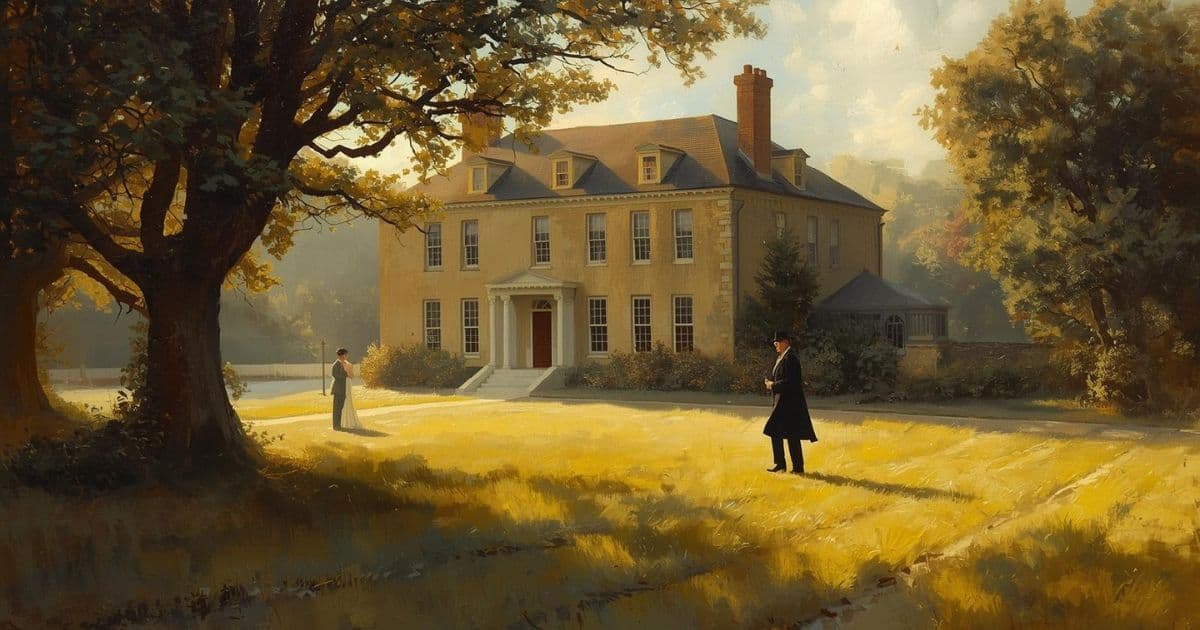
She was roused from her seat and her reflections, by someone’s approach;
and, before she could strike into another path, she was overtaken by
Wickham.
“I am afraid I interrupt your solitary ramble, my dear sister?” said he,
as he joined her.
“You certainly do,” she replied with a smile; “but it does not follow
that the interruption must be unwelcome.”
“I should be sorry, indeed, if it were. We were always good friends,
and now we are better.”
“True. Are the others coming out?”
“I do not know. Mrs. Bennet and Lydia are going in the carriage to
Meryton. And so, my dear sister, I find, from our uncle and aunt, that
you have actually seen Pemberley.”
She replied in the affirmative.
“I almost envy you the pleasure, and yet I believe it would be too much
for me, or else I could take it in my way to Newcastle. And you saw the
old housekeeper, I suppose? Poor Reynolds, she was always very fond of
me. But of course she did not mention my name to you.”
“Yes, she did.”
“And what did she say?”
“That you were gone into the army, and she was afraid had--not turned
out well. At such a distance as that, you know, things are strangely
misrepresented.”
“Certainly,” he replied, biting his lips. Elizabeth hoped she had
silenced him; but he soon afterwards said,--
“I was surprised to see Darcy in town last month. We passed each other
several times. I wonder what he can be doing there.”
“Perhaps preparing for his marriage with Miss de Bourgh,” said
Elizabeth. “It must be something particular to take him there at this
time of year.”
“Undoubtedly. Did you see him while you were at Lambton? I thought I
understood from the Gardiners that you had.”
“Yes; he introduced us to his sister.”
“And do you like her?”
“Very much.”
“I have heard, indeed, that she is uncommonly improved within this year
or two. When I last saw her, she was not very promising. I am very glad
you liked her. I hope she will turn out well.”
“I dare say she will; she has got over the most trying age.”
“Did you go by the village of Kympton?”
“I do not recollect that we did.”
“I mention it because it is the living which I ought to have had. A most
delightful place! Excellent parsonage-house! It would have suited me in
every respect.”
“How should you have liked making sermons?”
“Exceedingly well. I should have considered it as part of my duty, and
the exertion would soon have been nothing. One ought not to repine; but,
to be sure, it would have been such a thing for me! The quiet, the
retirement of such a life, would have answered all my ideas of
happiness! But it was not to be. Did you ever hear Darcy mention the
circumstance when you were in Kent?”
“I have heard from authority, which I thought as good, that it was
left you conditionally only, and at the will of the present patron.”
“You have! Yes, there was something in that; I told you so from the
first, you may remember.”
“I did hear, too, that there was a time when sermon-making was not so
palatable to you as it seems to be at present; that you actually
declared your resolution of never taking orders, and that the business
had been compromised accordingly.”
“You did! and it was not wholly without foundation. You may remember
what I told you on that point, when first we talked of it.”
They were now almost at the door of the house, for she had walked fast
to get rid of him; and unwilling, for her sister’s sake, to provoke him,
she only said in reply, with a good-humoured smile,--
“Come, Mr. Wickham, we are brother and sister, you know. Do not let us
quarrel about the past. In future, I hope we shall be always of one
mind.”
She held out her hand: he kissed it with affectionate gallantry, though
he hardly knew how to look, and they entered the house.
[Illustration:
“Mr. Darcy with him.”
]
Master this chapter. Complete your experience
Purchase the complete book to access all chapters and support classic literature
As an Amazon Associate, we earn a small commission from qualifying purchases at no additional cost to you.
Available in paperback, hardcover, and e-book formats
Let's Analyse the Pattern
Why This Matters
Connect literature to life
This chapter teaches when to keep someone's good deeds private while still publicly correcting your own mistakes about their character.
Now let's explore the literary elements.
Key Quotes & Analysis
"I must confess that I think her as delightful a creature as ever appeared in print, and how I shall be able to tolerate Caroline's raptures over her dear Jane, I do not know."
Context: When discussing Jane's engagement to Bingley with Elizabeth
Shows Mr. Bennet's dry wit and his genuine affection for Jane. His concern about Caroline Bingley's reaction reveals his understanding of social dynamics and family politics.
"You must learn some of my philosophy. Think only of the past as its remembrance gives you pleasure."
Context: When reflecting on how her feelings about Darcy have changed
Demonstrates Elizabeth's growth in wisdom and emotional maturity. She's learned to focus on positive memories rather than dwelling on past mistakes or resentments.
"I am the happiest creature in the world. Perhaps other people have said so before, but not one with such justice. I am happier even than Jane; she only smiles, I laugh."
Context: When expressing her joy about her engagement to Darcy
Shows Elizabeth's complete transformation from her earlier prejudice. Her comparison to Jane reveals that her happiness feels deeper because it was harder won through struggle and growth.
Thematic Threads
Accountability
In This Chapter
Elizabeth publicly admits she was wrong about Darcy's character, not just that her feelings changed
Development
Evolved from her private realization of error to public acknowledgment and teaching moment
In Your Life:
When was the last time you publicly admitted you were completely wrong about someone, and what made you willing to own that mistake openly?
Discretion
In This Chapter
Elizabeth protects Darcy's privacy about Lydia while being honest about her own mistakes
Development
New theme - showing maturity through balancing honesty with protecting others
In Your Life:
How do you balance being honest about your own flaws while still protecting someone else's private information when telling your story?
Class
In This Chapter
Mrs. Bennet focuses on Darcy's wealth while Mr. Bennet questions the character change
Development
Continues showing how different values shape perception of the same situation
In Your Life:
Think about a recent disagreement with family or friends - were you all really arguing about the same thing, or were your different values making you see the situation completely differently?
Growth
In This Chapter
Elizabeth demonstrates she can admit fault without defensiveness or excuses
Development
Culmination of her character arc from defensive pride to mature self-awareness
In Your Life:
Can you admit when you're wrong without making excuses or getting defensive, or do you still struggle to own your mistakes cleanly?
Marriage
In This Chapter
Contrast between Jane/Bingley's simple compatibility and Elizabeth/Darcy's hard-won understanding
Development
Shows two different but valid paths to successful partnership
In Your Life:
Do you think the best relationships come from easy compatibility or from working through major differences and misunderstandings together?
You now have the context. Time to form your own thoughts.
Discussion Questions
- 1
What does Elizabeth tell her father about her changed feelings toward Darcy, and what does she keep secret?
- 2
Why does Elizabeth choose to publicly admit she was wrong about Darcy's character rather than just quietly changing her mind?
- 3
Think about your workplace, school, or family - when have you seen someone gain respect by admitting they misjudged a situation or person?
- 4
If you realized you'd been unfairly criticizing someone to others, how would you handle correcting that mistake without making it worse?
- 5
What does Elizabeth's choice to protect Darcy's privacy while acknowledging her own error reveal about the difference between mature accountability and just saving face?
Critical Thinking Exercise
Practice the Accountability Framework
Think of someone you initially disliked or mistrusted but later realized you'd misjudged. Write out how you would apply Elizabeth's approach: specifically acknowledge what you got wrong, explain what changed your understanding, and identify what you learned from the experience. Practice saying it out loud as if you were talking to someone who heard your original negative opinion.
Consider:
- •Focus on your own misunderstanding rather than the other person's flaws or mistakes
- •Be specific about what evidence or experience changed your mind
- •Consider how acknowledging your error might actually strengthen your credibility with others
Coming Up Next...
Chapter 53
Lydia and Wickham finally leave, but Elizabeth's newfound knowledge about Darcy's sacrifice will continue to torment her. How can she ever repay such a debt, and will she ever see him again?