
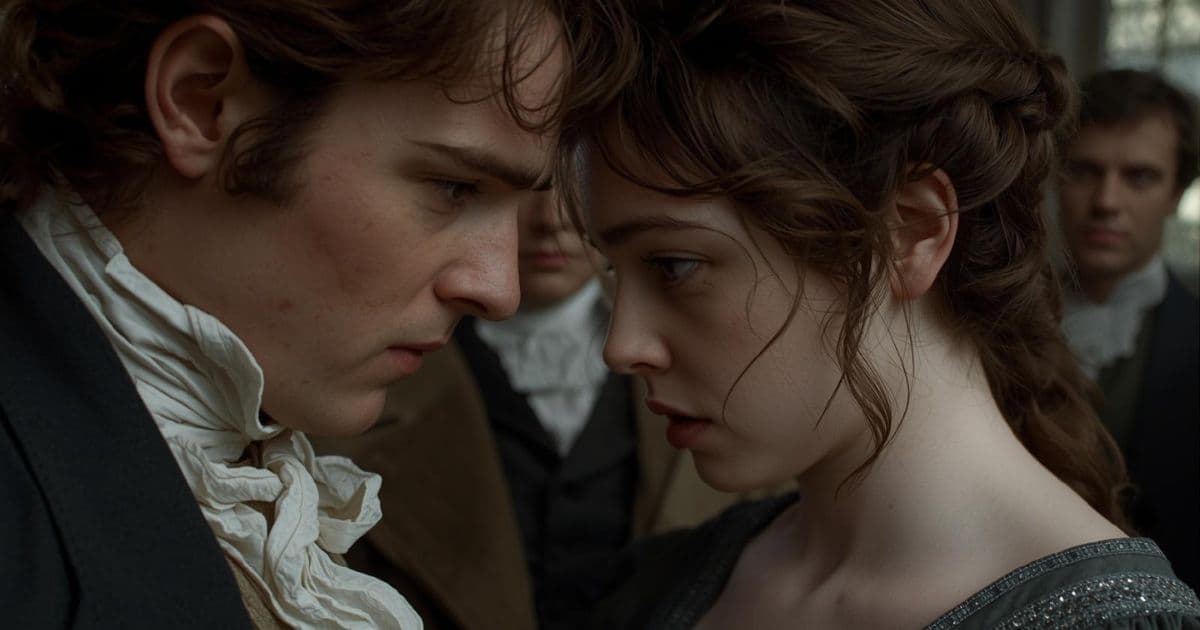
Themes in This Book
Click a theme to find more books with similar topics
What to expect ahead
What follows is a compact summary of each chapter in the book, designed to help you quickly grasp the core ideas while inviting you to continue into the full original text. Even when chapter text is presented here, these summaries are meant as a gateway to understanding, so your eventual reading of the complete book feels richer, deeper, and more fully appreciated.
Pride and Prejudice
A Brief Description
When Elizabeth Bennet meets Mr. Darcy at a country ball, she finds him insufferably arrogant. He finds her beneath his notice. Their mutual dislike seems destined to last forever—until circumstances force them to reconsider everything they thought they knew about each other, and themselves.
Jane Austen's beloved 1813 novel isn't just a romance about overcoming first impressions. It's a masterclass in how we construct narratives that justify our biases, protect our egos, and sabotage our own happiness. Elizabeth's wit and independence make her irresistible, but her quick judgments blind her to deeper truths about character and worth. Darcy's pride stems from genuine virtue twisted by privilege and social pressure. Their journey toward understanding reveals how personal growth requires dismantling the protective stories we tell ourselves about who we are.
Set against the backdrop of Regency England's marriage market, where women's futures depend entirely on securing wealthy husbands, the novel exposes how economic anxiety shapes relationships. Mrs. Bennet's desperate husband-hunting isn't mere comedy—it's survival strategy in a world that offers women no other path to security. The contrast between genuine partnership (Elizabeth and Darcy) and mercenary matches (Charlotte Lucas, Lydia and Wickham) reveals what happens when love battles practicality.
But Austen's genius lies in showing universal patterns beneath period customs. The dynamics she captured—how pride masks insecurity, prejudice protects us from uncomfortable truths, and social pressure warps authentic connection—remain startlingly relevant today. Elizabeth's struggle to distinguish substance from charm mirrors modern dating's surface judgments. Darcy's growth from entitled to empathetic maps the journey anyone must take to become worthy of real love.
Through Intelligence Amplifier™ analysis, we decode Austen's insights into first impressions, social intelligence, ego management, and the courage required for genuine change. Her story asks: What prejudices are you protecting, and what might you gain by letting them go?
Essential Life Skills Deep Dive
Explore chapter-by-chapter breakdowns of the essential life skills taught in this classic novel.
Pride Masks Vulnerability
8 chapters revealing how pride becomes armor against rejection—and what it takes to let those defenses down.
Challenging First Impressions
10 chapters showing how first impressions trap us—and the courage it takes to admit we were wrong.
Navigating Social Class
13 chapters revealing how economic hierarchy shapes relationships—and how privilege operates invisibly.
Developing Self-Awareness
14 chapters mapping the journey from confident certainty to humbling self-knowledge.
Essential Skills
Life skills and patterns this book helps you develop—drawn from its themes and characters.
Recognizing when pride masks vulnerability
Challenging first impressions
Navigating social class differences
Developing self-awareness
Table of Contents
The famous opening line sets the stage: wealthy single men must nee...
Mr. Bennet decides to visit Mr. Bingley after all, despite p...
The Meryton assembly ball becomes a social battlefield where first ...
Jane and Elizabeth have a heart-to-heart about the Netherfield ball...
The Bennet sisters walk to Meryton and encounter Mr
Elizabeth Bennet finds herself surprisingly drawn to Mr
Elizabeth walks to Netherfield through muddy fields to check on her...
Elizabeth spends several days at Netherfield caring for Jane, who's...
Elizabeth arrives at Netherfield to care for her sick sister Jane, ...
Elizabeth spends the evening at Netherfield watching the complex so...
Elizabeth spends an evening at Netherfield with the Bingley sisters...
Elizabeth stays at Netherfield to nurse Jane, who's still recoverin...
Mr. Collins arrives at Longbourn, and he's exactly as ridicu...
Mr. Collins arrives at Longbourn for his promised visit, and...
Wickham makes his move, and it's a calculated one
About Jane Austen
Published 1813
Jane Austen (1775-1817) was an English novelist whose works of romantic fiction, set among the landed gentry, earned her a place as one of the most widely read writers in English literature. Her realism, biting social commentary, and masterful use of free indirect speech have made her one of the most influential writers in literary history.
Pride and Prejudice, published in 1813, is Austen's most popular novel. It was originally titled "First Impressions" and explores themes of love, marriage, social class, and personal growth. Austen's sharp observations of human nature and her ability to create characters who feel real and relatable have made this novel timeless.
Why This Author Matters Today
Jane Austen's insights into human nature, social constraints, and the search for authenticity remain powerfully relevant. Their work helps us understand the timeless tensions between individual desire and social expectation, making them an essential guide for navigating modern life's complexities.
More by Jane Austen in Our Library


Amplified Classics is different.
not a sparknotes, nor a cliffnotes
This is a retelling. The story is still told—completely. You walk with the characters, feel what they feel, discover what they discover. The meaning arrives because you experienced it, not because someone explained a summary.
Read this, then read the original. The prose will illuminate—you'll notice what makes the author that author, because you're no longer fighting to follow the story.
Read the original first, then read this. Something will click. You'll want to go back.
Either way, the door opens inward.
Get the Full Book
Purchase the complete book to access all chapters and support classic literature
As an Amazon Associate, we earn a small commission from qualifying purchases at no additional cost to you.
Available in paperback, hardcover, and e-book formats
You Might Also Like




Free to read • No account required