An excerpt from the original text.(complete · 883 words)
t is a truth universally acknowledged, that a single man in possession
of a good fortune must be in want of a wife.
However little known the feelings or views of such a man may be on his
first entering a neighbourhood, this truth is so well fixed in the minds
of the surrounding families, that he is considered as the rightful
property of some one or other of their daughters.
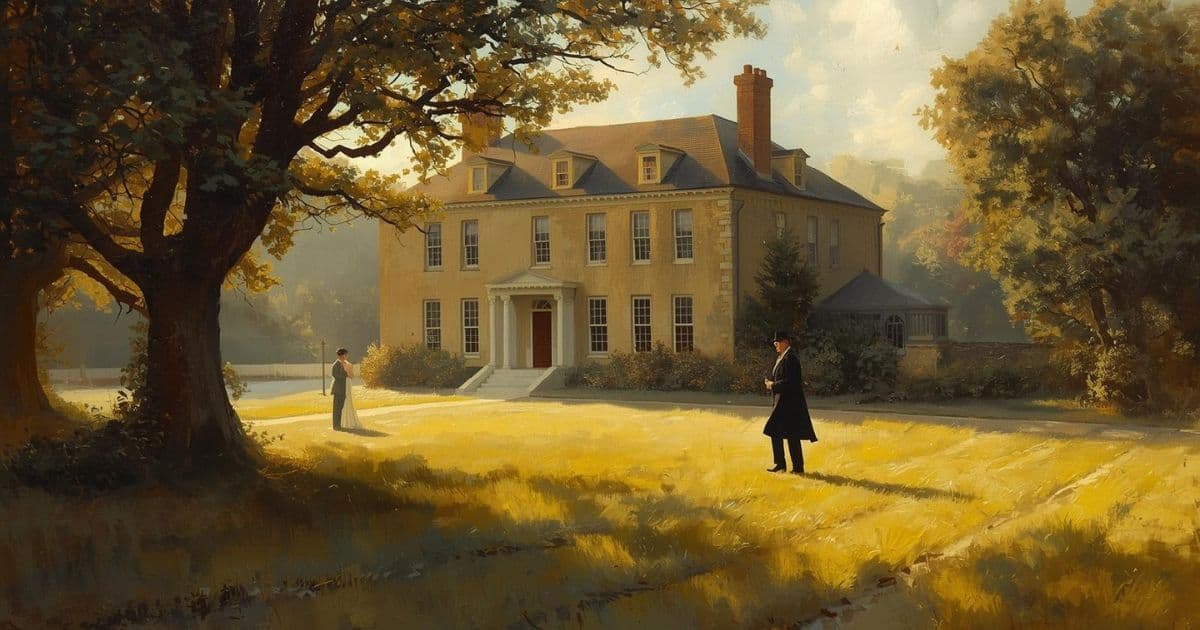
“My dear Mr. Bennet,” said his lady to him one day, “have you heard that
Netherfield Park is let at last?”
Mr. Bennet replied that he had not.
“But it is,” returned she; “for Mrs. Long has just been here, and she
told me all about it.”
Mr. Bennet made no answer.
“Do not you want to know who has taken it?” cried his wife, impatiently.
“You want to tell me, and I have no objection to hearing it.”
[Illustration:
“He came down to see the place”
[Copyright 1894 by George Allen.]]
This was invitation enough.
“Why, my dear, you must know, Mrs. Long says that Netherfield is taken
by a young man of large fortune from the north of England; that he came
down on Monday in a chaise and four to see the place, and was so much
delighted with it that he agreed with Mr. Morris immediately; that he is
to take possession before Michaelmas, and some of his servants are to be
in the house by the end of next week.”
“What is his name?”
“Bingley.”
“Is he married or single?”
“Oh, single, my dear, to be sure! A single man of large fortune; four or
five thousand a year. What a fine thing for our girls!”
“How so? how can it affect them?”
“My dear Mr. Bennet,” replied his wife, “how can you be so tiresome? You
must know that I am thinking of his marrying one of them.”
“Is that his design in settling here?”
“Design? Nonsense, how can you talk so! But it is very likely that he
may fall in love with one of them, and therefore you must visit him as
soon as he comes.”
“I see no occasion for that. You and the girls may go--or you may send
them by themselves, which perhaps will be still better; for as you are
as handsome as any of them, Mr. Bingley might like you the best of the
party.”
“My dear, you flatter me. I certainly have had my share of beauty, but
I do not pretend to be anything extraordinary now. When a woman has five
grown-up daughters, she ought to give over thinking of her own beauty.”
“In such cases, a woman has not often much beauty to think of.”
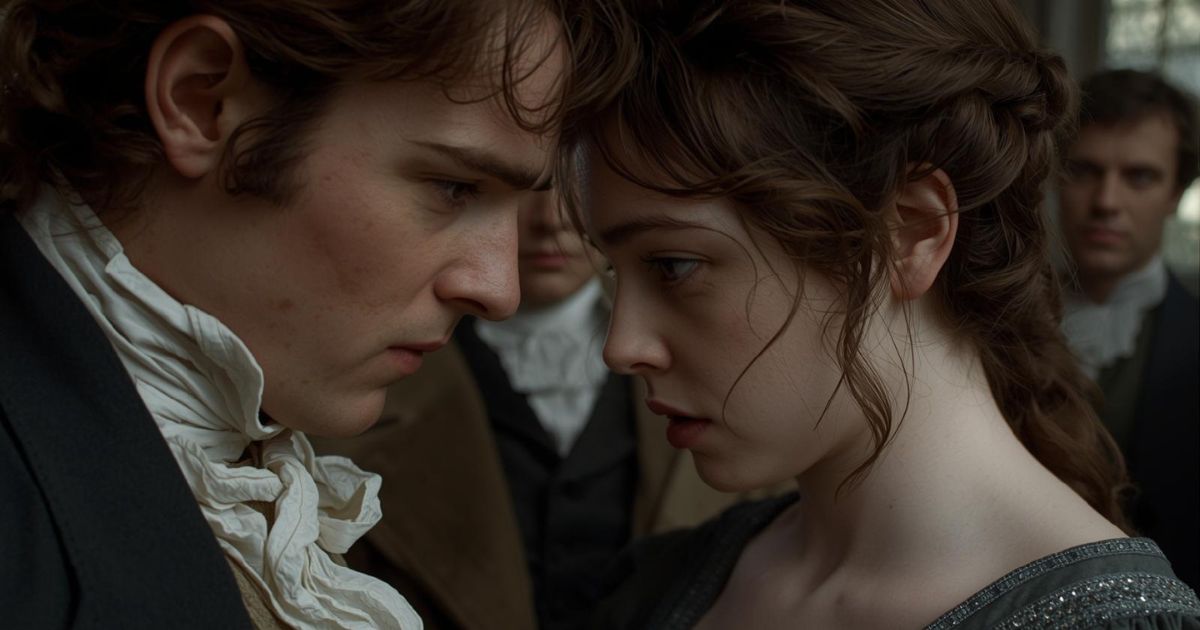
“But, my dear, you must indeed go and see Mr. Bingley when he comes into
the neighbourhood.”
“It is more than I engage for, I assure you.”
“But consider your daughters. Only think what an establishment it would
be for one of them. Sir William and Lady Lucas are determined to go,
merely on that account; for in general, you know, they visit no new
comers. Indeed you must go, for it will be impossible for us to visit
him, if you do not.”
“You are over scrupulous, surely. I dare say Mr. Bingley will be very
glad to see you; and I will send a few lines by you to assure him of my
hearty consent to his marrying whichever he chooses of the girls--though
I must throw in a good word for my little Lizzy.”
“I desire you will do no such thing. Lizzy is not a bit better than the
others: and I am sure she is not half so handsome as Jane, nor half so
good-humoured as Lydia. But you are always giving her the preference.”
“They have none of them much to recommend them,” replied he: “they are
all silly and ignorant like other girls; but Lizzy has something more of
quickness than her sisters.”
“Mr. Bennet, how can you abuse your own children in such a way? You take
delight in vexing me. You have no compassion on my poor nerves.”
“You mistake me, my dear. I have a high respect for your nerves. They
are my old friends. I have heard you mention them with consideration
these twenty years at least.”
“Ah, you do not know what I suffer.”
“But I hope you will get over it, and live to see many young men of four
thousand a year come into the neighbourhood.”
“It will be no use to us, if twenty such should come, since you will not
visit them.”
“Depend upon it, my dear, that when there are twenty, I will visit them
all.”
Mr. Bennet was so odd a mixture of quick parts, sarcastic humour,
reserve, and caprice, that the experience of three-and-twenty years had
been insufficient to make his wife understand his character. Her mind
was less difficult to develope. She was a woman of mean understanding,
little information, and uncertain temper. When she was discontented, she
fancied herself nervous. The business of her life was to get her
daughters married: its solace was visiting and news.
[Illustration: M^{r.} & M^{rs.} Bennet
[Copyright 1894 by George Allen.]]
[Illustration:
“I hope Mr. Bingley will like it”
[Copyright 1894 by George Allen.]]
Master this chapter. Complete your experience
Purchase the complete book to access all chapters and support classic literature
As an Amazon Associate, we earn a small commission from qualifying purchases at no additional cost to you.
Available in paperback, hardcover, and e-book formats
Let's Analyse the Pattern
Why This Matters
Connect literature to life
This chapter teaches how to recognize when financial pressure is driving someone's advice or behavior, helping you evaluate whether their guidance comes from wisdom or panic.
Now let's explore the literary elements.
Key Quotes & Analysis
"It is a truth universally acknowledged, that a single man in possession of a good fortune, must be in want of a wife."
Context: The famous opening line that establishes the novel's central theme
This ironic statement appears to state a fact about wealthy men, but actually exposes how society assumes marriage is inevitable and economically motivated. Austen is critiquing a world where relationships are reduced to financial transactions.
"My dear Mr. Bennet, have you heard that Netherfield Park is let at last?"
Context: Her excited announcement about their new wealthy neighbor
This seemingly innocent question reveals Mrs. Bennet's constant vigilance for marriage opportunities. Her breathless excitement shows how a single man's arrival could change her daughters' entire futures.
"You want to tell me, and I have no objection to hearing it."
Context: His dry response to his wife's news about Bingley
This perfectly captures Mr. Bennet's sardonic personality and his amusement at his wife's schemes. His detached tone contrasts sharply with her urgency, highlighting their different approaches to their daughters' futures.
Thematic Threads
Economic Survival
In This Chapter
Mrs. Bennet's frantic matchmaking stems from real financial terror—women can't inherit or work
Development
Introduced here as the driving force behind all family decisions
In Your Life:
When you're worried about money or job security, how does that anxiety affect your daily decisions and relationships?
Marriage as Transaction
In This Chapter
Bingley is evaluated purely on wealth and availability, not character or compatibility
Development
Established as the social norm that will be challenged throughout the story
In Your Life:
Do you find yourself or others evaluating potential romantic partners based on their career prospects or financial stability rather than personal connection?
Class Awareness
In This Chapter
The Bennets' middle-class position makes them vulnerable—too proud to work, too poor to be secure
Development
Introduced as the family's central tension
In Your Life:
Have you ever felt caught between wanting to maintain your dignity and needing to be practical about money or status?
Gender Power Imbalance
In This Chapter
Mr. Bennet can be amused by problems that terrify Mrs. Bennet because male privilege protects him
Development
Established through the contrast in how husband and wife react to the same situation
In Your Life:
Can you think of a situation where someone's gender, race, or other identity gave them the luxury of not worrying about something that deeply concerns you?
Social Performance
In This Chapter
Mrs. Bennet must perform enthusiasm and social climbing to secure her family's future
Development
Introduced as survival strategy disguised as social ambition
In Your Life:
When have you had to put on an enthusiastic or positive front to network, job hunt, or secure opportunities when you were actually feeling desperate or insecure?
You now have the context. Time to form your own thoughts.
Discussion Questions
- 1
What news does Mr. Bennet share with his wife, and how does she immediately respond?
- 2
Why does Mrs. Bennet see Bingley's arrival as such an urgent opportunity for her daughters?
- 3
Where do you see people today making important decisions based purely on financial desperation rather than what's actually good for them?
- 4
If you were advising someone who was making choices from a place of financial panic, what would you tell them to help them think more clearly?
- 5
What does this chapter reveal about how fear can make us see other people as solutions to our problems rather than as complex individuals?
Critical Thinking Exercise
Rewrite the Conversation from Mrs. Bennet's Perspective
Imagine you're Mrs. Bennet writing in your diary that night about the conversation with your husband. Write 2-3 paragraphs explaining why Bingley's arrival matters so much to you and what you're really afraid of. Don't make her a villain—try to understand her genuine fears and motivations.
Consider:
- •What specific financial realities is she facing that her husband might not fully grasp?
- •How might her desperation be both helping and hurting her daughters' chances?
- •What does she see as her role and responsibility as a mother in this social system?
Coming Up Next...
Chapter 2
Mrs. Bennet's matchmaking plans hit their first snag when Mr. Bennet refuses to make the social call that would introduce their family to the eligible Mr. Bingley. Without this crucial first step, all her schemes could crumble before they even begin.