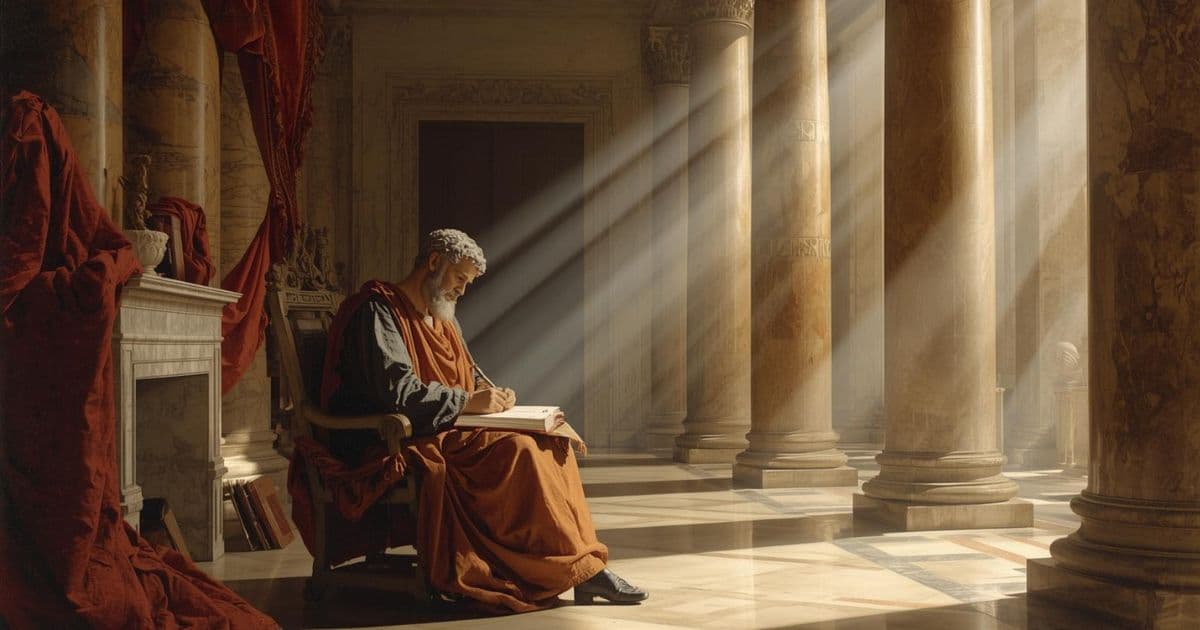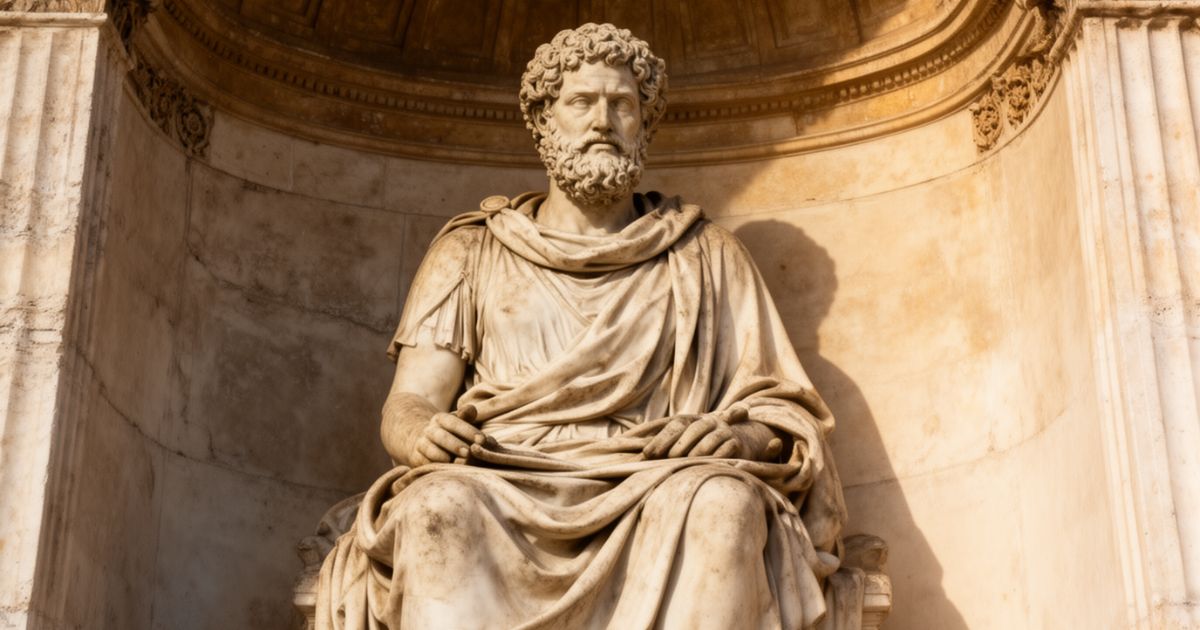
An excerpt from the original text.(complete · 5559 words)
THE SIXTH BOOK
I. The matter itself, of which the universe doth consist, is of itself
very tractable and pliable. That rational essence that doth govern it,
hath in itself no cause to do evil. It hath no evil in itself; neither
can it do anything that is evil: neither can anything be hurt by it. And
all things are done and determined according to its will and prescript.
II. Be it all one unto thee, whether half frozen or well warm; whether
only slumbering, or after a full sleep; whether discommended or
commended thou do thy duty: or whether dying or doing somewhat else; for
that also 'to die,' must among the rest be reckoned as one of the duties
and actions of our lives.
III. Look in, let not either the proper quality, or the true worth of
anything pass thee, before thou hast fully apprehended it.
IV. All substances come soon to their change, and either they shall
be resolved by way of exhalation (if so be that all things shall be
reunited into one substance), or as others maintain, they shall be
scattered and dispersed. As for that Rational Essence by which all
things are governed, as it best understandeth itself, both its own
disposition, and what it doth, and what matter it hath to do with and
accordingly doth all things; so we that do not, no wonder, if we wonder
at many things, the reasons whereof we cannot comprehend.
V. The best kind of revenge is, not to become like unto them.
VI. Let this be thy only joy, and thy only comfort, from one sociable
kind action without intermission to pass unto another, God being ever in
thy mind.
VII. The rational commanding part, as it alone can stir up and turn
itself; so it maketh both itself to be, and everything that happeneth,
to appear unto itself, as it will itself.
VIII. According to the nature of the universe all things particular are
determined, not according to any other nature, either about compassing
and containing; or within, dispersed and contained; or without,
depending. Either this universe is a mere confused mass, and an
intricate context of things, which shall in time be scattered and
dispersed again: or it is an union consisting of order, and administered
by Providence. If the first, why should I desire to continue any longer
in this fortuit confusion and commixtion? or why should I take care for
anything else, but that as soon as may be I may be earth again? And
why should I trouble myself any more whilst I seek to please the Gods?
Whatsoever I do, dispersion is my end, and will come upon me whether I
will or no. But if the latter be, then am not I religious in vain;
then will I be quiet and patient, and put my trust in Him, who is the
Governor of all.
IX. Whensoever by some present hard occurrences thou art constrained to
be in some sort troubled and vexed, return unto thyself as soon as may
be, and be not out of tune longer than thou must needs. For so shalt
thou be the better able to keep thy part another time, and to maintain
the harmony, if thou dost use thyself to this continually; once out,
presently to have recourse unto it, and to begin again.
X. If it were that thou hadst at one time both a stepmother, and
a natural mother living, thou wouldst honour and respect her also;
nevertheless to thine own natural mother would thy refuge, and recourse
be continually. So let the court and thy philosophy be unto thee. Have
recourse unto it often, and comfort thyself in her, by whom it is that
those other things are made tolerable unto thee, and thou also in those
things not intolerable unto others.
XI. How marvellous useful it is for a man to represent unto himself
meats, and all such things that are for the mouth, under a right
apprehension and imagination! as for example: This is the carcass of a
fish; this of a bird; and this of a hog. And again more generally; This
phalernum, this excellent highly commended wine, is but the bare juice
of an ordinary grape. This purple robe, but sheep's hairs, dyed with
the blood of a shellfish. So for coitus, it is but the attrition of an
ordinary base entrail, and the excretion of a little vile snivel, with
a certain kind of convulsion: according to Hippocrates his opinion. How
excellent useful are these lively fancies and representations of things,
thus penetrating and passing through the objects, to make their true
nature known and apparent! This must thou use all thy life long, and
upon all occasions: and then especially, when matters are apprehended
as of great worth and respect, thy art and care must be to uncover
them, and to behold their vileness, and to take away from them all those
serious circumstances and expressions, under which they made so grave
a show. For outward pomp and appearance is a great juggler; and then
especially art thou most in danger to be beguiled by it, when (to
a man's thinking) thou most seemest to be employed about matters of
moment.
XII. See what Crates pronounceth concerning Xenocrates himself.
XIII. Those things which the common sort of people do admire, are most
of them such things as are very general, and may be comprehended under
things merely natural, or naturally affected and qualified: as stones,
wood, figs, vines, olives. Those that be admired by them that are more
moderate and restrained, are comprehended under things animated: as
flocks and herds. Those that are yet more gentle and curious, their
admiration is commonly confined to reasonable creatures only; not in
general as they are reasonable, but as they are capable of art, or of
some craft and subtile invention: or perchance barely to reasonable
creatures; as they that delight in the possession of many slaves. But
he that honours a reasonable soul in general, as it is reasonable and
naturally sociable, doth little regard anything else: and above all
things is careful to preserve his own, in the continual habit and
exercise both of reason and sociableness: and thereby doth co-operate
with him, of whose nature he doth also participate; God.
XIV. Some things hasten to be, and others to be no more. And even
whatsoever now is, some part thereof hath already perished. Perpetual
fluxes and alterations renew the world, as the perpetual course of time
doth make the age of the world (of itself infinite) to appear always
fresh and new. In such a flux and course of all things, what of these
things that hasten so fast away should any man regard, since among all
there is not any that a man may fasten and fix upon? as if a man would
settle his affection upon some ordinary sparrow living by him, who is no
sooner seen, than out of sight. For we must not think otherwise of our
lives, than as a mere exhalation of blood, or of an ordinary respiration
of air. For what in our common apprehension is, to breathe in the air
and to breathe it out again, which we do daily: so much is it and no
more, at once to breathe out all thy respirative faculty into that
common air from whence but lately (as being but from yesterday, and
to-day), thou didst first breathe it in, and with it, life.
XV. Not vegetative spiration, it is not surely (which plants have) that
in this life should be so dear unto us; nor sensitive respiration, the
proper life of beasts, both tame and wild; nor this our imaginative
faculty; nor that we are subject to be led and carried up and down by
the strength of our sensual appetites; or that we can gather, and live
together; or that we can feed: for that in effect is no better, than
that we can void the excrements of our food. What is it then that should
be dear unto us? to hear a clattering noise? if not that, then neither
to be applauded by the tongues of men. For the praises of many tongues,
is in effect no better than the clattering of so many tongues. If then
neither applause, what is there remaining that should be dear unto thee?
This I think: that in all thy motions and actions thou be moved,
and restrained according to thine own true natural constitution and
Construction only. And to this even ordinary arts and professions do
lead us. For it is that which every art doth aim at, that whatsoever it
is, that is by art effected and prepared, may be fit for that work that
it is prepared for. This is the end that he that dresseth the vine, and
he that takes upon him either to tame colts, or to train up dogs,
doth aim at. What else doth the education of children, and all learned
professions tend unto? Certainly then it is that, which should be dear
unto us also. If in this particular it go well with thee, care not for
the obtaining of other things. But is it so, that thou canst not but
respect other things also? Then canst not thou truly be free? then canst
thou not have self-content: then wilt thou ever be subject to passions.
For it is not possible, but that thou must be envious, and jealous, and
suspicious of them whom thou knowest can bereave thee of such things;
and again, a secret underminer of them, whom thou seest in present
possession of that which is dear unto thee. To be short, he must of
necessity be full of confusion within himself, and often accuse the
Gods, whosoever stands in need of these things. But if thou shalt
honour and respect thy mind only, that will make thee acceptable
towards thyself, towards thy friends very tractable; and conformable
and concordant with the Gods; that is, accepting with praises whatsoever
they shall think good to appoint and allot unto thee.
XVI. Under, above, and about, are the motions of the elements; but
the motion of virtue, is none of those motions, but is somewhat more
excellent and divine. Whose way (to speed and prosper in it) must be
through a way, that is not easily comprehended.
XVII. Who can choose but wonder at them? They will not speak well of
them that are at the same time with them, and live with them; yet they
themselves are very ambitious, that they that shall follow, whom they
have never seen, nor shall ever see, should speak well of them. As if
a man should grieve that he hath not been commended by them, that lived
before him.
XVIII. Do not ever conceive anything impossible to man, which by thee
cannot, or not without much difficulty be effected; but whatsoever in
general thou canst Conceive possible and proper unto any man, think that
very possible unto thee also.
XIX. Suppose that at the palestra somebody hath all to-torn thee with
his nails, and hath broken thy head. Well, thou art wounded. Yet thou
dost not exclaim; thou art not offended with him. Thou dost not suspect
him for it afterwards, as one that watcheth to do thee a mischief. Yea
even then, though thou dost thy best to save thyself from him, yet not
from him as an enemy. It is not by way of any suspicious indignation,
but by way of gentle and friendly declination. Keep the same mind and
disposition in other parts of thy life also. For many things there be,
which we must conceit and apprehend, as though we had had to do with an
antagonist at the palestra. For as I said, it is very possible for us to
avoid and decline, though we neither suspect, nor hate.
XX. If anybody shall reprove me, and shall make it apparent unto me,
that in any either opinion or action of mine I do err, I will most
gladly retract. For it is the truth that I seek after, by which I am
sure that never any man was hurt; and as sure, that he is hurt that
continueth in any error, or ignorance whatsoever.
XXI. I for my part will do what belongs unto me; as for other things,
whether things unsensible or things irrational; or if rational, yet
deceived and ignorant of the true way, they shall not trouble or
distract me. For as for those creatures which are not endued with reason
and all other things and-matters of the world whatsoever I freely, and
generously, as one endued with reason, of things that have none, make
use of them. And as for men, towards them as naturally partakers of the
same reason, my care is to carry myself sociably. But whatsoever it is
that thou art about, remember to call upon the Gods. And as for the time
how long thou shalt live to do these things, let it be altogether
indifferent unto thee, for even three such hours are sufficient.
XXII. Alexander of Macedon, and he that dressed his mules, when once
dead both came to one. For either they were both resumed into those
original rational essences from whence all things in the world are
propagated; or both after one fashion were scattered into atoms.
XXIII Consider how many different things, whether they concern our
bodies, or our souls, in a moment of time come to pass in every one of
us, and so thou wilt not wonder if many more things or rather all things
that are done, can at one time subsist, and coexist in that both one and
general, which we call the world.
XXIV. if any should put this question unto thee, how this word Antoninus
is written, wouldst thou not presently fix thine intention upon it, and
utter out in order every letter of it? And if any shall begin to gainsay
thee, and quarrel with thee about it; wilt thou quarrel with him again,
or rather go on meekly as thou hast begun, until thou hast numbered out
every letter? Here then likewise remember, that every duty that belongs
unto a man doth consist of some certain letters or numbers as it were,
to which without any noise or tumult keeping thyself thou must orderly
proceed to thy proposed end, forbearing to quarrel with him that would
quarrel and fall out with thee.
XXV. Is it not a cruel thing to forbid men to affect those things, which
they conceive to agree best with their own natures, and to tend most
to their own proper good and behoof? But thou after a sort deniest them
this liberty, as often as thou art angry with them for their sins. For
surely they are led unto those sins whatsoever they be, as to
their proper good and commodity. But it is not so (thou wilt object
perchance). Thou therefore teach them better, and make it appear unto
them: but be not thou angry with them.
XXVI. Death is a cessation from the impression of the senses, the
tyranny of the passions, the errors of the mind, and the servitude of
the body.
XXVII. If in this kind of life thy body be able to hold out, it is a
shame that thy soul should faint first, and give over, take heed, lest
of a philosopher thou become a mere Cæsar in time, and receive a new
tincture from the court. For it may happen if thou dost not take heed.
Keep thyself therefore, truly simple, good, sincere, grave, free
from all ostentation, a lover of that which is just, religious, kind,
tender-hearted, strong and vigorous to undergo anything that becomes
thee. Endeavour to continue such, as philosophy (hadst thou wholly and
constantly applied thyself unto it) would have made, and secured thee.
Worship the Gods, procure the welfare of men, this life is short.
Charitable actions, and a holy disposition, is the only fruit of this
earthly life.
XXVIII. Do all things as becometh the disciple of Antoninus Pius.
Remember his resolute constancy in things that were done by him
according to reason, his equability in all things, his sanctity; the
cheerfulness of his countenance, his sweetness, and how free he was from
all vainglory; how careful to come to the true and exact knowledge of
matters in hand, and how he would by no means give over till he did
fully, and plainly understand the whole state of the business; and how
patiently, and without any contestation he would bear with them, that
did unjustly condemn him: how he would never be over-hasty in anything,
nor give ear to slanders and false accusations, but examine and observe
with best diligence the several actions and dispositions of men. Again,
how he was no backbiter, nor easily frightened, nor suspicious, and in
his language free from all affectation and curiosity: and how easily he
would content himself with few things, as lodging, bedding, clothing,
and ordinary nourishment, and attendance. How able to endure labour, how
patient; able through his spare diet to continue from morning to evening
without any necessity of withdrawing before his accustomed hours to
the necessities of nature: his uniformity and constancy in matter of
friendship. How he would bear with them that with all boldness and
liberty opposed his opinions; and even rejoice if any man could better
advise him: and lastly, how religious he was without superstition. All
these things of him remember, that whensoever thy last hour shall
come upon thee, it may find thee, as it did him, ready for it in the
possession of a good conscience.
XXIX. Stir up thy mind, and recall thy wits again from thy natural
dreams, and visions, and when thou art perfectly awoken, and canst
perceive that they were but dreams that troubled thee, as one newly
awakened out of another kind of sleep look upon these worldly things
with the same mind as thou didst upon those, that thou sawest in thy
sleep.
XXX. I consist of body and soul. Unto my body all things are
indifferent, for of itself it cannot affect one thing more than another
with apprehension of any difference; as for my mind, all things which
are not within the verge of her own operation, are indifferent unto her,
and for her own operations, those altogether depend of her; neither
does she busy herself about any, but those that are present; for as
for future and past operations, those also are now at this present
indifferent unto her.
XXXI. As long as the foot doth that which belongeth unto it to do, and
the hand that which belongs unto it, their labour, whatsoever it be, is
not unnatural. So a man as long as he doth that which is proper unto
a man, his labour cannot be against nature; and if it be not against
nature, then neither is it hurtful unto him. But if it were so that
happiness did consist in pleasure: how came notorious robbers, impure
abominable livers, parricides, and tyrants, in so large a measure to
have their part of pleasures?
XXXII. Dost thou not see, how even those that profess mechanic arts,
though in some respect they be no better than mere idiots, yet they
stick close to the course of their trade, neither can they find in
their heart to decline from it: and is it not a grievous thing that
an architect, or a physician shall respect the course and mysteries of
their profession, more than a man the proper course and condition of his
own nature, reason, which is common to him and to the Gods?
XXXIII. Asia, Europe; what are they, but as corners of the whole world;
of which the whole sea, is but as one drop; and the great Mount Athos,
but as a clod, as all present time is but as one point of eternity. All,
petty things; all things that are soon altered, soon perished. And all
things come from one beginning; either all severally and particularly
deliberated and resolved upon, by the general ruler and governor of all;
or all by necessary consequence. So that the dreadful hiatus of a gaping
lion, and all poison, and all hurtful things, are but (as the thorn and
the mire) the necessary consequences of goodly fair things. Think not
of these therefore, as things contrary to those which thou dost much
honour, and respect; but consider in thy mind the true fountain of all.
XXXIV He that seeth the things that are now, hath Seen all that either
was ever, or ever shall be, for all things are of one kind; and all like
one unto another. Meditate often upon the connection of all things in
the world; and upon the mutual relation that they have one unto another.
For all things are after a sort folded and involved one within another,
and by these means all agree well together. For one thing is consequent
unto another, by local motion, by natural conspiration and agreement,
and by substantial union, or, reduction of all substances into one.
XXXV. Fit and accommodate thyself to that estate and to those
occurrences, which by the destinies have been annexed unto thee; and
love those men whom thy fate it is to live with; but love them truly. An
instrument, a tool, an utensil, whatsoever it be, if it be fit for the
purpose it was made for, it is as it should be though he perchance that
made and fitted it, be out of sight and gone. But in things natural,
that power which hath framed and fitted them, is and abideth within them
still: for which reason she ought also the more to be respected, and we
are the more obliged (if we may live and pass our time according to her
purpose and intention) to think that all is well with us, and according
to our own minds. After this manner also, and in this respect it is,
that he that is all in all doth enjoy his happiness.
XXXVI. What things soever are not within the proper power and
jurisdiction of thine own will either to compass or avoid, if thou shalt
propose unto thyself any of those things as either good, or evil; it
must needs be that according as thou shalt either fall into that which
thou dost think evil, or miss of that which thou dost think good, so
wilt thou be ready both to complain of the Gods, and to hate those men,
who either shall be so indeed, or shall by thee be suspected as the
cause either of thy missing of the one, or falling into the other. And
indeed we must needs commit many evils, if we incline to any of these
things, more or less, with an opinion of any difference. But if we mind
and fancy those things only, as good and bad, which wholly depend of our
own wills, there is no more occasion why we should either murmur against
the Gods, or be at enmity with any man.
XXXVII. We all work to one effect, some willingly, and with a rational
apprehension of what we do: others without any such knowledge. As I
think Heraclitus in a place speaketh of them that sleep, that even they
do work in their kind, and do confer to the general operations of the
world. One man therefore doth co-operate after one sort, and another
after another sort; but even he that doth murmur, and to his power doth
resist and hinder; even he as much as any doth co-operate. For of such
also did the world stand in need. Now do thou consider among which of
these thou wilt rank thyself. For as for him who is the Administrator
of all, he will make good use of thee whether thou wilt or no, and make
thee (as a part and member of the whole) so to co-operate with him,
that whatsoever thou doest, shall turn to the furtherance of his own
counsels, and resolutions. But be not thou for shame such a part of the
whole, as that vile and ridiculous verse (which Chrysippus in a place
doth mention) is a part of the comedy. XXXVIII. Doth either the sun take
upon him to do that which belongs to the rain? or his son Aesculapius
that, which unto the earth doth properly belong? How is it with every
one of the stars in particular? Though they all differ one from another,
and have their several charges and functions by themselves, do they not
all nevertheless concur and co-operate to one end?
XXXIX. If so be that the Gods have deliberated in particular of those
things that should happen unto me, I must stand to their deliberation,
as discrete and wise. For that a God should be an imprudent God, is a
thing hard even to conceive: and why should they resolve to do me hurt?
for what profit either unto them or the universe (which they specially
take care for) could arise from it? But if so be that they have not
deliberated of me in particular, certainly they have of the whole in
general, and those things which in consequence and coherence of this
general deliberation happen unto me in particular, I am bound to embrace
and accept of. But if so be that they have not deliberated at all (which
indeed is very irreligious for any man to believe: for then let us
neither sacrifice, nor pray, nor respect our oaths, neither let us any
more use any of those things, which we persuaded of the presence and
secret conversation of the Gods among us, daily use and practise:)
but, I say, if so be that they have not indeed either in general, or
particular deliberated of any of those things, that happen unto us
in this world; yet God be thanked, that of those things that
concern myself, it is lawful for me to deliberate myself, and all my
deliberation is but concerning that which may be to me most profitable.
Now that unto every one is most profitable, which is according to his
own constitution and nature. And my nature is, to be rational in all my
actions and as a good, and natural member of a city and commonwealth,
towards my fellow members ever to be sociably and kindly disposed and
affected. My city and country as I am Antoninus, is Rome; as a man, the
whole world. Those things therefore that are expedient and profitable to
those cities, are the only things that are good and expedient for me.
XL. Whatsoever in any kind doth happen to any one, is expedient to the
whole. And thus much to content us might suffice, that it is expedient
for the whole in general. But yet this also shalt thou generally
perceive, if thou dost diligently take heed, that whatsoever doth happen
to any one man or men.... And now I am content that the word expedient,
should more generally be understood of those things which we otherwise
call middle things, or things indifferent; as health, wealth, and the
like.
XLI. As the ordinary shows of the theatre and of other such places,
when thou art presented with them, affect thee; as the same things still
seen, and in the same fashion, make the sight ingrateful and tedious;
so must all the things that we see all our life long affect us. For all
things, above and below, are still the same, and from the same causes.
When then will there be an end?
XLII. Let the several deaths of men of all sorts, and of all sorts of
professions, and of all sort of nations, be a perpetual object of thy
thoughts,... so that thou mayst even come down to Philistio, Phœbus,
and Origanion. Pass now to other generations. Thither shall we after
many changes, where so many brave orators are; where so many grave
philosophers; Heraclitus, Pythagoras, Socrates. Where so many heroes of
the old times; and then so many brave captains of the latter times; and
so many kings. After all these, where Eudoxus, Hipparchus, Archimedes;
where so many other sharp, generous, industrious, subtile, peremptory
dispositions; and among others, even they, that have been the greatest
scoffers and deriders of the frailty and brevity of this our human life;
as Menippus, and others, as many as there have been such as he. Of all
these consider, that they long since are all dead, and gone. And what do
they suffer by it! Nay they that have not so much as a name remaining,
what are they the worse for it? One thing there is, and that only, which
is worth our while in this world, and ought by us much to be esteemed;
and that is, according to truth and righteousness, meekly and lovingly
to converse with false, and unrighteous men.
XLIII. When thou wilt comfort and cheer thyself, call to mind the
several gifts and virtues of them, whom thou dost daily converse with;
as for example, the industry of the one; the modesty of another; the
liberality of a third; of another some other thing. For nothing can so
much rejoice thee, as the resemblances and parallels of several virtues,
visible and eminent in the dispositions of those who live with thee;
especially when, all at once, as near as may be, they represent
themselves unto thee. And therefore thou must have them always in a
readiness.
XLIV. Dost thou grieve that thou dost weigh but so many pounds, and not
three hundred rather? Just as much reason hast thou to grieve that
thou must live but so many years, and not longer. For as for bulk and
substance thou dost content thyself with that proportion of it that is
allotted unto thee, so shouldst thou for time.
XLV. Let us do our best endeavours to persuade them; but however, if
reason and justice lead thee to it, do it, though they be never so much
against it. But if any shall by force withstand thee, and hinder thee in
it, convert thy virtuous inclination from one object unto another, from
justice to contented equanimity, and cheerful patience: so that what in
the one is thy hindrance, thou mayst make use of it for the exercise of
another virtue: and remember that it was with due exception, and
reservation, that thou didst at first incline and desire. For thou didst
not set thy mind upon things impossible. Upon what then? that all thy
desires might ever be moderated with this due kind of reservation. And
this thou hast, and mayst always obtain, whether the thing desired be in
thy power or no. And what do I care for more, if that for which I was
born and brought forth into the world (to rule all my desires with
reason and discretion) may be?
XLVI. The ambitious supposeth another man's act, praise and applause, to
be his own happiness; the voluptuous his own sense and feeling; but he
that is wise, his own action.
XLVII. It is in thy power absolutely to exclude all manner of conceit
and opinion, as concerning this matter; and by the same means, to
exclude all grief and sorrow from thy soul. For as for the things and
objects themselves, they of themselves have no such power, whereby to
beget and force upon us any opinion at all.
XLVIII. Use thyself when any man speaks unto thee, so to hearken unto
him, as that in the interim thou give not way to any other thoughts;
that so thou mayst (as far as is possible) seem fixed and fastened to
his very soul, whosoever he be that speaks unto thee.
XLIX. That which is not good for the bee-hive, cannot be good for the
bee.
L. Will either passengers, or patients, find fault and complain, either
the one if they be well carried, or the others if well cured? Do they
take care for any more than this; the one, that their shipmaster may
bring them safe to land, and the other, that their physician may effect
their recovery?
LI. How many of them who came into the world at the same time when I
did, are already gone out of it?
LII. To them that are sick of the jaundice, honey seems bitter; and to
them that are bitten by a mad dog, the water terrible; and to children,
a little ball seems a fine thing. And why then should I be angry? or
do I think that error and false opinion is less powerful to make men
transgress, than either choler, being immoderate and excessive, to cause
the jaundice; or poison, to cause rage?
LIII. No man can hinder thee to live as thy nature doth require. Nothing
can happen unto thee, but what the common good of nature doth require.
LIV. What manner of men they be whom they seek to please, and what to
get, and by what actions: how soon time will cover and bury all things,
and how many it hath already buried!
Master this chapter. Complete your experience
Purchase the complete book to access all chapters and support classic literature
As an Amazon Associate, we earn a small commission from qualifying purchases at no additional cost to you.
Available in paperback, hardcover, and e-book formats
Let's Analyse the Pattern
The tendency to waste energy trying to control external events while neglecting the internal responses we can actually influence.
Why This Matters
Connect literature to life
This chapter teaches how to quickly identify what aspects of frustrating situations you can actually influence versus what you're wasting energy trying to control.
Practice This Today
This week, notice when you feel frustrated and ask yourself: What part of this can I actually change? Then spend your energy only on that part.
Now let's explore the literary elements.
Key Quotes & Analysis
"You have power over your mind - not outside events. Realize this, and you will find strength."
Context: Reminding himself of the fundamental principle of what he can and cannot control
This is the core of Stoic philosophy and practical wisdom. It shifts focus from trying to control others and circumstances to mastering your own responses and choices.
In Today's Words:
You can't control what happens to you, but you can control how you react to it.
"How much trouble he avoids who does not look to see what his neighbor says or does."
Context: Advising himself to focus on his own conduct rather than judging others
This addresses the universal human tendency to get distracted by other people's business instead of focusing on our own growth and responsibilities.
In Today's Words:
Mind your own business and you'll have a lot less drama in your life.
"The best revenge is not to be like your enemy."
Context: Reflecting on how to respond to people who wrong us
This reframes the concept of revenge from getting even to maintaining your integrity. True victory is refusing to let others drag you down to their level.
In Today's Words:
Don't let jerks turn you into a jerk.
"Remember that very little disturbs the wise man. For he is not disturbed by things, but by his opinions about things."
Context: Explaining how our interpretations create our suffering
This reveals that most of our stress comes from the stories we tell ourselves about events, not the events themselves. Change the story, change your experience.
In Today's Words:
It's not what happens that stresses you out, it's what you tell yourself about what happens.
Thematic Threads
Personal Agency
In This Chapter
Marcus emphasizes that true power comes from controlling your responses, not external circumstances
Development
Builds on earlier themes of self-discipline by focusing specifically on the control distinction
In Your Life:
You might recognize this when you're more upset about someone's reaction to your work than focused on improving the work itself
Perception Management
In This Chapter
The emperor practices seeing luxury items as basic materials to prevent external things from controlling his peace
Development
Extends previous discussions of rational thinking into practical mental exercises
In Your Life:
You might notice this when brand names or status symbols make you feel inadequate about your perfectly functional possessions
Conflict Navigation
In This Chapter
Marcus suggests treating difficult people like sparring partners—defend without hatred, learn without escalating
Development
Introduces new framework for handling interpersonal challenges with virtue intact
In Your Life:
You might apply this when dealing with a coworker who consistently undermines you but you need to maintain professionalism
Impermanence Awareness
In This Chapter
Reflects on how Alexander the Great and his mule driver ended up equally dead, making status distinctions meaningless
Development
Deepens earlier mortality reflections by connecting them to social hierarchy
In Your Life:
You might find comfort in this when feeling intimidated by someone's wealth or position, remembering we all face the same ultimate limitations
Rational Response
In This Chapter
Emphasizes that everyone acts according to what they believe is good for them, calling for education rather than anger
Development
Builds on Stoic rationality by applying it specifically to understanding others' motivations
In Your Life:
You might use this when someone's behavior seems inexplicably harmful, looking for the logic behind their actions instead of taking it personally
You now have the context. Time to form your own thoughts.
Discussion Questions
- 1
Anthony suggests seeing expensive wine as 'grape juice' and luxury items as basic materials with fancy marketing. What is he trying to train his mind to do, and why might this be useful?
analysis • surface - 2
When Anthony says 'revenge isn't getting even; it's refusing to become like those who wronged you,' what does this reveal about how conflict actually affects us?
analysis • medium - 3
Think about a recent frustrating situation at work or home. How much of your stress came from the actual event versus the story you told yourself about what it meant?
application • medium - 4
Anthony treats conflicts like sparring matches - defending without hatred, learning to sidestep rather than escalate. How would this approach change how you handle your most difficult relationship?
application • deep - 5
Why does Anthony find it liberating rather than depressing to remember that Alexander the Great and his mule driver both ended up dead? What does this suggest about what actually matters in life?
reflection • deep
Critical Thinking Exercise
Map Your Control Territory
Think of your most stressful ongoing situation right now. Draw two columns: 'I Can Control' and 'I Cannot Control.' Be brutally honest about where each aspect of the situation belongs. Then look at how you've been spending your mental energy - are you focused on the left column or the right one?
Consider:
- •Your feelings and reactions always belong in the 'Can Control' column, even when the situation doesn't
- •Other people's choices, opinions, and behaviors always belong in the 'Cannot Control' column
- •Notice how much lighter you feel when you stop carrying responsibility for the right column
Journaling Prompt
Write about a time when you wasted energy trying to control something impossible. What would you do differently now, and what would you focus on instead?
Coming Up Next...
Chapter 7: The Universal Patterns of Human Experience
In the seventh book, Marcus will confront the challenge of maintaining philosophical principles when surrounded by court politics and the temptations of absolute power. He'll explore how to stay true to your values when everyone around you seems to have abandoned theirs.