An excerpt from the original text.(complete · 5388 words)
THE FIFTH BOOK
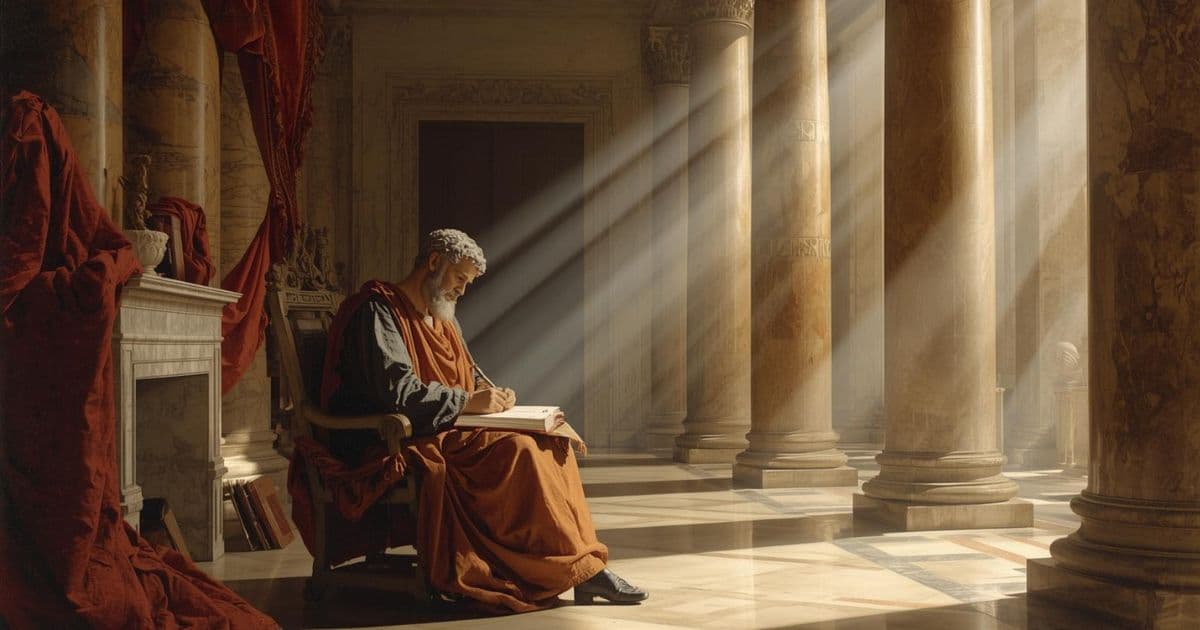
I. In the morning when thou findest thyself unwilling to rise, consider
with thyself presently, it is to go about a man's work that I am stirred
up. Am I then yet unwilling to go about that, for which I myself was
born and brought forth into this world? Or was I made for this, to
lay me down, and make much of myself in a warm bed? 'O but this is
pleasing.' And was it then for this that thou wert born, that thou
mightest enjoy pleasure? Was it not in very truth for this, that thou
mightest always be busy and in action? Seest thou not how all things
in the world besides, how every tree md plant, how sparrows and ants,
spiders and bees: how all in their kind are intent as it were orderly to
perform whatsoever (towards the preservation of this orderly universe)
naturally doth become and belong unto thin? And wilt not thou do that,
which belongs unto a man to do? Wilt not thou run to do that, which thy
nature doth require? 'But thou must have some rest.' Yes, thou must.
Nature hath of that also, as well as of eating and drinking, allowed
thee a certain stint. But thou guest beyond thy stint, and beyond that
which would suffice, and in matter of action, there thou comest short of
that which thou mayest. It must needs be therefore, that thou dost not
love thyself, for if thou didst, thou wouldst also love thy nature, and
that which thy nature doth propose unto herself as her end. Others,
as many as take pleasure in their trade and profession, can even pine
themselves at their works, and neglect their bodies and their food for
it; and doest thou less honour thy nature, than an ordinary mechanic
his trade; or a good dancer his art? than a covetous man his silver, and
vainglorious man applause? These to whatsoever they take an affection,
can be content to want their meat and sleep, to further that every one
which he affects: and shall actions tending to the common good of
human society, seem more vile unto thee, or worthy of less respect and
intention?
II. How easy a thing is it for a man to put off from him all turbulent
adventitious imaginations, and presently to be in perfect rest and
tranquillity!
III. Think thyself fit and worthy to speak, or to do anything that is
according to nature, and let not the reproach, or report of some that
may ensue upon it, ever deter thee. If it be right and honest to be
spoken or done, undervalue not thyself so much, as to be discouraged
from it. As for them, they have their own rational over-ruling part, and
their own proper inclination: which thou must not stand and look
about to take notice of, but go on straight, whither both thine own
particular, and the common nature do lead thee; and the way of both
these, is but one.
IV. I continue my course by actions according to nature, until I
fall and cease, breathing out my last breath into that air, by which
continually breathed in I did live; and falling upon that earth, out of
whose gifts and fruits my father gathered his seed, my mother her
blood, and my nurse her milk, out of which for so many years I have
been provided, both of meat and drink. And lastly, which beareth me that
tread upon it, and beareth with me that so many ways do abuse it, or
so freely make use of it, so many ways to so many ends.
V. No man can admire thee for thy sharp acute language, such is thy
natural disability that way. Be it so: yet there be many other good
things, for the want of which thou canst not plead the want or natural
ability. Let them be seen in thee, which depend wholly from thee;
sincerity, gravity, laboriousness, contempt of pleasures; be not
querulous, be Content with little, be kind, be free; avoid all
superfluity, all vain prattling; be magnanimous. Doest not thou
perceive, how many things there be, which notwithstanding any pretence
of natural indisposition and unfitness, thou mightest have performed and
exhibited, and yet still thou doest voluntarily continue drooping
downwards? Or wilt thou say that it is through defect of thy natural
constitution, that thou art constrained to murmur, to be base and
wretched to flatter; now to accuse, and now to please, and pacify thy
body: to be vainglorious, to be so giddy-headed., and unsettled in thy
thoughts? nay (witnesses be the Gods) of all these thou mightest have
been rid long ago: only, this thou must have been contented with, to
have borne the blame of one that is somewhat slow and dull, wherein thou
must so exercise thyself, as one who neither doth much take to heart
this his natural defect, nor yet pleaseth himself in it.
VI. Such there be, who when they have done a good turn to any, are ready
to set them on the score for it, and to require retaliation. Others
there be, who though they stand not upon retaliation, to require any,
yet they think with themselves nevertheless, that such a one is their
debtor, and they know as their word is what they have done. Others again
there be, who when they have done any such thing, do not so much as
know what they have done; but are like unto the vine, which beareth her
grapes, and when once she hath borne her own proper fruit, is contented
and seeks for no further recompense. As a horse after a race, and a
hunting dog when he hath hunted, and a bee when she hath made her honey,
look not for applause and commendation; so neither doth that man that
rightly doth understand his own nature when he hath done a good turn:
but from one doth proceed to do another, even as the vine after she hath
once borne fruit in her own proper season, is ready for another time.
Thou therefore must be one of them, who what they do, barely do it
without any further thought, and are in a manner insensible of what they
do. 'Nay but,' will some reply perchance, 'this very thing a rational
man is bound unto, to understand what it is, that he doeth.' For it
is the property, say they, of one that is naturally sociable, to be
sensible, that he doth operate sociably: nay, and to desire, that the
party him self that is sociably dealt with, should be sensible of it
too. I answer, That which thou sayest is true indeed, but the true
meaning of that which is said, thou dost not understand. And therefore
art thou one of those first, whom I mentioned. For they also are led by
a probable appearance of reason. But if thou dost desire to understand
truly what it is that is said, fear not that thou shalt therefore give
over any sociable action.
VII. The form of the Athenians' prayer did run thus: 'O rain, rain, good
Jupiter, upon all the grounds and fields that belong to the Athenians.'
Either we should not pray at all, or thus absolutely and freely; and not
every one for himself in particular alone.
VIII. As we say commonly, The physician hath prescribed unto this man,
riding; unto another, cold baths; unto a third, to go barefoot: so it
is alike to say, The nature of the universe hath prescribed unto this
man sickness, or blindness, or some loss, or damage or some such thing.
For as there, when we say of a physician, that he hath prescribed
anything, our meaning is, that he hath appointed this for that, as
subordinate and conducing to health: so here, whatsoever doth happen
unto any, is ordained unto him as a thing subordinate unto the fates,
and therefore do we say of such things, that they do συμβαίνειν, that
is, happen, or fall together; as of square stones, when either in
walls, or pyramids in a certain position they fit one another, and
agree as it were in an harmony, the masons say, that they do
συμβαίνειν; as if thou shouldest say, fall together: so that in the
general, though the things be divers that make it, yet the consent or
harmony itself is but one. And as the whole world is made up of all the
particular bodies of the world, one perfect and complete body, of the
same nature that particular bodies; so is the destiny of particular
causes and events one general one, of the same nature that particular
causes are. What I now say, even they that are mere idiots are not
ignorant of: for they say commonly τοῦτο ἔφερεν ἀυτῷ, that is, This
his destiny hath brought upon him. This therefore is by the fates
properly and particularly brought upon this, as that unto this in
particular is by the physician prescribed. These therefore let us
accept of in like manner, as we do those that are prescribed unto us
our physicians. For them also in themselves shall We find to contain
many harsh things, but we nevertheless, in hope of health, and
recovery, accept of them. Let the fulfilling and accomplishment of
those things which the common nature hath determined, be unto thee as
thy health. Accept then, and be pleased with whatsoever doth happen,
though otherwise harsh and un-pleasing, as tending to that end, to the
health and welfare of the universe, and to Jove's happiness and
prosperity. For this whatsoever it be, should not have been produced,
had it not conduced to the good of the universe. For neither doth any
ordinary particular nature bring anything to pass, that is not to
whatsoever is within the sphere of its own proper administration and
government agreeable and subordinate. For these two considerations then
thou must be well pleased with anything that doth happen unto thee.
First, because that for thee properly it was brought to pass, and unto
thee it was prescribed; and that from the very beginning by the series
and connection of the first causes, it hath ever had a reference unto
thee. And secondly, because the good success and perfect welfare, and
indeed the very continuance of Him, that is the Administrator of the
whole, doth in a manner depend on it. For the whole (because whole,
therefore entire and perfect) is maimed, and mutilated, if thou shalt
cut off anything at all, whereby the coherence, and contiguity as of
parts, so of causes, is maintained and preserved. Of which certain it
is, that thou doest (as much as lieth in thee) cut off, and in some
sort violently take somewhat away, as often as thou art displeased with
anything that happeneth.
IX. Be not discontented, be not disheartened, be not out of hope, if
often it succeed not so well with thee punctually and precisely to do
all things according to the right dogmata, but being once cast off,
return unto them again: and as for those many and more frequent
occurrences, either of worldly distractions, or human infirmities, which
as a man thou canst not but in some measure be subject unto, be not thou
discontented with them; but however, love and affect that only which
thou dust return unto: a philosopher's life, and proper occupation after
the most exact manner. And when thou dust return to thy philosophy,
return not unto it as the manner of some is, after play and liberty as
it were, to their schoolmasters and pedagogues; but as they that have
sore eyes to their sponge and egg: or as another to his cataplasm; or
as others to their fomentations: so shalt not thou make it a matter of
ostentation at all to obey reason but of ease and comfort. And
remember that philosophy requireth nothing of thee, but what thy
nature requireth, and wouldest thou thyself desire anything that is
not according to nature? for which of these sayest thou; that which is
according to nature or against it, is of itself more kind and pleasing?
Is it not for that respect especially, that pleasure itself is to so
many men's hurt and overthrow, most prevalent, because esteemed commonly
most kind, and natural? But consider well whether magnanimity rather,
and true liberty, and true simplicity, and equanimity, and holiness;
whether these be not most kind and natural? And prudency itself, what
more kind and amiable than it, when thou shalt truly consider with
thyself, what it is through all the proper objects of thy rational
intellectual faculty currently to go on without any fall or stumble?
As for the things of the world, their true nature is in a manner so
involved with obscurity, that unto many philosophers, and those no
mean ones, they seemed altogether incomprehensible, and the Stoics
themselves, though they judge them not altogether incomprehensible,
yet scarce and not without much difficulty, comprehensible, so that
all assent of ours is fallible, for who is he that is infallible in his
conclusions? From the nature of things, pass now unto their subjects
and matter: how temporary, how vile are they I such as may be in the
power and possession of some abominable loose liver, of some common
strumpet, of some notorious oppressor and extortioner. Pass from thence
to the dispositions of them that thou doest ordinarily converse with,
how hardly do we bear, even with the most loving and amiable! that I may
not say, how hard it is for us to bear even with our own selves, in such
obscurity, and impurity of things: in such and so continual a flux both
of the substances and time; both of the motions themselves, and things
moved; what it is that we can fasten upon; either to honour, and respect
especially; or seriously, and studiously to seek after; I cannot so much
as conceive For indeed they are things contrary.
X. Thou must comfort thyself in the expectation of thy natural
dissolution, and in the meantime not grieve at the delay; but rest
contented in those two things. First, that nothing shall happen unto
thee, which is not according to the nature of the universe. Secondly,
that it is in thy power, to do nothing against thine own proper God, and
inward spirit. For it is not in any man's power to constrain thee to
transgress against him.
XI. What is the use that now at this present I make of my soul? Thus
from time to time and upon all occasions thou must put this question to
thyself; what is now that part of mine which they call the rational
mistress part, employed about? Whose soul do I now properly possess? a
child's? or a youth's? a woman's? or a tyrant's? some brute, or some
wild beast's soul?
XII. What those things are in themselves, which by the greatest part are
esteemed good, thou mayest gather even from this. For if a man shall
hear things mentioned as good, which are really good indeed, such as are
prudence, temperance, justice, fortitude, after so much heard and
conceived, he cannot endure to hear of any more, for the word good is
properly spoken of them. But as for those which by the vulgar are
esteemed good, if he shall hear them mentioned as good, he doth hearken
for more. He is well contented to hear, that what is spoken by the
comedian, is but familiarly and popularly spoken, so that even the
vulgar apprehend the difference. For why is it else, that this offends
not and needs not to be excused, when virtues are styled good: but that
which is spoken in commendation of wealth, pleasure, or honour, we
entertain it only as merrily and pleasantly spoken? Proceed therefore,
and inquire further, whether it may not be that those things also which
being mentioned upon the stage were merrily, and with great applause of
the multitude, scoffed at with this jest, that they that possessed them
had not in all the world of their own, (such was their affluence and
plenty) so much as a place where to avoid their excrements. Whether, I
say, those ought not also in very deed to be much respected, and
esteemed of, as the only things that are truly good.
XIII. All that I consist of, is either form or matter. No corruption
can reduce either of these unto nothing: for neither did I of nothing
become a subsistent creature. Every part of mine then will by mutation
be disposed into a certain part of the whole world, and that in time
into another part; and so in infinitum; by which kind of mutation, I
also became what I am, and so did they that begot me, and they before
them, and so upwards in infinitum. For so we may be allowed to speak,
though the age and government of the world, be to some certain periods
of time limited, and confined.
XIV. Reason, and rational power, are faculties which content themselves
with themselves, and their own proper operations. And as for their first
inclination and motion, that they take from themselves. But their
progress is right to the end and object, which is in their way, as it
were, and lieth just before them: that is, which is feasible and
possible, whether it be that which at the first they proposed to
themselves, or no. For which reason also such actions are termed
κατορθώσεις, to intimate the directness of the way, by which they are
achieved. Nothing must be thought to belong to a man, which doth not
belong unto him as he is a man. These, the event of purposes, are not
things required in a man. The nature of man doth not profess any such
things. The final ends and consummations of actions are nothing at all
to a man's nature. The end therefore of a man, or the summum bonum
whereby that end is fulfilled, cannot consist in the consummation of
actions purposed and intended. Again, concerning these outward worldly
things, were it so that any of them did properly belong unto man, then
would it not belong unto man, to condemn them and to stand in opposition
with them. Neither would he be praiseworthy that can live without them;
or he good, (if these were good indeed) who of his own accord doth
deprive himself of any of them. But we see contrariwise, that the more a
man doth withdraw himself from these wherein external pomp and greatness
doth consist, or any other like these; or the better he doth bear with
the loss of these, the better he is accounted.
XV. Such as thy thoughts and ordinary cogitations are, such will thy
mind be in time. For the soul doth as it were receive its tincture from
the fancies, and imaginations. Dye it therefore and thoroughly soak it
with the assiduity of these cogitations. As for example. Wheresoever
thou mayest live, there it is in thy power to live well and happy. But
thou mayest live at the Court, there then also mayest thou live well and
happy. Again, that which everything is made for, he is also made unto
that, and cannot but naturally incline unto it. That which anything
doth naturally incline unto, therein is his end. Wherein the end of
everything doth consist, therein also doth his good and benefit consist.
Society therefore is the proper good of a rational creature. For that we
are made for society, it hath long since been demonstrated. Or can any
man make any question of this, that whatsoever is naturally worse and
inferior, is ordinarily subordinated to that which is better? and that
those things that are best, are made one for another? And those things
that have souls, are better than those that have none? and of those that
have, those best that have rational souls?
XVI. To desire things impossible is the part of a mad man. But it is a
thing impossible, that wicked man should not commit some such things.
Neither doth anything happen to any man, which in the ordinary course
of nature as natural unto him doth not happen. Again, the same things
happen unto others also. And truly, if either he that is ignorant that
such a thing hath happened unto him, or he that is ambitious to be
commended for his magnanimity, can be patient, and is not grieved: is it
not a grievous thing, that either ignorance, or a vain desire to please
and to be commended, should be more powerful and effectual than true
prudence? As for the things themselves, they touch not the soul, neither
can they have any access unto it: neither can they of themselves any
ways either affect it, or move it. For she herself alone can affect and
move herself, and according as the dogmata and opinions are, which she
doth vouchsafe herself; so are those things which, as accessories, have
any co-existence with her.
XVII. After one consideration, man is nearest unto us; as we are bound
to do them good, and to bear with them. But as he may oppose any of our
true proper actions, so man is unto me but as a thing indifferent: even
as the sun, or the wind, or some wild beast. By some of these it may be,
that some operation or other of mine, may be hindered; however, of my
mind and resolution itself, there can be no let or impediment, by reason
of that ordinary constant both exception (or reservation wherewith it
inclineth) and ready conversion of objects; from that which may not be,
to that which may be, which in the prosecution of its inclinations, as
occasion serves, it doth observe. For by these the mind doth turn and
convert any impediment whatsoever, to be her aim and purpose. So that
what before was the impediment, is now the principal object of her
working; and that which before was in her way, is now her readiest way.
XVIII. Honour that which is chiefest and most powerful in the world, and
that is it, which makes use of all things, and governs all things. So
also in thyself; honour that which is chiefest, and most powerful; and
is of one kind and nature with that which we now spake of. For it is the
very same, which being in thee, turneth all other things to its own use,
and by whom also thy life is governed.
XIX. That which doth not hurt the city itself; cannot hurt any citizen.
This rule thou must remember to apply and make use of upon every conceit
and apprehension of wrong. If the whole city be not hurt by this,
neither am I certainly. And if the whole be not, why should I make it
my private grievance? consider rather what it is wherein he is overseen
that is thought to have done the wrong. Again, often meditate how
swiftly all things that subsist, and all things that are done in the
world, are carried away, and as it were conveyed out of sight: for both
the substance themselves, we see as a flood, are in a continual flux;
and all actions in a perpetual change; and the causes themselves,
subject to a thousand alterations, neither is there anything almost,
that may ever be said to be now settled and constant. Next unto this,
and which follows upon it, consider both the infiniteness of the time
already past, and the immense vastness of that which is to come, wherein
all things are to be resolved and annihilated. Art not thou then a
very fool, who for these things, art either puffed up with pride, or
distracted with cares, or canst find in thy heart to make such moans as
for a thing that would trouble thee for a very long time? Consider the
whole universe whereof thou art but a very little part, and the whole
age of the world together, whereof but a short and very momentary
portion is allotted unto thee, and all the fates and destinies together,
of which how much is it that comes to thy part and share! Again: another
doth trespass against me. Let him look to that. He is master of his own
disposition, and of his own operation. I for my part am in the meantime
in possession of as much, as the common nature would have me to possess:
and that which mine own nature would have me do, I do.
XX. Let not that chief commanding part of thy soul be ever subject to
any variation through any corporal either pain or pleasure, neither
suffer it to be mixed with these, but let it both circumscribe itself,
and confine those affections to their own proper parts and members.
But if at any time they do reflect and rebound upon the mind and
understanding (as in an united and compacted body it must needs;) then
must thou not go about to resist sense and feeling, it being natural.
However let not thy understanding to this natural sense and feeling,
which whether unto our flesh pleasant or painful, is unto us nothing
properly, add an opinion of either good or bad and all is well.
XXI. To live with the Gods. He liveth with the Gods, who at all times
affords unto them the spectacle of a soul, both contented and well
pleased with whatsoever is afforded, or allotted unto her; and
performing whatsoever is pleasing to that Spirit, whom (being part of
himself) Jove hath appointed to every man as his overseer and governor.
XXII. Be not angry neither with him whose breath, neither with him whose
arm holes, are offensive. What can he do? such is his breath naturally,
and such are his arm holes; and from such, such an effect, and such
a smell must of necessity proceed. 'O, but the man (sayest thou) hath
understanding in him, and might of himself know, that he by standing
near, cannot choose but offend.' And thou also (God bless thee!) hast
understanding. Let thy reasonable faculty, work upon his reasonable
faculty; show him his fault, admonish him. If he hearken unto thee, thou
hast cured him, and there will be no more occasion of anger.
XXIII. 'Where there shall neither roarer be, nor harlot.' Why so? As
thou dost purpose to live, when thou hast retired thyself to some such
place, where neither roarer nor harlot is: so mayest thou here. And if
they will not suffer thee, then mayest thou leave thy life rather than
thy calling, but so as one that doth not think himself anyways wronged.
Only as one would say, Here is a smoke; I will out of it. And what a
great matter is this! Now till some such thing force me out, I will
continue free; neither shall any man hinder me to do what I will, and
my will shall ever be by the proper nature of a reasonable and sociable
creature, regulated and directed.
XXIV. That rational essence by which the universe is governed, is for
community and society; and therefore hath it both made the things that
are worse, for the best, and hath allied and knit together those
which are best, as it were in an harmony. Seest thou not how it hath
sub-ordinated, and co-ordinated? and how it hath distributed unto
everything according to its worth? and those which have the pre-eminency
and superiority above all, hath it united together, into a mutual
consent and agreement.
XXV. How hast thou carried thyself hitherto towards the Gods? towards
thy parents? towards thy brethren? towards thy wife? towards thy
children? towards thy masters? thy foster-fathers? thy friends? thy
domestics? thy servants? Is it so with thee, that hitherto thou hast
neither by word or deed wronged any of them? Remember withal through how
many things thou hast already passed, and how many thou hast been able
to endure; so that now the legend of thy life is full, and thy charge is
accomplished. Again, how many truly good things have certainly by thee
been discerned? how many pleasures, how many pains hast thou passed over
with contempt? how many things eternally glorious hast thou despised?
towards how many perverse unreasonable men hast thou carried thyself
kindly, and discreetly?
XXVI. Why should imprudent unlearned souls trouble that which is
both learned, and prudent? And which is that that is so? she that
understandeth the beginning and the end, and hath the true knowledge of
that rational essence, that passeth through all things subsisting, and
through all ages being ever the same, disposing and dispensing as it
were this universe by certain periods of time.
XXVII. Within a very little while, thou wilt be either ashes, or a
sceletum; and a name perchance; and perchance, not so much as a name.
And what is that but an empty sound, and a rebounding echo? Those things
which in this life are dearest unto us, and of most account, they are in
themselves but vain, putrid, contemptible. The most weighty and serious,
if rightly esteemed, but as puppies, biting one another: or untoward
children, now laughing and then crying. As for faith, and modesty, and
justice, and truth, they long since, as one of the poets hath it, have
abandoned this spacious earth, and retired themselves unto heaven. What
is it then that doth keep thee here, if things sensible be so mutable
and unsettled? and the senses so obscure, and so fallible? and our souls
nothing but an exhalation of blood? and to be in credit among such,
be but vanity? What is it that thou dost stay for? an extinction, or a
translation; either of them with a propitious and contented mind. But
still that time come, what will content thee? what else, but to worship
and praise the Gods; and to do good unto men. To bear with them, and
to forbear to do them any wrong. And for all external things belonging
either to this thy wretched body, or life, to remember that they are
neither thine, nor in thy power.
XXVIII. Thou mayest always speed, if thou wilt but make choice of the
right way; if in the course both of thine opinions and actions, thou
wilt observe a true method. These two things be common to the souls, as
of God, so of men, and of every reasonable creature, first that in their
own proper work they cannot be hindered by anything: and secondly, that
their happiness doth consist in a disposition to, and in the practice of
righteousness; and that in these their desire is terminated.
XXIX. If this neither be my wicked act, nor an act anyways depending
from any wickedness of mine, and that by it the public is not hurt; what
doth it concern me? And wherein can the public be hurt? For thou must
not altogether be carried by conceit and common opinion: as for help
thou must afford that unto them after thy best ability, and as occasion
shall require, though they sustain damage, but in these middle or
worldly things; but however do not thou conceive that they are truly
hurt thereby: for that is not right. But as that old foster-father
in the comedy, being now to take his leave doth with a great deal of
ceremony, require his foster-child's rhombus, or rattle-top, remembering
nevertheless that it is but a rhombus; so here also do thou likewise.
For indeed what is all this pleading and public bawling for at the
courts? O man, hast thou forgotten what those things are! yea but they
are things that others much care for, and highly esteem of. Wilt thou
therefore be a fool too? Once I was; let that suffice.
XXX. Let death surprise me when it will, and where it will, I may be
εὔμοιρος, or a happy man, nevertheless.
For he is a happy man, who in his lifetime dealeth unto himself a happy
lot and portion. A happy lot and portion is, good inclinations of the
soul, good desires, good actions.
Master this chapter. Complete your experience
Purchase the complete book to access all chapters and support classic literature
As an Amazon Associate, we earn a small commission from qualifying purchases at no additional cost to you.
Available in paperback, hardcover, and e-book formats
Let's Analyse the Pattern
Humans find satisfaction when they align with their natural function of purposeful action, and suffer when they resist it in favor of comfort-seeking.
Why This Matters
Connect literature to life
This chapter teaches how to separate what you're naturally designed to do from what others expect you to do or what seems easier.
Practice This Today
This week, notice when you feel energized versus drained at work—the energizing moments often reveal your natural function, regardless of your official job title.
Now let's explore the literary elements.
Key Quotes & Analysis
"At dawn, when you have trouble getting out of bed, tell yourself: 'I have to go to work — as a human being.'"
Context: He's addressing the universal struggle of not wanting to start the day
This transforms a mundane moment into a profound reminder of purpose. He's not just getting up for a job, but to fulfill his role as a human being with responsibilities to others.
In Today's Words:
When your alarm goes off and you want to hit snooze, remember: you've got a job to do as a person in this world.
"Don't demand that things happen as you wish — wish that they happen as they do happen, and you will go on well."
Context: He's teaching himself how to handle disappointment and setbacks
This isn't passive resignation but active acceptance. Instead of exhausting yourself fighting reality, align your expectations with what's actually happening so you can respond effectively.
In Today's Words:
Stop trying to force life to match your plans. Work with what you've got and you'll be much happier.
"The best revenge is not to be like your enemy."
Context: Reflecting on how to respond to people who wrong you
Rather than plotting payback, the most powerful response is to maintain your own character and values. This protects your integrity while often being more effective than retaliation.
In Today's Words:
The best way to get back at someone who hurt you is to not become the kind of person they are.
"Very little is needed to make a happy life; it is all within yourself, in your way of thinking."
Context: Reminding himself that contentment comes from internal perspective, not external circumstances
This challenges our culture's focus on acquiring more things for happiness. Marcus suggests that peace comes from adjusting your mindset, not your possessions or status.
In Today's Words:
You don't need much to be happy - it's mostly about how you choose to see things.
Thematic Threads
Purpose
In This Chapter
Marcus argues humans have a natural function like bees making honey—we're designed for purposeful action, not comfort
Development
Introduced here as core life philosophy
In Your Life:
You might notice feeling most alive when you're solving problems or helping others, even when it's difficult.
Resistance
In This Chapter
The morning struggle to get out of bed becomes a metaphor for resisting our natural purpose
Development
Introduced here as daily internal battle
In Your Life:
You might recognize that your biggest resistance often comes right before doing something meaningful.
Service
In This Chapter
Three levels of doing good: expecting payback, not expecting but still keeping score, and giving naturally like fruit-bearing
Development
Introduced here as hierarchy of motivation
In Your Life:
You might catch yourself keeping mental scorecards of your good deeds and others' responses.
Identity
In This Chapter
Your thoughts literally shape who you become—you are what you repeatedly think about
Development
Introduced here as practical psychology
In Your Life:
You might notice how dwelling on complaints or gratitude actually changes your personality over time.
Acceptance
In This Chapter
Life's hardships are like medicine—they taste awful but work toward your overall health and growth
Development
Introduced here as reframing technique
In Your Life:
You might start seeing difficult experiences as potentially strengthening rather than just punishing.
You now have the context. Time to form your own thoughts.
Discussion Questions
- 1
Anthony compares humans to bees and vines, saying we each have a natural function. What does he think humans are naturally designed to do?
analysis • surface - 2
Why does Anthony argue that seeking comfort and avoiding effort actually makes us more miserable than doing difficult but purposeful work?
analysis • medium - 3
Think about people you know who seem genuinely satisfied with their work, even when it's hard. What pattern do you notice about what they do or how they approach it?
application • medium - 4
Anthony describes three levels of doing good: keeping score, not expecting payback but still thinking people owe you, and being like a vine that just bears fruit naturally. Which level do you typically operate from, and what would it look like to move toward the highest level?
application • deep - 5
If Anthony is right that we're designed for purposeful action, what does this suggest about why so many people feel empty or restless despite having comfortable lives?
reflection • deep
Critical Thinking Exercise
Map Your Natural Function
Think of three times in the last month when you felt energized rather than drained by helping someone or solving a problem. Write down what you were actually doing in each situation. Look for the common thread - what natural ability were you using that made things better for others?
Consider:
- •Focus on moments when helping felt natural, not forced or resentful
- •Consider small daily interactions, not just major accomplishments
- •Notice what you were doing, not just how people reacted to you
Journaling Prompt
Write about a time when you felt most useful and alive. What were you doing? How could you create more opportunities to use that natural ability, even in small ways, in your current situation?
Coming Up Next...
Chapter 6: The Art of Inner Control
Having established the foundation of purposeful living, Marcus will next dive deeper into the practical mechanics of maintaining this philosophical stance when facing the inevitable conflicts and frustrations that come from dealing with other people's behavior and society's chaos.