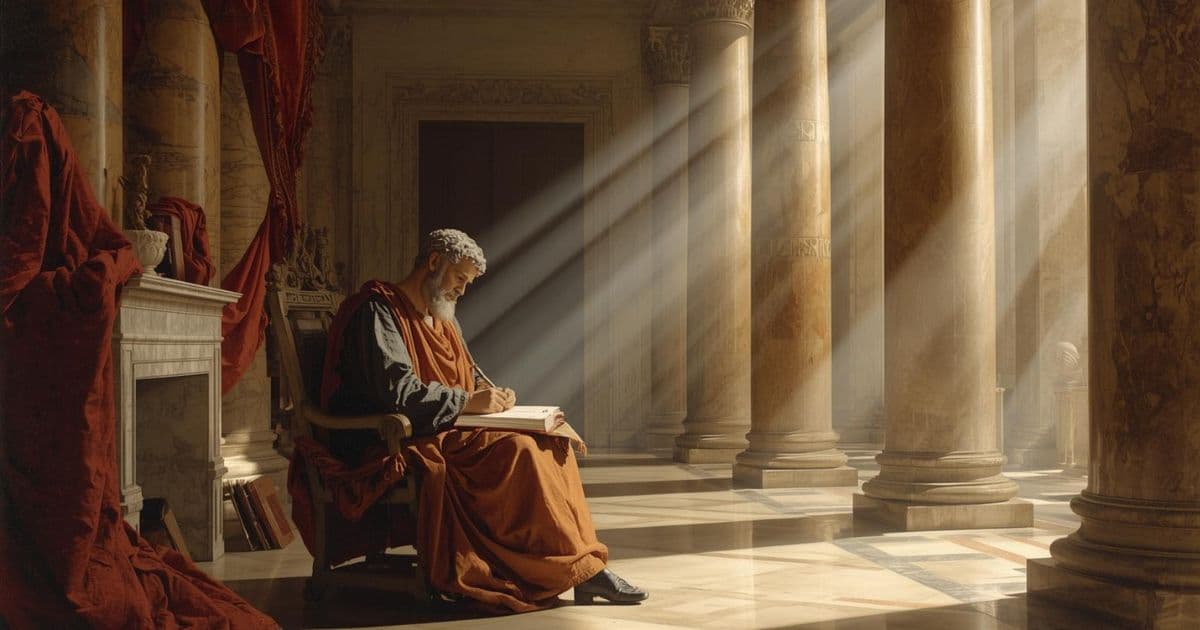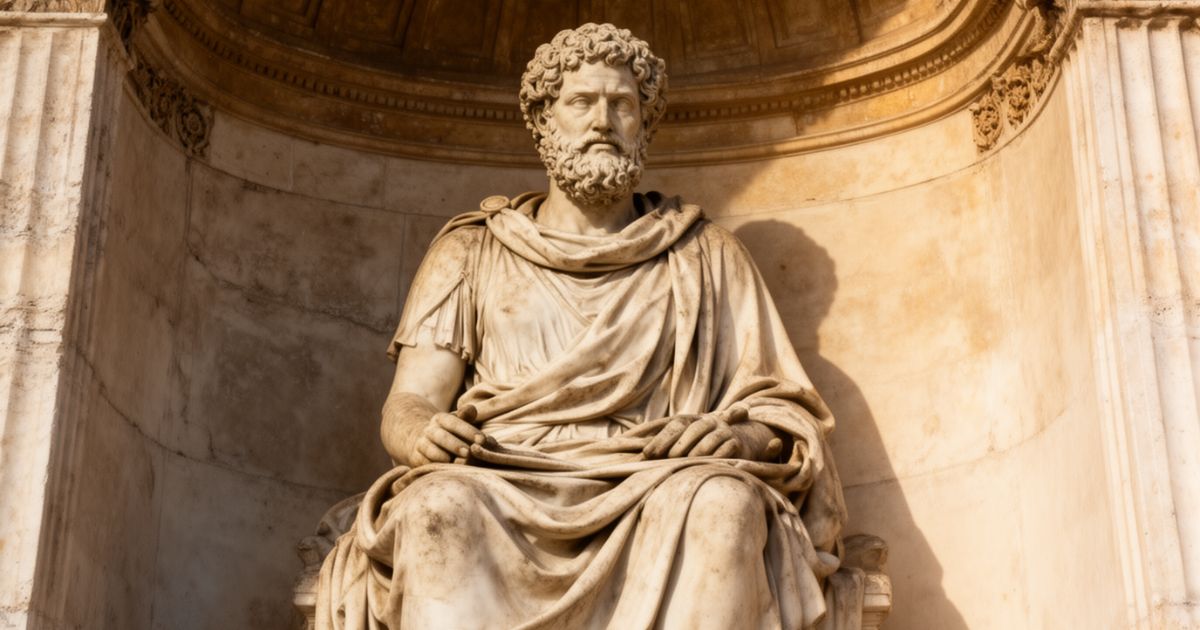
An excerpt from the original text.(complete · 5404 words)
THE FOURTH BOOK
I. That inward mistress part of man if it be in its own true natural
temper, is towards all worldly chances and events ever so disposed and
affected, that it will easily turn and apply itself to that which may
be, and is within its own power to compass, when that cannot be which at
first it intended. For it never doth absolutely addict and apply itself
to any one object, but whatsoever it is that it doth now intend and
prosecute, it doth prosecute it with exception and reservation; so that
whatsoever it is that falls out contrary to its first intentions, even
that afterwards it makes its proper object. Even as the fire when it
prevails upon those things that are in his way; by which things indeed a
little fire would have been quenched, but a great fire doth soon turn to
its own nature, and so consume whatsoever comes in his way: yea by those
very things it is made greater and greater.
II. Let nothing be done rashly, and at random, but all things according
to the most exact and perfect rules of art.
III. They seek for themselves private retiring
places, as country villages, the sea-shore, mountains; yea thou thyself
art wont to long much after such places. But all this thou must know
proceeds from simplicity in the highest degree. At what time soever thou
wilt, it is in thy power to retire into thyself, and to be at rest, and
free from all businesses. A man cannot any whither retire better than
to his own soul; he especially who is beforehand provided of such
things within, which whensoever he doth withdraw himself to look in, may
presently afford unto him perfect ease and tranquillity. By tranquillity
I understand a decent orderly disposition and carriage, free from
all confusion and tumultuousness. Afford then thyself this retiring
continually, and thereby refresh and renew thyself. Let these precepts
be brief and fundamental, which as soon as thou dost call them to mind,
may suffice thee to purge thy soul throughly, and to send thee away well
pleased with those things whatsoever they be, which now again after this
short withdrawing of thy soul into herself thou dost return unto. For
what is it that thou art offended at? Can it be at the wickedness of
men, when thou dost call to mind this conclusion, that all reasonable
creatures are made one for another? and that it is part of justice to
bear with them? and that it is against their wills that they offend?
and how many already, who once likewise prosecuted their enmities,
suspected, hated, and fiercely contended, are now long ago stretched
out, and reduced unto ashes? It is time for thee to make an end. As for
those things which among the common chances of the world happen unto
thee as thy particular lot and portion, canst thou be displeased with
any of them, when thou dost call that our ordinary dilemma to mind,
either a providence, or Democritus his atoms; and with it, whatsoever we
brought to prove that the whole world is as it were one city? And as for
thy body, what canst thou fear, if thou dost consider that thy mind and
understanding, when once it hath recollected itself, and knows its own
power, hath in this life and breath (whether it run smoothly and gently,
or whether harshly and rudely), no interest at all, but is altogether
indifferent: and whatsoever else thou hast heard and assented unto
concerning either pain or pleasure? But the care of thine honour and
reputation will perchance distract thee? How can that be, if thou
dost look back, and consider both how quickly all things that are, are
forgotten, and what an immense chaos of eternity was before, and will
follow after all things: and the vanity of praise, and the inconstancy
and variableness of human judgments and opinions, and the narrowness of
the place, wherein it is limited and circumscribed? For the whole earth
is but as one point; and of it, this inhabited part of it, is but a very
little part; and of this part, how many in number, and what manner of
men are they, that will commend thee? What remains then, but that thou
often put in practice this kind of retiring of thyself, to this little
part of thyself; and above all things, keep thyself from distraction,
and intend not anything vehemently, but be free and consider all things,
as a man whose proper object is Virtue, as a man whose true nature is
to be kind and sociable, as a citizen, as a mortal creature. Among
other things, which to consider, and look into thou must use to withdraw
thyself, let those two be among the most obvious and at hand. One, that
the things or objects themselves reach not unto the soul, but stand
without still and quiet, and that it is from the opinion only which is
within, that all the tumult and all the trouble doth proceed. The next,
that all these things, which now thou seest, shall within a very little
while be changed, and be no more: and ever call to mind, how many
changes and alterations in the world thou thyself hast already been an
eyewitness of in thy time. This world is mere change, and this life,
opinion.
IV. If to understand and to be reasonable be common unto all men, then
is that reason, for which we are termed reasonable, common unto all. If
reason is general, then is that reason also, which prescribeth what is
to be done and what not, common unto all. If that, then law. If law,
then are we fellow-citizens. If so, then are we partners in some one
commonweal. If so, then the world is as it were a city. For which other
commonweal is it, that all men can be said to be members of? From this
common city it is, that understanding, reason, and law is derived unto
us, for from whence else? For as that which in me is earthly I have from
some common earth; and that which is moist from some other element is
imparted; as my breath and life hath its proper fountain; and that
likewise which is dry and fiery in me: (for there is nothing which doth
not proceed from something; as also there is nothing that can be reduced
unto mere nothing:) so also is there some common beginning from whence
my understanding hath proceeded.
V. As generation is, so also death, a secret of nature's wisdom: a
mixture of elements, resolved into the same elements again, a thing
surely which no man ought to be ashamed of: in a series of other fatal
events and consequences, which a rational creature is subject unto,
not improper or incongruous, nor contrary to the natural and proper
constitution of man himself.
VI. Such and such things, from such and such causes, must of necessity
proceed. He that would not have such things to happen, is as he that
would have the fig-tree grow without any sap or moisture. In sum,
remember this, that within a very little while, both thou and he shall
both be dead, and after a little while more, not so much as your names
and memories shall be remaining.
VII. Let opinion be taken away, and no man will think himself wronged.
If no man shall think himself wronged, then is there no more any such
thing as wrong. That which makes not man himself the worse, cannot
make his life the worse, neither can it hurt him either inwardly
or outwardly. It was expedient in nature that it should be so, and
therefore necessary.
VIII. Whatsoever doth happen in the world, doth happen justly, and so if
thou dost well take heed, thou shalt find it. I say not only in right
order by a series of inevitable consequences, but according to justice
and as it were by way of equal distribution, according to the true worth
of everything. Continue then to take notice of it, as thou hast begun,
and whatsoever thou dost, do it not without this proviso, that it be a
thing of that nature that a good man (as the word good is properly
taken) may do it. This observe carefully in every action.
IX. Conceit no such things, as he that wrongeth thee conceiveth,
or would have thee to conceive, but look into the matter itself, and see
what it is in very truth.
X. These two rules, thou must have always in a readiness. First, do
nothing at all, but what reason proceeding from that regal and supreme
part, shall for the good and benefit of men, suggest unto thee. And
secondly, if any man that is present shall be able to rectify thee or to
turn thee from some erroneous persuasion, that thou be always ready to
change thy mind, and this change to proceed, not from any respect of any
pleasure or credit thereon depending, but always from some probable
apparent ground of justice, or of some public good thereby to be
furthered; or from some other such inducement.
XI. Hast thou reason? I have. Why then makest thou not use of it? For if
thy reason do her part, what more canst thou require?
XII. As a part hitherto thou hast had a particular subsistence: and now
shalt thou vanish away into the common substance of Him, who first begot
thee, or rather thou shalt be resumed again into that original rational
substance, out of which all others have issued, and are propagated.
Many small pieces of frankincense are set upon the same altar, one drops
first and is consumed, another after; and it comes all to one.
XIII. Within ten days, if so happen, thou shalt be esteemed a god of
them, who now if thou shalt return to the dogmata and to the honouring
of reason, will esteem of thee no better than of a mere brute, and of an
ape.
XIV. Not as though thou hadst thousands of years to live. Death hangs
over thee: whilst yet thou livest, whilst thou mayest, be good.
XV. Now much time and leisure doth he gain, who is not curious to know
what his neighbour hath said, or hath done, or hath attempted, but only
what he doth himself, that it may be just and holy? or to express it in
Agathos' words, Not to look about upon the evil conditions of others,
but to run on straight in the line, without any loose and extravagant
agitation.
XVI. He who is greedy of credit and reputation after his death, doth
not consider, that they themselves by whom he is remembered, shall soon
after every one of them be dead; and they likewise that succeed those;
until at last all memory, which hitherto by the succession of men
admiring and soon after dying hath had its course, be quite extinct.
But suppose that both they that shall remember thee, and thy memory
with them should be immortal, what is that to thee? I will not say to
thee after thou art dead; but even to thee living, what is thy praise?
But only for a secret and politic consideration, which we call
οἰκονομίαν, or dispensation. For as for that, that it is the gift of
nature, whatsoever is commended in thee, what might be objected from
thence, let that now that we are upon another consideration be omitted
as unseasonable. That which is fair and goodly, whatsoever it be, and
in what respect soever it be, that it is fair and goodly, it is so of
itself, and terminates in itself, not admitting praise as a part or
member: that therefore which is praised, is not thereby made either
better or worse. This I understand even of those things, that are
commonly called fair and good, as those which are commended either for
the matter itself, or for curious workmanship. As for that which is
truly good, what can it stand in need of more than either justice or
truth; or more than either kindness and modesty? Which of all those,
either becomes good or fair, because commended; or dispraised suffers
any damage? Doth the emerald become worse in itself, or more vile if it
be not commended? Doth gold, or ivory, or purple? Is there anything
that doth though never so common, as a knife, a flower, or a tree?
XVII. If so be that the souls remain after death (say they that will not
believe it); how is the air from all eternity able to contain them? How
is the earth (say I) ever from that time able to Contain the bodies
of them that are buried? For as here the change and resolution of dead
bodies into another kind of subsistence (whatsoever it be;) makes place
for other dead bodies: so the souls after death transferred into the
air, after they have conversed there a while, are either by way of
transmutation, or transfusion, or conflagration, received again into
that original rational substance, from which all others do proceed:
and so give way to those souls, who before coupled and associated unto
bodies, now begin to subsist single. This, upon a supposition that the
souls after death do for a while subsist single, may be answered. And
here, (besides the number of bodies, so buried and contained by the
earth), we may further consider the number of several beasts, eaten
by us men, and by other creatures. For notwithstanding that such a
multitude of them is daily consumed, and as it were buried in the bodies
of the eaters, yet is the same place and body able to contain them, by
reason of their conversion, partly into blood, partly into air and fire.
What in these things is the speculation of truth? to divide things into
that which is passive and material; and that which is active and formal.
XVIII. Not to wander out of the way, but upon every motion and desire,
to perform that which is just: and ever to be careful to attain to the
true natural apprehension of every fancy, that presents itself.
XIX. Whatsoever is expedient unto thee, O World, is expedient unto me;
nothing can either be 'unseasonable unto me, or out of date, which unto
thee is seasonable. Whatsoever thy seasons bear, shall ever by me be
esteemed as happy fruit, and increase. O Nature! from thee are all
things, in thee all things subsist, and to thee all tend. Could he say
of Athens, Thou lovely city of Cecrops; and shalt not thou say of the
world, Thou lovely city of God?
XX. They will say commonly, Meddle not with many things, if thou wilt
live cheerfully. Certainly there is nothing better, than for a man
to confine himself to necessary actions; to such and so many only, as
reason in a creature that knows itself born for society, will command
and enjoin. This will not only procure that cheerfulness, which from the
goodness, but that also, which from the paucity of actions doth usually
proceed. For since it is so, that most of those things, which we either
speak or do, are unnecessary; if a man shall cut them off, it must needs
follow that he shall thereby gain much leisure, and save much trouble,
and therefore at every action a man must privately by way of admonition
suggest unto himself, What? may not this that now I go about, be of the
number of unnecessary actions? Neither must he use himself to cut off
actions only, but thoughts and imaginations also, that are unnecessary
for so will unnecessary consequent actions the better be prevented and
cut off.
XXI. Try also how a good man's life; (of one, who is well pleased with
those things whatsoever, which among the common changes and chances of
this world fall to his own lot and share; and can live well contented
and fully satisfied in the justice of his own proper present action,
and in the goodness of his disposition for the future:) will agree with
thee. Thou hast had experience of that other kind of life: make now
trial of this also. Trouble not thyself any more henceforth, reduce
thyself unto perfect simplicity. Doth any man offend? It is against
himself that he doth offend: why should it trouble thee? Hath anything
happened unto thee? It is well, whatsoever it be, it is that which
of all the common chances of the world from the very beginning in the
series of all other things that have, or shall happen, was destinated
and appointed unto thee. To comprehend all in a few words, our life is
short; we must endeavour to gain the present time with best discretion
and justice. Use recreation with sobriety.
XXII. Either this world is a κόσμος or comely piece, because all
disposed and governed by certain order: or if it be a mixture, though
confused, yet still it is a comely piece. For is it possible that in
thee there should be any beauty at all, and that in the whole world
there should be nothing but disorder and confusion? and all things in it
too, by natural different properties one from another differenced and
distinguished; and yet all through diffused, and by natural sympathy,
one to another united, as they are?
XXIII. A black or malign disposition, an effeminate disposition; an
hard inexorable disposition, a wild inhuman disposition, a sheepish
disposition, a childish disposition; a blockish, a false, a scurril, a
fraudulent, a tyrannical: what then? If he be a stranger in the world,
that knows not the things that are in it; why not be a stranger as well,
that wonders at the things that are done in it?
XXIV. He is a true fugitive, that flies from reason, by which men are
sociable. He blind, who cannot see with the eyes of his understanding.
He poor, that stands in need of another, and hath not in himself all
things needful for this life. He an aposteme of the world, who by being
discontented with those things that happen unto him in the world,
doth as it were apostatise, and separate himself from common nature's
rational administration. For the same nature it is that brings this
unto thee, whatsoever it be, that first brought thee into the world. He
raises sedition in the city, who by irrational actions withdraws his own
soul from that one and common soul of all rational creatures.
XXV. There is, who without so much as a coat; and there is, who without
so much as a book, doth put philosophy in practice. I am half naked,
neither have I bread to eat, and yet I depart not from reason, saith
one. But I say; I want the food of good teaching, and instructions, and
yet I depart not from reason.
XXVI. What art and profession soever thou hast learned, endeavour to
affect it, and comfort thyself in it; and pass the remainder of thy life
as one who from his whole heart commits himself and whatsoever belongs
unto him, unto the gods: and as for men, carry not thyself either
tyrannically or servilely towards any.
XXVII. Consider in my mind, for example's sake, the times of Vespasian:
thou shalt see but the same things: some marrying, some bringing up
children, some sick, some dying, some fighting, some feasting, some
merchandising, some tilling, some flattering, some boasting, some
suspecting, some undermining, some wishing to die, some fretting and
murmuring at their present estate, some wooing, some hoarding, some
seeking after magistracies, and some after kingdoms. And is not that
their age quite over, and ended? Again, consider now the times of
Trajan. There likewise thou seest the very self-same things, and that
age also is now over and ended. In the like manner consider other
periods, both of times and of whole nations, and see how many men, after
they had with all their might and main intended and prosecuted some one
worldly thing or other did soon after drop away, and were resolved into
the elements. But especially thou must call to mind them, whom thou
thyself in thy lifetime hast known much distracted about vain things,
and in the meantime neglecting to do that, and closely and unseparably
(as fully satisfied with it) to adhere unto it, which their own proper
constitution did require. And here thou must remember, that thy carriage
in every business must be according to the worth and due proportion of
it, for so shalt thou not easily be tired out and vexed, if thou shalt
not dwell upon small matters longer than is fitting.
XXVIII. Those words which once were common and ordinary, are now become
obscure and obsolete; and so the names of men once commonly known and
famous, are now become in a manner obscure and obsolete names. Camillus,
Cæso, Volesius, Leonnatus; not long after, Scipio, Cato, then Augustus,
then Adrianus, then Antoninus Pius: all these in a short time will
be out of date, and, as things of another world as it were, become
fabulous. And this I say of them, who once shined as the wonders of
their ages, for as for the rest, no sooner are they expired, than with
them all their fame and memory. And what is it then that shall always be
remembered? all is vanity. What is it that we must bestow our care and
diligence upon? even upon this only: that our minds and wills be just;
that our actions be charitable; that our speech be never deceitful, or
that our understanding be not subject to error; that our inclination be
always set to embrace whatsoever shall happen unto us, as necessary,
as usual, as ordinary, as flowing from such a beginning, and such a
fountain, from which both thou thyself and all things are.
Willingly therefore, and wholly surrender up thyself unto that fatal
concatenation, yielding up thyself unto the fates, to be disposed of at
their pleasure.
XXIX. Whatsoever is now present, and from day to day hath its existence;
all objects of memories, and the minds and memories themselves,
incessantly consider, all things that are, have their being by change
and alteration. Use thyself therefore often to meditate upon this, that
the nature of the universe delights in nothing more, than in altering
those things that are, and in making others like unto them. So that we
may say, that whatsoever is, is but as it were the seed of that which
shall be. For if thou think that that only is seed, which either the
earth or the womb receiveth, thou art very simple.
XXX. Thou art now ready to die, and yet hast thou not attained to
that perfect simplicity: thou art yet subject to many troubles and
perturbations; not yet free from all fear and suspicion of external
accidents; nor yet either so meekly disposed towards all men, as thou
shouldest; or so affected as one, whose only study and only wisdom is,
to be just in all his actions.
XXXI. Behold and observe, what is the state of their rational part; and
those that the world doth account wise, see what things they fly and are
afraid of; and what things they hunt after.
XXXII. In another man's mind and understanding thy evil Cannot subsist,
nor in any proper temper or distemper of the natural constitution of thy
body, which is but as it were the coat or cottage of thy soul. Wherein
then, but in that part of thee, wherein the conceit, and apprehension
of any misery can subsist? Let not that part therefore admit any such
conceit, and then all is well. Though thy body which is so near it
should either be cut or burnt, or suffer any corruption or putrefaction,
yet let that part to which it belongs to judge of these, be still at
rest; that is, let her judge this, that whatsoever it is, that equally
may happen to a wicked man, and to a good man, is neither good nor evil.
For that which happens equally to him that lives according to nature,
and to him that doth not, is neither according to nature, nor against
it; and by consequent, neither good nor bad.
XXXIII. Ever consider and think upon the world as being but one living
substance, and having but one soul, and how all things in the world, are
terminated into one sensitive power; and are done by one general motion
as it were, and deliberation of that one soul; and how all things that
are, concur in the cause of one another's being, and by what manner of
connection and concatenation all things happen.
XXXIV. What art thou, that better and divine part excepted, but as
Epictetus said well, a wretched soul, appointed to carry a carcass up
and down?
XXXV. To suffer change can be no hurt; as no benefit it is, by change to
attain to being. The age and time of the world is as it were a flood and
swift current, consisting of the things that are brought to pass in
the world. For as soon as anything hath appeared, and is passed away,
another succeeds, and that also will presently out of sight.
XXXVI. Whatsoever doth happen in the world, is, in the course of nature,
as usual and ordinary as a rose in the spring, and fruit in summer. Of
the same nature is sickness and death; slander, and lying in wait, and
whatsoever else ordinarily doth unto fools use to be occasion either
of joy or sorrow. That, whatsoever it is, that comes after, doth always
very naturally, and as it were familiarly, follow upon that which was
before. For thou must consider the things of the world, not as a loose
independent number, consisting merely of necessary events; but as a
discreet connection of things orderly and harmoniously disposed. There
is then to be seen in the things of the world, not a bare succession,
but an admirable correspondence and affinity.
XXXVII. Let that of Heraclitus never be out of thy mind, that the death
of earth, is water, and the death of water, is air; and the death of
air, is fire; and so on the contrary. Remember him also who was
ignorant whither the way did lead, and how that reason being the thing
by which all things in the world are administered, and which men are
continually and most inwardly conversant with: yet is the thing, which
ordinarily they are most in opposition with, and how those things which
daily happen among them, cease not daily to be strange unto them, and
that we should not either speak, or do anything as men in their sleep,
by opinion and bare imagination: for then we think we speak and do, and
that we must not be as children, who follow their father's example; for
best reason alleging their bare καθότι παρειλήφαμεν; or, as by
successive tradition from our forefathers we have received it.
XXXVIII. Even as if any of the gods should tell thee, Thou shalt
certainly die to-morrow, or next day, thou wouldst not, except thou wert
extremely base and pusillanimous, take it for a great benefit, rather
to die the next day after, than to-morrow; (for alas, what is the
difference!) so, for the same reason, think it no great matter to die
rather many years after, than the very next day.
XXXIX. Let it be thy perpetual meditation, how many physicians who
once looked so grim, and so theatrically shrunk their brows upon their
patients, are dead and gone themselves. How many astrologers, after that
in great ostentation they had foretold the death of some others, how
many philosophers after so many elaborate tracts and volumes concerning
either mortality or immortality; how many brave captains and commanders,
after the death and slaughter of so many; how many kings and tyrants,
after they had with such horror and insolency abused their power upon
men's lives, as though themselves had been immortal; how many, that
I may so speak, whole cities both men and towns: Helice, Pompeii,
Herculaneum, and others innumerable are dead and gone. Run them over
also, whom thou thyself, one after another, hast known in thy time
to drop away. Such and such a one took care of such and such a one's
burial, and soon after was buried himself. So one, so another: and all
things in a short time. For herein lieth all indeed, ever to look upon
all worldly things, as things for their continuance, that are but for a
day: and for their worth, most vile, and contemptible, as for example,
What is man? That which but the other day when he was conceived was vile
snivel; and within few days shall be either an embalmed carcass, or mere
ashes. Thus must thou according to truth and nature, throughly consider
how man's life is but for a very moment of time, and so depart meek and
contented: even as if a ripe olive falling should praise the ground that
bare her, and give thanks to the tree that begat her.
XL. Thou must be like a promontory of the sea, against which though
the waves beat continually, yet it both itself stands, and about it are
those swelling waves stilled and quieted.
XLI. Oh, wretched I, to whom this mischance is happened! nay, happy I,
to whom this thing being happened, I can continue without grief; neither
wounded by that which is present, nor in fear of that which is to come.
For as for this, it might have happened unto any man, but any man having
such a thing befallen him, could not have continued without grief. Why
then should that rather be an unhappiness, than this a happiness? But
however, canst thou, O man! term that unhappiness, which is no mischance
to the nature of man I Canst thou think that a mischance to the nature
of man, which is not contrary to the end and will of his nature? What
then hast thou learned is the will of man's nature? Doth that then which
hath happened unto thee, hinder thee from being just? or magnanimous? or
temperate? or wise? or circumspect? or true? or modest? or free? or from
anything else of all those things in the present enjoying and possession
whereof the nature of man, (as then enjoying all that is proper unto
her,) is fully satisfied? Now to conclude; upon all occasion of sorrow
remember henceforth to make use of this dogma, that whatsoever it is
that hath happened unto thee, is in very deed no such thing of itself,
as a misfortune; but that to bear it generously, is certainly great
happiness.
XLII. It is but an ordinary coarse one, yet it is a good effectual
remedy against the fear of death, for a man to consider in his mind the
examples of such, who greedily and covetously (as it were) did for a
long time enjoy their lives. What have they got more, than they whose
deaths have been untimely? Are not they themselves dead at the last?
as Cadiciant's, Fabius, Julianus Lepidus, or any other who in their
lifetime having buried many, were at the last buried themselves. The
whole space of any man's life, is but little; and as little as it is,
with what troubles, with what manner of dispositions, and in the society
of how wretched a body must it be passed! Let it be therefore unto thee
altogether as a matter of indifferency. For if thou shalt look backward;
behold, what an infinite chaos of time doth present itself unto thee;
and as infinite a chaos, if thou shalt look forward. In that which is
so infinite, what difference can there be between that which liveth but
three days, and that which liveth three ages?
XLIII. Let thy course ever be the most compendious way. The most
compendious, is that which is according to nature: that is, in all both
words and deeds, ever to follow that which is most sound and perfect.
For such a resolution will free a man from all trouble, strife,
dissembling, and ostentation.
Master this chapter. Complete your experience
Purchase the complete book to access all chapters and support classic literature
As an Amazon Associate, we earn a small commission from qualifying purchases at no additional cost to you.
Available in paperback, hardcover, and e-book formats
Let's Analyse the Pattern
True security and peace come from developing an unshakeable inner core rather than trying to control external circumstances.
Why This Matters
Connect literature to life
This chapter teaches how to separate external events from internal responses, creating emotional boundaries that protect your peace.
Practice This Today
This week, notice when you feel overwhelmed and ask: 'What part of this situation can I actually control?' Focus your energy only there.
Now let's explore the literary elements.
Key Quotes & Analysis
"You can commit injustice by doing nothing"
Context: While reflecting on our duty to act with justice and help others
This challenges the common belief that as long as you're not actively hurting anyone, you're being good. Marcus argues that standing by when you could help or speak up is itself a form of wrongdoing.
In Today's Words:
If you see something wrong happening and don't speak up when you could, you're part of the problem.
"The best revenge is not to be like your enemy"
Context: Advising himself on how to respond to people who wrong him
Rather than seeking to hurt those who hurt us, the most powerful response is to refuse to let their behavior change who we are. This maintains our integrity while often being more effective than retaliation.
In Today's Words:
Don't let toxic people turn you toxic - stay true to your values and let that be your response.
"Very little is needed to make a happy life; it is all within yourself, in your way of thinking"
Context: Reflecting on what truly brings contentment versus what we think we need
This cuts against our culture's message that happiness comes from external things - more money, better relationships, perfect circumstances. Marcus argues that peace comes from how we interpret and respond to whatever situation we're in.
In Today's Words:
Happiness isn't about having the perfect life - it's about finding peace with the life you have.
"How much trouble he avoids who does not look to see what his neighbor says or does"
Context: Discussing the futility of constantly monitoring and judging others
This is ancient wisdom about minding your own business. Marcus points out that we create unnecessary stress and conflict by constantly watching what others do and comparing ourselves to them.
In Today's Words:
Stop stalking people on social media and worrying about what everyone else is doing - focus on your own life.
Thematic Threads
Personal Control
In This Chapter
Marcus emphasizes that we control our thoughts and responses, not external events
Development
Deepened from earlier focus on duty to internal sovereignty
In Your Life:
You might recognize this when you realize your stress comes from trying to control things beyond your influence
Perspective
In This Chapter
Historical perspective shows that all human concerns eventually fade into obscurity
Development
Expanded from cosmic view to historical timeline awareness
In Your Life:
You might find relief remembering that today's workplace drama won't matter in five years
Mental Discipline
In This Chapter
The mind as a fortress that can retreat inward for peace and strength
Development
Builds on earlier themes of rational thinking with practical techniques
In Your Life:
You might practice this during chaotic shifts by taking mental breaks to center yourself
Acceptance
In This Chapter
Accepting our role in life like actors performing their assigned part well
Development
Evolved from duty-focused to role-acceptance with grace
In Your Life:
You might apply this when dealing with job responsibilities you didn't choose but must handle professionally
Impermanence
In This Chapter
Recognition that reputation, praise, and even great historical figures eventually fade
Development
Deepened understanding of temporary nature of all human achievements
In Your Life:
You might feel liberated knowing that embarrassing moments and failures will also be forgotten with time
You now have the context. Time to form your own thoughts.
Discussion Questions
- 1
Anthony says you can retreat into your own mind anytime, anywhere. What does he mean by this mental retreat, and how is it different from just daydreaming or zoning out?
analysis • surface - 2
Why does Anthony believe our opinions about events cause more suffering than the events themselves? Can you think of a time when changing your perspective about a situation changed how you felt about it?
analysis • medium - 3
Anthony compares us to actors in a play - we don't choose our role, but we can choose how well we perform it. Where do you see this pattern playing out in modern workplaces or families?
application • medium - 4
Think about someone you know who stays calm during chaos while others panic. What do they do differently? How might they be practicing Anthony's 'internal refuge' without even knowing it?
application • deep - 5
Anthony reflects that all the great names of history eventually fade into obscurity, yet he still emphasizes living with virtue and justice. What does this paradox reveal about what makes life meaningful?
reflection • deep
Critical Thinking Exercise
Map Your Control Territory
Think of a current situation that's causing you stress or frustration. Draw two circles on paper - label one 'What I Can Control' and the other 'What I Cannot Control.' List everything about your situation in the appropriate circle. Then focus only on your 'Can Control' circle and write one specific action you could take today.
Consider:
- •Be brutally honest about what you actually control versus what you wish you could control
- •Notice how much mental energy you spend on the 'Cannot Control' circle
- •Remember that your thoughts, reactions, and responses always belong in your control circle
Journaling Prompt
Write about a time when you successfully shifted your focus from trying to control external circumstances to managing your internal response. What changed in that situation, and how did it feel different?
Coming Up Next...
Chapter 5: Getting Out of Bed and Living Your Purpose
In the next meditation, Marcus turns his attention to the morning routine that sets the tone for an entire day. He'll share the mental preparation needed to face difficult people and challenging situations with grace.