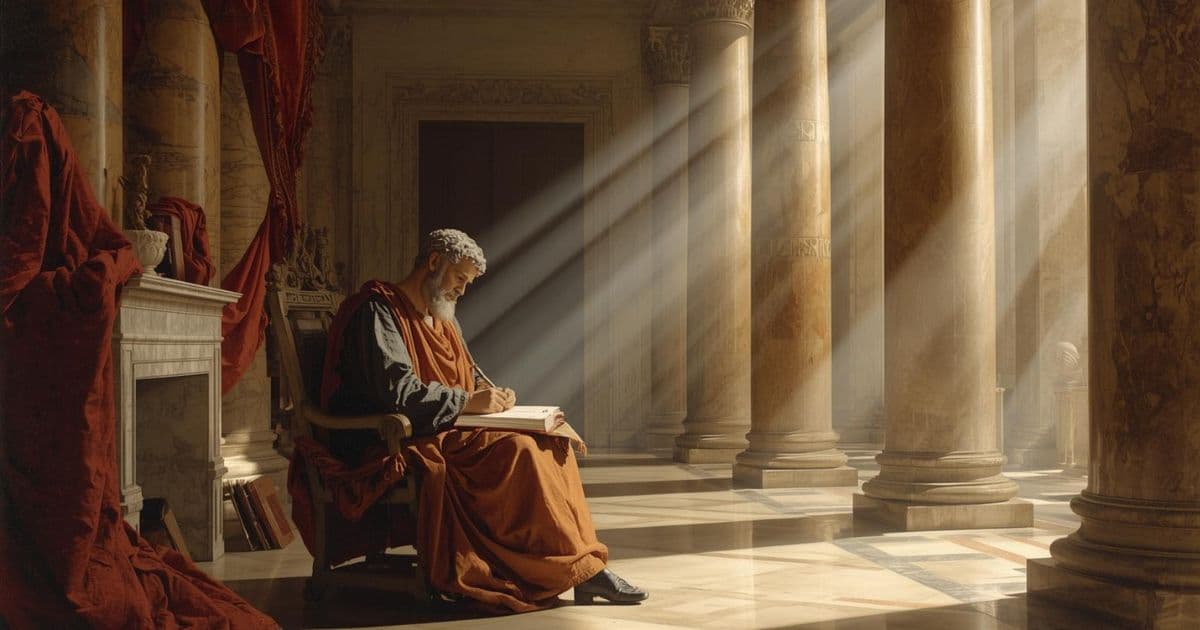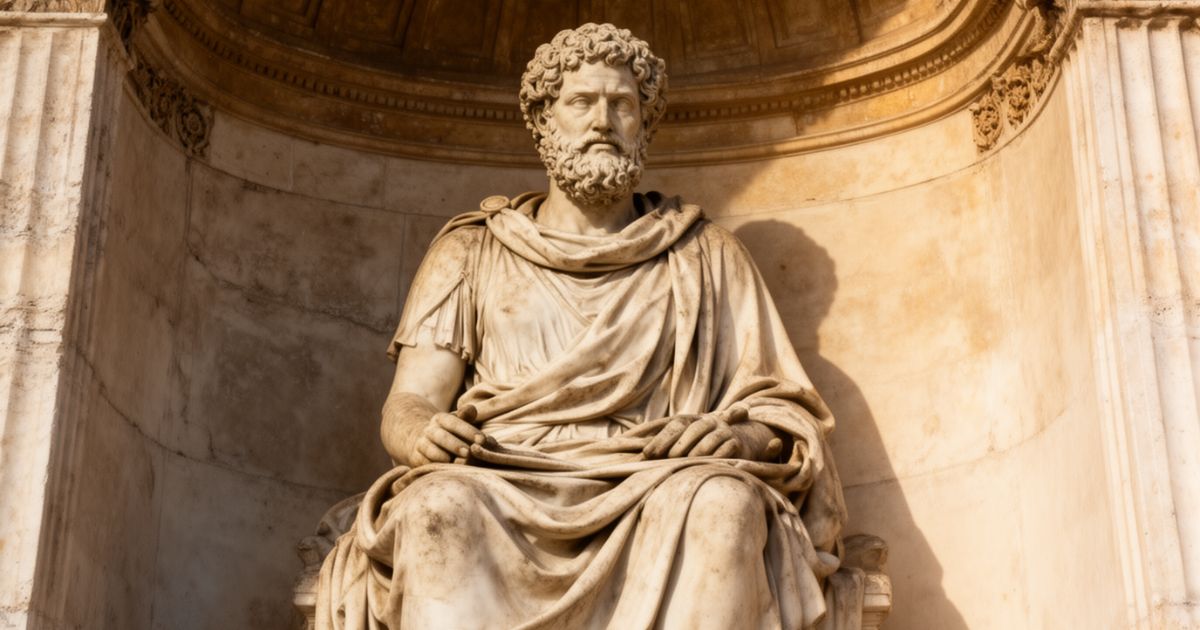
An excerpt from the original text.(complete · 3325 words)
THE THIRD BOOK
I. A man must not only consider how daily his life wasteth and
decreaseth, but this also, that if he live long, he cannot be certain,
whether his understanding shall continue so able and sufficient,
for either discreet consideration, in matter of businesses; or for
contemplation: it being the thing, whereon true knowledge of things both
divine and human, doth depend. For if once he shall begin to dote,
his respiration, nutrition, his imaginative, and appetitive, and other
natural faculties, may still continue the same: he shall find no want of
them. But how to make that right use of himself that he should, how
to observe exactly in all things that which is right and just, how to
redress and rectify all wrong, or sudden apprehensions and imaginations,
and even of this particular, whether he should live any longer or no, to
consider duly; for all such things, wherein the best strength and vigour
of the mind is most requisite; his power and ability will be past and
gone. Thou must hasten therefore; not only because thou art every day
nearer unto death than other, but also because that intellective faculty
in thee, whereby thou art enabled to know the true nature of things, and
to order all thy actions by that knowledge, doth daily waste and decay:
or, may fail thee before thou die.
II. This also thou must observe, that whatsoever it is that naturally
doth happen to things natural, hath somewhat in itself that is pleasing
and delightful: as a great loaf when it is baked, some parts of it
cleave as it were, and part asunder, and make the crust of it rugged and
unequal, and yet those parts of it, though in some sort it be against
the art and intention of baking itself, that they are thus cleft and
parted, which should have been and were first made all even and uniform,
they become it well nevertheless, and have a certain peculiar property,
to stir the appetite. So figs are accounted fairest and ripest then,
when they begin to shrink, and wither as it were. So ripe olives, when
they are next to putrefaction, then are they in their proper beauty. The
hanging down of grapes--the brow of a lion, the froth of a foaming wild
boar, and many other like things, though by themselves considered, they
are far from any beauty, yet because they happen naturally, they both
are comely, and delightful; so that if a man shall with a profound mind
and apprehension, consider all things in the world, even among all those
things which are but mere accessories and natural appendices as it were,
there will scarce appear anything unto him, wherein he will not find
matter of pleasure and delight. So will he behold with as much pleasure
the true rictus of wild beasts, as those which by skilful painters and
other artificers are imitated. So will he be able to perceive the proper
ripeness and beauty of old age, whether in man or woman: and whatsoever
else it is that is beautiful and alluring in whatsoever is, with chaste
and continent eyes he will soon find out and discern. Those and many
other things will he discern, not credible unto every one, but unto them
only who are truly and familiarly acquainted, both with nature itself,
and all natural things.
III. Hippocrates having cured many sicknesses, fell sick himself and
died. The Chaldeans and Astrologians having foretold the deaths of
divers, were afterwards themselves surprised by the fates. Alexander and
Pompeius, and Caius Cæsar, having destroyed so many towns, and cut
off in the field so many thousands both of horse and foot, yet they
themselves at last were fain to part with their own lives. Heraclitus
having written so many natural tracts concerning the last and general
conflagration of the world, died afterwards all filled with water
within, and all bedaubed with dirt and dung without. Lice killed
Democritus; and Socrates, another sort of vermin, wicked ungodly men.
How then stands the case? Thou hast taken ship, thou hast sailed, thou
art come to land, go out, if to another life, there also shalt thou find
gods, who are everywhere. If all life and sense shall cease, then shalt
thou cease also to be subject to either pains or pleasures; and to serve
and tend this vile cottage; so much the viler, by how much that which
ministers unto it doth excel; the one being a rational substance, and a
spirit, the other nothing but earth and blood.
IV. Spend not the remnant of thy days in thoughts and fancies concerning
other men, when it is not in relation to some common good, when by it
thou art hindered from some other better work. That is, spend not thy
time in thinking, what such a man doth, and to what end: what he saith,
and what he thinks, and what he is about, and such other things or
curiosities, which make a man to rove and wander from the care and
observation of that part of himself, which is rational, and overruling.
See therefore in the whole series and connection of thy thoughts, that
thou be careful to prevent whatsoever is idle and impertinent: but
especially, whatsoever is curious and malicious: and thou must use
thyself to think only of such things, of which if a man upon a sudden
should ask thee, what it is that thou art now thinking, thou mayest
answer This, and That, freely and boldly, that so by thy thoughts it may
presently appear that in all thee is sincere, and peaceable; as becometh
one that is made for society, and regards not pleasures, nor gives way
to any voluptuous imaginations at all: free from all contentiousness,
envy, and suspicion, and from whatsoever else thou wouldest blush to
confess thy thoughts were set upon. He that is such, is he surely that
doth not put off to lay hold on that which is best indeed, a very priest
and minister of the gods, well acquainted and in good correspondence
with him especially that is seated and placed within himself, as in
a temple and sacrary: to whom also he keeps and preserves himself
unspotted by pleasure, undaunted by pain; free from any manner of wrong,
or contumely, by himself offered unto himself: not capable of any evil
from others: a wrestler of the best sort, and for the highest prize,
that he may not be cast down by any passion or affection of his own;
deeply dyed and drenched in righteousness, embracing and accepting with
his whole heart whatsoever either happeneth or is allotted unto him. One
who not often, nor without some great necessity tending to some public
good, mindeth what any other, either speaks, or doth, or purposeth: for
those things only that are in his own power, or that are truly his own,
are the objects of his employments, and his thoughts are ever taken
up with those things, which of the whole universe are by the fates or
Providence destinated and appropriated unto himself. Those things that
are his own, and in his own power, he himself takes order, for that they
be good: and as for those that happen unto him, he believes them to be
so. For that lot and portion which is assigned to every one, as it is
unavoidable and necessary, so is it always profitable. He remembers
besides that whatsoever partakes of reason, is akin unto him, and that
to care for all men generally, is agreeing to the nature of a man: but
as for honour and praise, that they ought not generally to be admitted
and accepted of from all, but from such only, who live according to
nature. As for them that do not, what manner of men they be at home,
or abroad; day or night, how conditioned themselves with what manner of
conditions, or with men of what conditions they moil and pass away
the time together, he knoweth, and remembers right well, he therefore
regards not such praise and approbation, as proceeding from them, who
cannot like and approve themselves.
V. Do nothing against thy will, nor contrary to the community, nor
without due examination, nor with reluctancy. Affect not to set out thy
thoughts with curious neat language. Be neither a great talker, nor a
great undertaker. Moreover, let thy God that is in thee to rule over
thee, find by thee, that he hath to do with a man; an aged man; a
sociable man; a Roman; a prince; one that hath ordered his life, as
one that expecteth, as it were, nothing but the sound of the trumpet,
sounding a retreat to depart out of this life with all expedition. One
who for his word or actions neither needs an oath, nor any man to be a
witness.
VI. To be cheerful, and to stand in no need, either of other men's help
or attendance, or of that rest and tranquillity, which thou must be
beholding to others for. Rather like one that is straight of himself, or
hath ever been straight, than one that hath been rectified.
VII. If thou shalt find anything in this mortal life better than
righteousness, than truth, temperance, fortitude, and in general better
than a mind contented both with those things which according to right
and reason she doth, and in those, which without her will and knowledge
happen unto thee by the providence; if I say, thou canst find out
anything better than this, apply thyself unto it with thy whole heart,
and that which is best wheresoever thou dost find it, enjoy freely. But
if nothing thou shalt find worthy to be preferred to that spirit which
is within thee; if nothing better than to subject unto thee thine own
lusts and desires, and not to give way to any fancies or imaginations
before thou hast duly considered of them, nothing better than to
withdraw thyself (to use Socrates his words) from all sensuality, and
submit thyself unto the gods, and to have care of all men in general: if
thou shalt find that all other things in comparison of this, are but
vile, and of little moment; then give not way to any other thing, which
being once though but affected and inclined unto, it will no more be in
thy power without all distraction as thou oughtest to prefer and to
pursue after that good, which is thine own and thy proper good. For it
is not lawful, that anything that is of another and inferior kind and
nature, be it what it will, as either popular applause, or honour, or
riches, or pleasures; should be suffered to confront and contest as it
were, with that which is rational, and operatively good. For all these
things, if once though but for a while, they begin to please, they
presently prevail, and pervert a man's mind, or turn a man from the
right way. Do thou therefore I say absolutely and freely make choice of
that which is best, and stick unto it. Now, that they say is best, which
is most profitable. If they mean profitable to man as he is a rational
man, stand thou to it, and maintain it; but if they mean profitable, as
he is a creature, only reject it; and from this thy tenet and conclusion
keep off carefully all plausible shows and colours of external
appearance, that thou mayest be able to discern things rightly.
VIII. Never esteem of anything as profitable, which shall ever constrain
thee either to break thy faith, or to lose thy modesty; to hate any man,
to suspect, to curse, to dissemble, to lust after anything, that
requireth the secret of walls or veils. But he that preferreth before
all things his rational part and spirit, and the sacred mysteries of
virtue which issueth from it, he shall never lament and exclaim, never
sigh; he shall never want either solitude or company: and which is
chiefest of all, he shall live without either desire or fear. And as for
life, whether for a long or short time he shall enjoy his soul thus
compassed about with a body, he is altogether indifferent. For if even
now he were to depart, he is as ready for it, as for any other action,
which may be performed with modesty and decency. For all his life long,
this is his only care, that his mind may always be occupied in such
intentions and objects, as are proper to a rational sociable creature.
IX. In the mind that is once truly disciplined and purged, thou canst
not find anything, either foul or impure, or as it were festered:
nothing that is either servile, or affected: no partial tie; no
malicious averseness; nothing obnoxious; nothing concealed. The life of
such an one, death can never surprise as imperfect; as of an actor, that
should die before he had ended, or the play itself were at an end, a man
might speak.
X. Use thine opinative faculty with all honour and respect, for in
her indeed is all: that thy opinion do not beget in thy understanding
anything contrary to either nature, or the proper constitution of a
rational creature. The end and object of a rational constitution is, to
do nothing rashly, to be kindly affected towards men, and in all things
willingly to submit unto the gods. Casting therefore all other things
aside, keep thyself to these few, and remember withal that no man
properly can be said to live more than that which is now present, which
is but a moment of time. Whatsoever is besides either is already past,
or uncertain. The time therefore that any man doth live, is but a
little, and the place where he liveth, is but a very little corner of
the earth, and the greatest fame that can remain of a man after his
death, even that is but little, and that too, such as it is whilst it
is, is by the succession of silly mortal men preserved, who likewise
shall shortly die, and even whiles they live know not what in very deed
they themselves are: and much less can know one, who long before is dead
and gone.
XI. To these ever-present helps and mementoes, let one more be added,
ever to make a particular description and delineation as it were of
every object that presents itself to thy mind, that thou mayest wholly
and throughly contemplate it, in its own proper nature, bare and naked;
wholly, and severally; divided into its several parts and quarters: and
then by thyself in thy mind, to call both it, and those things of which
it doth consist, and in which it shall be resolved, by their own proper
true names, and appellations. For there is nothing so effectual to beget
true magnanimity, as to be able truly and methodically to examine and
consider all things that happen in this life, and so to penetrate
into their natures, that at the same time, this also may concur in our
apprehensions: what is the true use of it? and what is the true nature
of this universe, to which it is useful? how much in regard of the
universe may it be esteemed? how much in regard of man, a citizen of the
supreme city, of which all other cities in the world are as it were but
houses and families?
XII. What is this, that now my fancy is set upon? of what things doth
it consist? how long can it last? which of all the virtues is the proper
virtue for this present use? as whether meekness, fortitude, truth,
faith, sincerity, contentation, or any of the rest? Of everything
therefore thou must use thyself to say, This immediately comes from God,
this by that fatal connection, and concatenation of things, or (which
almost comes to one) by some coincidental casualty. And as for this, it
proceeds from my neighbour, my kinsman, my fellow: through his ignorance
indeed, because he knows not what is truly natural unto him: but I know
it, and therefore carry myself towards him according to the natural law
of fellowship; that is kindly, and justly. As for those things that of
themselves are altogether indifferent, as in my best judgment I conceive
everything to deserve more or less, so I carry myself towards it.
XIII. If thou shalt intend that which is present, following the rule of
right and reason carefully, solidly, meekly, and shalt not intermix
any other businesses, but shall study this only to preserve thy spirit
unpolluted, and pure, and shall cleave unto him without either hope
or fear of anything, in all things that thou shalt either do or speak,
contenting thyself with heroical truth, thou shalt live happily; and
from this, there is no man that can hinder thee.
XIV. As physicians and chirurgeons have always their instruments ready
at hand for all sudden cures; so have thou always thy dogmata in a
readiness for the knowledge of things, both divine and human: and
whatsoever thou dost, even in the smallest things that thou dost, thou
must ever remember that mutual relation, and connection that is between
these two things divine, and things human. For without relation unto
God, thou shalt never speed in any worldly actions; nor on the other
side in any divine, without some respect had to things human.
XV. Be not deceived; for thou shalt never live to read thy moral
commentaries, nor the acts of the famous Romans and Grecians; nor those
excerpta from several books; all which thou hadst provided and laid
up for thyself against thine old age. Hasten therefore to an end, and
giving over all vain hopes, help thyself in time if thou carest for
thyself, as thou oughtest to do.
XVI. To steal, to sow, to buy, to be at rest, to see what is to be done
(which is not seen by the eyes, but by another kind of sight:) what
these words mean, and how many ways to be understood, they do not
understand. The body, the soul, the understanding. As the senses
naturally belong to the body, and the desires and affections to the
soul, so do the dogmata to the understanding.
XVII. To be capable of fancies and imaginations, is common to man and
beast. To be violently drawn and moved by the lusts and desires of the
soul, is proper to wild beasts and monsters, such as Phalaris and Nero
were. To follow reason for ordinary duties and actions is common to them
also, who believe not that there be any gods, and for their advantage
would make no conscience to betray their own country; and who when once
the doors be shut upon them, dare do anything. If therefore all things
else be common to these likewise, it follows, that for a man to like and
embrace all things that happen and are destinated unto him, and not to
trouble and molest that spirit which is seated in the temple of his own
breast, with a multitude of vain fancies and imaginations, but to keep
him propitious and to obey him as a god, never either speaking anything
contrary to truth, or doing anything contrary to justice, is the only
true property of a good man. And such a one, though no man should
believe that he liveth as he doth, either sincerely and conscionably,
or cheerful and contentedly; yet is he neither with any man at all angry
for it, nor diverted by it from the way that leadeth to the end of his
life, through which a man must pass pure, ever ready to depart, and
willing of himself without any compulsion to fit and accommodate himself
to his proper lot and portion.
Master this chapter. Complete your experience
Purchase the complete book to access all chapters and support classic literature
As an Amazon Associate, we earn a small commission from qualifying purchases at no additional cost to you.
Available in paperback, hardcover, and e-book formats
Let's Analyse the Pattern
Wasting limited cognitive energy on things you can't control while neglecting what you can actually influence.
Why This Matters
Connect literature to life
This chapter teaches how to identify when you're wasting cognitive energy on things outside your control.
Practice This Today
This week, notice when you catch yourself speculating about what others think—stop and ask: 'Is this my responsibility, and what should I actually be focusing on right now?'
Now let's explore the literary elements.
Key Quotes & Analysis
"The mind that pursues the good, whether it succeeds or not, is honored by the very attempt."
Context: While discussing how to maintain mental discipline and focus on virtue
This quote reveals Marcus's belief that effort matters more than results. It's about the integrity of trying to do right, even when you fail or when nobody notices.
In Today's Words:
What matters is that you're genuinely trying to be a good person, not whether you're perfect at it.
"How much trouble he avoids who does not look to see what his neighbor says or does."
Context: When arguing against wasting mental energy on other people's business
This cuts to the heart of mental discipline - most of our stress comes from obsessing over things we can't control, especially other people's choices and opinions.
In Today's Words:
Your life gets so much easier when you stop worrying about what everyone else is doing.
"At dawn, when you have trouble getting out of bed, tell yourself: 'I have to go to work—as a human being.'"
Context: Motivating himself to face daily responsibilities with purpose
Even the most powerful man in Rome struggled with Monday morning blues. This shows how he reframed work as fulfilling his human purpose, not just earning money.
In Today's Words:
When you don't want to get up for work, remind yourself that contributing something useful is part of being human.
Thematic Threads
Mental Discipline
In This Chapter
Marcus advocates for radical focus on your own thoughts and responsibilities rather than obsessing over others
Development
Building on earlier themes of self-control, now specifically targeting where attention goes
In Your Life:
You might catch yourself spending more energy analyzing your coworkers' drama than planning your own career moves.
Mortality
In This Chapter
Opening reminder that mental sharpness is temporary and should be used wisely while you have it
Development
Continues the urgency theme but focuses specifically on cognitive decline
In Your Life:
You might recognize that the mental energy you have today won't last forever and should be invested carefully.
Beauty in Imperfection
In This Chapter
Finding beauty in bread cracks, aging figs, and natural decay—training the eye to see differently
Development
Introduced here as a new way of viewing inevitable change
In Your Life:
You might start seeing beauty in your own aging process or in things that aren't Instagram-perfect.
Self-Knowledge
In This Chapter
Being able to honestly answer what you're thinking at any moment without shame or hidden agendas
Development
Deepens earlier themes of honesty by making it about transparent self-awareness
In Your Life:
You might notice when your thoughts drift to judgment or gossip instead of staying focused on your own growth.
Personal Responsibility
In This Chapter
Taking charge of your own mental state rather than being reactive to others' behavior
Development
Continues from earlier chapters but now emphasizes mental responsibility specifically
In Your Life:
You might realize you're letting other people's moods or actions determine how you spend your mental energy.
You now have the context. Time to form your own thoughts.
Discussion Questions
- 1
Anthony warns that our mental clarity has an expiration date. What specific signs might indicate someone is wasting their cognitive energy instead of using it wisely?
analysis • surface - 2
Why does Anthony argue that obsessing over what others think or do is such a dangerous mental habit? What does this pattern cost us in the long run?
analysis • medium - 3
Where do you see the Mental Housekeeping pattern playing out in modern life - people burning mental energy on things they can't control while neglecting their actual responsibilities?
application • medium - 4
Anthony suggests you should be able to answer honestly if someone asked what you're thinking at any moment. How would implementing this standard change the way you manage your mental focus?
application • deep - 5
What does Anthony's approach to mental discipline reveal about the relationship between self-focus and actually being helpful to others?
reflection • deep
Critical Thinking Exercise
Mental Energy Audit
Track your thoughts for one day using Anthony's framework. Every few hours, ask yourself: 'What am I thinking about right now?' Categorize each thought as either 'My responsibility/My control' or 'Not my responsibility/Not my control.' At day's end, calculate what percentage of your mental energy went to each category.
Consider:
- •Notice which category dominates your thinking patterns
- •Identify your biggest mental energy drains that you can't actually influence
- •Recognize moments when scattered attention prevented you from handling your actual responsibilities
Journaling Prompt
Write about the biggest surprise from your mental energy audit. What pattern of thinking are you ready to change, and what would you focus on instead?
Coming Up Next...
Chapter 4: The Inner Fortress: Finding Peace Within
In the fourth book, Marcus will explore how to maintain inner peace when the world around you seems chaotic, offering specific techniques for staying centered when others lose their way.