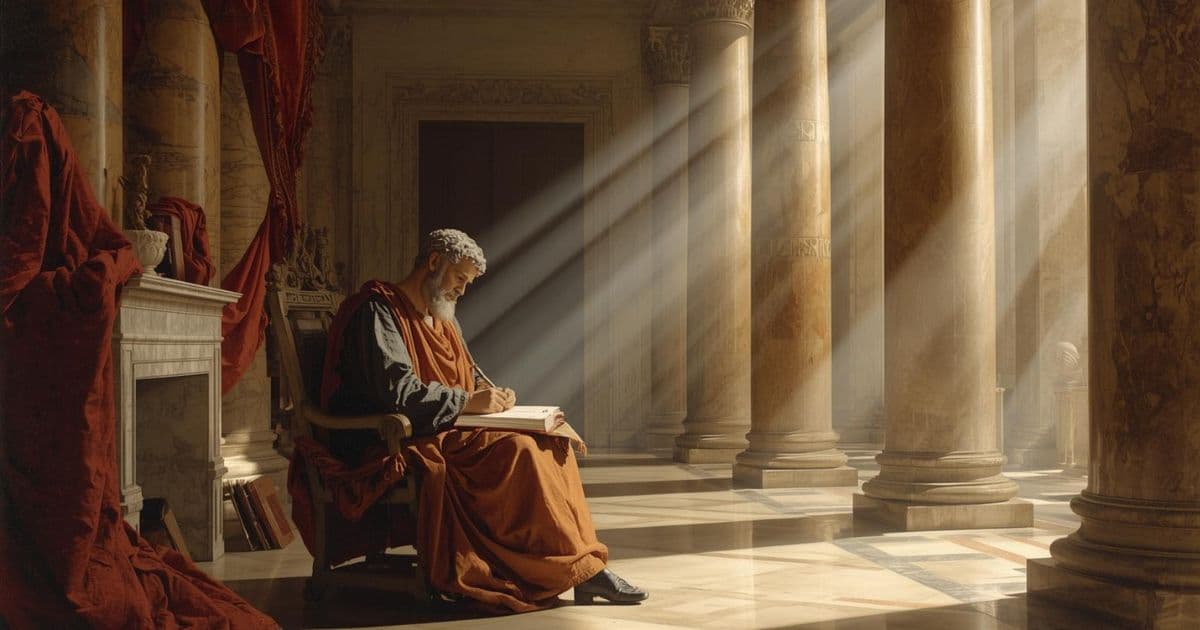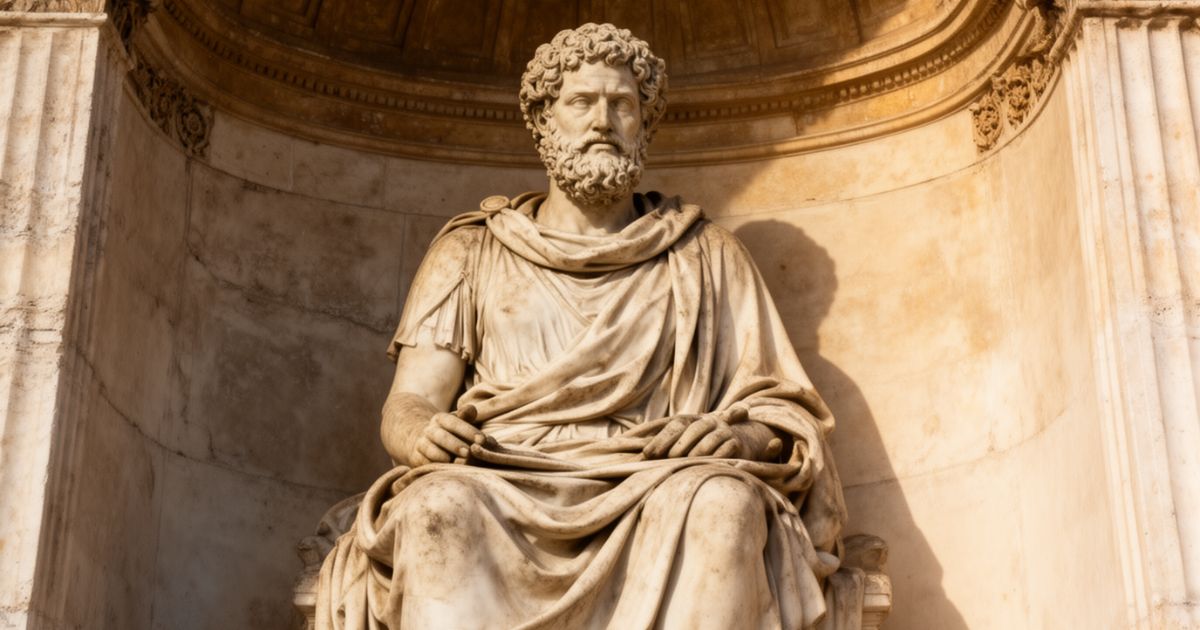
An excerpt from the original text.(complete · 2219 words)
THE SECOND BOOK
I. Remember how long thou hast already put off these things, and how
often a certain day and hour as it were, having been set unto thee by
the gods, thou hast neglected it. It is high time for thee to understand
the true nature both of the world, whereof thou art a part; and of that
Lord and Governor of the world, from whom, as a channel from the spring,
thou thyself didst flow: and that there is but a certain limit of time
appointed unto thee, which if thou shalt not make use of to calm and
allay the many distempers of thy soul, it will pass away and thou with
it, and never after return.
II. Let it be thy earnest and incessant care as a Roman and a man to
perform whatsoever it is that thou art about, with true and unfeigned
gravity, natural affection, freedom and justice: and as for all other
cares, and imaginations, how thou mayest ease thy mind of them. Which
thou shalt do; if thou shalt go about every action as thy last action,
free from all vanity, all passionate and wilful aberration from reason,
and from all hypocrisy, and self-love, and dislike of those things,
which by the fates or appointment of God have happened unto thee. Thou
seest that those things, which for a man to hold on in a prosperous
course, and to live a divine life, are requisite and necessary, are not
many, for the gods will require no more of any man, that shall but keep
and observe these things.
III. Do, soul, do; abuse and contemn thyself; yet a while and the time
for thee to respect thyself, will be at an end. Every man's happiness
depends from himself, but behold thy life is almost at an end, whiles
affording thyself no respect, thou dost make thy happiness to consist in
the souls, and conceits of other men.
IV. Why should any of these things that happen externally, so much
distract thee? Give thyself leisure to learn some good thing, and cease
roving and wandering to and fro. Thou must also take heed of another
kind of wandering, for they are idle in their actions, who toil and
labour in this life, and have no certain scope to which to direct all
their motions, and desires. V. For not observing the state of another
man's soul, scarce was ever any man known to be unhappy. Tell whosoever
they be that intend not, and guide not by reason and discretion the
motions of their own souls, they must of necessity be unhappy.
VI. These things thou must always have in mind: What is the nature
of the universe, and what is mine--in particular: This unto that what
relation it hath: what kind of part, of what kind of universe it is: And
that there is nobody that can hinder thee, but that thou mayest always
both do and speak those things which are agreeable to that nature,
whereof thou art a part.
VII. Theophrastus, where he compares sin with sin (as after a vulgar
sense such things I grant may be compared:) says well and like a
philosopher, that those sins are greater which are committed through
lust, than those which are committed through anger. For he that is angry
seems with a kind of grief and close contraction of himself, to turn
away from reason; but he that sins through lust, being overcome by
pleasure, doth in his very sin bewray a more impotent, and unmanlike
disposition. Well then and like a philosopher doth he say, that he of
the two is the more to be condemned, that sins with pleasure, than he
that sins with grief. For indeed this latter may seem first to have been
wronged, and so in some manner through grief thereof to have been forced
to be angry, whereas he who through lust doth commit anything, did of
himself merely resolve upon that action.
VIII. Whatsoever thou dost affect, whatsoever thou dost project, so do,
and so project all, as one who, for aught thou knowest, may at this very
present depart out of this life. And as for death, if there be any gods,
it is no grievous thing to leave the society of men. The gods will do
thee no hurt, thou mayest be sure. But if it be so that there be no
gods, or that they take no care of the world, why should I desire to
live in a world void of gods, and of all divine providence? But gods
there be certainly, and they take care for the world; and as for those
things which be truly evil, as vice and wickedness, such things they
have put in a man's own power, that he might avoid them if he would: and
had there been anything besides that had been truly bad and evil, they
would have had a care of that also, that a man might have avoided it.
But why should that be thought to hurt and prejudice a man's life in
this world, which cannot any ways make man himself the better, or the
worse in his own person? Neither must we think that the nature of the
universe did either through ignorance pass these things, or if not as
ignorant of them, yet as unable either to prevent, or better to order
and dispose them. It cannot be that she through want either of power or
skill, should have committed such a thing, so as to suffer all things
both good and bad, equally and promiscuously, to happen unto all both
good and bad. As for life therefore, and death, honour and dishonour,
labour and pleasure, riches and poverty, all these things happen
unto men indeed, both good and bad, equally; but as things which of
themselves are neither good nor bad; because of themselves, neither
shameful nor praiseworthy.
IX. Consider how quickly all things are dissolved and resolved: the
bodies and substances themselves, into the matter and substance of the
world: and their memories into the general age and time of the world.
Consider the nature of all worldly sensible things; of those especially,
which either ensnare by pleasure, or for their irksomeness are dreadful,
or for their outward lustre and show are in great esteem and request,
how vile and contemptible, how base and corruptible, how destitute of
all true life and being they are.
X. It is the part of a man endowed with a good understanding faculty, to
consider what they themselves are in very deed, from whose bare conceits
and voices, honour and credit do proceed: as also what it is to die, and
how if a man shall consider this by itself alone, to die, and separate
from it in his mind all those things which with it usually represent
themselves unto us, he can conceive of it no otherwise, than as of a
work of nature, and he that fears any work of nature, is a very child.
Now death, it is not only a work of nature, but also conducing to
nature.
XI. Consider with thyself how man, and by what part of his, is joined
unto God, and how that part of man is affected, when it is said to be
diffused. There is nothing more wretched than that soul, which in a kind
of circuit compasseth all things, searching (as he saith) even the very
depths of the earth; and by all signs and conjectures prying into the
very thoughts of other men's souls; and yet of this, is not sensible,
that it is sufficient for a man to apply himself wholly, and to confine
all his thoughts and cares to the tendance of that spirit which is
within him, and truly and really to serve him. His service doth consist
in this, that a man keep himself pure from all violent passion and
evil affection, from all rashness and vanity, and from all manner of
discontent, either in regard of the gods or men. For indeed whatsoever
proceeds from the gods, deserves respect for their worth and excellency;
and whatsoever proceeds from men, as they are our kinsmen, should by us
be entertained, with love, always; sometimes, as proceeding from their
ignorance, of that which is truly good and bad, (a blindness no less,
than that by which we are not able to discern between white and black:)
with a kind of pity and compassion also.
XII. If thou shouldst live three thousand, or as many as ten thousands
of years, yet remember this, that man can part with no life properly,
save with that little part of life, which he now lives: and that which
he lives, is no other, than that which at every instant he parts with.
That then which is longest of duration, and that which is shortest, come
both to one effect. For although in regard of that which is already past
there may be some inequality, yet that time which is now present and
in being, is equal unto all men. And that being it which we part with
whensoever we die, it doth manifestly appear, that it can be but a
moment of time, that we then part with. For as for that which is either
past or to come, a man cannot be said properly to part with it. For
how should a man part with that which he hath not? These two things
therefore thou must remember. First, that all things in the world from
all eternity, by a perpetual revolution of the same times and things
ever continued and renewed, are of one kind and nature; so that whether
for a hundred or two hundred years only, or for an infinite space of
time, a man see those things which are still the same, it can be no
matter of great moment. And secondly, that that life which any the
longest liver, or the shortest liver parts with, is for length and
duration the very same, for that only which is present, is that, which
either of them can lose, as being that only which they have; for that
which he hath not, no man can truly be said to lose.
XIII. Remember that all is but opinion and conceit, for those things
are plain and apparent, which were spoken unto Monimus the Cynic; and as
plain and apparent is the use that may be made of those things, if that
which is true and serious in them, be received as well as that which is
sweet and pleasing.
XIV. A man's soul doth wrong and disrespect itself first and especially,
when as much as in itself lies it becomes an aposteme, and as it were an
excrescency of the world, for to be grieved and displeased with anything
that happens in the world, is direct apostacy from the nature of the
universe; part of which, all particular natures of the world, are.
Secondly, when she either is averse from any man, or led by contrary
desires or affections, tending to his hurt and prejudice; such as are
the souls of them that are angry. Thirdly, when she is overcome by any
pleasure or pain. Fourthly, when she doth dissemble, and covertly and
falsely either doth or saith anything. Fifthly, when she doth either
affect or endeavour anything to no certain end, but rashly and without
due ratiocination and consideration, how consequent or inconsequent it
is to the common end. For even the least things ought not to be done,
without relation unto the end; and the end of the reasonable creatures
is, to follow and obey him, who is the reason as it were, and the law of
this great city, and ancient commonwealth.
XV. The time of a man's life is as a point; the substance of it ever
flowing, the sense obscure; and the whole composition of the body
tending to corruption. His soul is restless, fortune uncertain, and fame
doubtful; to be brief, as a stream so are all things belonging to the
body; as a dream, or as a smoke, so are all that belong unto the soul.
Our life is a warfare, and a mere pilgrimage. Fame after life is no
better than oblivion. What is it then that will adhere and follow? Only
one thing, philosophy. And philosophy doth consist in this, for a man to
preserve that spirit which is within him, from all manner of contumelies
and injuries, and above all pains or pleasures; never to do anything
either rashly, or feignedly, or hypocritically: wholly to depend from
himself and his own proper actions: all things that happen unto him to
embrace contentedly, as coming from Him from whom he himself also came;
and above all things, with all meekness and a calm cheerfulness, to
expect death, as being nothing else but the resolution of those
elements, of which every creature is composed. And if the elements
themselves suffer nothing by this their perpetual conversion of one into
another, that dissolution, and alteration, which is so common unto all,
why should it be feared by any? Is not this according to nature? But
nothing that is according to nature can be evil.
Whilst I was at Carnuntum.
Master this chapter. Complete your experience
Purchase the complete book to access all chapters and support classic literature
As an Amazon Associate, we earn a small commission from qualifying purchases at no additional cost to you.
Available in paperback, hardcover, and e-book formats
Let's Analyse the Pattern
The human tendency to postpone honest self-examination until external pressure forces uncomfortable truths to surface.
Why This Matters
Connect literature to life
This chapter teaches how to recognize when external pressure is revealing internal character gaps you've been avoiding.
Practice This Today
This week, notice when you feel defensive or make excuses - that's often your mind protecting you from seeing a pattern you need to address.
Now let's explore the literary elements.
Key Quotes & Analysis
"You have power over your mind - not outside events. Realize this, and you will find strength."
Context: Reminding himself what he can and cannot control while facing military pressures
This captures the core of Stoic philosophy - the radical idea that our thoughts and reactions are the only things we truly control. Everything else is just stuff that happens to us.
In Today's Words:
You can't control what happens, but you can control how you handle it.
"Very little is needed to make a happy life; it is all within yourself, in your way of thinking."
Context: Reflecting on what actually matters for contentment versus external circumstances
Marcus argues that happiness comes from internal work, not external achievements or possessions. This challenges our culture's focus on getting more stuff or status.
In Today's Words:
Happiness is an inside job - it's about your mindset, not your circumstances.
"Death smiles at us all, but all a man can do is smile back."
Context: Contemplating mortality while on a dangerous military campaign
Instead of fearing death, Marcus suggests accepting it with dignity. Death is natural and inevitable, so the brave response is calm acceptance rather than panic or denial.
In Today's Words:
We're all going to die eventually, so we might as well face it with grace.
"How much trouble he avoids who does not look to see what his neighbor says or does."
Context: Advising himself to stop worrying about others' opinions and focus on his own character
Marcus recognizes that constantly monitoring what others think or do drains energy from your real work - becoming a better person. Other people's business is a distraction.
In Today's Words:
Mind your own business and you'll have a lot less stress.
Thematic Threads
Time
In This Chapter
Marcus faces his mortality and wasted opportunities for growth, realizing time is running short for meaningful change
Development
Introduced here as urgent motivator for self-examination
In Your Life:
You might recognize this when health scares or relationship crises suddenly make you question how you've been spending your years.
Identity
In This Chapter
Marcus distinguishes between external reputation and internal character, arguing that only your soul's condition truly matters
Development
Introduced here as core philosophical foundation
In Your Life:
You see this when you realize you've been performing a version of yourself for others instead of developing who you actually want to be.
Social Expectations
In This Chapter
Marcus rejects the need for others' approval and sees external opinions as meaningless noise
Development
Introduced here as obstacle to authentic growth
In Your Life:
This shows up when you catch yourself making decisions based on what looks good rather than what feels right.
Personal Growth
In This Chapter
Marcus advocates for complete focus and integrity in every action, treating each moment as potentially your last
Development
Introduced here as urgent daily practice
In Your Life:
You might apply this when you realize you've been going through the motions instead of bringing full attention to your work and relationships.
You now have the context. Time to form your own thoughts.
Discussion Questions
- 1
Anthony realizes he's been putting off important inner work while the gods gave him chances to grow. What specific wake-up call forced him to face this delay?
analysis • surface - 2
Why does Anthony say that acting from lust shows weaker character than acting from anger? What does this reveal about how he ranks different motivations?
analysis • medium - 3
Anthony argues that external events like poverty or illness can't actually damage who you are inside. Where do you see people today struggling to separate external circumstances from their core identity?
application • medium - 4
If you treated each day as if you might not get another chance to course-correct your character, what's one thing you would stop putting off? How would you take action on it today?
application • deep - 5
Anthony writes that 'life is warfare and pilgrimage, but philosophy can preserve your inner spirit.' What does this suggest about how to maintain integrity when external pressures mount?
reflection • deep
Critical Thinking Exercise
Map Your Delayed Reckoning
Think of one area where you've been telling yourself you'll make changes 'later' - maybe it's your health, a relationship pattern, or a work habit. Write down what you've been avoiding and what wake-up call might force your hand if you keep delaying. Then identify one small action you could take today to start addressing it honestly.
Consider:
- •What story do you tell yourself about why 'now isn't the right time' to address this issue?
- •What crisis or external pressure might eventually force you to deal with this if you keep postponing?
- •What would someone who cares about you say about your pattern of delay in this area?
Journaling Prompt
Write about a time when you were forced to face something you'd been avoiding. What would have been different if you'd addressed it earlier by choice rather than waiting for circumstances to force your hand?
Coming Up Next...
Chapter 3: Time, Beauty, and Mental Discipline
Marcus turns his attention to morning routines and the art of starting each day with the right mindset, offering practical wisdom for dealing with difficult people and situations.