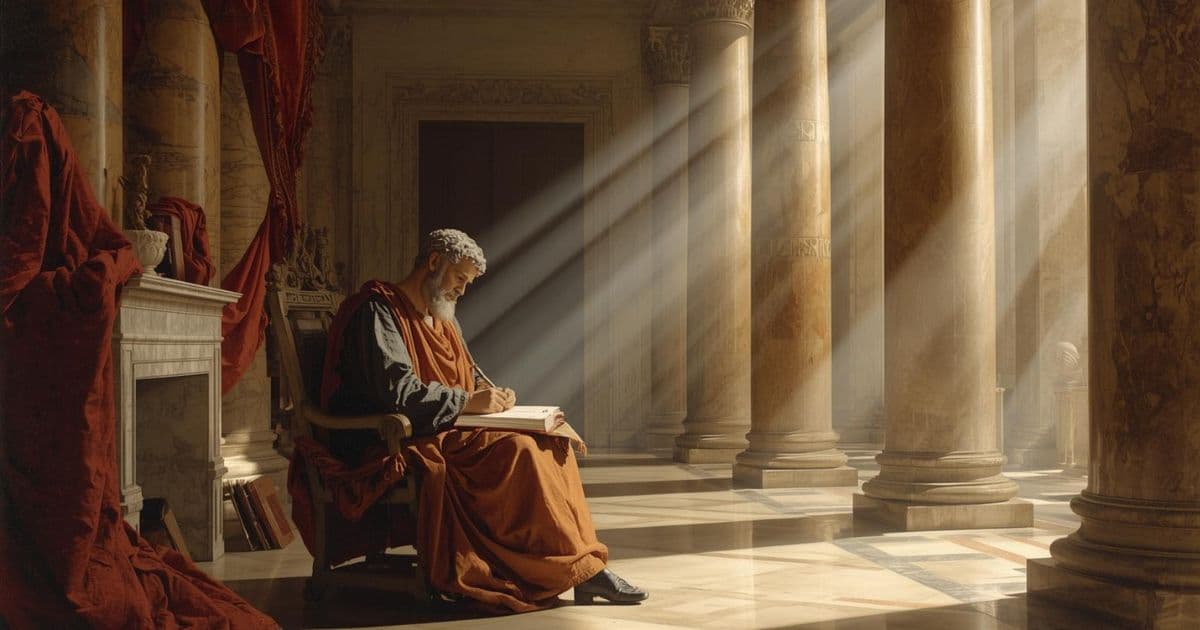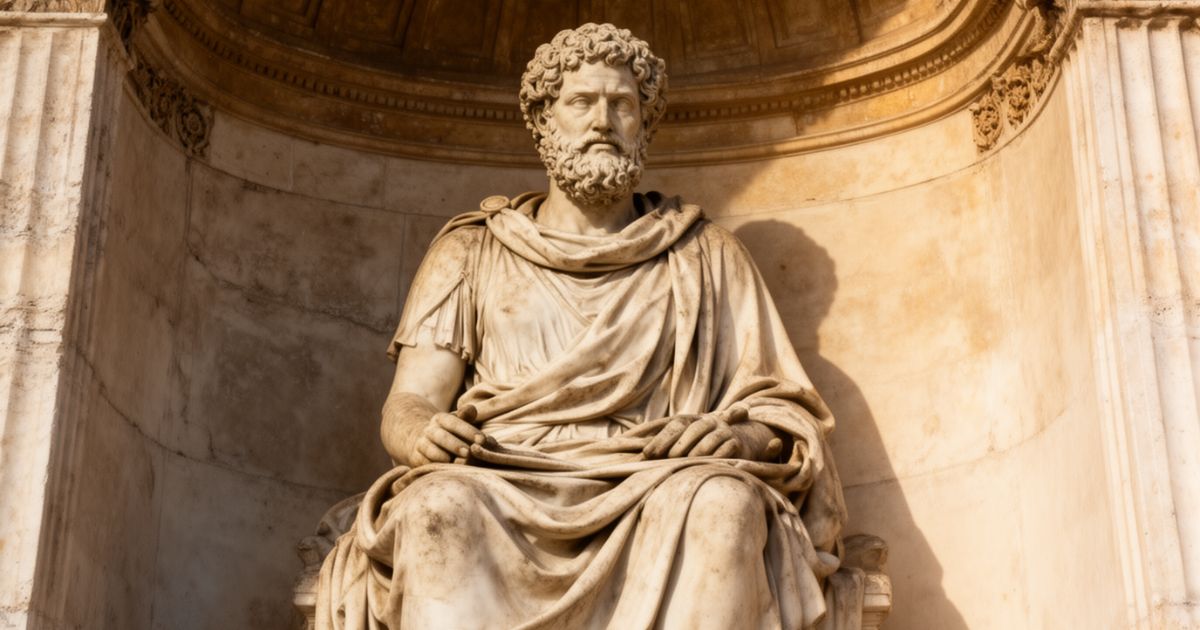
An excerpt from the original text.(complete · 3815 words)
THE FIRST BOOK
I. Of my grandfather Verus I have learned to be gentle and meek, and to
refrain from all anger and passion. From the fame and memory of him that
begot me I have learned both shamefastness and manlike behaviour. Of my
mother I have learned to be religious, and bountiful; and to forbear,
not only to do, but to intend any evil; to content myself with a spare
diet, and to fly all such excess as is incidental to great wealth. Of my
great-grandfather, both to frequent public schools and auditories, and
to get me good and able teachers at home; and that I ought not to think
much, if upon such occasions, I were at excessive charges.
II. Of him that brought me up, not to be fondly addicted to either of
the two great factions of the coursers in the circus, called Prasini,
and Veneti: nor in the amphitheatre partially to favour any of the
gladiators, or fencers, as either the Parmularii, or the Secutores.
Moreover, to endure labour; nor to need many things; when I have
anything to do, to do it myself rather than by others; not to meddle
with many businesses; and not easily to admit of any slander.
III. Of Diognetus, not to busy myself about vain things, and not easily
to believe those things, which are commonly spoken, by such as take upon
them to work wonders, and by sorcerers, or prestidigitators, and
impostors; concerning the power of charms, and their driving out of
demons, or evil spirits; and the like. Not to keep quails for the game;
nor to be mad after such things. Not to be offended with other men's
liberty of speech, and to apply myself unto philosophy. Him also I must
thank, that ever I heard first Bacchius, then Tandasis and Marcianus,
and that I did write dialogues in my youth; and that I took liking to
the philosophers' little couch and skins, and such other things, which
by the Grecian discipline are proper to those who profess philosophy.
IV. To Rusticus I am beholding, that I first entered into the conceit
that my life wanted some redress and cure. And then, that I did not
fall into the ambition of ordinary sophists, either to write tracts
concerning the common theorems, or to exhort men unto virtue and the
study of philosophy by public orations; as also that I never by way of
ostentation did affect to show myself an active able man, for any kind
of bodily exercises. And that I gave over the study of rhetoric and
poetry, and of elegant neat language. That I did not use to walk about
the house in my long robe, nor to do any such things. Moreover I learned
of him to write letters without any affectation, or curiosity; such as
that was, which by him was written to my mother from Sinuessa: and to be
easy and ready to be reconciled, and well pleased again with them that
had offended me, as soon as any of them would be content to seek unto
me again. To read with diligence; not to rest satisfied with a light and
superficial knowledge, nor quickly to assent to things commonly spoken
of: whom also I must thank that ever I lighted upon Epictetus his
Hypomnemata, or moral commentaries and common-factions: which also he
gave me of his own.
V. From Apollonius, true liberty, and unvariable steadfastness, and not
to regard anything at all, though never so little, but right and reason:
and always, whether in the sharpest pains, or after the loss of a child,
or in long diseases, to be still the same man; who also was a present
and visible example unto me, that it was possible for the same man to
be both vehement and remiss: a man not subject to be vexed, and offended
with the incapacity of his scholars and auditors in his lectures and
expositions; and a true pattern of a man who of all his good gifts
and faculties, least esteemed in himself, that his excellent skill and
ability to teach and persuade others the common theorems and maxims of
the Stoic philosophy. Of him also I learned how to receive favours and
kindnesses (as commonly they are accounted:) from friends, so that I
might not become obnoxious unto them, for them, nor more yielding upon
occasion, than in right I ought; and yet so that I should not pass them
neither, as an unsensible and unthankful man.
VI. Of Sextus, mildness and the pattern of a family governed with
paternal affection; and a purpose to live according to nature: to be
grave without affectation: to observe carefully the several dispositions
of my friends, not to be offended with idiots, nor unseasonably to set
upon those that are carried with the vulgar opinions, with the theorems,
and tenets of philosophers: his conversation being an example how a man
might accommodate himself to all men and companies; so that though his
company were sweeter and more pleasing than any flatterer's cogging and
fawning; yet was it at the same time most respected and reverenced: who
also had a proper happiness and faculty, rationally and methodically to
find out, and set in order all necessary determinations and instructions
for a man's life. A man without ever the least appearance of anger, or
any other passion; able at the same time most exactly to observe the
Stoic Apathia, or unpassionateness, and yet to be most tender-hearted:
ever of good credit; and yet almost without any noise, or rumour: very
learned, and yet making little show.
VII. From Alexander the Grammarian, to be un-reprovable myself, and not
reproachfully to reprehend any man for a barbarism, or a solecism, or
any false pronunciation, but dextrously by way of answer, or testimony,
or confirmation of the same matter (taking no notice of the word) to
utter it as it should have been spoken; or by some other such close and
indirect admonition, handsomely and civilly to tell him of it.
VIII. Of Fronto, to how much envy and fraud and hypocrisy the state of a
tyrannous king is subject unto, and how they who are commonly called
εὐπατρίδαι, i.e. nobly born, are in some sort incapable, or void
of natural affection.
IX. Of Alexander the Platonic, not often nor without great necessity to
say, or to write to any man in a letter, 'I am not at leisure'; nor in
this manner still to put off those duties, which we owe to our friends
and acquaintances (to every one in his kind) under pretence of urgent
affairs.
X. Of Catulus, not to contemn any friend's expostulation, though unjust,
but to strive to reduce him to his former disposition: freely and
heartily to speak well of all my masters upon any occasion, as it is
reported of Domitius, and Athenodotus: and to love my children with true
affection.
XI. From my brother Severus, to be kind and loving to all them of my
house and family; by whom also I came to the knowledge of Thrasea and
Helvidius, and Cato, and Dio, and Brutus. He it was also that did put me
in the first conceit and desire of an equal commonwealth, administered
by justice and equality; and of a kingdom wherein should be regarded
nothing more than the good and welfare of the subjects. Of him also,
to observe a constant tenor, (not interrupted, with any other cares and
distractions,) in the study and esteem of philosophy: to be bountiful
and liberal in the largest measure; always to hope the best; and to
be confident that my friends love me. In whom I moreover observed open
dealing towards those whom he reproved at any time, and that his friends
might without all doubt or much observation know what he would, or would
not, so open and plain was he.
XII. From Claudius Maximus, in all things to endeavour to have power
of myself, and in nothing to be carried about; to be cheerful and
courageous in all sudden chances and accidents, as in sicknesses: to
love mildness, and moderation, and gravity: and to do my business,
whatsoever it be, thoroughly, and without querulousness. Whatsoever
he said, all men believed him that as he spake, so he thought, and
whatsoever he did, that he did it with a good intent. His manner was,
never to wonder at anything; never to be in haste, and yet never
slow: nor to be perplexed, or dejected, or at any time unseemly, or
excessively to laugh: nor to be angry, or suspicious, but ever ready to
do good, and to forgive, and to speak truth; and all this, as one that
seemed rather of himself to have been straight and right, than ever to
have been rectified or redressed; neither was there any man that ever
thought himself undervalued by him, or that could find in his heart, to
think himself a better man than he. He would also be very pleasant and
gracious.
XIII. In my father, I observed his meekness; his constancy without
wavering in those things, which after a due examination and
deliberation, he had determined. How free from all vanity he carried
himself in matter of honour and dignity, (as they are esteemed:) his
laboriousness and assiduity, his readiness to hear any man, that had
aught to say tending to any common good: how generally and impartially
he would give every man his due; his skill and knowledge, when rigour
or extremity, or when remissness or moderation was in season; how he did
abstain from all unchaste love of youths; his moderate condescending to
other men's occasions as an ordinary man, neither absolutely requiring
of his friends, that they should wait upon him at his ordinary meals,
nor that they should of necessity accompany him in his journeys; and
that whensoever any business upon some necessary occasions was to be put
off and omitted before it could be ended, he was ever found when he
went about it again, the same man that he was before. His accurate
examination of things in consultations, and patient hearing of others.
He would not hastily give over the search of the matter, as one easy to
be satisfied with sudden notions and apprehensions. His care to preserve
his friends; how neither at any time he would carry himself towards them
with disdainful neglect, and grow weary of them; nor yet at any time
be madly fond of them. His contented mind in all things, his cheerful
countenance, his care to foresee things afar off, and to take order for
the least, without any noise or clamour. Moreover how all acclamations
and flattery were repressed by him: how carefully he observed all things
necessary to the government, and kept an account of the common expenses,
and how patiently he did abide that he was reprehended by some for this
his strict and rigid kind of dealing. How he was neither a superstitious
worshipper of the gods, nor an ambitious pleaser of men, or studious of
popular applause; but sober in all things, and everywhere observant of
that which was fitting; no affecter of novelties: in those things which
conduced to his ease and convenience, (plenty whereof his fortune
did afford him,) without pride and bragging, yet with all freedom and
liberty: so that as he did freely enjoy them without any anxiety or
affectation when they were present; so when absent, he found no want
of them. Moreover, that he was never commended by any man, as either a
learned acute man, or an obsequious officious man, or a fine orator; but
as a ripe mature man, a perfect sound man; one that could not endure to
be flattered; able to govern both himself and others. Moreover, how much
he did honour all true philosophers, without upbraiding those that were
not so; his sociableness, his gracious and delightful conversation, but
never unto satiety; his care of his body within bounds and measure,
not as one that desired to live long, or over-studious of neatness, and
elegancy; and yet not as one that did not regard it: so that through his
own care and providence, he seldom needed any inward physic, or outward
applications: but especially how ingeniously he would yield to any that
had obtained any peculiar faculty, as either eloquence, or the knowledge
of the laws, or of ancient customs, or the like; and how he concurred
with them, in his best care and endeavour that every one of them might
in his kind, for that wherein he excelled, be regarded and esteemed: and
although he did all things carefully after the ancient customs of his
forefathers, yet even of this was he not desirous that men should take
notice, that he did imitate ancient customs. Again, how he was not
easily moved and tossed up and down, but loved to be constant, both in
the same places and businesses; and how after his great fits of headache
he would return fresh and vigorous to his wonted affairs. Again, that
secrets he neither had many, nor often, and such only as concerned
public matters: his discretion and moderation, in exhibiting of the
public sights and shows for the pleasure and pastime of the people: in
public buildings. congiaries, and the like. In all these things,
having a respect unto men only as men, and to the equity of the things
themselves, and not unto the glory that might follow. Never wont to
use the baths at unseasonable hours; no builder; never curious, or
solicitous, either about his meat, or about the workmanship, or colour
of his clothes, or about anything that belonged to external beauty.
In all his conversation, far from all inhumanity, all boldness, and
incivility, all greediness and impetuosity; never doing anything with
such earnestness, and intention, that a man could say of him, that
he did sweat about it: but contrariwise, all things distinctly, as at
leisure; without trouble; orderly, soundly, and agreeably. A man might
have applied that to him, which is recorded of Socrates, that he knew
how to want, and to enjoy those things, in the want whereof, most men
show themselves weak; and in the fruition, intemperate: but to hold out
firm and constant, and to keep within the compass of true moderation and
sobriety in either estate, is proper to a man, who hath a perfect and
invincible soul; such as he showed himself in the sickness of Maximus.
XIV. From the gods I received that I had good grandfathers, and parents,
a good sister, good masters, good domestics, loving kinsmen, almost all
that I have; and that I never through haste and rashness transgressed
against any of them, notwithstanding that my disposition was such,
as that such a thing (if occasion had been) might very well have been
committed by me, but that It was the mercy of the gods, to prevent such
a concurring of matters and occasions, as might make me to incur this
blame. That I was not long brought up by the concubine of my father;
that I preserved the flower of my youth. That I took not upon me to be
a man before my time, but rather put it off longer than I needed. That
I lived under the government of my lord and father, who would take
away from me all pride and vainglory, and reduce me to that conceit and
opinion that it was not impossible for a prince to live in the court
without a troop of guards and followers, extraordinary apparel, such
and such torches and statues, and other like particulars of state and
magnificence; but that a man may reduce and contract himself almost to
the state of a private man, and yet for all that not to become the more
base and remiss in those public matters and affairs, wherein power and
authority is requisite. That I have had such a brother, who by his own
example might stir me up to think of myself; and by his respect and
love, delight and please me. That I have got ingenuous children, and
that they were not born distorted, nor with any other natural deformity.
That I was no great proficient in the study of rhetoric and poetry, and
of other faculties, which perchance I might have dwelt upon, if I had
found myself to go on in them with success. That I did by times prefer
those, by whom I was brought up, to such places and dignities, which
they seemed unto me most to desire; and that I did not put them off with
hope and expectation, that (since that they were yet but young) I would
do the same hereafter. That I ever knew Apollonius and Rusticus, and
Maximus. That I have had occasion often and effectually to consider and
meditate with myself, concerning that life which is according to nature,
what the nature and manner of it is: so that as for the gods and such
suggestions, helps and inspirations, as might be expected from them,
nothing did hinder, but that I might have begun long before to live
according to nature; or that even now that I was not yet partaker and
in present possession of that life, that I myself (in that I did not
observe those inward motions, and suggestions, yea and almost plain and
apparent instructions and admonitions of the gods,) was the only cause
of it. That my body in such a life, hath been able to hold out so long.
That I never had to do with Benedicta and Theodotus, yea and afterwards
when I fell into some fits of love, I was soon cured. That having been
often displeased with Rusticus, I never did him anything for which
afterwards I had occasion to repent. That it being so that my mother was
to die young, yet she lived with me all her latter years. That as often
as I had a purpose to help and succour any that either were poor, or
fallen into some present necessity, I never was answered by my officers
that there was not ready money enough to do it; and that I myself never
had occasion to require the like succour from any other. That I have
such a wife, so obedient, so loving, so ingenuous. That I had choice of
fit and able men, to whom I might commit the bringing up of my children.
That by dreams I have received help, as for other things, so in
particular, how I might stay my casting of blood, and cure my dizziness,
as that also that happened to thee in Cajeta, as unto Chryses when he
prayed by the seashore. And when I did first apply myself to philosophy,
that I did not fall into the hands of some sophists, or spent my time
either in reading the manifold volumes of ordinary philosophers, nor in
practising myself in the solution of arguments and fallacies, nor dwelt
upon the studies of the meteors, and other natural curiosities. All
these things without the assistance of the gods, and fortune, could not
have been.
XV. In the country of the Quadi at Granua, these. Betimes in the morning
say to thyself, This day I shalt have to do with an idle curious man,
with an unthankful man, a railer, a crafty, false, or an envious man; an
unsociable uncharitable man. All these ill qualities have happened unto
them, through ignorance of that which is truly good and truly bad. But I
that understand the nature of that which is good, that it only is to
be desired, and of that which is bad, that it only is truly odious and
shameful: who know moreover, that this transgressor, whosoever he be, is
my kinsman, not by the same blood and seed, but by participation of the
same reason, and of the same divine particle; How can I either be
hurt by any of those, since it is not in their power to make me incur
anything that is truly reproachful? or angry, and ill affected towards
him, who by nature is so near unto me? for we are all born to be
fellow-workers, as the feet, the hands, and the eyelids; as the rows of
the upper and under teeth: for such therefore to be in opposition, is
against nature; and what is it to chafe at, and to be averse from, but
to be in opposition?
XVI. Whatsoever I am, is either flesh, or life, or that which we
commonly call the mistress and overruling part of man; reason. Away with
thy books, suffer not thy mind any more to be distracted, and carried to
and fro; for it will not be; but as even now ready to die, think little
of thy flesh: blood, bones, and a skin; a pretty piece of knit and
twisted work, consisting of nerves, veins and arteries; think no more of
it, than so. And as for thy life, consider what it is; a wind; not one
constant wind neither, but every moment of an hour let out, and sucked
in again. The third, is thy ruling part; and here consider; Thou art an
old man; suffer not that excellent part to be brought in subjection, and
to become slavish: suffer it not to be drawn up and down with
unreasonable and unsociable lusts and motions, as it were with wires and
nerves; suffer it not any more, either to repine at anything now
present, or to fear and fly anything to come, which the destiny hath
appointed thee.
XVII. Whatsoever proceeds from the gods immediately, that any man will
grant totally depends from their divine providence. As for those
things that are commonly said to happen by fortune, even those must be
conceived to have dependence from nature, or from that first and general
connection, and concatenation of all those things, which more apparently
by the divine providence are administered and brought to pass.
All things flow from thence: and whatsoever it is that is, is both
necessary, and conducing to the whole (part of which thou art), and
whatsoever it is that is requisite and necessary for the preservation of
the general, must of necessity for every particular nature, be good and
behoveful. And as for the whole, it is preserved, as by the perpetual
mutation and conversion of the simple elements one into another, so
also by the mutation, and alteration of things mixed and compounded. Let
these things suffice thee; let them be always unto thee, as thy general
rules and precepts. As for thy thirst after books, away with it with all
speed, that thou die not murmuring and complaining, but truly meek and
well satisfied, and from thy heart thankful unto the gods.
Master this chapter. Complete your experience
Purchase the complete book to access all chapters and support classic literature
As an Amazon Associate, we earn a small commission from qualifying purchases at no additional cost to you.
Available in paperback, hardcover, and e-book formats
Let's Analyse the Pattern
True power comes from acknowledging your influences rather than projecting self-made success.
Why This Matters
Connect literature to life
This chapter teaches how to distinguish between authentic authority and insecure posturing by watching how people treat their influences.
Practice This Today
This week, notice when someone in authority acknowledges their teachers versus when they act self-made—you'll quickly see who has real confidence and who's overcompensating.
Now let's explore the literary elements.
Key Quotes & Analysis
"From my grandfather Verus I learned good morals and the government of my temper."
Context: Opening his gratitude list by acknowledging his grandfather's influence
This sets the tone for the entire chapter - Marcus recognizes that character is taught, not innate. He's crediting others for shaping who he became, showing humility despite his power.
In Today's Words:
My grandfather taught me how to be a good person and keep my cool under pressure.
"From my mother, piety and beneficence, and abstinence, not only from evil deeds, but even from evil thoughts."
Context: Acknowledging his mother's moral influence on his character
This reveals Marcus's belief that true virtue goes beyond just avoiding bad actions - it means not even entertaining bad thoughts. It shows the depth of character training he received.
In Today's Words:
My mom taught me to be respectful and generous, and to not even think about doing wrong things.
"From Antoninus: to be neither over-heated in anything, nor yet indifferent, but to be the same in all cases of sickness and other troubles."
Context: Describing lessons learned from his adoptive father about emotional balance
This captures the Stoic ideal of emotional equilibrium - not being overwhelmed by highs or lows, but maintaining steady character regardless of circumstances.
In Today's Words:
My dad taught me not to get too worked up about anything or too checked out, but to stay steady whether things are going great or falling apart.
Thematic Threads
Class
In This Chapter
Marcus, despite ultimate power, positions himself as a student of everyone from family members to teachers
Development
Introduced here
In Your Life:
You might notice how acknowledging what you learned from coworkers or family members actually increases your credibility rather than diminishing it
Identity
In This Chapter
He defines himself not by his achievements but by what he's learned from others
Development
Introduced here
In Your Life:
You might see how your identity becomes more solid when you acknowledge the people who shaped your values and skills
Social Expectations
In This Chapter
Defies the expectation that powerful people should project self-sufficiency
Development
Introduced here
In Your Life:
You might recognize pressure to appear like you have everything figured out when asking for help or advice would be more effective
Personal Growth
In This Chapter
Growth comes from recognizing and integrating lessons from multiple sources
Development
Introduced here
In Your Life:
You might notice that your biggest breakthroughs happen when you can identify exactly what someone else taught you
Human Relationships
In This Chapter
Relationships are viewed as sources of wisdom rather than just social connections
Development
Introduced here
In Your Life:
You might see how treating interactions as learning opportunities strengthens bonds rather than making you appear needy
You now have the context. Time to form your own thoughts.
Discussion Questions
- 1
Anthony lists specific people who influenced him and exactly what they taught him. Why do you think he starts his personal journal this way instead of focusing on his own achievements?
analysis • surface - 2
He mentions learning not to get caught up in 'meaningless controversies' like sports rivalries. What drives people to invest emotional energy in things that don't actually affect their daily lives?
analysis • medium - 3
Think about leaders you respect versus ones you don't. How do they handle giving credit to others? What pattern do you notice?
application • medium - 4
Anthony prepares each morning to deal with difficult people by reminding himself they're just doing what they think is right. How could this mindset change how you handle your most challenging relationships?
application • deep - 5
An emperor with absolute power chooses to focus on gratitude and humility in his private thoughts. What does this reveal about what actually makes people feel secure versus insecure?
reflection • deep
Critical Thinking Exercise
Map Your Influence Network
Create Anthony's gratitude list for your own life. Write down 5-7 people who shaped who you are today, then beside each name, write the specific skill, attitude, or lesson they gave you. Don't just list family members - include teachers, coworkers, even difficult people who taught you what not to do.
Consider:
- •Include both positive and challenging influences - Anthony learned from everyone
- •Be specific about what each person taught you, not just general 'they were nice'
- •Notice which influences you've never acknowledged out loud
Journaling Prompt
Write about one person on your list who doesn't know how they influenced you. What would you tell them if you had the chance? How might acknowledging their influence change your relationship with them or with that lesson they taught you?
Coming Up Next...
Chapter 2: Time Is Running Out
Having acknowledged his debts to others, Marcus turns inward to examine the fundamental nature of existence itself. The second book will challenge everything you think you know about what really matters in life.