
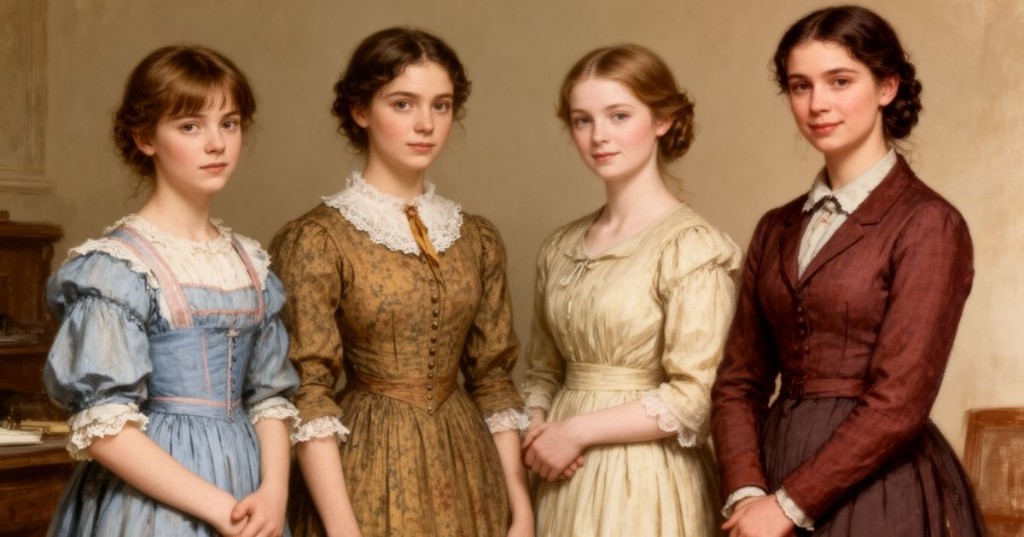
An excerpt from the original text.(complete · 4222 words)
CHAPTER ELEVEN EXPERIMENTS
“The first of June! The Kings are off to the seashore tomorrow, and I’m
free. Three months’ vacation—how I shall enjoy it!” exclaimed Meg,
coming home one warm day to find Jo laid upon the sofa in an unusual
state of exhaustion, while Beth took off her dusty boots, and Amy made
lemonade for the refreshment of the whole party.
“Aunt March went today, for which, oh, be joyful!” said Jo. “I was
mortally afraid she’d ask me to go with her. If she had, I should have
felt as if I ought to do it, but Plumfield is about as gay as a
churchyard, you know, and I’d rather be excused. We had a flurry
getting the old lady off, and I had a fright every time she spoke to
me, for I was in such a hurry to be through that I was uncommonly
helpful and sweet, and feared she’d find it impossible to part from me.
I quaked till she was fairly in the carriage, and had a final fright,
for as it drove of, she popped out her head, saying, ‘Josyphine, won’t
you—?’ I didn’t hear any more, for I basely turned and fled. I did
actually run, and whisked round the corner where I felt safe.”
“Poor old Jo! She came in looking as if bears were after her,” said
Beth, as she cuddled her sister’s feet with a motherly air.
“Aunt March is a regular samphire, is she not?” observed Amy, tasting
her mixture critically.
“She means vampire, not seaweed, but it doesn’t matter. It’s too warm
to be particular about one’s parts of speech,” murmured Jo.
“What shall you do all your vacation?” asked Amy, changing the subject
with tact.
“I shall lie abed late, and do nothing,” replied Meg, from the depths
of the rocking chair. “I’ve been routed up early all winter and had to
spend my days working for other people, so now I’m going to rest and
revel to my heart’s content.”
“No,” said Jo, “that dozy way wouldn’t suit me. I’ve laid in a heap of
books, and I’m going to improve my shining hours reading on my perch in
the old apple tree, when I’m not having l——”
“Don’t say ‘larks!’” implored Amy, as a return snub for the ‘samphire’
correction.
“I’ll say ‘nightingales’ then, with Laurie. That’s proper and
appropriate, since he’s a warbler.”
“Don’t let us do any lessons, Beth, for a while, but play all the time
and rest, as the girls mean to,” proposed Amy.
“Well, I will, if Mother doesn’t mind. I want to learn some new songs,
and my children need fitting up for the summer. They are dreadfully out
of order and really suffering for clothes.”
“May we, Mother?” asked Meg, turning to Mrs. March, who sat sewing in
what they called ‘Marmee’s corner’.
“You may try your experiment for a week and see how you like it. I
think by Saturday night you will find that all play and no work is as
bad as all work and no play.”
“Oh, dear, no! It will be delicious, I’m sure,” said Meg complacently.
“I now propose a toast, as my ‘friend and pardner, Sairy Gamp’, says.
Fun forever, and no grubbing!” cried Jo, rising, glass in hand, as the
lemonade went round.
They all drank it merrily, and began the experiment by lounging for the
rest of the day. Next morning, Meg did not appear till ten o’clock. Her
solitary breakfast did not taste good, and the room seemed lonely and
untidy, for Jo had not filled the vases, Beth had not dusted, and Amy’s
books lay scattered about. Nothing was neat and pleasant but ‘Marmee’s
corner’, which looked as usual. And there Meg sat, to ‘rest and read’,
which meant to yawn and imagine what pretty summer dresses she would
get with her salary. Jo spent the morning on the river with Laurie and
the afternoon reading and crying over The Wide, Wide World, up in the
apple tree. Beth began by rummaging everything out of the big closet
where her family resided, but getting tired before half done, she left
her establishment topsy-turvy and went to her music, rejoicing that she
had no dishes to wash. Amy arranged her bower, put on her best white
frock, smoothed her curls, and sat down to draw under the honeysuckle,
hoping someone would see and inquire who the young artist was. As no
one appeared but an inquisitive daddy-longlegs, who examined her work
with interest, she went to walk, got caught in a shower, and came home
dripping.
At teatime they compared notes, and all agreed that it had been a
delightful, though unusually long day. Meg, who went shopping in the
afternoon and got a ‘sweet blue muslin’, had discovered, after she had
cut the breadths off, that it wouldn’t wash, which mishap made her
slightly cross. Jo had burned the skin off her nose boating, and got a
raging headache by reading too long. Beth was worried by the confusion
of her closet and the difficulty of learning three or four songs at
once, and Amy deeply regretted the damage done her frock, for Katy
Brown’s party was to be the next day and now like Flora McFlimsey, she
had ‘nothing to wear’. But these were mere trifles, and they assured
their mother that the experiment was working finely. She smiled, said
nothing, and with Hannah’s help did their neglected work, keeping home
pleasant and the domestic machinery running smoothly. It was
astonishing what a peculiar and uncomfortable state of things was
produced by the ‘resting and reveling’ process. The days kept getting
longer and longer, the weather was unusually variable and so were
tempers; an unsettled feeling possessed everyone, and Satan found
plenty of mischief for the idle hands to do. As the height of luxury,
Meg put out some of her sewing, and then found time hang so heavily,
that she fell to snipping and spoiling her clothes in her attempts to
furbish them up a la Moffat. Jo read till her eyes gave out and she was
sick of books, got so fidgety that even good-natured Laurie had a
quarrel with her, and so reduced in spirits that she desperately wished
she had gone with Aunt March. Beth got on pretty well, for she was
constantly forgetting that it was to be all play and no work, and fell
back into her old ways now and then. But something in the air affected
her, and more than once her tranquility was much disturbed, so much so
that on one occasion she actually shook poor dear Joanna and told her
she was ‘a fright’. Amy fared worst of all, for her resources were
small, and when her sisters left her to amuse herself, she soon found
that accomplished and important little self a great burden. She didn’t
like dolls, fairy tales were childish, and one couldn’t draw all the
time. Tea parties didn’t amount to much, neither did picnics, unless
very well conducted. “If one could have a fine house, full of nice
girls, or go traveling, the summer would be delightful, but to stay at
home with three selfish sisters and a grown-up boy was enough to try
the patience of a Boaz,” complained Miss Malaprop, after several days
devoted to pleasure, fretting, and ennui.
No one would own that they were tired of the experiment, but by Friday
night each acknowledged to herself that she was glad the week was
nearly done. Hoping to impress the lesson more deeply, Mrs. March, who
had a good deal of humor, resolved to finish off the trial in an
appropriate manner, so she gave Hannah a holiday and let the girls
enjoy the full effect of the play system.
When they got up on Saturday morning, there was no fire in the kitchen,
no breakfast in the dining room, and no mother anywhere to be seen.
“Mercy on us! What has happened?” cried Jo, staring about her in
dismay.
Meg ran upstairs and soon came back again, looking relieved but rather
bewildered, and a little ashamed.
“Mother isn’t sick, only very tired, and she says she is going to stay
quietly in her room all day and let us do the best we can. It’s a very
queer thing for her to do, she doesn’t act a bit like herself. But she
says it has been a hard week for her, so we mustn’t grumble but take
care of ourselves.”
“That’s easy enough, and I like the idea, I’m aching for something to
do, that is, some new amusement, you know,” added Jo quickly.
In fact it was an immense relief to them all to have a little work, and
they took hold with a will, but soon realized the truth of Hannah’s
saying, “Housekeeping ain’t no joke.” There was plenty of food in the
larder, and while Beth and Amy set the table, Meg and Jo got breakfast,
wondering as they did why servants ever talked about hard work.
“I shall take some up to Mother, though she said we were not to think
of her, for she’d take care of herself,” said Meg, who presided and
felt quite matronly behind the teapot.
So a tray was fitted out before anyone began, and taken up with the
cook’s compliments. The boiled tea was very bitter, the omelet
scorched, and the biscuits speckled with saleratus, but Mrs. March
received her repast with thanks and laughed heartily over it after Jo
was gone.
“Poor little souls, they will have a hard time, I’m afraid, but they
won’t suffer, and it will do them good,” she said, producing the more
palatable viands with which she had provided herself, and disposing of
the bad breakfast, so that their feelings might not be hurt, a motherly
little deception for which they were grateful.
Many were the complaints below, and great the chagrin of the head cook
at her failures. “Never mind, I’ll get the dinner and be servant, you
be mistress, keep your hands nice, see company, and give orders,” said
Jo, who knew still less than Meg about culinary affairs.
This obliging offer was gladly accepted, and Margaret retired to the
parlor, which she hastily put in order by whisking the litter under the
sofa and shutting the blinds to save the trouble of dusting. Jo, with
perfect faith in her own powers and a friendly desire to make up the
quarrel, immediately put a note in the office, inviting Laurie to
dinner.
“You’d better see what you have got before you think of having
company,” said Meg, when informed of the hospitable but rash act.
“Oh, there’s corned beef and plenty of potatoes, and I shall get some
asparagus and a lobster, ‘for a relish’, as Hannah says. We’ll have
lettuce and make a salad. I don’t know how, but the book tells. I’ll
have blanc mange and strawberries for dessert, and coffee too, if you
want to be elegant.”
“Don’t try too many messes, Jo, for you can’t make anything but
gingerbread and molasses candy fit to eat. I wash my hands of the
dinner party, and since you have asked Laurie on your own
responsibility, you may just take care of him.”
“I don’t want you to do anything but be civil to him and help to the
pudding. You’ll give me your advice if I get in a muddle, won’t you?”
asked Jo, rather hurt.
“Yes, but I don’t know much, except about bread and a few trifles. You
had better ask Mother’s leave before you order anything,” returned Meg
prudently.
“Of course I shall. I’m not a fool.” And Jo went off in a huff at the
doubts expressed of her powers.
“Get what you like, and don’t disturb me. I’m going out to dinner and
can’t worry about things at home,” said Mrs. March, when Jo spoke to
her. “I never enjoyed housekeeping, and I’m going to take a vacation
today, and read, write, go visiting, and amuse myself.”
The unusual spectacle of her busy mother rocking comfortably and
reading early in the morning made Jo feel as if some unnatural
phenomenon had occurred, for an eclipse, an earthquake, or a volcanic
eruption would hardly have seemed stranger.
“Everything is out of sorts, somehow,” she said to herself, going
downstairs. “There’s Beth crying, that’s a sure sign that something is
wrong in this family. If Amy is bothering, I’ll shake her.”
Feeling very much out of sorts herself, Jo hurried into the parlor to
find Beth sobbing over Pip, the canary, who lay dead in the cage with
his little claws pathetically extended, as if imploring the food for
want of which he had died.
“It’s all my fault, I forgot him, there isn’t a seed or a drop left.
Oh, Pip! Oh, Pip! How could I be so cruel to you?” cried Beth, taking
the poor thing in her hands and trying to restore him.
Jo peeped into his half-open eye, felt his little heart, and finding
him stiff and cold, shook her head, and offered her domino box for a
coffin.
“Put him in the oven, and maybe he will get warm and revive,” said Amy
hopefully.
“He’s been starved, and he shan’t be baked now he’s dead. I’ll make him
a shroud, and he shall be buried in the garden, and I’ll never have
another bird, never, my Pip! for I am too bad to own one,” murmured
Beth, sitting on the floor with her pet folded in her hands.
“The funeral shall be this afternoon, and we will all go. Now, don’t
cry, Bethy. It’s a pity, but nothing goes right this week, and Pip has
had the worst of the experiment. Make the shroud, and lay him in my
box, and after the dinner party, we’ll have a nice little funeral,”
said Jo, beginning to feel as if she had undertaken a good deal.
Leaving the others to console Beth, she departed to the kitchen, which
was in a most discouraging state of confusion. Putting on a big apron,
she fell to work and got the dishes piled up ready for washing, when
she discovered that the fire was out.
“Here’s a sweet prospect!” muttered Jo, slamming the stove door open,
and poking vigorously among the cinders.
Having rekindled the fire, she thought she would go to market while the
water heated. The walk revived her spirits, and flattering herself that
she had made good bargains, she trudged home again, after buying a very
young lobster, some very old asparagus, and two boxes of acid
strawberries. By the time she got cleared up, the dinner arrived and
the stove was red-hot. Hannah had left a pan of bread to rise, Meg had
worked it up early, set it on the hearth for a second rising, and
forgotten it. Meg was entertaining Sallie Gardiner in the parlor, when
the door flew open and a floury, crocky, flushed, and disheveled figure
appeared, demanding tartly...
“I say, isn’t bread ‘riz’ enough when it runs over the pans?”
Sallie began to laugh, but Meg nodded and lifted her eyebrows as high
as they would go, which caused the apparition to vanish and put the
sour bread into the oven without further delay. Mrs. March went out,
after peeping here and there to see how matters went, also saying a
word of comfort to Beth, who sat making a winding sheet, while the dear
departed lay in state in the domino box. A strange sense of
helplessness fell upon the girls as the gray bonnet vanished round the
corner, and despair seized them when a few minutes later Miss Crocker
appeared, and said she’d come to dinner. Now this lady was a thin,
yellow spinster, with a sharp nose and inquisitive eyes, who saw
everything and gossiped about all she saw. They disliked her, but had
been taught to be kind to her, simply because she was old and poor and
had few friends. So Meg gave her the easy chair and tried to entertain
her, while she asked questions, criticized everything, and told stories
of the people whom she knew.
Language cannot describe the anxieties, experiences, and exertions
which Jo underwent that morning, and the dinner she served up became a
standing joke. Fearing to ask any more advice, she did her best alone,
and discovered that something more than energy and good will is
necessary to make a cook. She boiled the asparagus for an hour and was
grieved to find the heads cooked off and the stalks harder than ever.
The bread burned black; for the salad dressing so aggravated her that
she could not make it fit to eat. The lobster was a scarlet mystery to
her, but she hammered and poked till it was unshelled and its meager
proportions concealed in a grove of lettuce leaves. The potatoes had to
be hurried, not to keep the asparagus waiting, and were not done at the
last. The blanc mange was lumpy, and the strawberries not as ripe as
they looked, having been skilfully ‘deaconed’.
“Well, they can eat beef and bread and butter, if they are hungry, only
it’s mortifying to have to spend your whole morning for nothing,”
thought Jo, as she rang the bell half an hour later than usual, and
stood, hot, tired, and dispirited, surveying the feast spread before
Laurie, accustomed to all sorts of elegance, and Miss Crocker, whose
tattling tongue would report them far and wide.
Poor Jo would gladly have gone under the table, as one thing after
another was tasted and left, while Amy giggled, Meg looked distressed,
Miss Crocker pursed her lips, and Laurie talked and laughed with all
his might to give a cheerful tone to the festive scene. Jo’s one strong
point was the fruit, for she had sugared it well, and had a pitcher of
rich cream to eat with it. Her hot cheeks cooled a trifle, and she drew
a long breath as the pretty glass plates went round, and everyone
looked graciously at the little rosy islands floating in a sea of
cream. Miss Crocker tasted first, made a wry face, and drank some water
hastily. Jo, who refused, thinking there might not be enough, for they
dwindled sadly after the picking over, glanced at Laurie, but he was
eating away manfully, though there was a slight pucker about his mouth
and he kept his eye fixed on his plate. Amy, who was fond of delicate
fare, took a heaping spoonful, choked, hid her face in her napkin, and
left the table precipitately.
“Oh, what is it?” exclaimed Jo, trembling.
“Salt instead of sugar, and the cream is sour,” replied Meg with a
tragic gesture.
Jo uttered a groan and fell back in her chair, remembering that she had
given a last hasty powdering to the berries out of one of the two boxes
on the kitchen table, and had neglected to put the milk in the
refrigerator. She turned scarlet and was on the verge of crying, when
she met Laurie’s eyes, which would look merry in spite of his heroic
efforts. The comical side of the affair suddenly struck her, and she
laughed till the tears ran down her cheeks. So did everyone else, even
‘Croaker’ as the girls called the old lady, and the unfortunate dinner
ended gaily, with bread and butter, olives and fun.
“I haven’t strength of mind enough to clear up now, so we will sober
ourselves with a funeral,” said Jo, as they rose, and Miss Crocker made
ready to go, being eager to tell the new story at another friend’s
dinner table.
They did sober themselves for Beth’s sake. Laurie dug a grave under the
ferns in the grove, little Pip was laid in, with many tears by his
tender-hearted mistress, and covered with moss, while a wreath of
violets and chickweed was hung on the stone which bore his epitaph,
composed by Jo while she struggled with the dinner.
Here lies Pip March,
Who died the 7th of June;
Loved and lamented sore,
And not forgotten soon.
At the conclusion of the ceremonies, Beth retired to her room, overcome
with emotion and lobster, but there was no place of repose, for the
beds were not made, and she found her grief much assuaged by beating up
the pillows and putting things in order. Meg helped Jo clear away the
remains of the feast, which took half the afternoon and left them so
tired that they agreed to be contented with tea and toast for supper.
Laurie took Amy to drive, which was a deed of charity, for the sour
cream seemed to have had a bad effect upon her temper. Mrs. March came
home to find the three older girls hard at work in the middle of the
afternoon, and a glance at the closet gave her an idea of the success
of one part of the experiment.
Before the housewives could rest, several people called, and there was
a scramble to get ready to see them. Then tea must be got, errands
done, and one or two necessary bits of sewing neglected until the last
minute. As twilight fell, dewy and still, one by one they gathered on
the porch where the June roses were budding beautifully, and each
groaned or sighed as she sat down, as if tired or troubled.
“What a dreadful day this has been!” began Jo, usually the first to
speak.
“It has seemed shorter than usual, but so uncomfortable,” said Meg.
“Not a bit like home,” added Amy.
“It can’t seem so without Marmee and little Pip,” sighed Beth, glancing
with full eyes at the empty cage above her head.
“Here’s Mother, dear, and you shall have another bird tomorrow, if you
want it.”
As she spoke, Mrs. March came and took her place among them, looking as
if her holiday had not been much pleasanter than theirs.
“Are you satisfied with your experiment, girls, or do you want another
week of it?” she asked, as Beth nestled up to her and the rest turned
toward her with brightening faces, as flowers turn toward the sun.
“I don’t!” cried Jo decidedly.
“Nor I,” echoed the others.
“You think then, that it is better to have a few duties and live a
little for others, do you?”
“Lounging and larking doesn’t pay,” observed Jo, shaking her head. “I’m
tired of it and mean to go to work at something right off.”
“Suppose you learn plain cooking. That’s a useful accomplishment, which
no woman should be without,” said Mrs. March, laughing inaudibly at the
recollection of Jo’s dinner party, for she had met Miss Crocker and
heard her account of it.
“Mother, did you go away and let everything be, just to see how we’d
get on?” cried Meg, who had had suspicions all day.
“Yes, I wanted you to see how the comfort of all depends on each doing
her share faithfully. While Hannah and I did your work, you got on
pretty well, though I don’t think you were very happy or amiable. So I
thought, as a little lesson, I would show you what happens when
everyone thinks only of herself. Don’t you feel that it is pleasanter
to help one another, to have daily duties which make leisure sweet when
it comes, and to bear and forbear, that home may be comfortable and
lovely to us all?”
“We do, Mother, we do!” cried the girls.
“Then let me advise you to take up your little burdens again, for
though they seem heavy sometimes, they are good for us, and lighten as
we learn to carry them. Work is wholesome, and there is plenty for
everyone. It keeps us from ennui and mischief, is good for health and
spirits, and gives us a sense of power and independence better than
money or fashion.”
“We’ll work like bees, and love it too, see if we don’t,” said Jo.
“I’ll learn plain cooking for my holiday task, and the next dinner
party I have shall be a success.”
“I’ll make the set of shirts for father, instead of letting you do it,
Marmee. I can and I will, though I’m not fond of sewing. That will be
better than fussing over my own things, which are plenty nice enough as
they are.” said Meg.
“I’ll do my lessons every day, and not spend so much time with my music
and dolls. I am a stupid thing, and ought to be studying, not playing,”
was Beth’s resolution, while Amy followed their example by heroically
declaring, “I shall learn to make buttonholes, and attend to my parts
of speech.”
“Very good! Then I am quite satisfied with the experiment, and fancy
that we shall not have to repeat it, only don’t go to the other extreme
and delve like slaves. Have regular hours for work and play, make each
day both useful and pleasant, and prove that you understand the worth
of time by employing it well. Then youth will be delightful, old age
will bring few regrets, and life become a beautiful success, in spite
of poverty.”
“We’ll remember, Mother!” and they did.
Master this chapter. Complete your experience
Purchase the complete book to access all chapters and support classic literature
As an Amazon Associate, we earn a small commission from qualifying purchases at no additional cost to you.
Available in paperback, hardcover, and e-book formats
Let's Analyse the Pattern
Complete freedom from responsibility creates emptiness and anxiety rather than fulfillment because humans need purpose and contribution to thrive.
Why This Matters
Connect literature to life
This chapter teaches how to recognize when what looks like liberation is actually a setup for depression and stagnation.
Practice This Today
This week, notice when you feel restless in comfort—ask yourself what meaningful responsibility or connection you might be missing.
Now let's explore the literary elements.
Key Quotes & Analysis
"Three months' vacation—how I shall enjoy it!"
Context: Meg's excited reaction when she learns her teaching job is over for the summer
This quote captures the universal fantasy that unlimited free time equals happiness. Meg's enthusiasm sets up the lesson that follows - that we often don't know what will actually make us happy.
In Today's Words:
Finally, I can just chill and do whatever I want!
"I was mortally afraid she'd ask me to go with her"
Context: Jo explaining her relief that Aunt March didn't invite her to spend the summer at Plumfield
Jo's dramatic language reveals both her theatrical personality and her genuine dread of being trapped in a joyless environment. It shows how she values freedom and authenticity over social obligation.
In Today's Words:
I was terrified she'd want me to come with her and I'd feel like I had to say yes
"We had a flurry getting the old lady off"
Context: Jo describing the chaos of helping Aunt March prepare to leave for her summer trip
This quote shows Jo's irreverent attitude toward authority figures and her relief at escaping obligation. The word 'flurry' suggests both the physical chaos and Jo's internal anxiety about the situation.
In Today's Words:
It was crazy trying to get her out the door
Thematic Threads
Work
In This Chapter
The sisters learn that meaningful work creates satisfaction and competence, while avoiding responsibility leads to chaos and incompetence
Development
Builds on earlier themes of duty and contribution, now showing the positive psychology of purposeful work
In Your Life:
You might notice feeling more satisfied on busy, productive days than on completely free ones
Class
In This Chapter
Amy's fantasy of being an 'elegant lady of leisure' reveals how class aspirations can be based on misunderstanding what actually creates happiness
Development
Continues exploring how the sisters navigate between working-class reality and middle-class aspirations
In Your Life:
You might catch yourself romanticizing lifestyles that would actually leave you feeling empty or purposeless
Identity
In This Chapter
Each sister discovers her identity is tied to her contributions and responsibilities, not just her personal desires
Development
Deepens from earlier chapters showing how identity forms through action and service to others
In Your Life:
You might realize you feel most like yourself when you're helping others or doing meaningful work
Personal Growth
In This Chapter
Growth comes through facing challenges and responsibilities, not through avoiding them
Development
Reinforces the pattern that comfort zones limit development while meaningful challenges promote it
In Your Life:
You might notice you learn and grow more during difficult periods than during easy ones
Human Relationships
In This Chapter
Shared responsibilities and mutual care create stronger bonds than individual pleasure-seeking
Development
Builds on family dynamics to show how relationships thrive through interdependence rather than independence
In Your Life:
You might find your relationships are stronger when you're working together toward common goals rather than just enjoying each other's company
You now have the context. Time to form your own thoughts.
Discussion Questions
- 1
What specific problems did each sister encounter during their week of complete freedom from responsibilities?
analysis • surface - 2
Why did the sisters' 'perfect' week of leisure turn into disappointment and chaos instead of happiness?
analysis • medium - 3
Where do you see this same pattern today - people getting what they thought they wanted but feeling empty or restless?
application • medium - 4
How would you design a break from routine that includes both rest and purpose, based on what the March sisters learned?
application • deep - 5
What does this chapter reveal about the relationship between meaningful work and personal satisfaction?
reflection • deep
Critical Thinking Exercise
Design Your Ideal Week
Create two weekly schedules: one with complete freedom from all responsibilities (like the March sisters tried), and another that balances rest with meaningful activities. Compare what each week would actually feel like to live through, not just what sounds appealing on paper.
Consider:
- •What activities give you energy versus drain you?
- •How much unstructured time feels refreshing versus overwhelming?
- •What responsibilities actually contribute to your sense of purpose?
Journaling Prompt
Write about a time when you had more freedom than usual (vacation, time off, easy period at work) but found yourself feeling restless or unfulfilled. What was missing, and how would you structure that time differently now?
Coming Up Next...
Chapter 12: Camp Laurence
The girls' newfound appreciation for work and responsibility will be put to the test when Laurie invites them to join his grandfather's military-style summer camp. New adventures and challenges await as the March sisters venture beyond their familiar home.



