
Mapping Your Inner Landscape
In The Interior Castle, Teresa of Ávila provides a detailed map of human consciousness.
These 7 key chapters guide you in developing awareness of the different layers and dimensions within your own consciousness.
The Pattern
Teresa's genius is providing a systematic map of consciousness that's both mystical and practical. She describes seven "mansions" (dwelling places) within the soul, each representing deeper levels of self-awareness. Most people live in the outer mansions—caught in distractions, reactive patterns, and surface-level awareness. Few explore the middle mansions where real transformation begins. Almost no one reaches the innermost mansion where complete self-knowledge and integration become possible. But the map exists. The territory is real. And anyone can begin the journey.
The Territory
Your inner landscape isn't empty—it's infinitely complex. Surface thoughts and emotions are just the courtyard. Beneath them lie rooms of unconscious patterns, deeper rooms of direct awareness, and at the center, something vast and luminous that most people never discover. The map helps you navigate this territory systematically.
The Journey
Mapping your consciousness isn't intellectual—it's experiential. You can't think your way to deeper mansions; you have to practice moving inward. Each mansion has its own challenges and gifts. The outer ones are chaotic but accessible. The middle ones are profound but require letting go. The innermost ones are beyond description but utterly transformative.
The Journey Through Chapters
The Soul as Castle
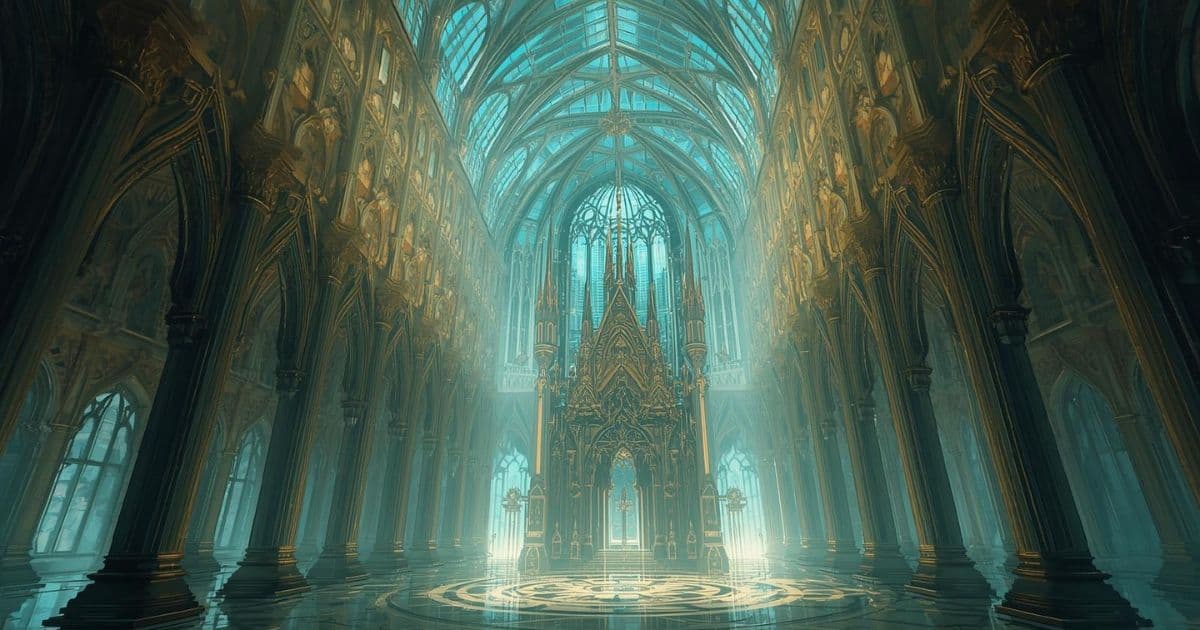
Teresa introduces her central metaphor: your soul is like a crystal castle with seven mansions, each room representing deeper levels of self-awareness. Most people live in the courtyard—distracted by external concerns, never venturing inside to explore the architecture of their own consciousness.
The Soul as Castle
The Interior Castle - Chapter 1
"Consider our soul to be like a castle made entirely out of a diamond or of very clear crystal, in which there are many rooms, just as in heaven there are many dwelling places."
Key Insight
You already possess infinite inner depth. The journey isn't about acquiring something new—it's about exploring what's already there. Most people never look beyond surface thoughts and emotions because they don't know there's anything deeper to find. Teresa gives you the map.
The Soul's Journey from Darkness to Light
Teresa describes how we begin in darkness—unaware of our inner landscape, caught in external distractions, barely conscious of our own thought patterns. The journey inward is from unconsciousness to awareness, from fragmentation to integration, from surface to depth.
The Soul's Journey from Darkness to Light
The Interior Castle - Chapter 2
Key Insight
Self-knowledge begins with recognizing how little you actually know yourself. You think you understand your motivations, but mostly you're running on automatic patterns you've never examined. Mapping your inner landscape starts with admitting you're currently lost.
The Danger of Spiritual Complacency
Teresa warns against staying in the outer rooms of the castle—those surface-level insights that make you feel spiritually advanced but never touch your deeper patterns. You read books, attend workshops, collect insights, but never actually venture into the uncomfortable rooms where real transformation happens.
The Danger of Spiritual Complacency
The Interior Castle - Chapter 3
Key Insight
Spiritual tourism isn't transformation. You can spend years exploring the same outer mansions, feeling like you're growing while actually avoiding the deeper work. Mapping your inner landscape requires courage to move beyond what's comfortable into territory you've been unconsciously avoiding.
Testing Our True Detachment
As you begin exploring deeper mansions, Teresa explains that you'll discover attachments you didn't know you had. Not just to obvious things like possessions or relationships, but to subtle things: your self-image, your need to be right, your stories about who you are. Each mansion reveals another layer of clinging.
Testing Our True Detachment
The Interior Castle - Chapter 4
Key Insight
The inner landscape has layers of self-deception. Each room you enter reveals attachments the previous room concealed. You think you've let go of ego, then discover ego just moved to a subtler room. Mapping your consciousness means becoming aware of depths of conditioning you didn't know existed.
When Your Mind Wanders During Prayer
Teresa addresses the practical problem every meditator knows: you sit down to explore inward, and immediately your mind fills with distractions, plans, memories, anxieties. She explains this isn't failure—it's encountering the outer rooms of consciousness that are always this chaotic. Most people quit here, thinking meditation doesn't work for them.
When Your Mind Wanders During Prayer
The Interior Castle - Chapter 5
Key Insight
Mental chatter isn't a bug—it's revealing the actual state of your consciousness. The inner landscape's outer rooms are genuinely noisy and distracted. You're not failing at meditation; you're successfully seeing what's actually there. The work isn't making thoughts stop—it's developing the capacity to observe them without getting lost.
When Love Begins to Transform You
Teresa describes entering the middle mansions where the inner landscape shifts dramatically. You're no longer just observing your thoughts—you're experiencing something deeper. Not intellectual understanding but direct knowing. The rooms here aren't chaotic; they're luminous, spacious, profound.
When Love Begins to Transform You
The Interior Castle - Chapter 11
Key Insight
Consciousness has regions that can't be reached through thinking. Teresa calls it 'infused contemplation'—modern psychology might call it flow states, peak experiences, or non-dual awareness. These deeper mansions exist in your inner landscape, but you can't think your way there. You have to let thought settle and discover what's beneath it.
Living from the Center
In the final chapters, Teresa describes those who've explored the entire castle and now live from its center—the seventh mansion. Their lives look ordinary from outside, but they've integrated all the mansions. They can navigate from center to surface and back. They know the architecture of their own consciousness intimately.
Living from the Center
The Interior Castle - Chapter 27
Key Insight
Complete self-knowledge doesn't make you otherworldly—it makes you fully present. When you know your inner landscape completely, you stop getting lost in passing thoughts and emotions. You can still experience them, but you know they're just rooms in a vast castle. You live from the center, not from whatever room you happen to be occupying at the moment.
Why This Matters Today
Modern psychology has rediscovered what Teresa mapped 450 years ago: consciousness has layers. Cognitive behavioral therapy works with surface thoughts (outer mansions). Depth psychology explores unconscious patterns (middle mansions). Contemplative neuroscience studies non-dual awareness states (inner mansions). Teresa's map integrates all of this into a coherent framework anyone can use.
We live in an attention economy that keeps us in the courtyard.Social media, constant notifications, manufactured urgency—all designed to prevent you from ever going inward. Most people experience only the most superficial layer of their own consciousness, mistaking mental chatter for the totality of their inner life. Teresa shows there's infinitely more depth available.
Mapping your inner landscape is practical, not mystical. It means developing awareness of your thought patterns, emotional triggers, unconscious motivations, and the spacious awareness beneath all of that. Every therapy session, meditation practice, or moment of genuine self-reflection is movement through Teresa's castle. The map hasn't changed. The territory hasn't changed. Only our language for describing it has evolved.