An excerpt from the original text.(complete · 2274 words)
THIS CHAPTER TREATS OF THE BEAUTY AND DIGNITY OF OUR SOULS AND MAKES A
COMPARISON TO EXPLAIN THIS. THE ADVANTAGE OF KNOWING AND UNDERSTANDING
THIS AND THE FAVOURS GOD GRANTS TO US IS SHOWN, AND HOW PRAYER IS THE
GATE OF THE SPIRITUAL CASTLE.
1. Plan of this book. 2. The Interior Castle. 3. Our curable self
ignorance. 4. God dwells in the centre of the soul. 5. Why all souls do
not receive certain favours. 6. Reasons for speaking of these favours.
7. The entrance of the Castle. 8. Entering into oneself. 9. Prayer. 10.
Those who dwell in the first mansion. 11. Entering. 12. Difficulties of
the subject.
1. WHILE I was begging our Lord to-day to speak for me, since I knew
not what to say nor how to commence this work which obedience has laid
upon me, an idea occurred to me which I will explain, and which will
serve as a foundation for that I am about to write.
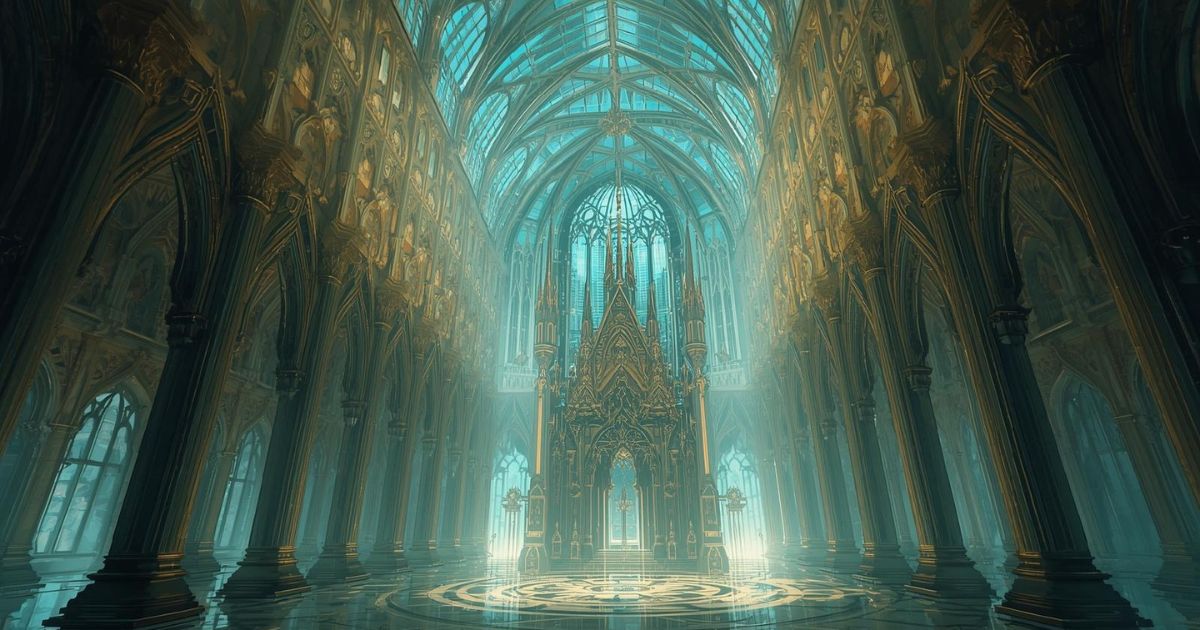
2. I thought of the soul as resembling a castle, [31] formed of a
single diamond or a very transparent crystal, [32] and containing
many rooms, just as in heaven there are many mansions. [33] If we
reflect, sisters, we shall see that the soul of the just man is but a
paradise, in which, God tells us, He takes His delight. [34] What, do
you imagine, must that dwelling be in which a King so mighty, so wise,
and so pure, containing in Himself all good, can delight to rest?
Nothing can be compared to the great beauty and capabilities of a soul;
however keen our intellects may be, they are as unable to comprehend
them as to comprehend God, for, as He has told us, He created us in His
own image and likeness. [35]
3. As this is so, we need not tire ourselves by trying to realize all
the beauty of this castle, although, being His creature, there is all
the difference between the soul and God that there is between the
creature and the Creator; the fact that it is made in God's image
teaches us how great are its dignity and loveliness. It is no small
misfortune and disgrace that, through our own fault, we neither
understand our nature nor our origin. Would it not be gross ignorance,
my daughters, if, when a man was questioned about his name, or country,
or parents, he could not answer? Stupid as this would be, it is
unspeakably more foolish to care to learn nothing of our nature except
that we possess bodies, and only to realize vaguely that we have souls,
because people say so and it is a doctrine of faith. Rarely do we
reflect upon what gifts our souls may possess, Who dwells within them,
or how extremely precious they are. Therefore we do little to preserve
their beauty; all our care is concentrated on our bodies, which are but
the coarse setting of the diamond, or the outer walls of the castle.
[36]
4. Let us imagine, as I said, that there are many rooms in this castle,
of which some are above, some below, others at the side; in the centre,
in the very midst of them all, is the principal chamber in which God
and the soul hold their most secret intercourse. [37] Think over this
comparison very carefully; God grant it may enlighten you about the
different kinds of graces He is pleased to bestow upon the soul. No one
can know all about them, much less a person so ignorant as I am. The
knowledge that such things are possible will console you greatly should
our Lord ever grant you any of these favours; people themselves
deprived of them can then at least praise Him for His great goodness in
bestowing them on others. The thought of heaven and the happiness of
the saints does us no harm, but cheers and urges us to win this joy for
ourselves, nor will it injure us to know that during this exile God can
communicate Himself to us loathsome worms; it will rather make us love
Him for such immense goodness and infinite mercy.
5. I feel sure that vexation at thinking that during our life on earth
God can bestow these graces on the souls of others shows a want of
humility and charity for one's neighbour, for why should we not feel
glad at a brother's receiving divine favours which do not deprive us of
our own share? Should we not rather rejoice at His Majesty's thus
manifesting His greatness wherever He chooses? [38] Sometimes our
Lord acts thus solely for the sake of showing His power, as He declared
when the Apostles questioned whether the blind man whom He cured had
been suffering for his own or his parents' sins. [39] God does not
bestow these favours on certain souls because they are more holy than
others who do not receive them, but to manifest His greatness, as in
the case of St. Paul and St. Mary Magdalen, and that we may glorify Him
in His creatures.
6. People may say such things appear impossible and it is best not to
scandalize the weak in faith by speaking about them. But it is better
that the latter should disbelieve us, than that we should desist from
enlightening souls which receive these graces, that they may rejoice
and may endeavour to love God better for His favours, seeing He is so
mighty and so great. There is no danger here of shocking those for whom
I write by treating of such matters, for they know and believe that God
gives even greater proofs of His love. I am certain that if any one of
you doubts the truth of this, God will never allow her to learn it by
experience, for He desires that no limits should be set to His work:
therefore, never discredit them because you are not thus led
yourselves.
7. Now let us return to our beautiful and charming castle and discover
how to enter it. This appears incongruous: if this castle is the soul,
clearly no one can have to enter it, for it is the person himself: one
might as well tell some one to go into a room he is already in! There
are, however, very different ways of being in this castle; many souls
live in the courtyard of the building where the sentinels stand,
neither caring to enter farther, nor to know who dwells in that most
delightful place, what is in it and what rooms it contains.
8. Certain books on prayer that you have read advise the soul to enter
into itself, [40] and this is what I mean. I was recently told by a
great theologian that souls without prayer are like bodies, palsied and
lame, having hands and feet they cannot use. Just so, there are souls
so infirm and accustomed to think of nothing but earthly matters, that
there seems no cure for them. It appears impossible for them to retire
into their own hearts; accustomed as they are to be with the reptiles
and other creatures which live outside the castle, they have come at
last to imitate their habits. Though these souls are by their nature so
richly endowed, capable of communion even with God Himself, yet their
case seems hopeless. Unless they endeavour to understand and remedy
their most miserable plight, their minds will become, as it were,
bereft of movement, just as Lot's wife became a pillar of salt for
looking backwards in disobedience to God's command. [41]
9. As far as I can understand, the gate by which to enter this castle
is prayer and meditation. I do not allude more to mental than to vocal
prayer, for if it is prayer at all, the mind must take part in it. If a
person neither considers to Whom he is addressing himself, what he
asks, nor what he is who ventures to speak to God, although his lips
may utter many words, I do not call it prayer. [42] Sometimes,
indeed, one may pray devoutly without making all these considerations
through having practised them at other times. The custom of speaking to
God Almighty as freely as with a slave--caring nothing whether the
words are suitable or not, but simply saying the first thing that comes
to mind from being learnt by rote by frequent repetition--cannot be
called prayer: God grant that no Christian may address Him in this
manner. I trust His Majesty will prevent any of you, sisters, from
doing so. Our habit in this Order of conversing about spiritual matters
is a good preservative against such evil ways.
10. Let us speak no more of these crippled souls, who are in a most
miserable and dangerous state, unless our Lord bid them rise, as He did
the palsied man who had waited more than thirty years at the pool of
Bethsaida. [43] We will now think of the others who at last enter the
precincts of the castle; they are still very worldly, yet have some
desire to do right, and at times, though rarely, commend themselves to
God's care. They think about their souls every now and then; although
very busy, they pray a few times a month, with minds generally filled
with a thousand other matters, for where their treasure is, there is
their heart also. [44] Still, occasionally they cast aside these
cares; it is a great boon for them to realize to some extent the state
of their souls, and to see that they will never reach the gate by the
road they are following.
11. At length they enter the first rooms in the basement of the castle,
accompanied by numerous reptiles [45] which disturb their peace, and
prevent their seeing the beauty of the building; still, it is a great
gain that these persons should have found their way in at all.
12. You may think, my daughters, that all this does not concern you,
because, by God's grace, you are farther advanced; still, you must be
patient with me, for I can explain myself on some spiritual matters
concerning prayer in no other way. May our Lord enable me to speak to
the point; the subject is most difficult to understand without personal
experience of such graces. Any one who has received them will know how
impossible it is to avoid touching on subjects which, by the mercy of
God, will never apply to us.
__________________________________________________________________
[31] Way of Perfection, ch. xxviii, 9.
[32] In her Life St. Teresa likened God to a diamond (ch. xl, 14); and
elsewhere (ch. xi, 10) the soul to a garden wherein our Lord takes His
delight.
[33] St. John xiv. 2: In domo Patris mei mansiones multæ sunt.' St.
John of the Cross uses the same comparison: If the soul shall overcome
the devil in the first combat, it shall then pass on to the second; and
if it shall be victorious there also, it shall then pass on to the
third; and then through the seven mansions, the seven degrees of love,
until the Bridegroom shall bring it to the "cellar of wine" of perfect
charity.' (Ascent of Mount Carmel, bk. ii. ch. xi. 7.)
[34] Prov. viii. 31: Deliciæ meæ esse cum filiis hominum.'
[35] Gen. i. 26: Faciamus hominem ad imaginem et similitudinem
nostram.'
[36] Way of Perf. ch. xxviii.
[37] St. John of the Cross on the words of his stanza: In the inner
cellar of my Beloved have I drunk.' Here the soul speaks of that
sovereign grace of God in taking it into the house of His love, which
is the union or transformation of love in God . . . The cellar is the
highest degree of love to which the soul can attain in this life, and
is therefore said to be the inner. It follows from this that there are
other cellars not so interior; that is, the degrees of love by which
souls reach to this, the last. These cellars are seven in number, and
the soul has entered them all when it has in perfection the seven gifts
of the Holy Ghost, so far as it is possible for it. . . . Many souls
reach and enter the first cellar, each according to the perfection of
its love, but the last and inmost cellar is entered by few in this
world, because therein is wrought the perfect union with God, the union
of the spiritual marriage.' A Spiritual Canticle, stanza xxvi. 1-3.
Concept. ch. vi. (Minor Works of St. Teresa.)
[38] St. Matt. xx. 15: Alit non licet mihi quod volo, facere? an oculus
tuus nequam est, quia ego bonus sum?'
[39] St. John ix. 2: Quis peccavit, hic, aut parentes ejus, ut cæcus
nasceretur?'
[40] Imitation, bk. II. ch. 1: Regnum Dei intra vos est.' Luke. xvii.
21. The Imitation is one of the books which according to St. Teresa's
Constitutions, (§ 7) every prioress was bound to provide for her
convent.
[41] Gen. xix. 26: Respiciensque uxor ejus post se, versa est in
statuam salis.'
[42] Way of Perf. ch. xxi. 6; xxix. 4.
[43] St. John v. 5: Erat autem quidam homo ibi triginta et octo annos
habens in infirmitate sua.'
[44] St. Matt. vi. 21: Ubi enim est thesaurus tuus ibi est et cor tuum.
[45] Many an ancient castle was provided with a bear-garden where rare
animals were kept for the amusement of the inhabitants. This may have
supplied the material for St. Teresa's comparison.
__________________________________________________________________
Master this chapter. Complete your experience
Purchase the complete book to access all chapters and support classic literature
As an Amazon Associate, we earn a small commission from qualifying purchases at no additional cost to you.
Available in paperback, hardcover, and e-book formats
Let's Analyse the Pattern
Living in constant proximity to your own potential while never exploring or developing it.
Why This Matters
Connect literature to life
This chapter teaches how to recognize when you're choosing familiar surface activities to avoid deeper self-exploration.
Practice This Today
This week, notice when you automatically reach for your phone or turn on the TV—ask yourself what you might be avoiding exploring about yourself in that moment.
Now let's explore the literary elements.
Key Quotes & Analysis
"I thought of the soul as resembling a castle, formed of a single diamond or a very transparent crystal, and containing many rooms"
Context: She's explaining the central metaphor that will guide the entire book
This image suggests that souls are both precious and transparent - valuable but also able to let light pass through. The many rooms imply there's always more to discover about ourselves.
In Today's Words:
Think of your inner self like a beautiful house with lots of rooms you've never explored
"It seems to me that many souls are like this: they live in the courtyard of the castle and never think of entering it"
Context: She's describing people who never turn inward for self-reflection
Teresa suggests most people live on the surface of their own lives, never exploring their deeper potential or connecting with their spiritual center.
In Today's Words:
Most people are strangers to themselves - they never take time to really figure out who they are inside
"The door of entry into this castle is prayer and meditation"
Context: She's explaining how to begin the spiritual journey
Prayer isn't just religious ritual for Teresa - it's the practical method for self-discovery and inner exploration. It's how you start the journey inward.
In Today's Words:
If you want to understand yourself better, you need to spend quiet time in reflection
Thematic Threads
Self-Knowledge
In This Chapter
Teresa argues most people know their bodies but remain strangers to their souls, living in the outer courtyard of their own potential
Development
Introduced here
In Your Life:
You might recognize this in how you know your daily routine but couldn't name what actually fulfills you.
Class
In This Chapter
Teresa democratizes spiritual wealth—everyone possesses an inner castle regardless of external circumstances
Development
Introduced here
In Your Life:
You might see this in assuming that deep reflection or personal growth is only for people with more education or money.
Distraction
In This Chapter
The 'reptiles' of worldly concerns keep souls circling the outer courtyard instead of venturing deeper
Development
Introduced here
In Your Life:
You might notice this in how you fill every quiet moment with screens or noise rather than sitting with your own thoughts.
Prayer
In This Chapter
Teresa distinguishes between mindless repetition and genuine conversation with the divine as the key to inner exploration
Development
Introduced here
In Your Life:
You might recognize this in the difference between going through motions versus having honest conversations with yourself about what matters.
Potential
In This Chapter
The crystal castle metaphor suggests everyone contains vast, unexplored richness within themselves
Development
Introduced here
In Your Life:
You might see this in talents or interests you've never pursued because they seemed impractical or impossible.
You now have the context. Time to form your own thoughts.
Discussion Questions
- 1
Teresa says most people live like strangers in their own homes, knowing they have souls but never exploring them. What does she mean by this, and how does she suggest we start exploring our inner 'castle'?
analysis • surface - 2
Why does Teresa compare souls without prayer to paralyzed bodies? What's the connection between self-reflection and being able to 'move' through life effectively?
analysis • medium - 3
Teresa describes 'reptiles' of worldly concerns that keep us in the outer courtyard. What are the modern 'reptiles' that prevent people from exploring their own potential and capabilities?
application • medium - 4
Think about someone you know who seems to really understand themselves versus someone who seems lost or reactive. What practical differences do you notice in how they handle challenges or make decisions?
application • deep - 5
Teresa suggests we possess vast inner resources but camp in the front yard of ourselves. What does this reveal about human nature and our tendency to settle for surface-level living?
reflection • deep
Critical Thinking Exercise
Map Your Inner Territory
Draw or list the 'rooms' of yourself that you know well versus those you've never explored. For example, you might know your work skills and family role, but never examined your creative abilities or what truly energizes you. Identify one unexplored 'room' and brainstorm three small ways you could investigate it this week.
Consider:
- •Consider both strengths and interests you've never developed
- •Notice which areas you avoid thinking about and why
- •Think about feedback others have given you that you've dismissed
Journaling Prompt
Write about a time when you discovered something unexpected about yourself. What prompted that discovery, and how did it change how you saw your capabilities or options?
Coming Up Next...
Chapter 2: The Soul's Journey from Darkness to Light
Having established the castle metaphor, Teresa will guide us into the first mansion, where souls begin their spiritual journey but still struggle with prayer and worldly attachments. She'll reveal what obstacles await newcomers to the spiritual life.