An excerpt from the original text.(complete · 6956 words)
DESCRIBES THE HIDEOUS APPEARANCE OF A SOUL IN MORTAL SIN AS REVEALED BY
GOD TO SOME ONE: OFFERS A FEW REMARKS ON SELF-KNOWLEDGE: THIS CHAPTER
IS USEFUL AS IT CONTAINS SOME POINTS REQUIRING ATTENTION. AN
EXPLANATION OF THE MANSIONS.
1. Effects of mortal sin. 2. It prevents the soul's gaining merit. 3.
The soul compared to a tree. 4. Disorder of the soul in mortal sin. 5.
Vision of a sinful soul. 6. Profit of realizing these lessons. 7.
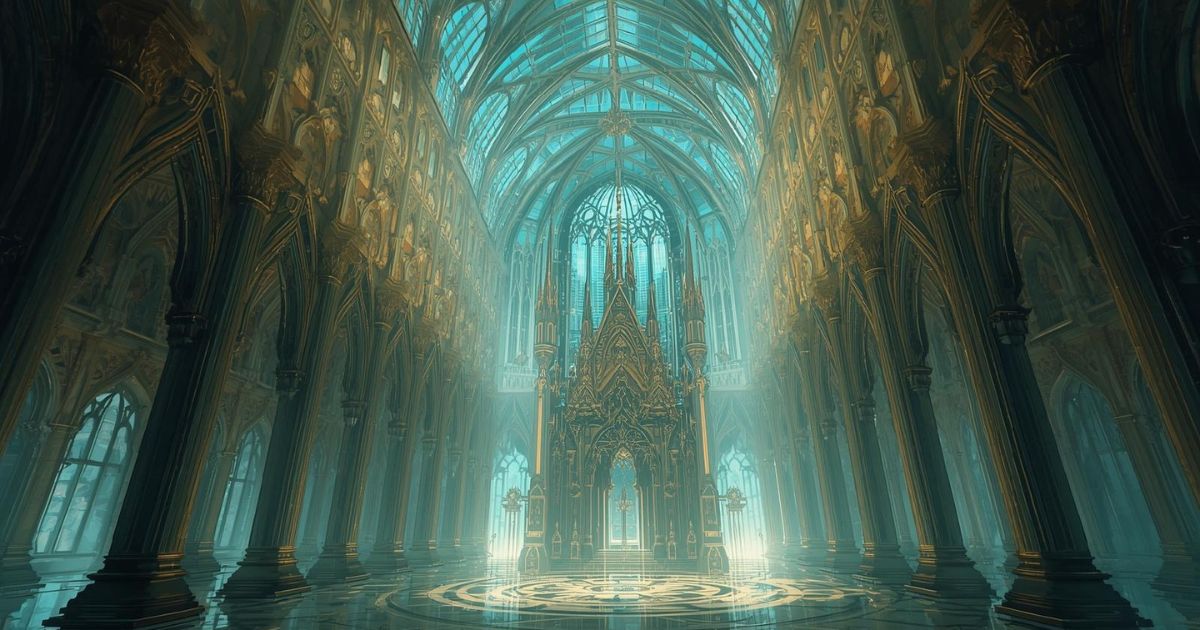
Prayer. 8. Beauty of the Castle. 9. Self-knowledge 10. Gained by
meditating on the divine perfections. 11. Advantages of such
meditation. 12. Christ should be our model. 13. The devil entraps
beginners. 14. Our strength must come from God. 15. Sin blinds the
soul. 16. Worldliness. 17. The world in the cloister. 18. Assaults of
the devil. 19. Examples of the devil's arts. 20. Perfection consists in
charity. 21. Indiscreet zeal. 22. Danger of detraction.
1. BEFORE going farther, I wish you to consider the state to which
mortal sin [46] brings this magnificent and beautiful castle, this
pearl of the East, this tree of life, planted beside the living waters
of life [47] which symbolize God Himself. No night can be so dark, no
gloom nor blackness can compare to its obscurity. Suffice it to say
that the sun in the centre of the soul, which gave it such splendour
and beauty, is totally eclipsed, though the spirit is as fitted to
enjoy God's presence as is the crystal to reflect the sun. [48]
2. While the soul is in mortal sin nothing can profit it; none of its
good works merit an eternal reward, since they do not proceed from God
as their first principle, and by Him alone is our virtue real virtue.
The soul separated from Him is no longer pleasing in His eyes, because
by committing a mortal sin, instead of seeking to please God, it
prefers to gratify the devil, the prince of darkness, and so comes to
share his blackness. I knew a person to whom our Lord revealed the
result of a mortal sin [49] and who said she thought no one who
realized its effects could ever commit it, but would suffer
unimaginable torments to avoid it. This vision made her very desirous
for all to grasp this truth, therefore I beg you, my daughters, to pray
fervently to God for sinners, who live in blindness and do deeds of
darkness.
3. In a state of grace the soul is like a well of limpid water, from
which flow only streams of clearest crystal. Its works are pleasing
both to God and man, rising from the River of Life, beside which it is
rooted like a tree. Otherwise it would produce neither leaves nor
fruit, for the waters of grace nourish it, keep it from withering from
drought, and cause it to bring forth good fruit. But the soul by
sinning withdraws from this stream of life, and growing beside a black
and fetid pool, can produce nothing but disgusting and unwholesome
fruit.
Notice that it is not the fountain and the brilliant sun which lose
their splendour and beauty, for they are placed in the very centre of
the soul and cannot be deprived of their lustre. The soul is like a
crystal in the sunshine over which a thick black cloth has been thrown,
so that however brightly the sun may shine the crystal can never
reflect it.
4. O souls, redeemed by the Blood of Jesus Christ, take these things to
heart; have mercy on yourselves! If you realize your pitiable
condition, how can you refrain from trying to remove the darkness from
the crystal of your souls? Remember, if death should take you now, you
would never again enjoy the light of this Sun. O Jesus! how sad a sight
must be a soul deprived of light! What a terrible state the chambers of
this castle are in! How disorderly must be the senses--the inhabitants
of the castle--the powers of the soul its magistrates, governors, and
stewards--blind and uncontrolled as they are! In short, as the soil in
which the tree is now planted is in the devil's domain, how can its
fruit be anything but evil? A man of great spiritual insight once told
me he was not so much surprised at such a soul's wicked deeds as
astonished that it did not commit even worse sins. May God in His mercy
keep us from such great evil, for nothing in this life merits the name
of evil in comparison with this, which delivers us over to evil which
is eternal.
5. This is what we must dread and pray God to deliver us from, for we
are weakness itself, and unless He guards the city, in vain shall we
labour to defend it. [50] The person of whom I spoke [51] said that
she had learnt two things from the vision granted her. The first was, a
great fear of offending God; seeing how terrible were the consequences,
she constantly begged Him to preserve her from falling into sin.
Secondly, it was a mirror to teach her humility, for she saw that
nothing good in us springs from ourselves but comes from the waters of
grace near which the soul remains like a tree planted beside a river,
and from that Sun which gives life to our works. She realized this so
vividly that on seeing any good deed performed by herself or by other
people she at once turned to God as to its fountain head--without whose
help she knew well we can do nothing--and broke out into songs of
praise to Him. Generally she forgot all about herself and only thought
of God when she did any meritorious action.
6. The time which has been spent in reading or writing on this subject
will not have been lost if it has taught us these two truths; for
though learned, clever men know them perfectly, women's wits are dull
and need help in every way. Perhaps this is why our Lord has suggested
these comparisons to me; may He give us grace to profit by them!
7. So obscure are these spiritual matters that to explain them an
ignorant person like myself must say much that is superfluous, and even
alien to the subject, before coming to the point. My readers must be
patient with me, as I am with myself while writing what I do not
understand; indeed, I often take up the paper like a dunce, not knowing
what to say, nor how to begin. Doubtless there is need for me to do my
best to explain these spiritual subjects to you, for we often hear how
beneficial prayer is for our souls; our Constitutions oblige us to pray
so many hours a day, yet tell us nothing of what part we ourselves can
take in it and very little of the work God does in the soul by its
means. [52] It will be helpful, in setting it before you in various
ways, to consider this heavenly edifice within us, so little understood
by men, near as they often come to it. Our Lord gave me grace to
understand something of such matters when I wrote on them before, yet I
think I have more light now, especially on the more difficult
questions. Unfortunately I am too ignorant to treat of such subjects
without saying much that is already well known.
8. Now let us turn at last to our castle with its many mansions. You
must not think of a suite of rooms placed in succession, but fix your
eyes on the keep, the court inhabited by the King. [53] Like the
kernel of the palmito, [54] from which several rinds must be removed
before coming to the eatable part, this principal chamber is surrounded
by many others. However large, magnificent, and spacious you imagine
this castle to be, you cannot exaggerate it; the capacity of the soul
is beyond all our understanding, and the Sun within this palace
enlightens every part of it.
9. A soul which gives itself to prayer, either much or little, should
on no account be kept within narrow bounds. Since God has given it such
great dignity, permit it to wander at will through the rooms of the
castle, from the lowest to the highest. Let it not force itself to
remain for very long in the same mansion, even that of self-knowledge.
Mark well, however, that self-knowledge is indispensable, even for
those whom God takes to dwell in the same mansion with Himself. Nothing
else, however elevated, perfects the soul which must never seek to
forget its own nothingness. Let humility be always at work, like the
bee at the honeycomb, or all will be lost. But, remember, the bee
leaves its hive to fly in search of flowers and the soul should
sometimes cease thinking of itself to rise in meditation on the
grandeur and majesty of its God. It will learn its own baseness better
thus than by self-contemplation, and will be freer from the reptiles
which enter the first room where self-knowledge is acquired. Although
it is a great grace from God to practise self-examination, yet too much
is as bad as too little,' as they say; believe me, by God's help, we
shall advance more by contemplating the Divinity than by keeping our
eyes fixed on ourselves, poor creatures of earth that we are.
10. I do not know whether I have put this clearly; self-knowledge is of
such consequence that I would not have you careless of it, though you
may be lifted to heaven in prayer, because while on earth nothing is
more needful than humility. Therefore, I repeat, not only a good way,
but the best of all ways, is to endeavour to enter first by the room
where humility is practised, which is far better than at once rushing
on to the others. This is the right road;--if we know how easy and safe
it is to walk by it, why ask for wings with which to fly? Let us rather
try to learn how to advance quickly. I believe we shall never learn to
know ourselves except by endeavouring to know God, for, beholding His
greatness we are struck by our own baseness, His purity shows our
foulness, and by meditating on His humility we find how very far we are
from being humble.
11. Two advantages are gained by this practice. First, it is clear that
white looks far whiter when placed near something black, and on the
contrary, black never looks so dark as when seen beside something
white. Secondly, our understanding and will become more noble and
capable of good in every way when we turn from ourselves to God: it is
very injurious never to raise our minds above the mire of our own
faults. I described how murky and fetid are the streams that spring
from the source of a soul in mortal sin. [55] Thus (although the case
is not really the same, God forbid! this is only a comparison), while
we are continually absorbed in contemplating the weakness of our
earthly nature, the springs of our actions will never flow free from
the mire of timid, weak, and cowardly thoughts, such as: I wonder
whether people are noticing me or not! If I follow this course, will
harm come to me? Dare I begin this work? Would it not be presumptuous?
Is it right for any one as faulty as myself to speak on sublime
spiritual subjects? [56] Will not people think too well of me, if I
make myself singular? Extremes are bad, even in virtue; sinful as I am
I shall only fall the lower. Perhaps I shall fail and be a source of
scandal to good people; such a person as I am has no need of
peculiarities.'
12. Alas, my daughters, what loss the devil must have caused to many a
soul by such thoughts as these! It thinks such ideas and many others of
the same sort I could mention arise from humility. This comes from not
understanding our own nature; self-knowledge becomes so warped that,
unless we take our thoughts off ourselves, I am not surprised that
these and many worse fears should threaten us. Therefore I maintain, my
daughters, that we should fix our eyes on Christ our only good, and on
His saints; there we shall learn true humility, and our minds will be
ennobled, so that self-knowledge will not make us base and cowardly.
Although only the first, this mansion contains great riches and such
treasures that if the soul only manages to elude the reptiles dwelling
here, it cannot fail to advance farther. Terrible are the wiles and
stratagems the devil uses to hinder people from realizing their
weakness and detecting his snares.
13. From personal experience I could give you much information as to
what happens in these first mansions. I will only say that you must not
imagine there are only a few, but a number of rooms, for souls enter
them by many different ways, and always with a good intention. The
devil is so angry at this that he keeps legions of evil spirits hidden
in each room to stop the progress of Christians, whom, being ignorant
of this, he entraps in a thousand ways. He cannot so easily deceive
souls which dwell nearer to the King as he can beginners still absorbed
in the world, immersed in its pleasures, and eager for its honours and
distinctions. As the vassals of their souls, the senses and powers
bestowed on them by God, are weak, such people are easily vanquished,
although desirous not to offend God.
14. Those conscious of being in this state must as often as possible
have recourse to His Majesty, taking His Blessed Mother and the saints
for their advocates to do battle for them, because we creatures possess
little strength for self-defence. Indeed in every state of life all our
help must come from God; may He in His mercy grant it us, Amen! What a
miserable life we lead! As I have spoken more fully in other writings
[57] on the ill that results from ignoring the need of humility and
self-knowledge, I will treat no more about it here, my daughters,
although it is of the first importance. God grant that what I have said
may be useful to you.
15 You must notice that the light which comes from the King's palace
hardly shines at all in these first mansions; although not as gloomy
and black as the soul in mortal sin, yet they are in semi-darkness, and
their inhabitants see scarcely anything. I cannot explain myself; I do
not mean that this is the fault of the mansions themselves, but that
the number of snakes, vipers, and venomous reptiles from outside the
castle prevent souls entering them from seeing the light. They resemble
a person entering a chamber full of brilliant sunshine, with eyes
clogged and half closed with dust. Though the room itself is light, he
cannot see because of his self-imposed impediment. In the same way,
these fierce and wild beasts blind the eyes of the beginner, so that he
sees nothing but them.
16. Such, it appears to me, is the soul which, though not in a state of
mortal sin, is so worldly and preoccupied with earthly riches, honours,
and affairs, that as I said, even if it sincerely wishes to enter into
itself and enjoy the beauties of the castle, it is prevented by these
distractions and seems unable to overcome so many obstacles. It is most
important to withdraw from all unnecessary cares and business, as far
as compatible with the duties of one's state of life, in order to enter
the second mansion. This is so essential, that unless done immediately
I think it impossible for any one ever to reach the principal room, or
even to remain where he is without great risk of losing what is already
gained; otherwise, although he is inside the castle, he will find it
impossible to avoid being bitten some time or other by some of the very
venomous creatures surrounding him.
17. What then would become of a religious like ourselves, my daughters,
if, after having escaped from all these impediments, and having entered
much farther into the more secret mansion, she should, by her own
fault, return to all this turmoil? Through her sins, many other people
on whom God had bestowed great graces would culpably relapse into their
wretched state. In our convents we are free from these exterior evils;
please God our minds may be as free from them, and may He deliver us
from such ills.
18. Do not trouble yourselves, my daughters, with cares which do not
concern you. You must notice that the struggle with the demons
continues through nearly all the mansions of this castle. True, in some
of them, the guards, which, as I explained, are the powers of the soul,
have strength for the combat, but we must be keenly on the watch
against the devils's arts, lest he deceive us in the form of an angel
of light. He creeps in gradually, in numberless ways, and does us much
harm, though we do not discover it until too late. [58]
19. As I said elsewhere, [59] he works like a file, secretly and
silently wearing its way: I will give you some examples to show how he
begins his wiles. For instance: a nun has such a longing for penance as
to feel no peace unless she is tormenting herself in some way. [60]
This is good in itself; but suppose that the Prioress has forbidden her
to practise any mortifications without special leave, and the sister
thinking that, in such a meritorious cause, she may venture to disobey,
secretly leads such a life that she loses her health and cannot even
fulfil the requirements of her rule--you see how this show of good
ends. Another nun is very zealous about religious perfection; this is
very right, but may cause her to think every small fault she sees in
her sisters a serious crime, and to watch constantly whether they do
anything wrong, that she may run to the Prioress to accuse them of it.
At the same time, may be she never notices her own shortcomings because
of her great zeal about other people's religious observance, while
perhaps her sisters, not seeing her intention but only knowing of the
watch she keeps on them, do not take her behaviour in good part.
20. The devil's chief aim here is to cool the charity and lessen the
mutual affection of the nuns, which would injure them seriously. Be
sure, my daughters, that true perfection consists in the love of God
and our neighbour, and the better we keep both these commandments, the
more perfect we shall be. The sole object of our Rule and Constitutions
is to help us to observe these two laws.
21. Indiscreet zeal about others must not be indulged in; it may do us
much harm; let each one look to herself. However, as I have spoken
fully on this subject elsewhere, [61] I will not enlarge on it here,
and will only beg you to remember the necessity of this mutual
affection. Our souls may lose their peace and even disturb other
people's if we are always criticizing trivial actions which often are
not real defects at all, but we construe them wrongly through ignorance
of their motives. See how much it costs to attain perfection! Sometimes
the devil tempts nuns in this way about the Prioress, which is still
more dangerous. Great prudence is then required, for if she disobeys
the Rule or Constitutions the matter must not always be overlooked, but
should be mentioned to her; [62] if, after this, she does not amend,
the Superior of the Order should be informed of it. It is true charity
to speak in this case, as it would be if we saw our sisters commit a
grave fault; to keep silence for fear that speech would be a temptation
against charity, would be that very temptation itself. [63]
22. However, I must warn you seriously not to talk to each other about
such things, lest the devil deceive you. He would gain greatly by your
doing so, because it would lead to the habit of detraction; rather, as
I said, state the matter to those whose duty it is to remedy it. Thank
God our custom here of keeping almost perpetual silence gives little
opportunity for such conversations, still, it is well to stand ever on
our guard.
__________________________________________________________________
[46] Life, ch. xxxviii. 31; ch. xl. 15.
[47] Ps. i. 3: Et erit tamquam lignum quod plantatum eat secus decursus
aquarum.'
[48] Way of Perf. ch. xxviii. 9.
[49] In this as in most other cases when the Saint speaks of a person
she knows,' she means herself. Life, ch. xl, 15.
[50] cxxvi. 1: 'Nisi Dominus custodierit civitatem, frustra vigilat qui
custodit eam.'
[51] Life, ch. xxxviii. 33; ch. xl. 15, 16.
[52] Life, ch. x. 2 sqq. Constitut. 2, 6.
[53] Way of Perf.. ch. xxviii. 1.
[54] The palmito here referred to is not a palm, but a shrub about four
feet high and very dense with leaves, resembling palm leaves. The
poorer classes and principally children dig it up by the roots, which
they peel of its many layers until a sort of kernel is disclosed, which
is eaten, not without relish, and is somewhat like a filbert in taste.
See St. John of the Cross, Accent of Mount Carmel, bk. ii. ch, xiv, 3.
[55] Supra, § 3.
[56] Life, ch. viii. 6, x. 4, xxiii. 3-5. Way of Perf. ch. xxxix. 1.
[57] Life ch. xiii. 23. Way of Perf. ch. x. 4. Castle, M. iii. ch. ii.
8. Concep. ch. ii. 20. Const. 21.
[58] Life ch. xxxi. 23.
[59] No doubt the Saint often used this excellent comparison in her
verbal instructions, but it occurs nowhere else in her writings.
[60] Way of Perf. ch. x. 5; xxxix. 4; Rel. iii. 12.
[61] The Saint must frequently have spoken on the subject, but she
never treated it more fully than in this place. Way of Perf. ch. xii.
7. Life, ch. xiii. 11, 14 sqq. Visitation of convents.
[62] Way of Perfection, ch. ii. 3. Visit. 20-22, 34, 36.
[63] 'It is terrible to think what harm a Prioress can do! For although
the Sisters witness things which scandalize them (of which there are
plenty here!), yet they think it would be sinning against obedience to
see any harm in them.' (Letter to Father Gracian, written at Malagon at
the beginning of December, 5579. Letters, Vol. III.)
_________________________________________________________________
_________________________________________________________________
THE SECOND MANSIONS
__________________________________________________________________
ONLY CHAPTER
TREATS OF THE GREAT IMPORTANCE OF PERSEVERANCE IN ORDER TO ENTER THE
LAST MANSIONS, AND OF THE FIERCE WAR THE DEVIL WAGES AGAINST US. HOW
ESSENTIAL IT IS TO TAKE THE RIGHT PATH FROM THE VERY COMMENCEMENT OF
OUR JOURNEY. A METHOD OF ACTION WHICH HAS PROVED VERY EFFICACIOUS.
1. Souls in the second mansions. 2. Their state. 3. Their sufferings.
4. They cannot get rid of their imperfections. 5. How God calls these
souls. 6. Perseverance is essential. 7. Temptations of the devil. 8.
Delusion of earthly joys. 9. God alone to be loved. 10. Reasons for
continuing the journey. 11. War fare of the devil. 12. Importance of
choice of friends. 13. Valour required. 14. Presumption of expecting
spiritual consolations at first. 15. In the Cross is strength. 16. Our
falls should raise us higher. 17. Confidence and perseverance. 18.
Recollection. 19. Why we must practise prayer. 20. Meditation kindles
love.
1. Now let us consider which are the souls that enter the second
mansions, and what they do there: I do not wish to enlarge on this
subject, having already treated it very fully elsewhere, [64] for I
could not avoid repeating myself, as my memory is very bad. If I could
state my ideas in another form they would not weary you, for we never
tire of reading books on this subject, numerous as they are. 2. In this
part of the castle are found souls which have begun to practise prayer;
they realize the importance of their not remaining in the first
mansions, yet often lack determination to quit their present condition
by avoiding occasions of sin, which is a very perilous state to be in.
3. However, it is a great grace that they should sometimes make good
their escape from the vipers and poisonous creatures around them and
should understand the need of avoiding them. In some way these souls
suffer a great deal more than those in the first mansions, although not
in such danger, as they begin to understand their peril and there are
great hopes of their entering farther into the castle. I say that they
suffer a great deal more, for those in an earlier stage are like
deaf-mutes and are not so distressed at being unable to speak, while
the others, who can hear but cannot talk, find it much harder. At the
same time, it is better not to be deaf, and a decided advantage to hear
what is said to us.
4. These souls hear our Lord calling them, for as they approach nearer
to where His Majesty dwells He proves a loving Neighbour, though they
may still be engaged in the amusements and business, the pleasures and
vanities of this world. While in this state we continually fall into
sin and rise again, for the creatures amongst whom we dwell are so
venomous, so vicious, and so dangerous, that it is almost impossible to
avoid being tripped up by them. Yet such are the pity and compassion of
this Lord of ours, so desirous is He that we should seek Him and enjoy
His company, that in one way or another He never ceases calling us to
Him. So sweet is His voice, that the poor soul is disconsolate at being
unable to follow His bidding at once, and therefore, as I said, suffers
more than if it could not hear Him.
5. I do not mean that divine communications and inspirations received
in this mansion are the same as those I shall describe later on; God
here speaks to souls through words uttered by pious people, by sermons
or good books, and in many other such ways. Sometimes He calls souls by
means of sickness or troubles, or by some truth He teaches them during
prayer, for tepid as they may be in seeking Him, yet God holds them
very dear.
6. Do not think lightly, sisters, of this first grace, nor be downcast
if you have not responded immediately to Our Lord's voice, for His
Majesty is willing to wait for us many a day and even many a year,
especially when He sees perseverance and good desires in our hearts.
Perseverance is the first essential; with this we are sure to profit
greatly. However, the devils now fiercely assault the soul in a
thousand different ways: it suffers more than ever, because formerly it
was mute and deaf, or at least could hear very little, and offered but
feeble resistance, like one who has almost lost all hope of victory.
7. Here, however, the understanding being more vigilant and the powers
more on the alert, we cannot avoid hearing the fighting and cannonading
around us. For now the devils set on us the reptiles, that is to say,
thoughts about the world and its joys which they picture as unending;
they remind us of the high esteem men held us in, of our friends and
relations; they tell us how the penances which souls in this mansion
always begin to wish to perform would injure our health: in fine, the
evil spirits place a thousand impediments in the way.
8. O Jesus! What turmoil the devils cause in the poor soul! How unhappy
it feels, not knowing whether to go forward or to return to the first
mansion! On the other hand, reason shows it the delusion of overrating
worldly things, while faith teaches what alone can satisfy its
cravings. Memory reminds the soul how all earthly joys end, recalling
the death of those who lived at ease; how some died suddenly and were
soon forgotten, how others, once so prosperous, are now buried beneath
the ground and men pass by the graves where they lie, the prey of
worms, [65] while the mind recalls many other such incidents.
9. The will inclines to love Our Lord and longs to make some return to
Him Who is so amiable, and Who has given so many proofs of His love,
especially by His constant presence with the soul, which this faithful
Lover never quits, ever accompanying it and giving it life and being.
The understanding aids by showing that however many years life might
last, no one could ever wish for a better friend than God; that the
world is full of falsehood, and that the worldly pleasures pictured by
the devil to the mind were but troubles and cares and annoyances in
disguise.
10. Reason convinces the soul that as outside its interior castle are
found neither peace nor security, it should cease to seek another home
abroad, its own being full of riches that it can enjoy at will.
Besides, it is not every one who, like itself, possesses all he needs
within his own dwelling, and above all, such a Host, Who will give it
all it can desire, unless, like the prodigal son, it chooses to go
astray and feed with the swine. [66] Surely these arguments are
strong enough to defeat the devil's wiles! But, O my God, how the force
of worldly habits and the example of others who practise them ruin
everything! Our faith is so dead that we trust less to its teaching
than to what is visible, though, indeed, we see that worldly lives
bring nothing but unhappiness. All this results from those venomous
thoughts I described, which, unless we are very careful, will deform
the soul as the sting of a viper poisons and swells the body.
11. When this happens, great care is evidently needed to cure it, and
only God's signal mercy prevents its resulting in death. Indeed, the
soul passes through severe trials at this time, especially when the
devil perceives from a person's character and behaviour that she is
likely to make very great progress, for then all hell will league
together to force her to turn back. O my Lord! what need there is here
that, by Thy mercy, Thou shouldst prevent the soul from being deluded
into forsaking the good begun! Enlighten it to see that its welfare
consists in perseverance in the right way, and in the withdrawing from
bad company.
12. It is of the utmost importance for the beginner to associate with
those who lead a spiritual life, [67] and not only with those in the
same mansion as herself, but with others who have travelled farther
into the castle, who will aid her greatly and draw her to join them.
The soul should firmly resolve never to submit to defeat, for if the
devil sees it staunchly determined to lose life and comfort and all
that he can offer, rather than return to the first mansion, he will the
sooner leave it alone.
13. Let the Christian be valiant; let him not be like those who lay
down to drink from the brook when they went to battle (I do not
remember when). [68] Let him resolve to go forth to combat with the
host of demons, and be convinced that there is no better weapon than
the cross. I have already said, [69] yet it is of such importance
that I repeat it here: let no one think on starting of the reward to be
reaped: this would be a very ignoble way of commencing such a large and
stately building. If built on sand it would soon fall down. [70]
Souls who acted thus would continually suffer from discouragement and
temptations, for in these mansions no manna rains; [71] farther on,
the soul is pleased with all that comes, because it desires nothing but
what God wills.
14. What a farce it is! Here are we, with a thousand obstacles,
drawbacks, and imperfections within ourselves, our virtues so newly
born that they have scarcely the strength to act (and God grant that
they exist at all!) yet we are not ashamed to expect sweetness in
prayer and to complain of feeling dryness. [72]
15. Do not act thus, sisters; embrace the cross your Spouse bore on His
shoulders; know that your motto should be: Most happy she who suffers
most if it be for Christ!' [73] All else should be looked upon as
secondary: if our Lord give it you, render Him grateful thanks. You may
imagine you would be resolute in enduring external trials if God gave
you interior consolations: His Majesty knows best what is good for us;
it is not for us to advise Him how to treat us, for He has the right to
tell us that we know not what we ask. [74] Remember, it is of the
greatest importance--the sole aim of one beginning to practise prayer
should be to endure trials, and to resolve and strive to the utmost of
her power to conform her own will to the will of God. [75] Be certain
that in this consists all the greatest perfection to be attained in the
spiritual life, as I will explain later. She who practises this most
perfectly will receive from God the highest reward and is the farthest
advanced on the right road. Do not imagine that we have need of a
cabalistic formula or any other occult or mysterious thing to attain it
our whole welfare consists in doing the will of God. If we start with
the false principle of wishing God to follow our will and to lead us in
the way we think best, upon what firm foundation can this spiritual
edifice rest?
16. Let us endeavour to do our best: beware of the poisonous
reptiles--that is to say, the bad thoughts and aridities which are
often permitted by God to assail and torment us so that we cannot repel
them. Indeed, perchance we feel their sting! He allows this to teach us
to be more on our guard in the future and to see whether we grieve much
at offending Him. Therefore if you occasionally lapse into sin, do not
lose heart and cease trying to advance, for God will draw good even out
of our falls, like the merchant who sells theriac, who first takes
poison, then the theriac, to prove the power of his elixir. [76] This
combat would suffice to teach us to amend our habits if we realized our
failings in no other way, and would show us the injury we receive from
a life of dissipation. Can any evil be greater than that we find at
home? What peace can we hope to find elsewhere, if we have none within
us? What friends or kindred can be so close and intimate as the powers
of our soul, which, whether we will or no, must ever bear us company?
These seem to wage war on us as if they knew the harm our vices had
wrought them. Peace, peace be unto you,' my sisters, as our Lord said,
and many a time proclaimed to His Apostles. [77] Believe me, if we
neither possess nor strive to obtain this peace at home, we shall never
find it abroad.
17. By the blood which our Lord shed for us, I implore those who have
not yet begun to enter into themselves, to stop this warfare: I beg
those already started in the right path, not to let the combat turn
them back from it. Let them reflect that a relapse is worse than a
fall, and see what ruin it would bring. They should confide in God's
mercy, trusting nothing in themselves; then they will see how His
Majesty will lead them from one mansion to another, and will set them
in a place where these wild beasts can no more touch or annoy them, but
will be entirely at their mercy and merely objects of ridicule. Then,
even in this life, they will enjoy a far greater happiness than they
are able even to desire.
18. As I said at the beginning of this work, I have explained elsewhere
[78] how you should behave when the devil thus disturbs you. I also
told you that the habit of recollection is not to be gained by force of
arms, but with calmness, which will enable you to practise it for a
longer space of time. [79] I will say no more now, except that I
think it very helpful for those of you who are beginners to consult
persons experienced in such matters, lest you imagine that you are
injuring yourselves by leaving your prayer to perform any necessary
duties. This is not the case; our Lord will direct such things to our
profit, although we may have no one to counsel us. [80] The only
remedy for having given up a habit of recollection is to recommence it,
otherwise the soul will continue to lose it more and more every day,
and God grant it may realize its danger.
19. You may think, that if it is so very injurious to desist, it would
have been better never to have begun, and to have remained outside the
castle. But, as I began by saying, and as God Himself declares: He that
loves danger shall perish by it,' [81] and the door by which we must
enter this castle is prayer. Remember, we must get to heaven, and it
would be madness to think we could do so without sometimes retiring
into our souls so as to know ourselves, or thinking of our failings and
of what we owe to God, or frequently imploring His mercy. Our Lord also
says, No man cometh to the Father but by Me' [82] (I am not sure
whether this quotation is correct, but I think so), and, He that seeth
Me seeth the Father also.' [83]
20. If we never look up at Him and reflect on what we owe Him for
having died for us, I do not understand how we can know Him, or perform
good deeds in His service. What value is there in faith without works?
and what are they worth if they are not united to the merits of Jesus
Christ, our only good? What would incite us to love our Lord unless we
thought of Him? May He give us grace to understand how much we cost
Him; that the servant is not above his lord' [84] ; that we must toil
for Him if we would enjoy His glory; and prayer is a necessity to
prevent us from constantly falling into temptation. [85]
__________________________________________________________________
[64] Life, ch. xi-xiii. Way of Perf. ch. xx.-xxix.
[65] 'How many, thinking to live long, have been deceived and
unexpectedly have been snatched away! How often hast thou heard that
such a one was slain by the sword; another drowned; another, falling
from on high, broke his neck; this man died at the table; that other
came to his death while he was at play. . . . Thus death is the end of
all; and man's life passeth suddenly like a shadow' (Imitation, bk. 1.
ch. xxiii. 7). The edition of the Imitation known to St. Teresa under
the title of Contemptus Mundi was translated by Luis de Granada,
printed at Seville in 1536, at Lisbon in 1542, and at Alcalá in 1548.
See Life, ch. xxxix. 21, note.
[66] St. Luke xv. 16: Et cupiebat implere ventrem suum de siliquis quas
porci manducabant.'
[67] Life, ch. vii. 33-37; xvi. 1 2; XXX. 6. Way of Perfection, ch. vi.
1; Vii. 4.
[68] With Gedeon. Jud. vii. 5: Qui lingua lambuerint aquas, sicut
solent canes lambere, separabis eos seorsum.'
[69] Life, ch. xi 16.
[70] St. Matt. vii. 26, 27: Qui ædificavit domum suam super arenam . .
. et fuit ruina illius magna.'
[71] Ps. lxxvii. 24: Pluit illis manna ad manducandum.' Way of Perf.
ch. x. 4.
[72] Life, ch. xii. 5.
[73] Way of Perf. ch. xvii. 6; xxiii. 1.
[74] St. Matt. xx. 22: Nescitis quid petatis.'
[75] Way of Perf. ch. xvi. 2. Found. ch. v. 2, 3. Life, ch. iv. II; xi.
20.
[76] A drug greatly in vogue until recent times. It was composed of all
the essences supposed to contain life-giving and life-preserving
qualities of animals and plants.
[77] St. Luke xxiv. 36. St. John xx. 19.
[78] Life, ch. xi. and xix. 8. Way of Perfection, ch. xxiii. 3.
[79] Way of Perf. ch. xix. 3.
[80] Way of Perf. ch. xxiii. 3.
[81] Ecclus. iii. 27: Qui amat periculum, in illo peribit.'
[82] St. John xiv. 6: Nemo venit ad Patrem, nisi per Me.'
[83] St. John xiv. 9. Qui videt me, videt et Patrem.'
[84] St. Matt. x. 24: Nec servus super dominum suum.'
[85] St. Matt. xxvi. 41: Orate ut non intretis in tentationem.'
_________________________________________________________________
_________________________________________________________________
THE THIRD MANSIONS
__________________________________________________________________
Master this chapter. Complete your experience
Purchase the complete book to access all chapters and support classic literature
As an Amazon Associate, we earn a small commission from qualifying purchases at no additional cost to you.
Available in paperback, hardcover, and e-book formats
Let's Analyse the Pattern
The painful stage where awareness of your potential exceeds your current ability to change, leaving you caught between your old life and your desired new one.
Why This Matters
Connect literature to life
This chapter teaches how to identify when you're caught between your old life and your potential new one—the most dangerous stage for giving up.
Practice This Today
This week, notice when you feel simultaneously dissatisfied with where you are and scared to move forward—that's not weakness, that's awareness beginning to activate.
Now let's explore the literary elements.
Key Quotes & Analysis
"No night can be so dark, no gloom nor blackness can compare to its obscurity"
Context: Teresa describes the state of a soul completely cut off from its spiritual source
This vivid imagery shows how spiritual disconnection affects everything about us. When we lose touch with our deepest values and purpose, life becomes fundamentally dark regardless of external circumstances.
In Today's Words:
When you're totally disconnected from what matters most, everything feels hopeless and empty.
"They resemble persons in a dark dungeon, bound hand and foot, who can neither move nor see nor feel the warmth of the sun"
Context: Describing souls in the second mansions who can hear God calling but feel powerless to respond fully
This captures the frustration of knowing what you need to do but feeling trapped by old patterns. It's the painful awareness that comes with beginning to wake up spiritually.
In Today's Words:
You know you need to change your life, but you feel stuck and can't seem to break free from what's holding you back.
"Self-knowledge is so important that I would not want any relaxation in this regard, however high you may have climbed into the heavens"
Context: Teresa emphasizes that understanding ourselves remains crucial at every stage of spiritual development
She's warning against spiritual pride - thinking we've 'arrived' and no longer need to examine our motivations and blind spots. Growth requires ongoing honesty about ourselves.
In Today's Words:
No matter how far you've come in life, you still need to stay real about your flaws and keep working on yourself.
Thematic Threads
Class
In This Chapter
Teresa addresses the inner voice that says 'Who am I to think I can be spiritual?'—the class-based shame that tells working people they don't deserve transcendence
Development
Building from Chapter 1's castle metaphor, now showing how class conditioning creates spiritual barriers
In Your Life:
You might recognize this when you talk yourself out of opportunities because 'people like us don't do that.'
Identity
In This Chapter
The struggle between who you've been and who you're becoming—caught between two versions of yourself
Development
Deepening from the initial self-knowledge theme to show the pain of identity transition
In Your Life:
You might feel this when old friends say you're 'getting too good for them' as you try to grow.
Social Expectations
In This Chapter
Fear of what others will think becomes a major barrier to spiritual progress—the devil uses social pressure as a weapon
Development
Introduced here as a specific obstacle to growth
In Your Life:
You might experience this when you want to make changes but worry about family or community judgment.
Personal Growth
In This Chapter
Growth isn't linear—beginners suffer more than the completely unaware because awareness brings responsibility
Development
Evolution from simple self-knowledge to understanding the painful stages of development
In Your Life:
You might notice this when knowing better makes you feel worse about your current choices.
You now have the context. Time to form your own thoughts.
Discussion Questions
- 1
What does Teresa mean when she describes souls in mortal sin as trees planted beside poisonous waters?
analysis • surface - 2
Why does Teresa say the devil works hardest against beginners in their spiritual journey?
analysis • medium - 3
Where do you see people today caught between hearing a call to change and feeling powerless to respond fully?
application • medium - 4
How would you help someone who knows they need to change but keeps talking themselves out of it with 'Who am I to think I can do better?'
application • deep - 5
What does Teresa's insight about true self-knowledge coming from looking up rather than inward teach us about personal growth?
reflection • deep
Critical Thinking Exercise
Map Your Between-Worlds Moment
Think of a time when you knew you needed to change something in your life but felt stuck between your old way and a new possibility. Draw or write about what was pulling you backward versus forward. What voices of doubt were loudest? What would have helped you move forward faster?
Consider:
- •Notice how awareness of a problem can sometimes feel worse than ignorance
- •Identify which voices of doubt sound like your own versus others' expectations
- •Consider what 'looking up' rather than endless self-examination might mean for your situation
Journaling Prompt
Write about someone in your life who might be in this limbo right now. How could you be the kind of spiritual friend Teresa recommends? What would you want someone to say to you when you're caught between worlds?
Coming Up Next...
Chapter 3: The Danger of Spiritual Complacency
Having survived the initial battles of spiritual awakening, souls now enter the third mansions where consistency becomes the new challenge. But Teresa warns that even here, a different kind of spiritual trap awaits the seemingly devout.