An excerpt from the original text.(complete · 2214 words)
y mind grew very uneasy on the subject of the pale young gentleman.
The more I thought of the fight, and recalled the pale young gentleman
on his back in various stages of puffy and incrimsoned countenance, the
more certain it appeared that something would be done to me. I felt
that the pale young gentleman’s blood was on my head, and that the Law
would avenge it. Without having any definite idea of the penalties I
had incurred, it was clear to me that village boys could not go
stalking about the country, ravaging the houses of gentlefolks and
pitching into the studious youth of England, without laying themselves
open to severe punishment. For some days, I even kept close at home,
and looked out at the kitchen door with the greatest caution and
trepidation before going on an errand, lest the officers of the County
Jail should pounce upon me. The pale young gentleman’s nose had stained
my trousers, and I tried to wash out that evidence of my guilt in the
dead of night. I had cut my knuckles against the pale young gentleman’s
teeth, and I twisted my imagination into a thousand tangles, as I
devised incredible ways of accounting for that damnatory circumstance
when I should be haled before the Judges.
When the day came round for my return to the scene of the deed of
violence, my terrors reached their height. Whether myrmidons of
Justice, especially sent down from London, would be lying in ambush
behind the gate;—whether Miss Havisham, preferring to take personal
vengeance for an outrage done to her house, might rise in those
grave-clothes of hers, draw a pistol, and shoot me dead:—whether
suborned boys—a numerous band of mercenaries—might be engaged to fall
upon me in the brewery, and cuff me until I was no more;—it was high
testimony to my confidence in the spirit of the pale young gentleman,
that I never imagined him accessory to these retaliations; they
always came into my mind as the acts of injudicious relatives of his,
goaded on by the state of his visage and an indignant sympathy with the
family features.
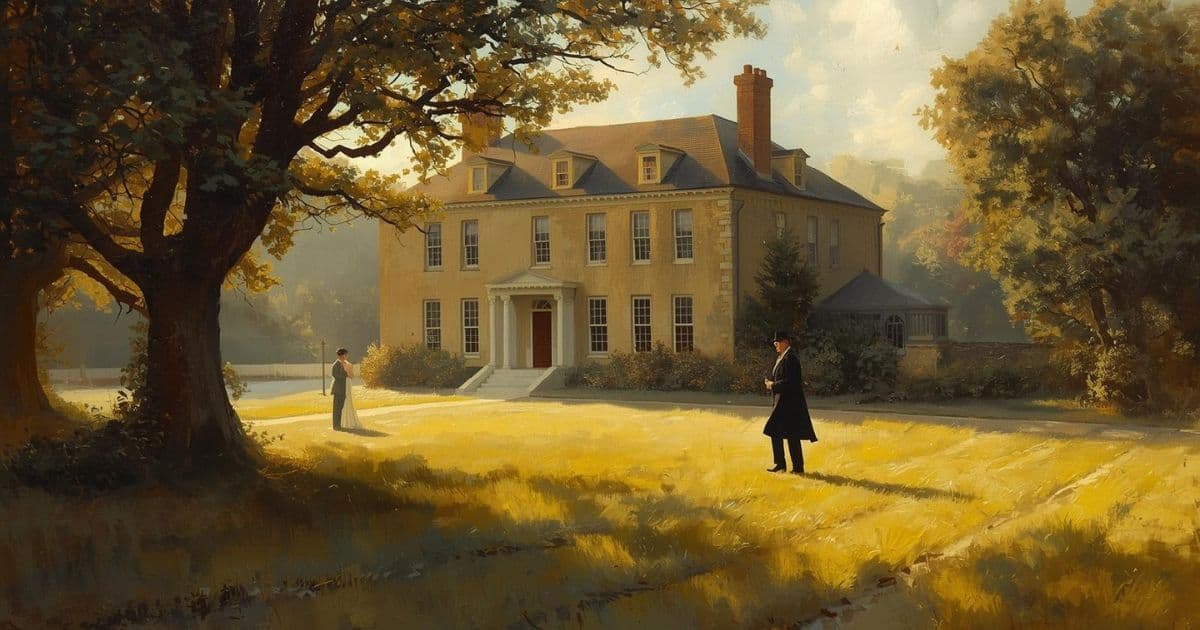
However, go to Miss Havisham’s I must, and go I did. And behold!
nothing came of the late struggle. It was not alluded to in any way,
and no pale young gentleman was to be discovered on the premises. I
found the same gate open, and I explored the garden, and even looked in
at the windows of the detached house; but my view was suddenly stopped
by the closed shutters within, and all was lifeless. Only in the corner
where the combat had taken place could I detect any evidence of the
young gentleman’s existence. There were traces of his gore in that
spot, and I covered them with garden-mould from the eye of man.
On the broad landing between Miss Havisham’s own room and that other
room in which the long table was laid out, I saw a garden-chair,—a
light chair on wheels, that you pushed from behind. It had been placed
there since my last visit, and I entered, that same day, on a regular
occupation of pushing Miss Havisham in this chair (when she was tired
of walking with her hand upon my shoulder) round her own room, and
across the landing, and round the other room. Over and over and over
again, we would make these journeys, and sometimes they would last as
long as three hours at a stretch. I insensibly fall into a general
mention of these journeys as numerous, because it was at once settled
that I should return every alternate day at noon for these purposes,
and because I am now going to sum up a period of at least eight or ten
months.
As we began to be more used to one another, Miss Havisham talked more
to me, and asked me such questions as what had I learnt and what was I
going to be? I told her I was going to be apprenticed to Joe, I
believed; and I enlarged upon my knowing nothing and wanting to know
everything, in the hope that she might offer some help towards that
desirable end. But she did not; on the contrary, she seemed to prefer
my being ignorant. Neither did she ever give me any money,—or anything
but my daily dinner,—nor ever stipulate that I should be paid for my
services.
Estella was always about, and always let me in and out, but never told
me I might kiss her again. Sometimes, she would coldly tolerate me;
sometimes, she would condescend to me; sometimes, she would be quite
familiar with me; sometimes, she would tell me energetically that she
hated me. Miss Havisham would often ask me in a whisper, or when we
were alone, “Does she grow prettier and prettier, Pip?” And when I said
yes (for indeed she did), would seem to enjoy it greedily. Also, when
we played at cards Miss Havisham would look on, with a miserly relish
of Estella’s moods, whatever they were. And sometimes, when her moods
were so many and so contradictory of one another that I was puzzled
what to say or do, Miss Havisham would embrace her with lavish
fondness, murmuring something in her ear that sounded like “Break their
hearts my pride and hope, break their hearts and have no mercy!”
There was a song Joe used to hum fragments of at the forge, of which
the burden was Old Clem. This was not a very ceremonious way of
rendering homage to a patron saint, but I believe Old Clem stood in
that relation towards smiths. It was a song that imitated the measure
of beating upon iron, and was a mere lyrical excuse for the
introduction of Old Clem’s respected name. Thus, you were to hammer
boys round—Old Clem! With a thump and a sound—Old Clem! Beat it out,
beat it out—Old Clem! With a clink for the stout—Old Clem! Blow the
fire, blow the fire—Old Clem! Roaring dryer, soaring higher—Old Clem!
One day soon after the appearance of the chair, Miss Havisham suddenly
saying to me, with the impatient movement of her fingers, “There,
there, there! Sing!” I was surprised into crooning this ditty as I
pushed her over the floor. It happened so to catch her fancy that she
took it up in a low brooding voice as if she were singing in her sleep.
After that, it became customary with us to have it as we moved about,
and Estella would often join in; though the whole strain was so
subdued, even when there were three of us, that it made less noise in
the grim old house than the lightest breath of wind.
What could I become with these surroundings? How could my character
fail to be influenced by them? Is it to be wondered at if my thoughts
were dazed, as my eyes were, when I came out into the natural light
from the misty yellow rooms?
Perhaps I might have told Joe about the pale young gentleman, if I had
not previously been betrayed into those enormous inventions to which I
had confessed. Under the circumstances, I felt that Joe could hardly
fail to discern in the pale young gentleman, an appropriate passenger
to be put into the black velvet coach; therefore, I said nothing of
him. Besides, that shrinking from having Miss Havisham and Estella
discussed, which had come upon me in the beginning, grew much more
potent as time went on. I reposed complete confidence in no one but
Biddy; but I told poor Biddy everything. Why it came natural to me to
do so, and why Biddy had a deep concern in everything I told her, I did
not know then, though I think I know now.
Meanwhile, councils went on in the kitchen at home, fraught with almost
insupportable aggravation to my exasperated spirit. That ass,
Pumblechook, used often to come over of a night for the purpose of
discussing my prospects with my sister; and I really do believe (to
this hour with less penitence than I ought to feel), that if these
hands could have taken a linchpin out of his chaise-cart, they would
have done it. The miserable man was a man of that confined stolidity of
mind, that he could not discuss my prospects without having me before
him,—as it were, to operate upon,—and he would drag me up from my stool
(usually by the collar) where I was quiet in a corner, and, putting me
before the fire as if I were going to be cooked, would begin by saying,
“Now, Mum, here is this boy! Here is this boy which you brought up by
hand. Hold up your head, boy, and be forever grateful unto them which
so did do. Now, Mum, with respections to this boy!” And then he would
rumple my hair the wrong way,—which from my earliest remembrance, as
already hinted, I have in my soul denied the right of any
fellow-creature to do,—and would hold me before him by the sleeve,—a
spectacle of imbecility only to be equalled by himself.
Then, he and my sister would pair off in such nonsensical speculations
about Miss Havisham, and about what she would do with me and for me,
that I used to want—quite painfully—to burst into spiteful tears, fly
at Pumblechook, and pummel him all over. In these dialogues, my sister
spoke to me as if she were morally wrenching one of my teeth out at
every reference; while Pumblechook himself, self-constituted my patron,
would sit supervising me with a depreciatory eye, like the architect of
my fortunes who thought himself engaged on a very unremunerative job.
In these discussions, Joe bore no part. But he was often talked at,
while they were in progress, by reason of Mrs. Joe’s perceiving that he
was not favourable to my being taken from the forge. I was fully old
enough now to be apprenticed to Joe; and when Joe sat with the poker on
his knees thoughtfully raking out the ashes between the lower bars, my
sister would so distinctly construe that innocent action into
opposition on his part, that she would dive at him, take the poker out
of his hands, shake him, and put it away. There was a most irritating
end to every one of these debates. All in a moment, with nothing to
lead up to it, my sister would stop herself in a yawn, and catching
sight of me as it were incidentally, would swoop upon me with, “Come!
there’s enough of you! You get along to bed; you’ve given trouble
enough for one night, I hope!” As if I had besought them as a favour to
bother my life out.
We went on in this way for a long time, and it seemed likely that we
should continue to go on in this way for a long time, when one day Miss
Havisham stopped short as she and I were walking, she leaning on my
shoulder; and said with some displeasure,—
“You are growing tall, Pip!”
I thought it best to hint, through the medium of a meditative look,
that this might be occasioned by circumstances over which I had no
control.
She said no more at the time; but she presently stopped and looked at
me again; and presently again; and after that, looked frowning and
moody. On the next day of my attendance, when our usual exercise was
over, and I had landed her at her dressing-table, she stayed me with a
movement of her impatient fingers:—
“Tell me the name again of that blacksmith of yours.”
“Joe Gargery, ma’am.”
“Meaning the master you were to be apprenticed to?”
“Yes, Miss Havisham.”
“You had better be apprenticed at once. Would Gargery come here with
you, and bring your indentures, do you think?”
I signified that I had no doubt he would take it as an honour to be
asked.
“Then let him come.”
“At any particular time, Miss Havisham?”
“There, there! I know nothing about times. Let him come soon, and come
along with you.”
When I got home at night, and delivered this message for Joe, my sister
“went on the Rampage,” in a more alarming degree than at any previous
period. She asked me and Joe whether we supposed she was door-mats
under our feet, and how we dared to use her so, and what company we
graciously thought she was fit for? When she had exhausted a torrent
of such inquiries, she threw a candlestick at Joe, burst into a loud
sobbing, got out the dustpan,—which was always a very bad sign,—put on
her coarse apron, and began cleaning up to a terrible extent. Not
satisfied with a dry cleaning, she took to a pail and scrubbing-brush,
and cleaned us out of house and home, so that we stood shivering in the
back-yard. It was ten o’clock at night before we ventured to creep in
again, and then she asked Joe why he hadn’t married a Negress Slave at
once? Joe offered no answer, poor fellow, but stood feeling his whisker
and looking dejectedly at me, as if he thought it really might have
been a better speculation.
Master this chapter. Complete your experience
Purchase the complete book to access all chapters and support classic literature
As an Amazon Associate, we earn a small commission from qualifying purchases at no additional cost to you.
Available in paperback, hardcover, and e-book formats
Let's Analyse the Pattern
When guilt and anxiety combine to create imagined consequences far worse than any realistic outcome.
Why This Matters
Connect literature to life
This chapter teaches how to identify when our minds create punishments far worse than reality will deliver.
Practice This Today
This week, notice when you're replaying a mistake or conflict—write down what actually happened versus what you fear might happen, then act on facts, not fears.
Now let's explore the literary elements.
Key Quotes & Analysis
"I felt that the pale young gentleman's blood was on my head, and that the Law would avenge it."
Context: Pip's thoughts after the fight, consumed with guilt and fear
Shows how guilt can create punishments far worse than reality. Pip's working-class background makes him assume the worst - that the system will crush him for daring to fight above his station. His fear reveals the power imbalance between classes.
In Today's Words:
I was convinced I was going to get in serious trouble and the authorities would come after me.
"Break their hearts, my pride and hope, break their hearts and have no mercy!"
Context: Whispering encouragement to Estella while watching her interact with Pip
Reveals Miss Havisham's twisted plan to use Estella as a weapon of revenge against all men. She's training a young girl to be cruel and manipulative, which is a form of child abuse disguised as affection.
In Today's Words:
Hurt them emotionally and don't feel bad about it - that's my girl!
"Village boys could not go stalking about the country, ravaging the houses of gentlefolks... without laying themselves open to severe punishment."
Context: Pip's anxious thoughts about the consequences of fighting the pale young gentleman
Shows Pip's internalized class shame and fear. He believes he's committed a crime against the social order itself. The dramatic language reveals how his guilt has blown the situation completely out of proportion.
In Today's Words:
Poor kids like me can't just go around fighting rich kids without getting in major trouble.
Thematic Threads
Guilt
In This Chapter
Pip's overwhelming terror and self-punishment after the fight, despite no actual consequences
Development
Building from earlier shame about his background, now including guilt about his actions
In Your Life:
You might recognize this when a small mistake at work keeps you awake for weeks while your boss has already forgotten about it
Powerlessness
In This Chapter
Family conferences about Pip's future happen around him, not with him, treating him like property to be managed
Development
Continues the pattern of adults controlling Pip's life without consulting his wishes or feelings
In Your Life:
This appears when others make major decisions affecting you—job changes, family moves, medical choices—without meaningful input from you
Class
In This Chapter
Miss Havisham prefers Pip's ignorance and never offers education or payment, keeping him in his place
Development
Deepens the exploration of how the wealthy maintain class boundaries while appearing benevolent
In Your Life:
You see this when employers or institutions offer 'opportunities' that actually keep you dependent rather than truly advancing your position
Manipulation
In This Chapter
Miss Havisham encourages Estella's cruelty toward Pip, taking disturbing pleasure in emotional manipulation
Development
Reveals the calculated nature behind what seemed like random kindness in earlier chapters
In Your Life:
This pattern emerges when someone in your life seems to enjoy creating drama or conflict between people they control
Identity
In This Chapter
Pip's growing awareness that his current path leads to apprenticeship, not the genteel life he's begun to imagine
Development
His identity crisis deepens as the gap widens between his dreams and his likely reality
In Your Life:
You face this when your daily reality conflicts with the life you've started to envision for yourself
You now have the context. Time to form your own thoughts.
Discussion Questions
- 1
Why does Pip imagine such extreme punishments after his fight, when no one even mentions it happened?
analysis • surface - 2
How does Miss Havisham's preference for Pip's ignorance reveal her true motivations for keeping him around?
analysis • medium - 3
When have you seen someone's guilt create worse consequences than the actual situation warranted?
application • medium - 4
How would you handle being discussed 'like property' in family meetings about your future, as Pip experiences?
application • deep - 5
What does this chapter reveal about how powerlessness amplifies our fears and guilt?
reflection • deep
Critical Thinking Exercise
Reality Check Your Worst-Case Scenario
Think of a recent situation where you felt guilty or worried about consequences. Write down what you feared would happen, then what actually happened. Compare the two lists and identify the gap between your fears and reality.
Consider:
- •Notice how your mind amplified the potential consequences
- •Consider whether your social position or past experiences influenced your fears
- •Identify the difference between taking responsibility and catastrophic thinking
Journaling Prompt
Write about a time when you spent more energy worrying about consequences than dealing with the actual situation. What would you do differently now?
Coming Up Next...
Chapter 13: Joe's Uncomfortable Visit to Miss Havisham
Joe must dress in his uncomfortable Sunday best to meet the mysterious Miss Havisham, a prospect that terrifies the simple blacksmith. What will happen when Pip's two worlds—the humble forge and the decaying mansion—finally collide?