An excerpt from the original text.(complete · 4125 words)
ondon was our present point of rest; we determined to remain several months in this wonderful and celebrated city. Clerval desired the intercourse of the men of genius and talent who flourished at this time, but this was with me a secondary object; I was principally occupied with the means of obtaining the information necessary for the completion of my promise and quickly availed myself of the letters of introduction that I had brought with me, addressed to the most distinguished natural philosophers.
If this journey had taken place during my days of study and happiness, it would have afforded me inexpressible pleasure. But a blight had come over my existence, and I only visited these people for the sake of the information they might give me on the subject in which my interest was so terribly profound. Company was irksome to me; when alone, I could fill my mind with the sights of heaven and earth; the voice of Henry soothed me, and I could thus cheat myself into a transitory peace. But busy, uninteresting, joyous faces brought back despair to my heart. I saw an insurmountable barrier placed between me and my fellow men; this barrier was sealed with the blood of William and Justine, and to reflect on the events connected with those names filled my soul with anguish.
But in Clerval I saw the image of my former self; he was inquisitive and anxious to gain experience and instruction. The difference of manners which he observed was to him an inexhaustible source of instruction and amusement. He was also pursuing an object he had long had in view. His design was to visit India, in the belief that he had in his knowledge of its various languages, and in the views he had taken of its society, the means of materially assisting the progress of European colonisation and trade. In Britain only could he further the execution of his plan. He was forever busy, and the only check to his enjoyments was my sorrowful and dejected mind. I tried to conceal this as much as possible, that I might not debar him from the pleasures natural to one who was entering on a new scene of life, undisturbed by any care or bitter recollection. I often refused to accompany him, alleging another engagement, that I might remain alone. I now also began to collect the materials necessary for my new creation, and this was to me like the torture of single drops of water continually falling on the head. Every thought that was devoted to it was an extreme anguish, and every word that I spoke in allusion to it caused my lips to quiver, and my heart to palpitate.
After passing some months in London, we received a letter from a person in Scotland who had formerly been our visitor at Geneva. He mentioned the beauties of his native country and asked us if those were not sufficient allurements to induce us to prolong our journey as far north as Perth, where he resided. Clerval eagerly desired to accept this invitation, and I, although I abhorred society, wished to view again mountains and streams and all the wondrous works with which Nature adorns her chosen dwelling-places.
We had arrived in England at the beginning of October, and it was now February. We accordingly determined to commence our journey towards the north at the expiration of another month. In this expedition we did not intend to follow the great road to Edinburgh, but to visit Windsor, Oxford, Matlock, and the Cumberland lakes, resolving to arrive at the completion of this tour about the end of July. I packed up my chemical instruments and the materials I had collected, resolving to finish my labours in some obscure nook in the northern highlands of Scotland.
We quitted London on the 27th of March and remained a few days at Windsor, rambling in its beautiful forest. This was a new scene to us mountaineers; the majestic oaks, the quantity of game, and the herds of stately deer were all novelties to us.
From thence we proceeded to Oxford. As we entered this city our minds were filled with the remembrance of the events that had been transacted there more than a century and a half before. It was here that Charles I had collected his forces. This city had remained faithful to him, after the whole nation had forsaken his cause to join the standard of Parliament and liberty. The memory of that unfortunate king and his companions, the amiable Falkland, the insolent Gower, his queen, and son, gave a peculiar interest to every part of the city which they might be supposed to have inhabited. The spirit of elder days found a dwelling here, and we delighted to trace its footsteps. If these feelings had not found an imaginary gratification, the appearance of the city had yet in itself sufficient beauty to obtain our admiration. The colleges are ancient and picturesque; the streets are almost magnificent; and the lovely Isis, which flows beside it through meadows of exquisite verdure, is spread forth into a placid expanse of waters, which reflects its majestic assemblage of towers, and spires, and domes, embosomed among aged trees.
I enjoyed this scene, and yet my enjoyment was embittered both by the memory of the past and the anticipation of the future. I was formed for peaceful happiness. During my youthful days discontent never visited my mind, and if I was ever overcome by ennui, the sight of what is beautiful in nature or the study of what is excellent and sublime in the productions of man could always interest my heart and communicate elasticity to my spirits. But I am a blasted tree; the bolt has entered my soul; and I felt then that I should survive to exhibit what I shall soon cease to be—a miserable spectacle of wrecked humanity, pitiable to others and intolerable to myself.
We passed a considerable period at Oxford, rambling among its environs and endeavouring to identify every spot which might relate to the most animating epoch of English history. Our little voyages of discovery were often prolonged by the successive objects that presented themselves. We visited the tomb of the illustrious Hampden and the field on which that patriot fell. For a moment my soul was elevated from its debasing and miserable fears to contemplate the divine ideas of liberty and self sacrifice of which these sights were the monuments and the remembrancers. For an instant I dared to shake off my chains and look around me with a free and lofty spirit, but the iron had eaten into my flesh, and I sank again, trembling and hopeless, into my miserable self.
We left Oxford with regret and proceeded to Matlock, which was our next place of rest. The country in the neighbourhood of this village resembled, to a greater degree, the scenery of Switzerland; but everything is on a lower scale, and the green hills want the crown of distant white Alps which always attend on the piny mountains of my native country. We visited the wondrous cave and the little cabinets of natural history, where the curiosities are disposed in the same manner as in the collections at Servox and Chamounix. The latter name made me tremble when pronounced by Henry, and I hastened to quit Matlock, with which that terrible scene was thus associated.
From Derby, still journeying northwards, we passed two months in Cumberland and Westmorland. I could now almost fancy myself among the Swiss mountains. The little patches of snow which yet lingered on the northern sides of the mountains, the lakes, and the dashing of the rocky streams were all familiar and dear sights to me. Here also we made some acquaintances, who almost contrived to cheat me into happiness. The delight of Clerval was proportionably greater than mine; his mind expanded in the company of men of talent, and he found in his own nature greater capacities and resources than he could have imagined himself to have possessed while he associated with his inferiors. "I could pass my life here," said he to me; "and among these mountains I should scarcely regret Switzerland and the Rhine."
But he found that a traveller's life is one that includes much pain amidst its enjoyments. His feelings are forever on the stretch; and when he begins to sink into repose, he finds himself obliged to quit that on which he rests in pleasure for something new, which again engages his attention, and which also he forsakes for other novelties.
We had scarcely visited the various lakes of Cumberland and Westmorland and conceived an affection for some of the inhabitants when the period of our appointment with our Scotch friend approached, and we left them to travel on. For my own part I was not sorry. I had now neglected my promise for some time, and I feared the effects of the daemon's disappointment. He might remain in Switzerland and wreak his vengeance on my relatives. This idea pursued me and tormented me at every moment from which I might otherwise have snatched repose and peace. I waited for my letters with feverish impatience; if they were delayed I was miserable and overcome by a thousand fears; and when they arrived and I saw the superscription of Elizabeth or my father, I hardly dared to read and ascertain my fate. Sometimes I thought that the fiend followed me and might expedite my remissness by murdering my companion. When these thoughts possessed me, I would not quit Henry for a moment, but followed him as his shadow, to protect him from the fancied rage of his destroyer. I felt as if I had committed some great crime, the consciousness of which haunted me. I was guiltless, but I had indeed drawn down a horrible curse upon my head, as mortal as that of crime.
I visited Edinburgh with languid eyes and mind; and yet that city might have interested the most unfortunate being. Clerval did not like it so well as Oxford, for the antiquity of the latter city was more pleasing to him. But the beauty and regularity of the new town of Edinburgh, its romantic castle and its environs, the most delightful in the world, Arthur's Seat, St. Bernard's Well, and the Pentland Hills compensated him for the change and filled him with cheerfulness and admiration. But I was impatient to arrive at the termination of my journey.
We left Edinburgh in a week, passing through Coupar, St. Andrew's, and along the banks of the Tay, to Perth, where our friend expected us. But I was in no mood to laugh and talk with strangers or enter into their feelings or plans with the good humour expected from a guest; and accordingly I told Clerval that I wished to make the tour of Scotland alone. "Do you," said I, "enjoy yourself, and let this be our rendezvous. I may be absent a month or two; but do not interfere with my motions, I entreat you; leave me to peace and solitude for a short time; and when I return, I hope it will be with a lighter heart, more congenial to your own temper."
Henry wished to dissuade me, but seeing me bent on this plan, ceased to remonstrate. He entreated me to write often. "I had rather be with you," he said, "in your solitary rambles, than with these Scotch people, whom I do not know; hasten, then, my dear friend, to return, that I may again feel myself somewhat at home, which I cannot do in your absence."
Having parted from my friend, I determined to visit some remote spot of Scotland and finish my work in solitude. I did not doubt but that the monster followed me and would discover himself to me when I should have finished, that he might receive his companion.
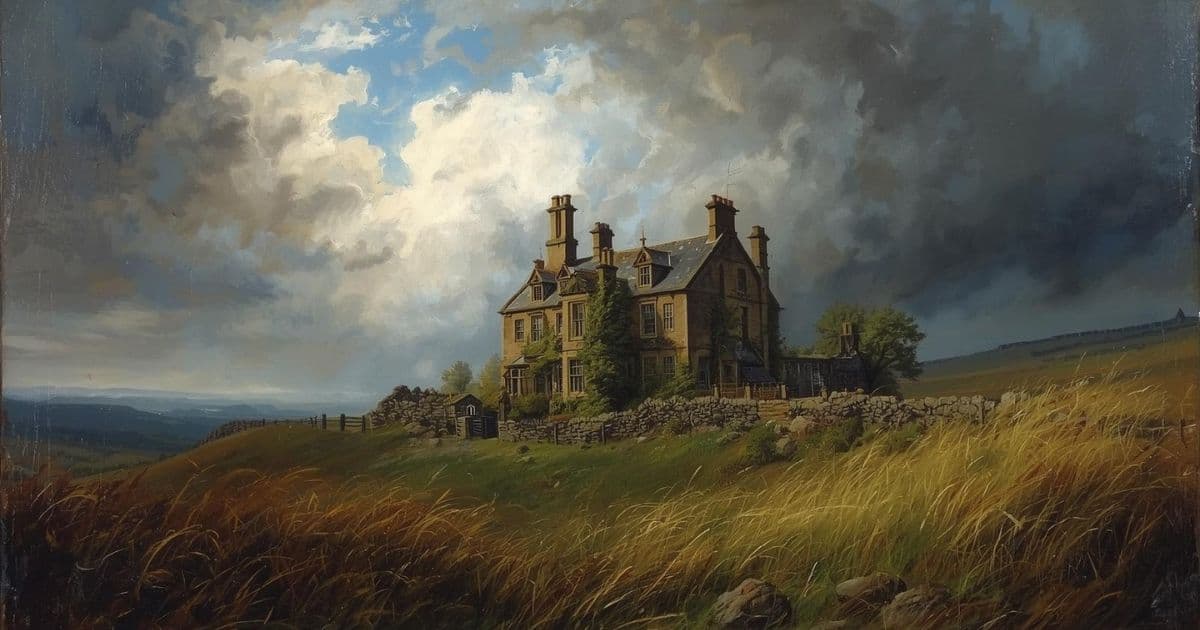
With this resolution I traversed the northern highlands and fixed on one of the remotest of the Orkneys as the scene of my labours. It was a place fitted for such a work, being hardly more than a rock whose high sides were continually beaten upon by the waves. The soil was barren, scarcely affording pasture for a few miserable cows, and oatmeal for its inhabitants, which consisted of five persons, whose gaunt and scraggy limbs gave tokens of their miserable fare. Vegetables and bread, when they indulged in such luxuries, and even fresh water, was to be procured from the mainland, which was about five miles distant.
On the whole island there were but three miserable huts, and one of these was vacant when I arrived. This I hired. It contained but two rooms, and these exhibited all the squalidness of the most miserable penury. The thatch had fallen in, the walls were unplastered, and the door was off its hinges. I ordered it to be repaired, bought some furniture, and took possession, an incident which would doubtless have occasioned some surprise had not all the senses of the cottagers been benumbed by want and squalid poverty. As it was, I lived ungazed at and unmolested, hardly thanked for the pittance of food and clothes which I gave, so much does suffering blunt even the coarsest sensations of men.
In this retreat I devoted the morning to labour; but in the evening, when the weather permitted, I walked on the stony beach of the sea to listen to the waves as they roared and dashed at my feet. It was a monotonous yet ever-changing scene. I thought of Switzerland; it was far different from this desolate and appalling landscape. Its hills are covered with vines, and its cottages are scattered thickly in the plains. Its fair lakes reflect a blue and gentle sky, and when troubled by the winds, their tumult is but as the play of a lively infant when compared to the roarings of the giant ocean.
In this manner I distributed my occupations when I first arrived, but as I proceeded in my labour, it became every day more horrible and irksome to me. Sometimes I could not prevail on myself to enter my laboratory for several days, and at other times I toiled day and night in order to complete my work. It was, indeed, a filthy process in which I was engaged. During my first experiment, a kind of enthusiastic frenzy had blinded me to the horror of my employment; my mind was intently fixed on the consummation of my labour, and my eyes were shut to the horror of my proceedings. But now I went to it in cold blood, and my heart often sickened at the work of my hands.
Thus situated, employed in the most detestable occupation, immersed in a solitude where nothing could for an instant call my attention from the actual scene in which I was engaged, my spirits became unequal; I grew restless and nervous. Every moment I feared to meet my persecutor. Sometimes I sat with my eyes fixed on the ground, fearing to raise them lest they should encounter the object which I so much dreaded to behold. I feared to wander from the sight of my fellow creatures lest when alone he should come to claim his companion.
In the mean time I worked on, and my labour was already considerably advanced. I looked towards its completion with a tremulous and eager hope, which I dared not trust myself to question but which was intermixed with obscure forebodings of evil that made my heart sicken in my bosom.
I sat one evening in my laboratory; the sun had set, and the moon was just rising from the sea; I had not sufficient light for my employment, and I remained idle, in a pause of consideration of whether I should leave my labour for the night or hasten its conclusion by an unremitting attention to it. As I sat, a train of reflection occurred to me which led me to consider the effects of what I was now doing. Three years before, I was engaged in the same manner and had created a fiend whose unparalleled barbarity had desolated my heart and filled it forever with the bitterest remorse. I was now about to form another being of whose dispositions I was alike ignorant; she might become ten thousand times more malignant than her mate and delight, for its own sake, in murder and wretchedness. He had sworn to quit the neighbourhood of man and hide himself in deserts, but she had not; and she, who in all probability was to become a thinking and reasoning animal, might refuse to comply with a compact made before her creation. They might even hate each other; the creature who already lived loathed his own deformity, and might he not conceive a greater abhorrence for it when it came before his eyes in the female form? She also might turn with disgust from him to the superior beauty of man; she might quit him, and he be again alone, exasperated by the fresh provocation of being deserted by one of his own species.
Even if they were to leave Europe and inhabit the deserts of the new world, yet one of the first results of those sympathies for which the daemon thirsted would be children, and a race of devils would be propagated upon the earth who might make the very existence of the species of man a condition precarious and full of terror. Had I right, for my own benefit, to inflict this curse upon everlasting generations? I had before been moved by the sophisms of the being I had created; I had been struck senseless by his fiendish threats; but now, for the first time, the wickedness of my promise burst upon me; I shuddered to think that future ages might curse me as their pest, whose selfishness had not hesitated to buy its own peace at the price, perhaps, of the existence of the whole human race.
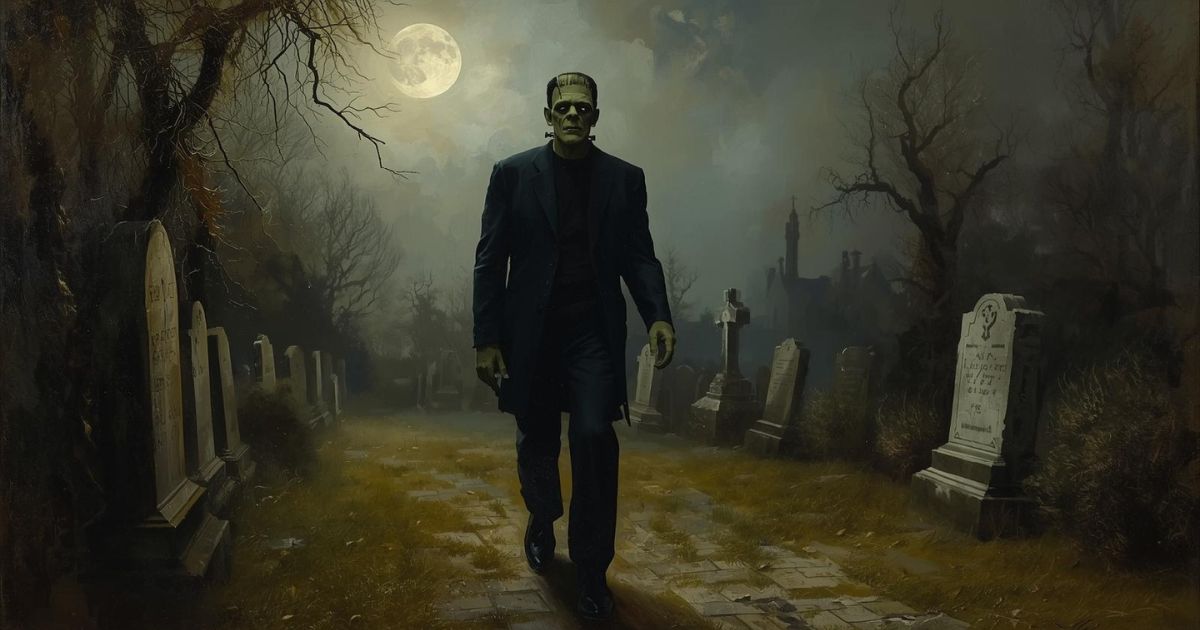
I trembled and my heart failed within me, when, on looking up, I saw by the light of the moon the daemon at the casement. A ghastly grin wrinkled his lips as he gazed on me, where I sat fulfilling the task which he had allotted to me. Yes, he had followed me in my travels; he had loitered in forests, hid himself in caves, or taken refuge in wide and desert heaths; and he now came to mark my progress and claim the fulfillment of my promise.
As I looked on him, his countenance expressed the utmost extent of malice and treachery. I thought with a sensation of madness on my promise of creating another like to him, and trembling with passion, tore to pieces the thing on which I was engaged. The wretch saw me destroy the creature on whose future existence he depended for happiness, and with a howl of devilish despair and revenge, withdrew.
I left the room, and locking the door, made a solemn vow in my own heart never to resume my labours; and then, with trembling steps, I sought my own apartment. I was alone; none were near me to dissipate the gloom and relieve me from the sickening oppression of the most terrible reveries.
Several hours passed, and I remained near my window gazing on the sea; it was almost motionless, for the winds were hushed, and all nature reposed under the eye of the quiet moon. A few fishing vessels alone specked the water, and now and then the gentle breeze wafted the sound of voices as the fishermen called to one another. I felt the silence, although I was hardly conscious of its extreme profundity, until my ear was suddenly arrested by the paddling of oars near the shore, and a person landed close to my house.
In a few minutes after, I heard the creaking of my door, as if some one endeavoured to open it softly. I trembled from head to foot; I felt a presentiment of who it was and wished to rouse one of the peasants who dwelt in a cottage not far from mine; but I was overcome by the sensation of helplessness, so often felt in frightful dreams, when you in vain endeavour to fly from an impending danger, and was rooted to the spot.
Presently I heard the sound of footsteps along the passage; the door opened, and the wretch whom I dreaded appeared. Shutting the door, he approached me and said in a smothered voice,
"You have destroyed the work which you began; what is it that you intend? Do you dare to break your promise? I have endured toil and misery; I left Switzerland with you; I crept along the shores of the Rhine, among its willow islands and over the summits of its hills. I have dwelt many months in the heaths of England and among the deserts of Scotland. I have endured incalculable fatigue, and cold, and hunger; do you dare destroy my hopes?"
"Begone! I do break my promise; never will I create another like yourself, equal in deformity and wickedness."
"Slave, I before reasoned with you, but you have proved yourself unworthy of my condescension. Remember that I have power; you believe yourself miserable, but I can make you so wretched that the light of day will be hateful to you. You are my creator, but I am your master; obey!"
"The hour of my irresolution is past, and the period of your power is arrived. Your threats cannot move me to do an act of wickedness; but they confirm me in a determination of not creating you a companion in vice. Shall I, in cool blood, set loose upon the earth a daemon whose delight is in death and wretchedness? Begone! I am firm, and your words will only exasperate my rage."
The monster saw my determination in my face and gnashed his teeth in the impotence of anger. "Shall each man," cried he, "find a wife for his bosom, and each beast have his mate, and I be alone? I had feelings of affection, and they were requited by detestation and scorn. Man! You may hate, but beware! Your hours will pass in dread and misery, and soon the bolt will fall which must ravish from you your happiness forever. Are you to be happy while I grovel in the intensity of my wretchedness? You can blast my other passions, but revenge remains—revenge, henceforth dearer than light or food! I may die, but first you, my tyrant and tormentor, shall curse the sun that gazes on your misery. Beware, for I am fearless and therefore powerful. I will watch with the wiliness of a snake, that I may sting with its venom. Man, you shall repent of the injuries you inflict."
"Devil, cease; and do not poison the air with these sounds of malice. I have declared my resolution to you, and I am no coward to bend beneath words. Leave me; I am inexorable."
"It is well. I go; but remember, I shall be with you on your wedding-night."
I started forward and exclaimed, "Villain! Before you sign my death-warrant, be sure that you are yourself safe."
I would have seized him, but he eluded me and quit the house with precipitation. In a few moments I saw him in his boat, which shot across the waters with an arrowy swiftness and was soon lost amidst the waves.
All was again silent, but his words rang in my ears. I burned with rage to pursue the murderer of my peace and precipitate him into the ocean. I walked up and down my room hastily and perturbed, while my imagination conjured up a thousand images to torment and sting me. Why had I not followed him and closed with him in mortal strife? But I had suffered him to depart, and he had directed his course towards the mainland. I shuddered to think who might be the next victim sacrificed to his insatiate revenge. And then I thought again of his words—"I will be with you on your wedding-night." That, then, was the period fixed for the fulfillment of my destiny. In that hour I should die and at once satisfy and extinguish his malice. The prospect did not move me to fear; yet when I thought of my beloved Elizabeth, of her tears and endless sorrow, when she should find her lover so barbarously snatched from her, tears, the first I had shed for many months, streamed from my eyes, and I resolved not to fall before my enemy without a bitter struggle.
Master this chapter. Complete your experience
Purchase the complete book to access all chapters and support classic literature
As an Amazon Associate, we earn a small commission from qualifying purchases at no additional cost to you.
Available in paperback, hardcover, and e-book formats
Let's Analyse the Pattern
Focusing so intensely on defending against one expected threat that you become blind to the real danger approaching from a different direction.
Why This Matters
Connect literature to life
This chapter teaches how to recognize when someone is deliberately drawing your attention to one area while attacking another.
Practice This Today
This week, notice when conflicts or problems seem to be pulling your focus in one obvious direction—ask yourself what you might be missing while you're watching the obvious threat.
Now let's explore the literary elements.
Key Quotes & Analysis
"I will be with you on your wedding night"
Context: The creature's earlier threat that Victor misinterprets as a threat to himself
This quote shows how Victor's self-centeredness blinds him to the real danger. He assumes the creature means to kill him, not Elizabeth, leading to her death.
In Today's Words:
I'm going to ruin the happiest day of your life
"She was there, lifeless and inanimate, thrown across the bed"
Context: Victor discovers Elizabeth's body after the creature's attack
The stark, clinical language contrasts with the horror of the moment. Victor's scientific mind tries to process the emotional devastation objectively.
In Today's Words:
She was dead, lying there like a broken doll
"The loss of his son had completed the old man's misery"
Context: Describing how Victor's father dies from grief after Elizabeth's murder
This shows how tragedy spreads beyond the main conflict. The father becomes another casualty of Victor's war with his creation.
In Today's Words:
Losing his family was more than the old man could handle
Thematic Threads
Pride
In This Chapter
Victor's masculine pride makes him assume he's the target, blinding him to the real threat to Elizabeth
Development
Pride has driven Victor's choices throughout—from his initial ambition to his refusal to create a companion
In Your Life:
Your ego might convince you that conflicts are about you when they're really about something else entirely
Communication
In This Chapter
Victor never tells Elizabeth the true nature of the danger, leaving her completely unprepared
Development
Victor's secrecy has been a constant—he's never shared the truth with anyone who could help
In Your Life:
When you keep important information to yourself, you prevent others from protecting themselves
Consequences
In This Chapter
The creature's systematic destruction of Victor's family reaches its climax with Elizabeth's murder
Development
Each death has escalated the stakes—William, Justine, now Elizabeth, with Victor's father to follow
In Your Life:
Unresolved conflicts tend to escalate and spread to innocent people in your life
Isolation
In This Chapter
Victor is now completely alone, having lost everyone he loved to his creation
Development
Victor's isolation began with secrecy and has progressed to literal solitude through loss
In Your Life:
Keeping secrets and avoiding difficult conversations can ultimately leave you with no one to turn to
Revenge
In This Chapter
The creature completes his promise to make Victor as miserable and alone as he is
Development
The cycle of revenge that began with William's death reaches its intended conclusion
In Your Life:
Revenge cycles rarely end where you expect—they keep escalating until everyone loses everything
You now have the context. Time to form your own thoughts.
Discussion Questions
- 1
Victor prepared for the monster's attack on his wedding night, but Elizabeth died anyway. What went wrong with his plan?
analysis • surface - 2
Why did Victor assume the monster would attack him directly rather than targeting Elizabeth?
analysis • medium - 3
When have you seen someone focus so hard on one problem that they missed a different danger entirely?
application • medium - 4
If you were Victor, how would you have handled the threat differently to actually protect Elizabeth?
application • deep - 5
What does this tragedy reveal about how our assumptions and blind spots can make us our own worst enemies?
reflection • deep
Critical Thinking Exercise
Map Your Blind Spots
Think of a current situation where you're worried about something going wrong. Write down what you're actively watching or defending against. Then brainstorm three completely different ways the situation could go sideways that you're NOT currently watching for. Consider what you might be missing while you're focused on your main concern.
Consider:
- •Ask yourself: 'What am I assuming about how this threat will come?'
- •Consider who else might have a different perspective on the real dangers
- •Think about what you value most that might be vulnerable while you're defending something else
Journaling Prompt
Write about a time when you were so focused on preventing one problem that you walked straight into another. What would you do differently now?
Coming Up Next...
Chapter 24: Clerval's Murder and Victor's Arrest
The creature's revenge begins immediately. Victor will pay for his broken promise in ways he cannot yet imagine, starting with someone he loves.