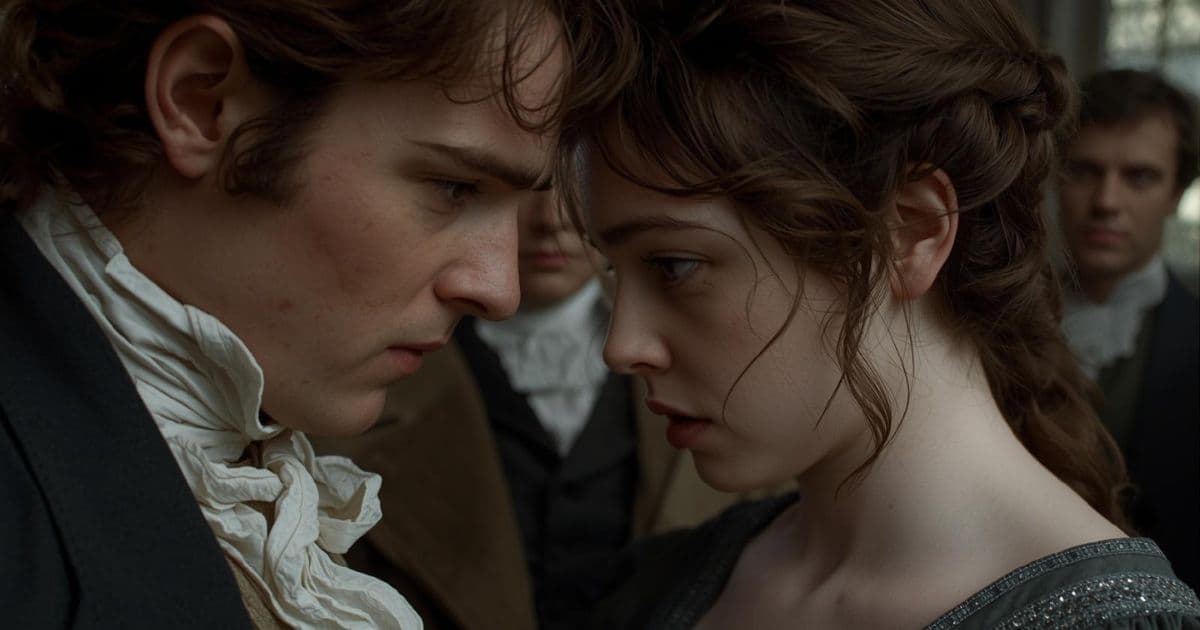
An excerpt from the original text.(complete · 1687 words)
his little explanation with Mr. Knightley gave Emma considerable
pleasure. It was one of the agreeable recollections of the ball, which
she walked about the lawn the next morning to enjoy.—She was extremely
glad that they had come to so good an understanding respecting the
Eltons, and that their opinions of both husband and wife were so much
alike; and his praise of Harriet, his concession in her favour, was
peculiarly gratifying. The impertinence of the Eltons, which for a few
minutes had threatened to ruin the rest of her evening, had been the
occasion of some of its highest satisfactions; and she looked forward
to another happy result—the cure of Harriet’s infatuation.—From
Harriet’s manner of speaking of the circumstance before they quitted
the ballroom, she had strong hopes. It seemed as if her eyes were
suddenly opened, and she were enabled to see that Mr. Elton was not the
superior creature she had believed him. The fever was over, and Emma
could harbour little fear of the pulse being quickened again by
injurious courtesy. She depended on the evil feelings of the Eltons for
supplying all the discipline of pointed neglect that could be farther
requisite.—Harriet rational, Frank Churchill not too much in love, and
Mr. Knightley not wanting to quarrel with her, how very happy a summer
must be before her!
She was not to see Frank Churchill this morning. He had told her that
he could not allow himself the pleasure of stopping at Hartfield, as he
was to be at home by the middle of the day. She did not regret it.
Having arranged all these matters, looked them through, and put them
all to rights, she was just turning to the house with spirits freshened
up for the demands of the two little boys, as well as of their
grandpapa, when the great iron sweep-gate opened, and two persons
entered whom she had never less expected to see together—Frank
Churchill, with Harriet leaning on his arm—actually Harriet!—A moment
sufficed to convince her that something extraordinary had happened.
Harriet looked white and frightened, and he was trying to cheer
her.—The iron gates and the front-door were not twenty yards
asunder;—they were all three soon in the hall, and Harriet immediately
sinking into a chair fainted away.
A young lady who faints, must be recovered; questions must be answered,
and surprizes be explained. Such events are very interesting, but the
suspense of them cannot last long. A few minutes made Emma acquainted
with the whole.
Miss Smith, and Miss Bickerton, another parlour boarder at Mrs.
Goddard’s, who had been also at the ball, had walked out together, and
taken a road, the Richmond road, which, though apparently public enough
for safety, had led them into alarm.—About half a mile beyond Highbury,
making a sudden turn, and deeply shaded by elms on each side, it became
for a considerable stretch very retired; and when the young ladies had
advanced some way into it, they had suddenly perceived at a small
distance before them, on a broader patch of greensward by the side, a
party of gipsies. A child on the watch, came towards them to beg; and
Miss Bickerton, excessively frightened, gave a great scream, and
calling on Harriet to follow her, ran up a steep bank, cleared a slight
hedge at the top, and made the best of her way by a short cut back to
Highbury. But poor Harriet could not follow. She had suffered very much
from cramp after dancing, and her first attempt to mount the bank
brought on such a return of it as made her absolutely powerless—and in
this state, and exceedingly terrified, she had been obliged to remain.
How the trampers might have behaved, had the young ladies been more
courageous, must be doubtful; but such an invitation for attack could
not be resisted; and Harriet was soon assailed by half a dozen
children, headed by a stout woman and a great boy, all clamorous, and
impertinent in look, though not absolutely in word.—More and more
frightened, she immediately promised them money, and taking out her
purse, gave them a shilling, and begged them not to want more, or to
use her ill.—She was then able to walk, though but slowly, and was
moving away—but her terror and her purse were too tempting, and she was
followed, or rather surrounded, by the whole gang, demanding more.
In this state Frank Churchill had found her, she trembling and
conditioning, they loud and insolent. By a most fortunate chance his
leaving Highbury had been delayed so as to bring him to her assistance
at this critical moment. The pleasantness of the morning had induced
him to walk forward, and leave his horses to meet him by another road,
a mile or two beyond Highbury—and happening to have borrowed a pair of
scissors the night before of Miss Bates, and to have forgotten to
restore them, he had been obliged to stop at her door, and go in for a
few minutes: he was therefore later than he had intended; and being on
foot, was unseen by the whole party till almost close to them. The
terror which the woman and boy had been creating in Harriet was then
their own portion. He had left them completely frightened; and Harriet
eagerly clinging to him, and hardly able to speak, had just strength
enough to reach Hartfield, before her spirits were quite overcome. It
was his idea to bring her to Hartfield: he had thought of no other
place.
This was the amount of the whole story,—of his communication and of
Harriet’s as soon as she had recovered her senses and speech.—He dared
not stay longer than to see her well; these several delays left him not
another minute to lose; and Emma engaging to give assurance of her
safety to Mrs. Goddard, and notice of there being such a set of people
in the neighbourhood to Mr. Knightley, he set off, with all the
grateful blessings that she could utter for her friend and herself.
Such an adventure as this,—a fine young man and a lovely young woman
thrown together in such a way, could hardly fail of suggesting certain
ideas to the coldest heart and the steadiest brain. So Emma thought, at
least. Could a linguist, could a grammarian, could even a mathematician
have seen what she did, have witnessed their appearance together, and
heard their history of it, without feeling that circumstances had been
at work to make them peculiarly interesting to each other?—How much
more must an imaginist, like herself, be on fire with speculation and
foresight!—especially with such a groundwork of anticipation as her
mind had already made.
It was a very extraordinary thing! Nothing of the sort had ever
occurred before to any young ladies in the place, within her memory; no
rencontre, no alarm of the kind;—and now it had happened to the very
person, and at the very hour, when the other very person was chancing
to pass by to rescue her!—It certainly was very extraordinary!—And
knowing, as she did, the favourable state of mind of each at this
period, it struck her the more. He was wishing to get the better of his
attachment to herself, she just recovering from her mania for Mr.
Elton. It seemed as if every thing united to promise the most
interesting consequences. It was not possible that the occurrence
should not be strongly recommending each to the other.
In the few minutes’ conversation which she had yet had with him, while
Harriet had been partially insensible, he had spoken of her terror, her
naïveté, her fervour as she seized and clung to his arm, with a
sensibility amused and delighted; and just at last, after Harriet’s own
account had been given, he had expressed his indignation at the
abominable folly of Miss Bickerton in the warmest terms. Every thing
was to take its natural course, however, neither impelled nor assisted.
She would not stir a step, nor drop a hint. No, she had had enough of
interference. There could be no harm in a scheme, a mere passive
scheme. It was no more than a wish. Beyond it she would on no account
proceed.
Emma’s first resolution was to keep her father from the knowledge of
what had passed,—aware of the anxiety and alarm it would occasion: but
she soon felt that concealment must be impossible. Within half an hour
it was known all over Highbury. It was the very event to engage those
who talk most, the young and the low; and all the youth and servants in
the place were soon in the happiness of frightful news. The last
night’s ball seemed lost in the gipsies. Poor Mr. Woodhouse trembled as
he sat, and, as Emma had foreseen, would scarcely be satisfied without
their promising never to go beyond the shrubbery again. It was some
comfort to him that many inquiries after himself and Miss Woodhouse
(for his neighbours knew that he loved to be inquired after), as well
as Miss Smith, were coming in during the rest of the day; and he had
the pleasure of returning for answer, that they were all very
indifferent—which, though not exactly true, for she was perfectly well,
and Harriet not much otherwise, Emma would not interfere with. She had
an unhappy state of health in general for the child of such a man, for
she hardly knew what indisposition was; and if he did not invent
illnesses for her, she could make no figure in a message.
The gipsies did not wait for the operations of justice; they took
themselves off in a hurry. The young ladies of Highbury might have
walked again in safety before their panic began, and the whole history
dwindled soon into a matter of little importance but to Emma and her
nephews:—in her imagination it maintained its ground, and Henry and
John were still asking every day for the story of Harriet and the
gipsies, and still tenaciously setting her right if she varied in the
slightest particular from the original recital.
Master this chapter. Complete your experience
Purchase the complete book to access all chapters and support classic literature
As an Amazon Associate, we earn a small commission from qualifying purchases at no additional cost to you.
Available in paperback, hardcover, and e-book formats
Let's Analyse the Pattern
The Rescue Romance Pattern
People develop intense romantic feelings for those who rescue them or whom they rescue during vulnerable moments, often mistaking crisis bonding for genuine compatibility.
Why This Matters
Connect literature to life
This chapter teaches how to recognize when dramatic circumstances create misleading romantic feelings.
Practice This Today
This week, notice when you feel drawn to someone who helped you through a crisis - ask yourself if you'd choose them during ordinary times.
Now let's explore the literary elements.
Key Quotes & Analysis
"Harriet rational, Frank Churchill not too much in love, and Mr. Knightley not wanting to quarrel with her, how very happy a summer must be before her!"
Context: Emma's morning optimism before the dramatic rescue
Shows Emma's tendency to plan out perfect scenarios and her relief at having peace with the important people in her life. The irony is that drama is about to unfold.
In Today's Words:
With everyone finally acting normal and no one mad at me, this summer is going to be amazing!
"The fever was over, and Emma could harbour little fear of the pulse being quickened again by injurious courtesy."
Context: Emma's belief that Harriet is over her Mr. Elton obsession
Uses medical metaphor to describe romantic infatuation as an illness that has finally broken. Emma feels confident that Mr. Elton's rude behavior has permanently cured Harriet.
In Today's Words:
The crush was finally dead, and Emma didn't think Mr. Elton could charm his way back into Harriet's heart.
"Such an adventure as this,—a fine young man and a lovely young woman thrown together in such a way, could hardly fail of suggesting certain ideas to the coldest heart and the steadiest brain."
Context: Emma analyzing the romantic potential of Frank rescuing Harriet
Shows how Emma can't help but see romantic possibilities in dramatic situations. She recognizes that shared danger and heroic rescue create perfect conditions for love.
In Today's Words:
A cute guy saving a pretty girl in a dramatic moment? Even the most unromantic person would see where this could go.
Thematic Threads
Matchmaking
In This Chapter
Emma immediately sees romantic potential in Frank rescuing Harriet, but resolves not to interfere this time
Development
Evolution from active meddling to hopeful observation—Emma is learning restraint
In Your Life:
You might catch yourself mentally pairing up friends after dramatic events, seeing 'perfect matches' everywhere.
Class Anxiety
In This Chapter
The encounter with Roma people triggers immediate fear and panic in respectable Highbury ladies
Development
Continues the book's examination of social boundaries and who belongs where
In Your Life:
You might notice your own discomfort around people from different economic backgrounds, even when there's no real threat.
Emotional Timing
In This Chapter
Emma recognizes that both Frank and Harriet are in perfect emotional states for new attachment
Development
Shows Emma's growing sophistication about human psychology and relationship patterns
In Your Life:
You might notice how people become available for new relationships right after major disappointments or life changes.
Narrative Creation
In This Chapter
The rescue story immediately becomes the talk of Highbury, overshadowing even the previous night's ball
Development
Demonstrates how communities create and share stories that shape social reality
In Your Life:
You might see how dramatic stories spread faster than ordinary news in your workplace or social circles.
Protective Filtering
In This Chapter
Emma shields her father from the worst details of Harriet's frightening encounter
Development
Shows Emma's practical wisdom about managing others' anxieties
In Your Life:
You might find yourself editing stories to protect family members who worry easily or can't handle stress.
You now have the context. Time to form your own thoughts.
Discussion Questions
- 1
What exactly happened to Harriet, and how did Frank Churchill become involved in rescuing her?
analysis • surface - 2
Why does Emma immediately see romantic potential in this rescue situation? What does she understand about how people form attachments?
analysis • medium - 3
Where do you see this 'rescue bonding' pattern in modern relationships - at work, in dating, or in your community?
application • medium - 4
How can you tell the difference between genuine attraction and gratitude chemistry when someone helps you through a crisis?
application • deep - 5
What does this chapter reveal about how dramatic moments can create false intimacy between people?
reflection • deep
Critical Thinking Exercise
Map Your Rescue Chemistry
Think of a time when someone helped you through a difficult situation, or when you helped someone else. Write down what happened, how you felt toward that person afterward, and whether those feelings lasted or faded. Then analyze whether the connection was based on genuine compatibility or rescue chemistry.
Consider:
- •Notice if your strongest feelings came during the crisis or continued afterward
- •Consider whether you would choose this person as a friend or partner in calm circumstances
- •Examine if this person shows up consistently or only during emergencies
Journaling Prompt
Write about a time when you confused gratitude with attraction, or when someone seemed to mistake your helpfulness for romantic interest. How did you recognize what was really happening?
Coming Up Next...
Chapter 40: Burning Bridges and Building New Dreams
Emma's hopes for a natural romance between Frank and Harriet will be tested as the aftermath of the rescue continues to unfold. But will her resolve to avoid interference hold when new opportunities for meddling present themselves?