
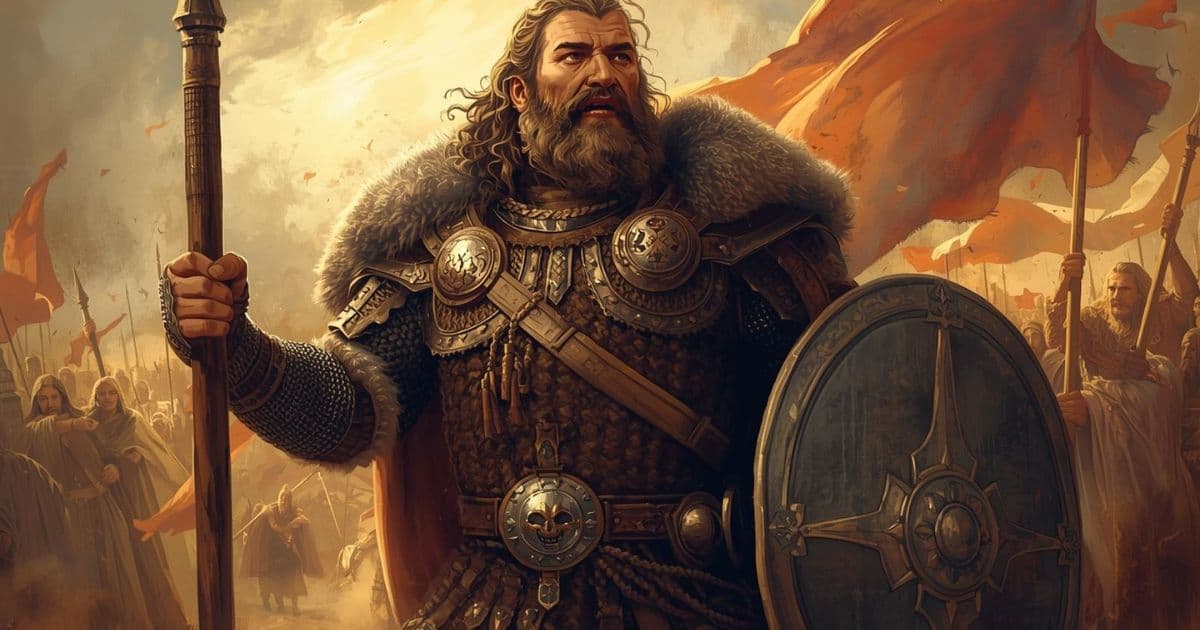
The Dragon at the End
In Beowulf, every warrior faces monsters — but only one monster cannot be defeated. The poem's final movement is about what a person does when they know the end is coming.
These 4 chapters trace Beowulf's final battle, his dying words, the collapse of his people's security, and the monument they build so the world won't forget.
The Pattern
Beowulf doesn't discover mortality in his final battle — he's known about it his whole life. The poem is saturated with wyrd, the Anglo-Saxon concept of fate: the sense that how you face what's coming matters more than whether you can escape it. Beowulf fights the dragon not because he thinks he can survive — he makes a shield specifically designed to withstand dragonfire, which suggests he knows this fight will be different. He goes because not going would mean a different kind of death: the death of the reputation he has spent his entire life building. The poem forces a question that only becomes urgent when you can feel your own limits: when your time comes, will the way you face it be consistent with how you lived?
Wyrd: Fate Without Passivity
The Anglo-Saxon concept of wyrd isn't fatalism — it's the recognition that some things are inevitable, and that what distinguishes people is how they face the inevitable. Beowulf doesn't fight the dragon despite knowing the odds. He fights because of them. The choice to act boldly knowing time is finite isn't recklessness. It's the poem's definition of a life fully lived.
The Weight of a Death
The messenger's speech after Beowulf's death is a full accounting of what one person's existence was worth to the world around them. Every enemy held back, every war not fought, every year of peace — all of it traceable to one life. Beowulf's mortality isn't just personal. It reorganizes the geopolitical landscape. This is the poem's argument: a life of genuine service leaves a hole the shape of what it provided.
The Journey Through Chapters
The Final Stand Begins
Beowulf is old now — decades of victories behind him, a kingdom he has protected for fifty years. When a dragon awakens and burns his people's homes, Beowulf insists on facing it himself. His advisors worry. His warriors hesitate. He orders a shield made to withstand dragonfire and goes anyway. This chapter is the moment the poem's central tension becomes explicit: a man who has spent his life being the answer to impossible problems is now the impossible problem himself.
The Final Stand Begins
Beowulf - Chapter 35
“He was unable to follow the warrior with hatred, with deeds that were direful.”
Key Insight
The Isolated Leadership Trap reveals itself most clearly at the end of a great career. Beowulf knows, somewhere, that he is not what he was at thirty. He goes anyway, because he has never defined himself any other way. This is mortality's first lesson: the identities that served us can become cages when the circumstances change. The warrior who cannot stop being a warrior, the leader who cannot stop leading from the front — they often end not in defeat, but in a kind of self-expenditure that leaves everyone around them exposed.
The Final Gift and Last Words
Wounded mortally by the dragon, Beowulf asks Wiglaf to bring him the treasure so he can see it before he dies — so he can know his last act meant something for his people. He removes his gold collar and gives it to Wiglaf. He thanks God he was able to win this for his people before the end. His last concern is not his own suffering but what he's leaving behind. The dying king's final act is an act of transfer — of treasure, of authority, of responsibility.
The Final Gift and Last Words
Beowulf - Chapter 38
“Wealth can easily, gold on the sea-bottom, turn into vanity each one of earthmen.”
Key Insight
Beowulf's death scene is one of literature's most precise depictions of dying well. He is not in denial. He does not rage. He looks at what he accomplished, confirms it was real, and passes it on. The final gift — the gold collar removed and given to Wiglaf — is not sentiment. It's a leadership act: the formal transfer of authority to the person who proved themselves worthy of it. Facing mortality well doesn't mean dying without fear. It means dying with your accounts settled and your successor prepared.
The Messenger Bears Dark News
Wiglaf sends a messenger to the warriors who waited at the edge of the fight, and the messenger's report reveals the full weight of what Beowulf's mortality means. With the king gone, every old enemy who feared him will feel free to move. The security that Beowulf's reputation provided — the peace that existed because no one wanted to test him — dissolves the moment the news reaches enemy territory. One death unmakes decades of safety.
The Messenger Bears Dark News
Beowulf - Chapter 40
“Now the free-giving friend-lord of the folk of the Weders, the folk-prince of Geatmen, is fast in his death-bed.”
Key Insight
The Deterrent Collapse shows what mortality means at scale. Beowulf's life wasn't just his own — it was the structural support for an entire people's security. When the deterrent dies, the deterrence ends. This is the poem's hardest truth about mortality: your presence shapes the world around you in ways that only become visible when you're gone. The messenger's speech is a list of every enemy who was held back by Beowulf's existence — and who will now advance. How much of the peace in your own life depends on someone's continued presence?
A Hero's Final Honor
The Geats build Beowulf's funeral pyre and then his barrow — a massive structure visible to sailors at sea, built so that those who come after will see it and remember. Twelve warriors ride around the barrow praising their king's courage, generosity, and gentleness. The poem ends not with triumph but with grief — and with the deliberate act of making that grief visible and lasting. The community doesn't move on quickly. They build something that says: he was here, and it mattered.
A Hero's Final Honor
Beowulf - Chapter 43
“They placed in the barrow rings and jewels, all such ornaments as erst in the treasure war-mooded men had won.”
Key Insight
The Service Legacy Loop closes here. Beowulf's funeral isn't just honoring the dead — it's the community's way of processing the shape of what they've lost. The barrow on the headland isn't a monument to his power. It's a beacon: the word the poem uses. Something that guides people home. The best leaders leave behind not just achievements but orientation points — ways of thinking, standards of behavior, proof that certain things are possible. The question the barrow poses to every reader: what will people build when you're gone, and what will it be pointing toward?
Why This Matters Today
Most people spend their lives managing the awareness of mortality rather than engaging with it. We're busy, which is convenient — busyness is the most socially acceptable form of denial. Beowulf doesn't permit this. The final third of the poem is a slow, unflinching reckoning with what it means to be a finite person who built something that will outlast them — and what it costs when the building wasn't done well enough.
The poem makes a specific, uncomfortable argument: facing your mortality isn't morbid — it's the precondition for living with intention. Beowulf's choices in his final battle make complete sense only if you understand that he'd been thinking about this end his whole life. Every ring he gave, every loyalty he built, every monster he chose to face was a bet on the kind of person he wanted to have been.
The mortality question Beowulf asks: are you making the choices now that will leave the hole you want to leave when you're gone? Not the hole of grief — the hole of orientation. The beacon on the headland. The thing that helps people find their way after you.