
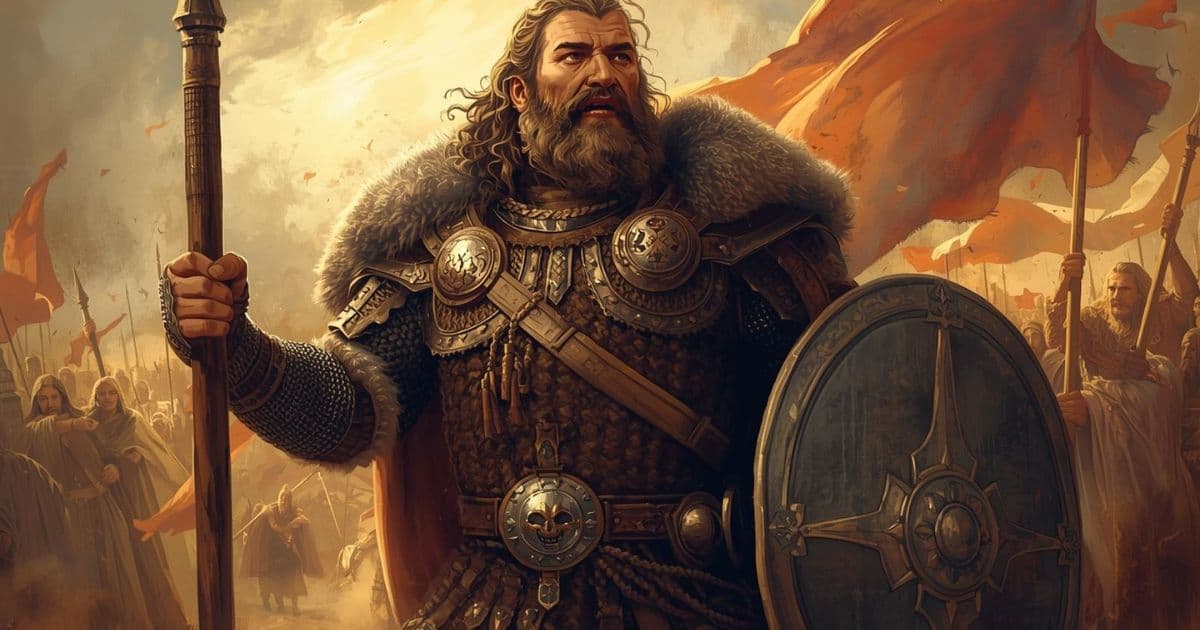
The Only Way Through Is Through
In Beowulf, heroism isn't a personality trait — it's a decision made in the moment when everyone else steps back.
These 4 chapters trace the full anatomy of heroic action: earning the right to act, silencing doubt, delivering results, and going back in when the job isn't done.
The Pattern
Beowulf's heroism follows a consistent structure: he shows up when others won't, establishes his right to act before acting, delivers results under pressure, and refuses to stop when the situation escalates. This isn't recklessness — it's a methodology. He earns credibility at the gate before he earns glory in the hall. He responds to public challenges with evidence, not emotion. He turns victory into relationship. And when victory reveals a deeper threat, he volunteers again without being asked. What makes Beowulf a hero isn't that he's unafraid. It's that his response to fear is always forward motion.
Heroism as Competence
Beowulf never claims heroism — he demonstrates it. His first act is a clean self-introduction. His second is a measured rebuttal. Only then does he fight. The poem insists that heroism is earned through consistent action, not proclaimed through bold words. The warriors who stayed home and talked weren't cowards — they just never tested themselves. Beowulf did.
The Escalation Choice
The defining heroic moment isn't the first battle — it's the decision to go back in after the first victory. Grendel's mother wasn't in Beowulf's original deal. He had already done what he came to do. His choice to dive into the dark water anyway is the moment the poem defines as truly heroic: doing the harder thing when you've already earned the right to stop.
The Journey Through Chapters
Making First Impressions That Matter
Beowulf's heroism begins not with a battle cry but with a conversation. When the Danish coast guard challenges him, Beowulf doesn't brag or threaten — he introduces himself clearly, establishes his credentials, and explains his purpose. He earns the right to enter before he earns the right to fight. This chapter shows that heroism starts long before the confrontation.
Making First Impressions That Matter
Beowulf - Chapter 5
“We are sprung from the lineage of the people of Geatland, And Higelac's hearth-friends.”
Key Insight
The hero's first test is usually not the monster — it's the gatekeeper. Beowulf's calm, confident self-introduction is itself an act of courage: he's a stranger in a foreign land claiming to be able to do what no one else can. He doesn't inflate or deflect. He states his case and lets his record speak. Recognizing that credibility must be established before capability can be demonstrated is a critical skill in any environment where you need to earn the right to act.
Beowulf Silences His Critics
Before Beowulf can fight Grendel, he must defeat Unferth — a warrior who publicly challenges his reputation to undermine his authority. Beowulf doesn't ignore the attack or deflect with false modesty. He responds with precision: correcting the record, naming Unferth's own failures, and reframing the entire conversation. The hero who can't defend his credibility in words will find his authority undermined before the real battle begins.
Beowulf Silences His Critics
Beowulf - Chapter 10
“Not a word hath been told me of deeds so daring done by thee, Unferth.”
Key Insight
Heroism requires the ability to withstand public questioning without crumbling or overreacting. Unferth's challenge is a test disguised as an insult — and Beowulf passes it by responding with evidence, not emotion. He doesn't need Unferth to like him. He needs the room to believe him. The skill of correcting the record calmly and precisely, without losing composure or going nuclear, is what separates effective leaders from reactive ones.
Recognition After the Battle
When Beowulf presents Grendel's severed arm as proof of victory, King Hrothgar's response reveals something crucial about heroism: it doesn't just solve the immediate problem — it transforms relationships and creates lasting bonds. Hrothgar formally adopts Beowulf as a son and pledges him honor that will outlast the moment. The hero's act ripples outward, changing the social landscape around them.
Recognition After the Battle
Beowulf - Chapter 15
“Now, Beowulf dear, most excellent hero, I'll love thee in spirit as bairn of my body.”
Key Insight
The aftermath of heroic action reveals its true value. Beowulf didn't just kill a monster — he restored a king's ability to dream again, gave an entire community its safety back, and demonstrated that capability creates connections that last longer than the crisis. When you solve a problem that others couldn't, the relationship changes permanently. The recognition Hrothgar offers isn't just gratitude — it's acknowledgment that Beowulf has fundamentally proven his worth.
When the Monster Has a Mother
Just when victory seems complete, Grendel's mother strikes — killing Hrothgar's closest advisor and retreating to the dark waters. The hero's work is never as finished as it appears. Beowulf could reasonably say his contract was fulfilled. Instead, he volunteers immediately to go deeper, into an underwater lair no one has entered, against a threat no one anticipated. This is the defining heroic choice: going back in when you don't have to.
When the Monster Has a Mother
Beowulf - Chapter 20
“Still an avenger outlived the loathed one, long since the sorrow caused by the struggle.”
Key Insight
The Victory Vulnerability Cycle is real: every problem you solve can reveal a deeper one that your success made possible. Grendel's mother wasn't a new threat — she was always there, waiting. Beowulf's first victory created the conditions for the second confrontation. True heroism isn't a single act — it's the willingness to keep going when the situation escalates beyond the original deal. The question every person faces after a win is the same one Beowulf faces here: will you stop when you've done enough, or go back in when there's more to do?
Why This Matters Today
Beowulf is a thousand years old, but the heroic choice it describes happens every day — in hospitals, firehouses, boardrooms, and living rooms. It's the nurse who speaks up when a doctor is wrong. The employee who addresses the problem everyone else is whispering about. The person who says "I'll handle it" when the situation is genuinely hard and the outcome is genuinely uncertain.
The poem makes a subtle but important argument: heroism is not the absence of fear — it's the presence of a decision. Beowulf isn't shown as fearless. He's shown as someone who makes the choice to act anyway, every time, including when the original threat turns out to have a mother.
The actionable question Beowulf poses: when a problem arises that you have the capability to address, do you step forward or wait for someone else? Most people wait. Most of the time, that's reasonable. But there are moments — in every life — where the decision to step forward is the one that defines you. Beowulf knew the difference between those moments and ordinary ones. So do you, if you're honest about it.