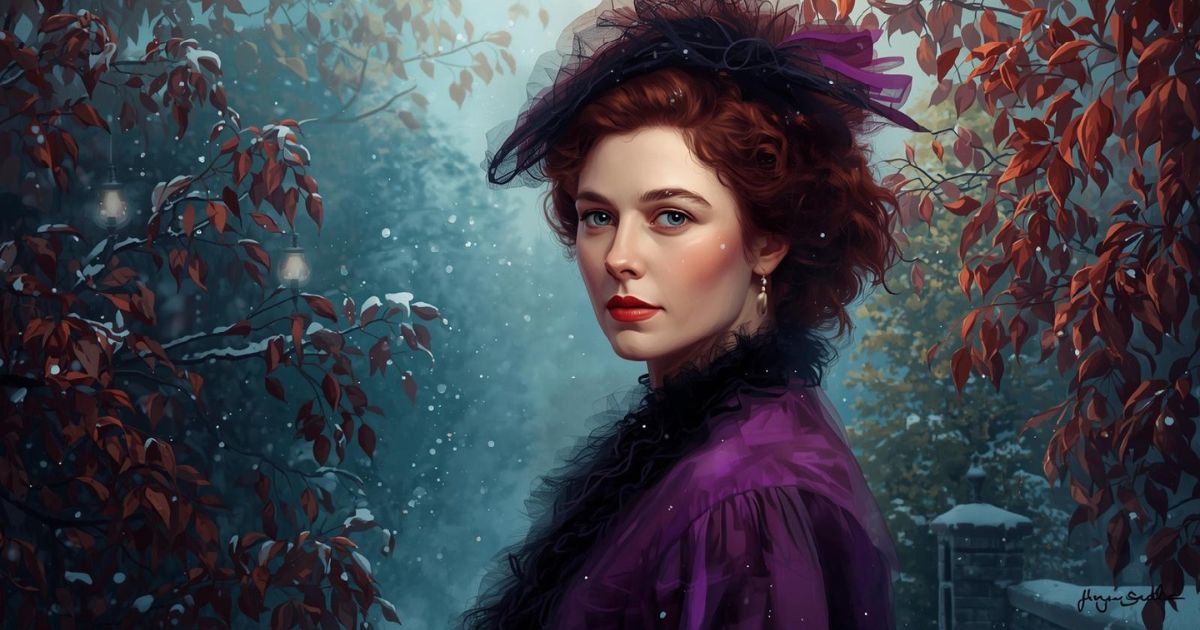
An excerpt from the original text.(complete · 992 words)
he Karenins, husband and wife, continued living in the same house, met
every day, but were complete strangers to one another. Alexey
Alexandrovitch made it a rule to see his wife every day, so that the
servants might have no grounds for suppositions, but avoided dining at
home. Vronsky was never at Alexey Alexandrovitch’s house, but Anna saw
him away from home, and her husband was aware of it.
The position was one of misery for all three; and not one of them would
have been equal to enduring this position for a single day, if it had
not been for the expectation that it would change, that it was merely a
temporary painful ordeal which would pass over. Alexey Alexandrovitch
hoped that this passion would pass, as everything does pass, that
everyone would forget about it, and his name would remain unsullied.
Anna, on whom the position depended, and for whom it was more miserable
than for anyone, endured it because she not merely hoped, but firmly
believed, that it would all very soon be settled and come right. She
had not the least idea what would settle the position, but she firmly
believed that something would very soon turn up now. Vronsky, against
his own will or wishes, followed her lead, hoped too that something,
apart from his own action, would be sure to solve all difficulties.
In the middle of the winter Vronsky spent a very tiresome week. A
foreign prince, who had come on a visit to Petersburg, was put under
his charge, and he had to show him the sights worth seeing. Vronsky was
of distinguished appearance; he possessed, moreover, the art of
behaving with respectful dignity, and was used to having to do with
such grand personages—that was how he came to be put in charge of the
prince. But he felt his duties very irksome. The prince was anxious to
miss nothing of which he would be asked at home, had he seen that in
Russia? And on his own account he was anxious to enjoy to the utmost
all Russian forms of amusement. Vronsky was obliged to be his guide in
satisfying both these inclinations. The mornings they spent driving to
look at places of interest; the evenings they passed enjoying the
national entertainments. The prince rejoiced in health exceptional even
among princes. By gymnastics and careful attention to his health he had
brought himself to such a point that in spite of his excess in pleasure
he looked as fresh as a big glossy green Dutch cucumber. The prince had
traveled a great deal, and considered one of the chief advantages of
modern facilities of communication was the accessibility of the
pleasures of all nations.
He had been in Spain, and there had indulged in serenades and had made
friends with a Spanish girl who played the mandolin. In Switzerland he
had killed chamois. In England he had galloped in a red coat over
hedges and killed two hundred pheasants for a bet. In Turkey he had got
into a harem; in India he had hunted on an elephant, and now in Russia
he wished to taste all the specially Russian forms of pleasure.
Vronsky, who was, as it were, chief master of the ceremonies to him,
was at great pains to arrange all the Russian amusements suggested by
various persons to the prince. They had race horses, and Russian
pancakes and bear hunts and three-horse sledges, and gypsies and
drinking feasts, with the Russian accompaniment of broken crockery. And
the prince with surprising ease fell in with the Russian spirit,
smashed trays full of crockery, sat with a gypsy girl on his knee, and
seemed to be asking—what more, and does the whole Russian spirit
consist in just this?
In reality, of all the Russian entertainments the prince liked best
French actresses and ballet dancers and white-seal champagne. Vronsky
was used to princes, but, either because he had himself changed of
late, or that he was in too close proximity to the prince, that week
seemed fearfully wearisome to him. The whole of that week he
experienced a sensation such as a man might have set in charge of a
dangerous madman, afraid of the madman, and at the same time, from
being with him, fearing for his own reason. Vronsky was continually
conscious of the necessity of never for a second relaxing the tone of
stern official respectfulness, that he might not himself be insulted.
The prince’s manner of treating the very people who, to Vronsky’s
surprise, were ready to descend to any depths to provide him with
Russian amusements, was contemptuous. His criticisms of Russian women,
whom he wished to study, more than once made Vronsky crimson with
indignation. The chief reason why the prince was so particularly
disagreeable to Vronsky was that he could not help seeing himself in
him. And what he saw in this mirror did not gratify his self-esteem. He
was a very stupid and very self-satisfied and very healthy and very
well-washed man, and nothing else. He was a gentleman—that was true,
and Vronsky could not deny it. He was equable and not cringing with his
superiors, was free and ingratiating in his behavior with his equals,
and was contemptuously indulgent with his inferiors. Vronsky was
himself the same, and regarded it as a great merit to be so. But for
this prince he was an inferior, and his contemptuous and indulgent
attitude to him revolted him.
“Brainless beef! can I be like that?” he thought.
Be that as it might, when, on the seventh day, he parted from the
prince, who was starting for Moscow, and received his thanks, he was
happy to be rid of his uncomfortable position and the unpleasant
reflection of himself. He said good-bye to him at the station on their
return from a bear hunt, at which they had had a display of Russian
prowess kept up all night.
Master this chapter. Complete your experience
Purchase the complete book to access all chapters and support classic literature
As an Amazon Associate, we earn a small commission from qualifying purchases at no additional cost to you.
Available in paperback, hardcover, and e-book formats
Let's Analyse the Pattern
Making another person responsible for your emotional wellbeing, then using desperation and neediness to control their behavior.
Why This Matters
Connect literature to life
This chapter teaches how to identify when love has crossed the line into desperate control and emotional manipulation.
Practice This Today
This week, notice when you need someone else's attention or approval to feel okay about yourself, and practice sitting with that discomfort without demanding immediate reassurance.
Now let's explore the literary elements.
Key Quotes & Analysis
"She felt that the ground on which she stood was sliding away from under her feet."
Context: Describing Anna's realization that she's losing control of her relationship and her life
This metaphor captures Anna's complete loss of stability and security. Everything she's built her identity on is crumbling, leaving her with nothing solid to stand on. It shows how dangerous it is to make one person your entire foundation.
In Today's Words:
She felt like her whole world was falling apart and she had nothing left to hold onto.
"The very thing that had once been the source of her happiness had become the source of her torment."
Context: Reflecting on how Anna's passionate love has turned into obsessive jealousy
This reveals how love can become toxic when it's based on possession rather than genuine care. Anna's happiness depends entirely on controlling Vronsky, which inevitably leads to misery for both of them.
In Today's Words:
The thing that used to make her happy was now making her miserable.
"She could not think of him as having interests separate from her own."
Context: Explaining Anna's inability to accept that Vronsky has his own life and needs
This shows the ultimate selfishness of Anna's love - she can't see Vronsky as an independent person with his own desires and friendships. This possessive attitude destroys relationships because it denies the other person's humanity.
In Today's Words:
She couldn't handle the idea that he had his own life outside of her.
Thematic Threads
Identity
In This Chapter
Anna has completely lost herself in Vronsky—her worth depends entirely on his attention and approval
Development
Escalated from earlier chapters where she first began sacrificing her social position for love
In Your Life:
You might recognize this when your mood depends entirely on how someone else treats you on any given day
Control
In This Chapter
Anna's desperate attempts to monitor and control Vronsky's every action and interaction
Development
Evolved from passionate love into obsessive surveillance and emotional manipulation
In Your Life:
You see this when you find yourself checking someone's social media constantly or demanding to know where they are every moment
Isolation
In This Chapter
Anna's paranoia and neediness are driving away the one person she's sacrificed everything for
Development
Built from her earlier social exile—now she's creating emotional exile as well
In Your Life:
This happens when your fear of being abandoned causes you to behave in ways that actually push people away
Dependency
In This Chapter
Anna resents her complete emotional dependence on Vronsky while being unable to break free from it
Development
Deepened from earlier chapters where she first chose love over independence
In Your Life:
You might feel this when you hate needing someone's approval but can't stop seeking it
Self-destruction
In This Chapter
Anna's jealousy and desperation are destroying the very relationship she's trying to preserve
Development
Culmination of choices that began with adultery and escalated through social rebellion
In Your Life:
This shows up when your attempts to fix a relationship actually make it worse
You now have the context. Time to form your own thoughts.
Discussion Questions
- 1
What specific behaviors show that Anna has become completely dependent on Vronsky's attention and approval?
analysis • surface - 2
How does Anna's desperate need for reassurance actually push Vronsky away, creating the very abandonment she fears?
analysis • medium - 3
Where do you see this pattern of emotional hostage-taking in modern relationships - romantic, family, or workplace?
application • medium - 4
If you were Vronsky's friend, what advice would you give him for dealing with Anna's increasing neediness without being cruel?
application • deep - 5
What does Anna's story teach us about the difference between healthy love and emotional dependency?
reflection • deep
Critical Thinking Exercise
Map Your Emotional Independence
Create a simple chart with two columns: 'Sources of Self-Worth' and 'Relationship Dependencies.' List everything that makes you feel valuable and confident in the first column. In the second, honestly identify any relationships where you rely too heavily on someone else's approval or attention for your emotional stability. Look for patterns where one person's mood or behavior has too much power over your day.
Consider:
- •Notice if your self-worth is concentrated in just one or two relationships
- •Pay attention to areas where you feel anxious when someone doesn't respond quickly
- •Consider whether you have interests and accomplishments that exist independently of others
Journaling Prompt
Write about a time when you felt emotionally dependent on someone else's approval. How did that dependency affect your behavior and the relationship? What would you do differently now?
Coming Up Next...
Chapter 103
Anna's desperation reaches a breaking point as she makes a decision that will change everything. The weight of her isolation and the intensity of her inner turmoil finally push her toward a moment of terrible clarity.