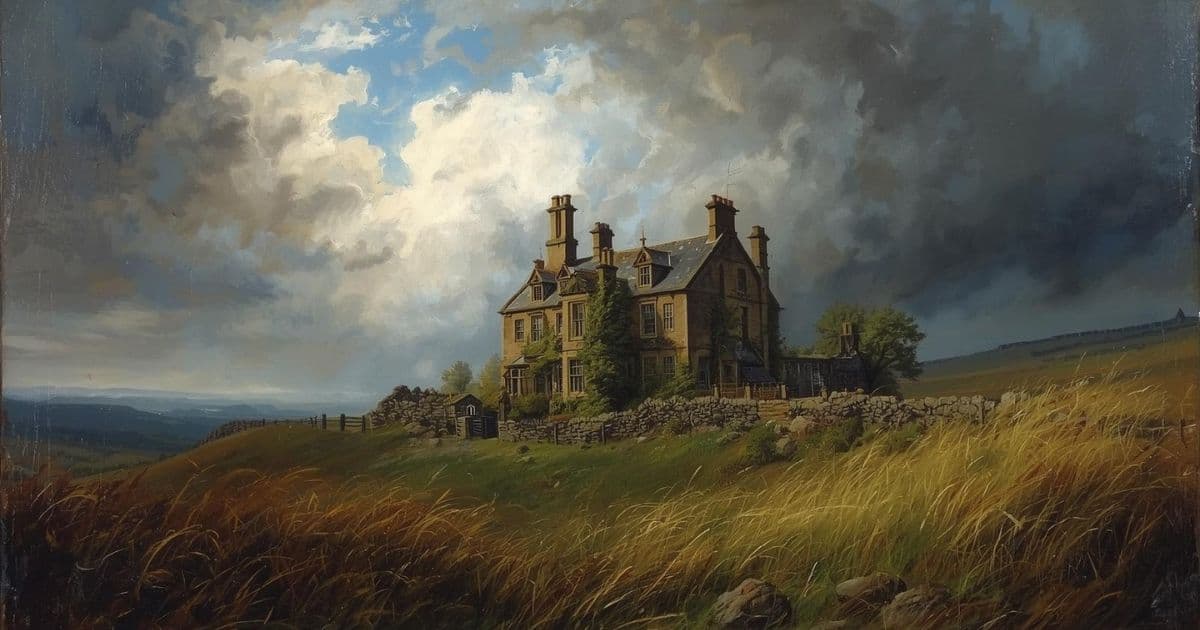
An excerpt from the original text.(complete · 860 words)
hen he got home, Vronsky found there a note from Anna. She wrote, “I
am ill and unhappy. I cannot come out, but I cannot go on longer
without seeing you. Come in this evening. Alexey Alexandrovitch goes to
the council at seven and will be there till ten.” Thinking for an
instant of the strangeness of her bidding him come straight to her, in
spite of her husband’s insisting on her not receiving him, he decided
to go.
Vronsky had that winter got his promotion, was now a colonel, had left
the regimental quarters, and was living alone. After having some lunch,
he lay down on the sofa immediately, and in five minutes memories of
the hideous scenes he had witnessed during the last few days were
confused together and joined on to a mental image of Anna and of the
peasant who had played an important part in the bear hunt, and Vronsky
fell asleep. He waked up in the dark, trembling with horror, and made
haste to light a candle. “What was it? What? What was the dreadful
thing I dreamed? Yes, yes; I think a little dirty man with a disheveled
beard was stooping down doing something, and all of a sudden he began
saying some strange words in French. Yes, there was nothing else in the
dream,” he said to himself. “But why was it so awful?” He vividly
recalled the peasant again and those incomprehensible French words the
peasant had uttered, and a chill of horror ran down his spine.
“What nonsense!” thought Vronsky, and glanced at his watch.
It was half-past eight already. He rang up his servant, dressed in
haste, and went out onto the steps, completely forgetting the dream and
only worried at being late. As he drove up to the Karenins’ entrance he
looked at his watch and saw it was ten minutes to nine. A high, narrow
carriage with a pair of grays was standing at the entrance. He
recognized Anna’s carriage. “She is coming to me,” thought Vronsky,
“and better she should. I don’t like going into that house. But no
matter; I can’t hide myself,” he thought, and with that manner peculiar
to him from childhood, as of a man who has nothing to be ashamed of,
Vronsky got out of his sledge and went to the door. The door opened,
and the hall-porter with a rug on his arm called the carriage. Vronsky,
though he did not usually notice details, noticed at this moment the
amazed expression with which the porter glanced at him. In the very
doorway Vronsky almost ran up against Alexey Alexandrovitch. The gas
jet threw its full light on the bloodless, sunken face under the black
hat and on the white cravat, brilliant against the beaver of the coat.
Karenin’s fixed, dull eyes were fastened upon Vronsky’s face. Vronsky
bowed, and Alexey Alexandrovitch, chewing his lips, lifted his hand to
his hat and went on. Vronsky saw him without looking round get into the
carriage, pick up the rug and the opera-glass at the window and
disappear. Vronsky went into the hall. His brows were scowling, and his
eyes gleamed with a proud and angry light in them.
“What a position!” he thought. “If he would fight, would stand up for
his honor, I could act, could express my feelings; but this weakness or
baseness.... He puts me in the position of playing false, which I never
meant and never mean to do.”
Vronsky’s ideas had changed since the day of his conversation with Anna
in the Vrede garden. Unconsciously yielding to the weakness of Anna—who
had surrendered herself up to him utterly, and simply looked to him to
decide her fate, ready to submit to anything—he had long ceased to
think that their tie might end as he had thought then. His ambitious
plans had retreated into the background again, and feeling that he had
got out of that circle of activity in which everything was definite, he
had given himself entirely to his passion, and that passion was binding
him more and more closely to her.
He was still in the hall when he caught the sound of her retreating
footsteps. He knew she had been expecting him, had listened for him,
and was now going back to the drawing-room.
“No,” she cried, on seeing him, and at the first sound of her voice the
tears came into her eyes. “No; if things are to go on like this, the
end will come much, much too soon.”
“What is it, dear one?”
“What? I’ve been waiting in agony for an hour, two hours ... No, I
won’t ... I can’t quarrel with you. Of course you couldn’t come. No, I
won’t.” She laid her two hands on his shoulders, and looked a long
while at him with a profound, passionate, and at the same time
searching look. She was studying his face to make up for the time she
had not seen him. She was, every time she saw him, making the picture
of him in her imagination (incomparably superior, impossible in
reality) fit with him as he really was.
Master this chapter. Complete your experience
Purchase the complete book to access all chapters and support classic literature
As an Amazon Associate, we earn a small commission from qualifying purchases at no additional cost to you.
Available in paperback, hardcover, and e-book formats
Let's Analyse the Pattern
Using physical work or busyness to temporarily escape mental pain, creating relief but not resolution.
Why This Matters
Connect literature to life
This chapter teaches how to identify when productive activity becomes avoidance behavior rather than genuine progress.
Practice This Today
This week, notice when you take on extra tasks or stay busy to avoid dealing with difficult emotions—then ask yourself what you're really trying to outrun.
Now let's explore the literary elements.
Key Quotes & Analysis
"He wanted to forget himself in work, to lose himself in it so that he would not think."
Context: As Levin throws himself into field work to escape his mental anguish
This reveals how work becomes Levin's desperate attempt at self-medication. He's not working for productivity but for mental survival, hoping exhaustion will silence his suicidal thoughts.
In Today's Words:
He just wanted to work so hard he'd be too tired to think about how miserable he was.
"The longer he worked, the more often he felt those moments of unconsciousness when it was possible not to think of what he was doing."
Context: Describing Levin's experience during repetitive farm work
Shows how physical rhythm can create a meditative state that temporarily frees him from his psychological prison. These moments of 'unconsciousness' are precious relief from his overactive, tormented mind.
In Today's Words:
The harder he worked, the more he could zone out and forget his problems for a while.
"He envied the peasants their certainty, their unquestioning acceptance of life."
Context: Levin observing the workers around him who seem at peace
Highlights the irony that education and privilege have made him more miserable than the 'simple' people around him. Their faith gives them what his intellect cannot - peace with existence.
In Today's Words:
He wished he could just accept life without questioning everything like they did.
Thematic Threads
Class
In This Chapter
Levin envies the peasants' simple faith and natural acceptance of life, feeling his education and wealth have separated him from their peace
Development
Continues the theme of class barriers creating spiritual isolation rather than privilege
In Your Life:
You might find yourself envying people with 'simpler' lives when your own complexity feels overwhelming
Identity
In This Chapter
Levin questions whether his intellectual education is a burden rather than a gift, wondering if thinking too much prevents living
Development
Deepens his identity crisis as he sees his strengths as potential weaknesses
In Your Life:
You might wonder if your awareness of problems makes you less happy than those who don't notice them
Personal Growth
In This Chapter
Levin seeks meaning through physical labor and connection to the land, hoping work will provide what philosophy cannot
Development
Shows growth as desperate searching rather than steady progress
In Your Life:
You might try to solve emotional problems through physical activity or complete life changes
Human Relationships
In This Chapter
Levin feels isolated from the peasants despite working alongside them, unable to access their natural faith
Development
Explores how internal struggles can create barriers even in shared experiences
In Your Life:
You might feel lonely even when surrounded by people, especially when struggling with depression or anxiety
You now have the context. Time to form your own thoughts.
Discussion Questions
- 1
What specific strategy does Levin use to try to escape his dark thoughts, and what does he hope the physical exhaustion will accomplish?
analysis • surface - 2
Why does Levin envy the peasants who work alongside him, and what does this reveal about the relationship between education and happiness?
analysis • medium - 3
Where do you see people today using work or busyness to avoid dealing with emotional pain or difficult life situations?
application • medium - 4
If you had a friend like Levin who was throwing themselves into work to escape suicidal thoughts, how would you approach helping them without taking away their coping mechanism?
application • deep - 5
What does Levin's experience teach us about the difference between temporary relief and actual healing when dealing with life's biggest questions?
reflection • deep
Critical Thinking Exercise
Map Your Own Escape Routes
Think about the last time you felt overwhelmed, anxious, or deeply upset. What activities did you throw yourself into to avoid thinking about it? List 3-5 things you do when you need to escape your own thoughts. Then honestly assess: which ones actually help you process and heal, versus which ones just postpone the reckoning?
Consider:
- •Consider both healthy and unhealthy escape mechanisms you use
- •Think about whether your go-to activities connect you to others or isolate you further
- •Notice if your escape activities make you feel accomplished or just exhausted
Journaling Prompt
Write about a time when you used work or busyness to avoid dealing with something painful. What were you really trying to escape, and what would have happened if you had faced it directly instead?
Coming Up Next...
Chapter 104
A chance conversation with an old peasant about living 'for the soul' stops Levin cold in the middle of his work. Sometimes the answers we're desperately seeking come from the most unexpected sources.