
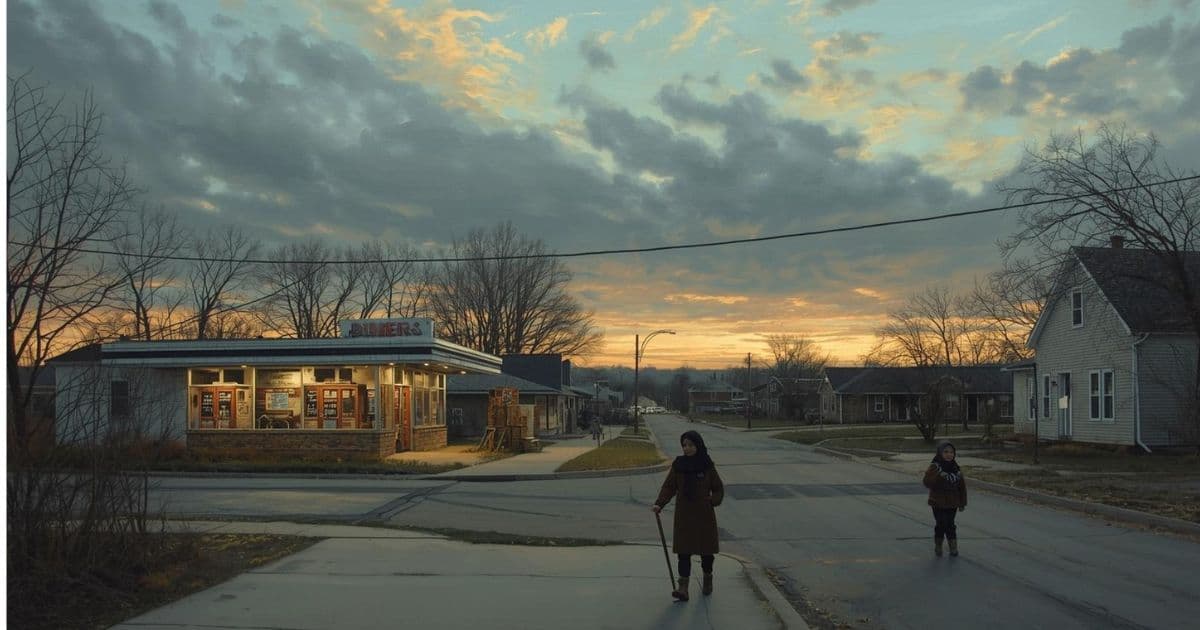
The Exhausting Work of Social Climbing
In Alice Adams, Booth Tarkington shows exactly what social climbing costs — not in money, but in energy, authenticity, and peace of mind.
These 8 chapters trace how the performance of a higher social status slowly consumes the person performing it.
The Pattern
Alice Adams doesn't climb by acquiring wealth or power — she climbs by performing them. Her entire strategy is appearance management: dress the right way, speak the right way, be seen in the right places, and eventually the world will accept you as what you're pretending to be. Tarkington is merciless in showing how this strategy works, briefly, and then unravels. The performance is convincing enough to attract Arthur Russell, a man from the class she aspires to. But it's expensive to maintain, impossible to sustain indefinitely, and leaves Alice with no genuine self to fall back on when the fiction fails. What makes this novel so unsettling is that Alice isn't stupid or deluded. She's intelligent and self-aware — she knows she's performing. She just can't stop, because stopping means accepting a reality she's been taught to regard as defeat. Tarkington's insight is that the real trap of social climbing isn't failure. It's the internalization of a hierarchy that makes your actual life feel like not enough.
The Energy Cost
Every scene where Alice is in public shows her working — managing impressions, monitoring reactions, improvising cover stories. Social climbing isn't just ambition; it's a second job. The energy Alice spends maintaining the performance is energy she can't spend building the life she actually wants. This is the hidden cost that never appears in the aspirational story.
The Escalation Trap
Each successful performance raises the stakes. Alice impresses Arthur, so now she must maintain and exceed that impression. She creates obligations — like the dinner party — that demand resources she doesn't have. Social climbing is a ratchet: it only goes up, and the higher you climb on false foundations, the more catastrophic the fall becomes.
The Journey Through Chapters
The Walking Stick and Social Judgment
Alice ventures out wearing a new walking stick, hoping to project sophistication and fashion. Her morning walk becomes a minefield of social signals: who nods, who ignores, who whispers. Every gesture is calculated. Every passerby is an audience. What should be a simple errand becomes an exhausting performance evaluated by invisible judges.
“She walked with a little too much elaborateness of movement.”
Key Insight
Social climbing turns ordinary life into a constant performance review. When you're invested in how others perceive your status, nothing is neutral—every interaction is either evidence you belong or evidence you don't. Alice can't walk down a street without keeping score. Recognizing when you're performing versus living is the first step toward choosing which one you want.
The Performance Before the Dance
Alice prepares meticulously for the Palmer party, transforming herself into what she hopes will be an irresistible vision. She borrows, improvises, and invents to assemble an appearance of wealth she doesn't have. The preparation takes hours. Each detail is a calculated lie. She arrives having spent tremendous energy on a fiction—before the real performance even begins.
“She had done everything that could be done to make herself look like what she was not.”
Key Insight
The preparation for social climbing often costs more than the event itself. Alice exhausts herself creating an illusion before she even walks in the door. This is the hidden tax of pretending: it drains resources—time, money, emotional energy—that could go toward building something real. The energy spent maintaining a false image is energy unavailable for becoming who you actually want to be.
The Art of Appearing Wanted
At the dance, Alice works frantically to appear as though she has more options than she does. When she's left without a partner, she manufactures busyness—checking her card, greeting people who barely acknowledge her, drifting toward groups she hasn't been invited into. The entire evening is an improvised theater of belonging, performed for an audience that mostly isn't watching.
“She had the air of one who waits for friends who are perhaps a little late.”
Key Insight
One of the most exhausting aspects of social climbing is performing popularity you don't have. Alice spends enormous energy creating the appearance of being wanted rather than doing anything that would actually make her wanted. The performance substitutes for the reality. Recognizing when you're manufacturing the appearance of success rather than building actual connections is crucial—one is a trap, the other is the way out.
The Cruelest Performance
Alice reaches her breaking point at the dance, cycling through increasingly desperate strategies to avoid looking like a wallflower. She pretends to be absorbed in conversations she isn't having, laughs at nothing, moves constantly to avoid being seen standing alone. The evening becomes a masterclass in the torture of status anxiety—all performance, no pleasure, no genuine connection.
“She had begun to play a part, and the part required that she seem to be enjoying herself.”
Key Insight
When status anxiety peaks, the event meant to demonstrate your belonging becomes the thing that most painfully exposes your exclusion. Alice came to the dance to prove she belonged; instead every hour proves she doesn't. This is the cruel paradox of social climbing: the desperate pursuit of acceptance in contexts where you don't naturally belong tends to make the exclusion more visible, not less.
The Art of Strategic Flirtation
Alice encounters Arthur Russell—a man above her social station—and deploys every charm she possesses. She is witty, warm, spontaneous. She is also calculating every word. The genuine and the performed become indistinguishable, even to Alice. When climbing, you use real assets to pursue false goals, and eventually you can't tell the difference between who you actually are and who you're performing.
“She had the gift of being genuinely interested in whoever she was with—or of seeming to be.”
Key Insight
Social climbing corrupts authentic self-expression. Alice has real charm, real intelligence, real warmth—but she deploys them as tools for social advancement rather than genuine connection. Over time, this instrumentalization of your own qualities makes it harder to know when you're being real versus strategic. The person who uses their genuine self as a ladder loses track of where the self ends and the performance begins.
The Art of Careful Conversation
Alice and Arthur walk through the less fashionable part of town where she believes they won't be seen. Every word she speaks is monitored for class signals. She edits herself in real time, suppressing references to her real life, amplifying allusions to a grander existence. The conversation flows naturally on the surface while underneath Alice is working frantically to control every impression.
“She spoke carefully, as one who picks a path through difficult country.”
Key Insight
Social climbing makes conversation into surveillance. Alice can't speak freely because every sentence might reveal something that destroys the fiction. When you're performing a social identity rather than living one, ordinary intimacy becomes dangerous—the more someone knows you, the greater the risk. This is why social climbers often feel most alone in the relationships that should feel closest.
The Dinner Party Dilemma
Alice's mother insists on hosting a formal dinner for Arthur, despite their poverty. Alice is horrified, knowing the dinner will expose everything she's been hiding. Yet she can't refuse without revealing why. The trap closes: the social performance has created obligations she can't fulfill without the resources to back them up. The lie now has a deadline.
“Each step upward had made the next step more necessary and more impossible.”
Key Insight
Social climbing creates escalating obligations. Each successful performance raises expectations for the next one. Alice performed wealth so convincingly that now the natural consequence—a dinner party—will destroy her. The higher you climb through pretense, the further you fall when reality intrudes. At some point, the performance always encounters a situation it cannot sustain.
When Everything Falls Apart
The disastrous dinner party reaches its climax. The hired help is incompetent, the food inadequate, the heat unbearable, and Arthur's discomfort unmistakable. Alice watches her carefully constructed fiction collapse in real time, unable to stop it. The performance she has sustained for months crumbles over the course of a single evening. What took months to build takes hours to destroy.
“The evening had become something she could not stop and could not endure.”
Key Insight
Social performances are fragile precisely because they're performances. Real life is messy—heat waves happen, hired servants are unreliable, poverty shows through improvised elegance. Alice built an identity on surfaces; the dinner exposes the lack of substance beneath them. The lesson isn't that Alice should have performed better. It's that no performance, however skilled, can substitute indefinitely for the real thing.
Why This Matters Today
Alice Adams was published in 1921, but the pressure she faces is more intense now than it was then. Social media has turned every person into a brand manager, every moment into content, every life into a highlight reel. The performance Alice sustained in Midwestern drawing rooms, we sustain on Instagram, LinkedIn, and TikTok — constantly curating the impression of a life slightly grander than the one we actually have.
Tarkington shows that the problem with social climbing isn't ambition — it's the substitution of performance for development. Alice isn't improving her circumstances; she's performing improved circumstances. The energy she spends on impression management could go toward actual skill-building, genuine relationship-forming, and real advancement. The novel forces the question: are you building something, or are you performing something being built?
The actionable lesson: audit where your energy actually goes. How much time do you spend on appearance — the LinkedIn optimization, the outfit for the event you don't want to attend, the carefully worded message designed to seem casual — versus on substance? Alice's tragedy isn't that she wanted more. It's that she confused looking like she had more with having more, and paid for the confusion with everything she actually had.