
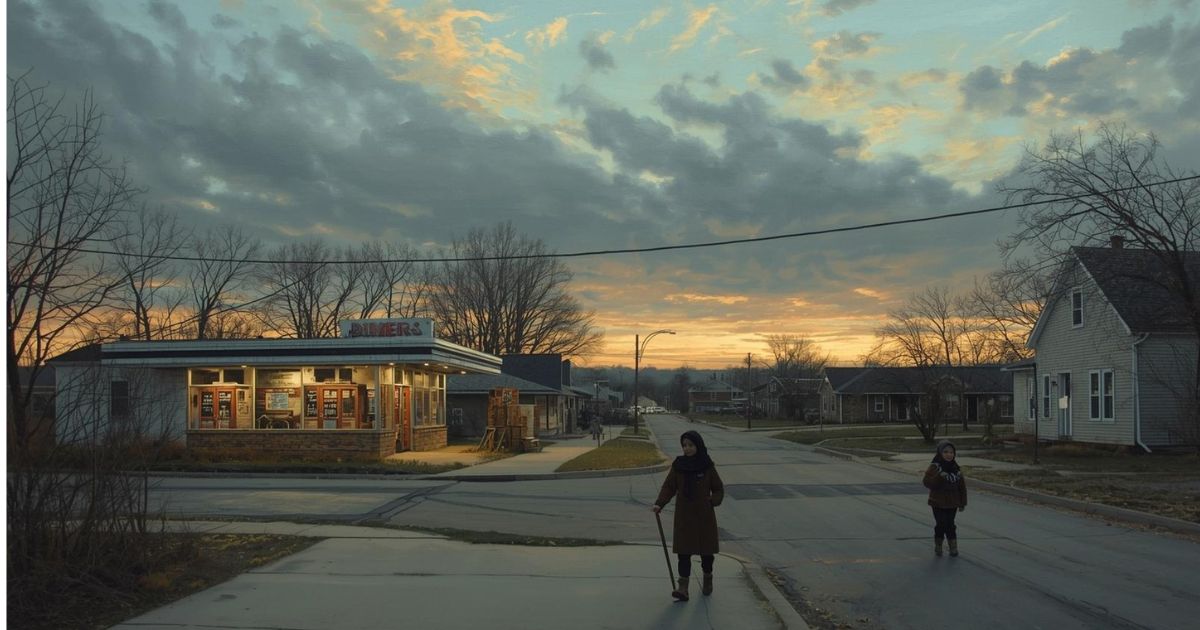
An excerpt from the original text.(complete · 3544 words)
lice was softly crooning to herself as her mother turned the corner of
the house and approached through the dusk.
“Isn't it the most BEAUTIFUL evening!” the daughter said. “WHY can't
summer last all year? Did you ever know a lovelier twilight than this,
mama?”
Mrs. Adams laughed, and answered, “Not since I was your age, I expect.”
Alice was wistful at once. “Don't they stay beautiful after my age?”
“Well, it's not the same thing.”
“Isn't it? Not ever?”
“You may have a different kind from mine,” the mother said, a little
sadly. “I think you will, Alice. You deserve----”
“No, I don't. I don't deserve anything, and I know it. But I'm getting
a great deal these days--more than I ever dreamed COULD come to me.
I'm--I'm pretty happy, mama!”
“Dearie!” Her mother would have kissed her, but Alice drew away.
“Oh, I don't mean----” She laughed nervously. “I wasn't meaning to
tell you I'm ENGAGED, mama. We're not. I mean--oh! things seem pretty
beautiful in spite of all I've done to spoil 'em.”
“You?” Mrs. Adams cried, incredulously. “What have you done to spoil
anything?”
“Little things,” Alice said. “A thousand little silly--oh, what's
the use? He's so honestly what he is--just simple and good and
intelligent--I feel a tricky mess beside him! I don't see why he likes
me; and sometimes I'm afraid he wouldn't if he knew me.”
“He'd just worship you,” said the fond mother. “And the more he knew
you, the more he'd worship you.”
Alice shook her head. “He's not the worshiping kind. Not like that at
all. He's more----”
But Mrs. Adams was not interested in this analysis, and she interrupted
briskly, “Of course it's time your father and I showed some interest in
him. I was just saying I actually don't believe he's ever been inside
the house.”
“No,” Alice said, musingly; “that's true: I don't believe he has. Except
when we've walked in the evening we've always sat out here, even those
two times when it was drizzly. It's so much nicer.”
“We'll have to do SOMETHING or other, of course,” her mother said.
“What like?”
“I was thinking----” Mrs. Adams paused. “Well, of course we could hardly
put off asking him to dinner, or something, much longer.”
Alice was not enthusiastic; so far from it, indeed, that there was a
melancholy alarm in her voice. “Oh, mama, must we? Do you think so?”
“Yes, I do. I really do.”
“Couldn't we--well, couldn't we wait?”
“It looks queer,” Mrs. Adams said. “It isn't the thing at all for a
young man to come as much as he does, and never more than just barely
meet your father and mother. No. We ought to do something.”
“But a dinner!” Alice objected. “In the first place, there isn't anybody
I want to ask. There isn't anybody I WOULD ask.”
“I didn't mean trying to give a big dinner,” her mother explained. “I
just mean having him to dinner. That mulatto woman, Malena Burns, goes
out by the day, and she could bring a waitress. We can get some flowers
for the table and some to put in the living-room. We might just as well
go ahead and do it to-morrow as any other time; because your father's in
a fine mood, and I saw Malena this afternoon and told her I might want
her soon. She said she didn't have any engagements this week, and I can
let her know to-night. Suppose when he comes you ask him for to-morrow,
Alice. Everything'll be very nice, I'm sure. Don't worry about it.”
“Well--but----” Alice was uncertain.
“But don't you see, it looks so queer, not to do SOMETHING?” her mother
urged. “It looks so kind of poverty-stricken. We really oughtn't to wait
any longer.”
Alice assented, though not with a good heart. “Very well, I'll ask him,
if you think we've got to.”
“That matter's settled then,” Mrs. Adams said. “I'll go telephone
Malena, and then I'll tell your father about it.”
But when she went back to her husband, she found him in an excited
state of mind, and Walter standing before him in the darkness. Adams was
almost shouting, so great was his vehemence.
“Hush, hush!” his wife implored, as she came near them. “They'll hear
you out on the front porch!”
“I don't care who hears me,” Adams said, harshly, though he tempered his
loudness. “Do you want to know what this boy's asking me for? I thought
he'd maybe come to tell me he'd got a little sense in his head at last,
and a little decency about what's due his family! I thought he was
going to ask me to take him into my plant. No, ma'am; THAT'S not what he
wants!”
“No, it isn't,” Walter said. In the darkness his face could not be seen;
he stood motionless, in what seemed an apathetic attitude; and he spoke
quietly, “No,” he repeated. “That isn't what I want.”
“You stay down at that place,” Adams went on, hotly, “instead of trying
to be a little use to your family; and the only reason you're ALLOWED to
stay there is because Mr. Lamb's never happened to notice you ARE still
there! You just wait----”
“You're off,” Walter said, in the same quiet way. “He knows I'm there.
He spoke to me yesterday: he asked me how I was getting along with my
work.”
“He did?” Adams said, seeming not to believe him.
“Yes. He did.”
“What else did he say, Walter?” Mrs. Adams asked quickly.
“Nothin'. Just walked on.”
“I don't believe he knew who you were,” Adams declared.
“Think not? He called me 'Walter Adams.'”
At this Adams was silent; and Walter, after waiting a moment, said:
“Well, are you going to do anything about me? About what I told you I
got to have?”
“What is it, Walter?” his mother asked, since Adams did not speak.
Walter cleared his throat, and replied in a tone as quiet as that he
had used before, though with a slight huskiness, “I got to have three
hundred and fifty dollars. You better get him to give it to me if you
can.”
Adams found his voice. “Yes,” he said, bitterly. “That's all he asks!
He won't do anything I ask HIM to, and in return he asks me for three
hundred and fifty dollars! That's all!”
“What in the world!” Mrs. Adams exclaimed. “What FOR, Walter?”
“I got to have it,” Walter said.
“But what FOR?”
His quiet huskiness did not alter. “I got to have it.”
“But can't you tell us----”
“I got to have it.”
“That's all you can get out of him,” Adams said. “He seems to think
it'll bring him in three hundred and fifty dollars!”
A faint tremulousness became evident in the husky voice. “Haven't you
got it?”
“NO, I haven't got it!” his father answered. “And I've got to go to a
bank for more than my pay-roll next week. Do you think I'm a mint?”
“I don't understand what you mean, Walter,” Mrs. Adams interposed,
perplexed and distressed. “If your father had the money, of course
he'd need every cent of it, especially just now, and, anyhow, you could
scarcely expect him to give it to you, unless you told us what you want
with it. But he hasn't got it.”
“All right,” Walter said; and after standing a moment more, in silence,
he added, impersonally, “I don't see as you ever did anything much for
me, anyhow either of you.”
Then, as if this were his valedictory, he turned his back upon them,
walked away quickly, and was at once lost to their sight in the
darkness.
“There's a fine boy to've had the trouble of raising!” Adams grumbled.
“Just crazy, that's all.”
“What in the world do you suppose he wants all that money for?” his
wife said, wonderingly. “I can't imagine what he could DO with it. I
wonder----” She paused. “I wonder if he----”
“If he what?” Adams prompted her irritably.
“If he COULD have bad--associates.”
“God knows!” said Adams. “I don't! It just looks to me like he had
something in him I don't understand. You can't keep your eye on a boy
all the time in a city this size, not a boy Walter's age. You got a girl
pretty much in the house, but a boy'll follow his nature. I don't know
what to do with him!”
Mrs. Adams brightened a little. “He'll come out all right,” she said.
“I'm sure he will. I'm sure he'd never be anything really bad: and he'll
come around all right about the glue-works, too; you'll see. Of course
every young man wants money--it doesn't prove he's doing anything wrong
just because he asks you for it.”
“No. All it proves to me is that he hasn't got good sense asking me for
three hundred and fifty dollars, when he knows as well as you do the
position I'm in! If I wanted to, I couldn't hardly let him have three
hundred and fifty cents, let alone dollars!”
“I'm afraid you'll have to let ME have that much--and maybe a little
more,” she ventured, timidly; and she told him of her plans for the
morrow. He objected vehemently.
“Oh, but Alice has probably asked him by this time,” Mrs. Adams said.
“It really must be done, Virgil: you don't want him to think she's
ashamed of us, do you?”
“Well, go ahead, but just let me stay away,” he begged. “Of course I
expect to undergo a kind of talk with him, when he gets ready to say
something to us about Alice, but I do hate to have to sit through a
fashionable dinner.”
“Why, it isn't going to bother you,” she said; “just one young man as a
guest.”
“Yes, I know; but you want to have all this fancy cookin'; and I see
well enough you're going to get that old dress suit out of the cedar
chest in the attic, and try to make me put it on me.”
“I do think you better, Virgil.”
“I hope the moths have got in it,” he said. “Last time I wore it was to
the banquet, and it was pretty old then. Of course I didn't mind wearing
it to the banquet so much, because that was what you might call quite an
occasion.” He spoke with some reminiscent complacency; “the banquet,”
an affair now five years past, having provided the one time in his
life when he had been so distinguished among his fellow-citizens as to
receive an invitation to be present, with some seven hundred others, at
the annual eating and speech-making of the city's Chamber of Commerce.
“Anyhow, as you say, I think it would look foolish of me to wear a dress
suit for just one young man,” he went on protesting, feebly. “What's the
use of all so much howdy-do, anyway? You don't expect him to believe we
put on all that style every night, do you? Is that what you're after?”
“Well, we want him to think we live nicely,” she admitted.
“So that's it!” he said, querulously. “You want him to think that's our
regular gait, do you? Well, he'll know better about me, no matter how
you fix me up, because he saw me in my regular suit the evening she
introduced me to him, and he could tell anyway I'm not one of these
moving-picture sporting-men that's always got a dress suit on. Besides,
you and Alice certainly have some idea he'll come AGAIN, haven't you?
If they get things settled between 'em he'll be around the house and to
meals most any time, won't he? You don't hardly expect to put on style
all the time, I guess. Well, he'll see then that this kind of thing was
all show-off, and bluff, won't he? What about it?”
“Oh, well, by THAT time----” She left the sentence unfinished, as if
absently. “You could let us have a little money for to-morrow, couldn't
you, honey?”
“Oh, I reckon, I reckon,” he mumbled. “A girl like Alice is some
comfort: she don't come around acting as if she'd commit suicide if she
didn't get three hundred and fifty dollars in the next five minutes. I
expect I can spare five or six dollars for your show-off if I got to.”
However, she finally obtained fifteen before his bedtime; and the next
morning “went to market” after breakfast, leaving Alice to make the
beds. Walter had not yet come downstairs. “You had better call him,”
Mrs. Adams said, as she departed with a big basket on her arm. “I expect
he's pretty sleepy; he was out so late last night I didn't hear him come
in, though I kept awake till after midnight, listening for him. Tell him
he'll be late to work if he doesn't hurry; and see that he drinks his
coffee, even if he hasn't time for anything else. And when Malena comes,
get her started in the kitchen: show her where everything is.” She
waved her hand, as she set out for a corner where the cars stopped.
“Everything'll be lovely. Don't forget about Walter.”
Nevertheless, Alice forgot about Walter for a few minutes. She closed
the door, went into the “living-room” absently, and stared vaguely at
one of the old brown-plush rocking-chairs there. Upon her forehead
were the little shadows of an apprehensive reverie, and her thoughts
overlapped one another in a fretful jumble. “What will he think? These
old chairs--they're hideous. I'll scrub those soot-streaks on
the columns: it won't do any good, though. That long crack in the
column--nothing can help it. What will he think of papa? I hope
mama won't talk too much. When he thinks of Mildred's house, or of
Henrietta's, or any of 'em, beside this--She said she'd buy plenty
of roses; that ought to help some. Nothing could be done about these
horrible chairs: can't take 'em up in the attic--a room's got to have
chairs! Might have rented some. No; if he ever comes again he'd see they
weren't here. 'If he ever comes again'--oh, it won't be THAT bad! But
it won't be what he expects. I'm responsible for what he expects: he
expects just what the airs I've put on have made him expect. What did I
want to pose so to him for--as if papa were a wealthy man and all that?
What WILL he think? The photograph of the Colosseum's a rather good
thing, though. It helps some--as if we'd bought it in Rome perhaps. I
hope he'll think so; he believes I've been abroad, of course. The
other night he said, 'You remember the feeling you get in the
Sainte-Chapelle'.--There's another lie of mine, not saying I didn't
remember because I'd never been there. What makes me do it? Papa MUST
wear his evening clothes. But Walter----”
With that she recalled her mother's admonition, and went upstairs to
Walter's door. She tapped upon it with her fingers.
“Time to get up, Walter. The rest of us had breakfast over half an hour
ago, and it's nearly eight o'clock. You'll be late. Hurry down and I'll
have some coffee and toast ready for you.” There came no sound from
within the room, so she rapped louder.
“Wake up, Walter!”
She called and rapped again, without getting any response, and then,
finding that the door yielded to her, opened it and went in. Walter was
not there.
He had been there, however; had slept upon the bed, though not inside
the covers; and Alice supposed he must have come home so late that he
had been too sleepy to take off his clothes. Near the foot of the bed
was a shallow closet where he kept his “other suit” and his evening
clothes; and the door stood open, showing a bare wall. Nothing whatever
was in the closet, and Alice was rather surprised at this for a moment.
“That's queer,” she murmured; and then she decided that when he woke he
found the clothes he had slept in “so mussy” he had put on his “other
suit,” and had gone out before breakfast with the mussed clothes to have
them pressed, taking his evening things with them. Satisfied with this
explanation, and failing to observe that it did not account for the
absence of shoes from the closet floor, she nodded absently, “Yes, that
must be it”; and, when her mother returned, told her that Walter had
probably breakfasted down-town. They did not delay over this; the
coloured woman had arrived, and the basket's disclosures were important.
“I stopped at Worlig's on the way back,” said Mrs. Adams, flushed with
hurry and excitement. “I bought a can of caviar there. I thought we'd
have little sandwiches brought into the 'living-room' before dinner, the
way you said they did when you went to that dinner at the----”
“But I think that was to go with cocktails, mama, and of course we
haven't----”
“No,” Mrs. Adams said. “Still, I think it would be nice. We can make
them look very dainty, on a tray, and the waitress can bring them in. I
thought we'd have the soup already on the table; and we can walk right
out as soon as we have the sandwiches, so it won't get cold. Then, after
the soup, Malena says she can make sweetbread pates with mushrooms: and
for the meat course we'll have larded fillet. Malena's really a
fancy cook, you know, and she says she can do anything like that to
perfection. We'll have peas with the fillet, and potato balls and
Brussels sprouts. Brussels sprouts are fashionable now, they told me
at market. Then will come the chicken salad, and after that the
ice-cream--she's going to make an angel-food cake to go with it--and
then coffee and crackers and a new kind of cheese I got at Worlig's, he
says is very fine.”
Alice was alarmed. “Don't you think perhaps it's too much, mama?”
“It's better to have too much than too little,” her mother said,
cheerfully. “We don't want him to think we're the kind that skimp. Lord
knows we have to enough, though, most of the time! Get the flowers in
water, child. I bought 'em at market because they're so much cheaper
there, but they'll keep fresh and nice. You fix 'em any way you want.
Hurry! It's got to be a busy day.”
She had bought three dozen little roses. Alice took them and began to
arrange them in vases, keeping the stems separated as far as possible so
that the clumps would look larger. She put half a dozen in each of three
vases in the “living-room,” placing one vase on the table in the center
of the room, and one at each end of the mantelpiece. Then she took the
rest of the roses to the dining-room; but she postponed the arrangement
of them until the table should be set, just before dinner. She was
thoughtful; planning to dry the stems and lay them on the tablecloth
like a vine of roses running in a delicate design, if she found that the
dozen and a half she had left were enough for that. If they weren't she
would arrange them in a vase.
She looked a long time at the little roses in the basin of water, where
she had put them; then she sighed, and went away to heavier tasks,
while her mother worked in the kitchen with Malena. Alice dusted the
“living-room” and the dining-room vigorously, though all the time with a
look that grew more and more pensive; and having dusted everything, she
wiped the furniture; rubbed it hard. After that, she washed the floors
and the woodwork.
Emerging from the kitchen at noon, Mrs. Adams found her daughter on
hands and knees, scrubbing the bases of the columns between the hall and
the “living-room.”
“Now, dearie,” she said, “you mustn't tire yourself out, and you'd
better come and eat something. Your father said he'd get a bite
down-town to-day--he was going down to the bank--and Walter eats
down-town all the time lately, so I thought we wouldn't bother to set
the table for lunch. Come on and we'll have something in the kitchen.”
“No,” Alice said, dully, as she went on with the work. “I don't want
anything.”
Her mother came closer to her. “Why, what's the matter?” she asked,
briskly. “You seem kind of pale, to me; and you don't look--you don't
look HAPPY.”
“Well----” Alice began, uncertainly, but said no more.
“See here!” Mrs. Adams exclaimed. “This is all just for you! You ought
to be ENJOYING it. Why, it's the first time we've--we've entertained
in I don't know how long! I guess it's almost since we had that little
party when you were eighteen. What's the matter with you?”
“Nothing. I don't know.”
“But, dearie, aren't you looking FORWARD to this evening?”
The girl looked up, showing a pallid and solemn face. “Oh, yes, of
course,” she said, and tried to smile. “Of course we had to do it--I do
think it'll be nice. Of course I'm looking forward to it.”
Master this chapter. Complete your experience
Purchase the complete book to access all chapters and support classic literature
As an Amazon Associate, we earn a small commission from qualifying purchases at no additional cost to you.
Available in paperback, hardcover, and e-book formats
Let's Analyse the Pattern
The Performance Trap - When Image Management Becomes Self-Destruction
When maintaining false impressions requires increasingly costly performances that drain energy from solving real problems.
Why This Matters
Connect literature to life
This chapter teaches how to spot when someone (including yourself) is overinvesting in appearances at the expense of reality.
Practice This Today
This week, notice when you feel pressure to seem more successful than you are—catch the impulse before it becomes expensive performance.
Now let's explore the literary elements.
Key Quotes & Analysis
"I feel a tricky mess beside him! I don't see why he likes me; and sometimes I'm afraid he wouldn't if he knew me."
Context: Alice confides to her mother about her fears regarding Russell
This reveals Alice's deep insecurity about the false image she's created. She knows she's been deceptive and fears that her true self isn't worthy of love.
In Today's Words:
I feel like such a fake compared to him! I don't know why he's into me, and I'm scared he'd dump me if he knew the real me.
"We can't go on this way. I got to have some money."
Context: Walter's desperate plea to his father for $350
The urgency and vagueness of Walter's demand suggests he's in serious trouble, possibly illegal. His timing shows how personal crises don't wait for convenient moments.
In Today's Words:
This situation is out of control. I need cash now or I'm screwed.
"What's the matter with you, Walter? You look sick."
Context: Adams notices his son's distressed appearance when Walter demands money
This shows a father's concern but also his helplessness. Adams recognizes something is seriously wrong but lacks the resources or knowledge to help.
In Today's Words:
Walter, you look terrible. What's going on with you?
"I expect we better make it as nice as we can for him."
Context: Discussing preparations for Russell's dinner visit
This seemingly simple statement reveals the enormous pressure the family feels to perform respectability. 'As nice as we can' suggests they're already stretching beyond their means.
In Today's Words:
We need to pull out all the stops to impress this guy.
Thematic Threads
Class Anxiety
In This Chapter
Alice frantically tries to make their modest home appear sophisticated enough for Russell, buying expensive ingredients they can't afford and hiring help to create an illusion of higher status.
Development
Evolved from Alice's earlier social climbing attempts to this critical test where her constructed identity meets family reality.
In Your Life:
You might feel this when your partner wants to meet your family and you worry about their judgment of your background or living situation.
Family Loyalty
In This Chapter
Alice torn between protecting Russell from her family's reality and protecting her family from his potential judgment, while Walter's crisis threatens to derail everything.
Development
Previously focused on Alice's individual struggles, now showing how personal ambitions conflict with family obligations.
In Your Life:
You experience this when your personal goals require distancing yourself from family members who might not understand or support your aspirations.
Financial Strain
In This Chapter
The family stretches their limited resources for an elaborate dinner while Walter desperately needs $350 they don't have, highlighting competing financial pressures.
Development
Intensified from earlier hints about Adams' struggling business to this crisis point where multiple financial demands converge.
In Your Life:
You know this feeling when unexpected expenses hit just as you're trying to make a good impression or maintain appearances in your social life.
Deception's Cost
In This Chapter
Alice's months of creating false impressions now require expensive, exhausting maintenance as the dinner forces her constructed identity to meet reality.
Development
Culmination of Alice's pattern of small deceptions and omissions, now requiring major performance to sustain.
In Your Life:
This hits when you realize that small lies or exaggerations have grown into a web that requires constant energy to maintain.
Crisis Timing
In This Chapter
Walter's mysterious trouble and desperate need for money coincides with Alice's important dinner, forcing the family to juggle multiple crises simultaneously.
Development
New development showing how personal crises rarely arrive conveniently, often compounding existing pressures.
In Your Life:
You've lived this when work problems, family emergencies, and relationship milestones all hit at the same time, leaving you stretched thin across multiple urgent situations.
You now have the context. Time to form your own thoughts.
Discussion Questions
- 1
What specific steps does Alice take to prepare for Russell's dinner visit, and what does this preparation cost the family financially and emotionally?
analysis • surface - 2
Why does Alice feel trapped between maintaining her image with Russell and revealing her family's true circumstances? What has she already invested in this deception?
analysis • medium - 3
Where do you see people today spending money they don't have to maintain an image or status they can't actually afford? What drives this behavior?
application • medium - 4
If you were Alice's friend and knew about both her financial situation and her feelings for Russell, what advice would you give her about handling this dinner?
application • deep - 5
What does Alice's situation reveal about the difference between building relationships on shared values versus building them on projected image?
reflection • deep
Critical Thinking Exercise
Calculate the True Cost of Image Management
Think of a time when you or someone you know spent money, time, or energy maintaining an image that didn't match reality. Create a two-column list: in the left column, write what was spent (money, time, stress, missed opportunities). In the right column, write what could have been gained by using those same resources honestly. Then write one sentence describing the pattern you see.
Consider:
- •Consider both obvious costs (money spent) and hidden costs (stress, missed authentic connections)
- •Think about what honest communication might have prevented or solved
- •Notice how the fear of judgment often costs more than the judgment itself would
Journaling Prompt
Write about a current situation where you feel pressure to maintain an image. What would happen if you chose honesty instead? What's the worst realistic outcome, and what's the best possible outcome?
Coming Up Next...
Chapter 20: When Secrets Come to Light
As Alice prepares for the dinner that could make or break her relationship with Russell, she has no idea that her guest is approaching the evening with his own sense of dread and foreboding. The carefully planned meal may reveal more than anyone intended.



