
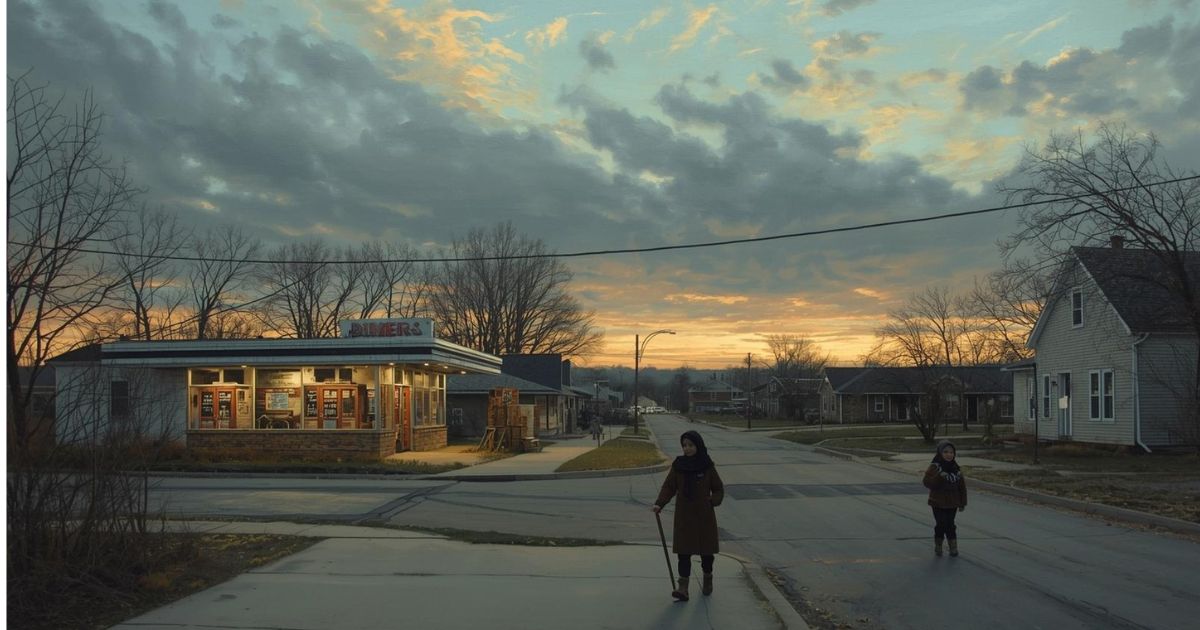
An excerpt from the original text.(complete · 2796 words)
her pocket as she spoke her hand rested upon the little sack of
tobacco, which responded accusingly to the touch of her restless
fingers; and she found time to wonder why she was building up this
fiction for Mr. Arthur Russell. His discovery of Walter's device for
whiling away the dull evening had shamed and distressed her; but she
would have suffered no less if almost any other had been the discoverer.
In this gentleman, after hearing that he was Mildred's Mr. Arthur
Russell, Alice felt not the slightest “personal interest”; and there was
yet to develop in her life such a thing as an interest not personal. At
twenty-two this state of affairs is not unique.
So far as Alice was concerned Russell might have worn a placard,
“Engaged.” She looked upon him as diners entering a restaurant look upon
tables marked “Reserved”: the glance, slightly discontented, passes on
at once. Or so the eye of a prospector wanders querulously over staked
and established claims on the mountainside, and seeks the virgin land
beyond; unless, indeed, the prospector be dishonest. But Alice was no
claim-jumper--so long as the notice of ownership was plainly posted.
Though she was indifferent now, habit ruled her: and, at the very time
she wondered why she created fictitious cigars for her father, she
was also regretting that she had not boldly carried her Malacca stick
down-town with her. Her vivacity increased automatically.
“Perhaps the clerk thought you wanted the cigars for yourself,” Russell
suggested. “He may have taken you for a Spanish countess.”
“I'm sure he did!” Alice agreed, gaily; and she hummed a bar or two of
“LaPaloma,” snapping her fingers as castanets, and swaying her body a
little, to suggest the accepted stencil of a “Spanish Dancer.” “Would
you have taken me for one, Mr. Russell?” she asked, as she concluded the
impersonation.
“I? Why, yes,” he said. “I'D take you for anything you wanted me to.”
“Why, what a speech!” she cried, and, laughing, gave him a quick glance
in which there glimmered some real surprise. He was looking at
her quizzically, but with the liveliest appreciation. Her surprise
increased; and she was glad that he had joined her.
To be seen walking with such a companion added to her pleasure. She
would have described him as “altogether quite stunning-looking”; and she
liked his tall, dark thinness, his gray clothes, his soft hat, and his
clean brown shoes; she liked his easy swing of the stick he carried.
“Shouldn't I have said it?” he asked. “Would you rather not be taken for
a Spanish countess?”
“That isn't it,” she explained. “You said----”
“I said I'd take you for whatever you wanted me to. Isn't that all
right?”
“It would all depend, wouldn't it?”
“Of course it would depend on what you wanted.”
“Oh, no!” she laughed. “It might depend on a lot of things.”
“Such as?”
“Well----” She hesitated, having the mischievous impulse to say, “Such
as Mildred!” But she decided to omit this reference, and became serious,
remembering Russell's service to her at Mildred's house. “Speaking of
what I want to be taken for,” she said;--“I've been wondering ever since
the other night what you did take me for! You must have taken me for the
sister of a professional gambler, I'm afraid!”
Russell's look of kindness was the truth about him, she was to discover;
and he reassured her now by the promptness of his friendly chuckle.
“Then your young brother told you where I found him, did he? I kept my
face straight at the time, but I laughed afterward--to myself. It
struck me as original, to say the least: his amusing himself with those
darkies.”
“Walter IS original,” Alice said; and, having adopted this new view of
her brother's eccentricities, she impulsively went on to make it more
plausible. “He's a very odd boy, and I was afraid you'd misunderstand.
He tells wonderful 'darky stories,' and he'll do anything to draw
coloured people out and make them talk; and that's what he was doing at
Mildred's when you found him for me--he says he wins their confidence
by playing dice with them. In the family we think he'll probably write
about them some day. He's rather literary.”
“Are you?” Russell asked, smiling.
“I? Oh----” She paused, lifting both hands in a charming gesture of
helplessness. “Oh, I'm just--me!”
His glance followed the lightly waved hands with keen approval, then
rose to the lively and colourful face, with its hazel eyes, its small
and pretty nose, and the lip-caught smile which seemed the climax of
her decorative transition. Never had he seen a creature so plastic or so
wistful.
Here was a contrast to his cousin Mildred, who was not wistful, and
controlled any impulses toward plasticity, if she had them. “By George!”
he said. “But you ARE different!”
With that, there leaped in her such an impulse of roguish gallantry
as she could never resist. She turned her head, and, laughing and
bright-eyed, looked him full in the face.
“From whom?” she cried.
“From--everybody!” he said. “Are you a mind-reader?”
“Why?”
“How did you know I was thinking you were different from my cousin,
Mildred Palmer?”
“What makes you think I DID know it?”
“Nonsense!” he said. “You knew what I was thinking and I knew you knew.”
“Yes,” she said with cool humour. “How intimate that seems to make us
all at once!”
Russell left no doubt that he was delighted with these gaieties of hers.
“By George!” he exclaimed again. “I thought you were this sort of girl
the first moment I saw you!”
“What sort of girl? Didn't Mildred tell you what sort of girl I am when
she asked you to dance with me?”
“She didn't ask me to dance with you--I'd been looking at you. You were
talking to some old ladies, and I asked Mildred who you were.”
“Oh, so Mildred DIDN'T----” Alice checked herself. “Who did she tell you
I was?”
“She just said you were a Miss Adams, so I----”
“'A' Miss Adams?” Alice interrupted.
“Yes. Then I said I'd like to meet you.”
“I see. You thought you'd save me from the old ladies.”
“No. I thought I'd save myself from some of the girls Mildred was
getting me to dance with. There was a Miss Dowling----”
“Poor man!” Alice said, gently, and her impulsive thought was that
Mildred had taken few chances, and that as a matter of self-defense her
carefulness might have been well founded. This Mr. Arthur Russell was a
much more responsive person than one had supposed.
“So, Mr. Russell, you don't know anything about me except what you
thought when you first saw me?”
“Yes, I know I was right when I thought it.”
“You haven't told me what you thought.”
“I thought you were like what you ARE like.”
“Not very definite, is it? I'm afraid you shed more light a minute or
so ago, when you said how different from Mildred you thought I was. That
WAS definite, unfortunately!”
“I didn't say it,” Russell explained. “I thought it, and you read my
mind. That's the sort of girl I thought you were--one that could read a
man's mind. Why do you say 'unfortunately' you're not like Mildred?”
Alice's smooth gesture seemed to sketch Mildred. “Because she's
perfect--why, she's PERFECTLY perfect! She never makes a mistake, and
everybody looks up to her--oh, yes, we all fairly adore her! She's like
some big, noble, cold statue--'way above the rest of us--and she hardly
ever does anything mean or treacherous. Of all the girls I know I
believe she's played the fewest really petty tricks. She's----”
Russell interrupted; he looked perplexed. “You say she's perfectly
perfect, but that she does play SOME----”
Alice laughed, as if at his sweet innocence. “Men are so funny!” she
informed him. “Of course girls ALL do mean things sometimes. My own
career's just one long brazen smirch of 'em! What I mean is, Mildred's
perfectly perfect compared to the rest of us.”
“I see,” he said, and seemed to need a moment or two of thoughtfulness.
Then he inquired, “What sort of treacherous things do YOU do?”
“I? Oh, the very worst kind! Most people bore me particularly the men in
this town--and I show it.”
“But I shouldn't call that treacherous, exactly.”
“Well, THEY do,” Alice laughed. “It's made me a terribly unpopular
character! I do a lot of things they hate. For instance, at a dance I'd
a lot rather find some clever old woman and talk to her than dance with
nine-tenths of these nonentities. I usually do it, too.”
“But you danced as if you liked it. You danced better than any other
girl I----”
“This flattery of yours doesn't quite turn my head, Mr. Russell,” Alice
interrupted. “Particularly since Mildred only gave you Ella Dowling to
compare with me!”
“Oh, no,” he insisted. “There were others--and of course Mildred,
herself.”
“Oh, of course, yes. I forgot that. Well----” She paused, then added, “I
certainly OUGHT to dance well.”
“Why is it so much a duty?”
“When I think of the dancing-teachers and the expense to papa! All sorts
of fancy instructors--I suppose that's what daughters have fathers for,
though, isn't it? To throw money away on them?”
“You don't----” Russell began, and his look was one of alarm. “You
haven't taken up----”
She understood his apprehension and responded merrily, “Oh, murder, no!
You mean you're afraid I break out sometimes in a piece of cheesecloth
and run around a fountain thirty times, and then, for an encore, show
how much like snakes I can make my arms look.”
“I SAID you were a mind-reader!” he exclaimed. “That's exactly what I
was pretending to be afraid you might do.”
“'Pretending?' That's nicer of you. No; it's not my mania.”
“What is?”
“Oh, nothing in particular that I know of just now. Of course I've had
the usual one: the one that every girl goes through.”
“What's that?”
“Good heavens, Mr. Russell, you can't expect me to believe you're really
a man of the world if you don't know that every girl has a time in her
life when she's positive she's divinely talented for the stage! It's the
only universal rule about women that hasn't got an exception. I don't
mean we all want to go on the stage, but we all think we'd be wonderful
if we did. Even Mildred. Oh, she wouldn't confess it to you: you'd have
to know her a great deal better than any man can ever know her to find
out.”
“I see,” he said. “Girls are always telling us we can't know them. I
wonder if you----”
She took up his thought before he expressed it, and again he was
fascinated by her quickness, which indeed seemed to him almost
telepathic. “Oh, but DON'T we know one another, though!” she cried.
“Such things we have to keep secret--things that go on right before YOUR
eyes!”
“Why don't some of you tell us?” he asked.
“We can't tell you.”
“Too much honour?”
“No. Not even too much honour among thieves, Mr. Russell. We don't tell
you about our tricks against one another because we know it wouldn't
make any impression on you. The tricks aren't played against you, and
you have a soft side for cats with lovely manners!”
“What about your tricks against us?”
“Oh, those!” Alice laughed. “We think they're rather cute!”
“Bravo!” he cried, and hammered the ferrule of his stick upon the
pavement.
“What's the applause for?”
“For you. What you said was like running up the black flag to the
masthead.”
“Oh, no. It was just a modest little sign in a pretty flower-bed:
'Gentlemen, beware!'”
“I see I must,” he said, gallantly.
“Thanks! But I mean, beware of the whole bloomin' garden!” Then, picking
up a thread that had almost disappeared: “You needn't think you'll ever
find out whether I'm right about Mildred's not being an exception by
asking her,” she said. “She won't tell you: she's not the sort that ever
makes a confession.”
But Russell had not followed her shift to the former topic. “'Mildred's
not being an exception?'” he said, vaguely. “I don't----”
“An exception about thinking she could be a wonderful thing on the stage
if she only cared to. If you asked her I'm pretty sure she'd say, 'What
nonsense!' Mildred's the dearest, finest thing anywhere, but you won't
find out many things about her by asking her.”
Russell's expression became more serious, as it did whenever his cousin
was made their topic. “You think not?” he said. “You think she's----”
“No. But it's not because she isn't sincere exactly. It's only because
she has such a lot to live up to. She has to live up to being a girl
on the grand style to herself, I mean, of course.” And without pausing
Alice rippled on, “You ought to have seen ME when I had the stage-fever!
I used to play 'Juliet' all alone in my room.' She lifted her arms in
graceful entreaty, pleading musically,
“O, swear not by the moon, the inconstant moon,
That monthly changes in her circled orb,
Lest thy love prove----”
She broke off abruptly with a little flourish, snapping thumb and finger
of each outstretched hand, then laughed and said, “Papa used to make
such fun of me! Thank heaven, I was only fifteen; I was all over it by
the next year.”
“No wonder you had the fever,” Russell observed. “You do it beautifully.
Why didn't you finish the line?”
“Which one? 'Lest thy love prove likewise variable'? Juliet was saying
it to a MAN, you know. She seems to have been ready to worry about his
constancy pretty early in their affair!”
Her companion was again thoughtful. “Yes,” he said, seeming to be rather
irksomely impressed with Alice's suggestion. “Yes; it does appear so.”
Alice glanced at his serious face, and yielded to an audacious
temptation. “You mustn't take it so hard,” she said, flippantly.
“It isn't about you: it's only about Romeo and Juliet.”
“See here!” he exclaimed. “You aren't at your mind-reading again, are
you? There are times when it won't do, you know!”
She leaned toward him a little, as if companionably: they were walking
slowly, and this geniality of hers brought her shoulder in light contact
with his for a moment. “Do you dislike my mind-reading?” she asked, and,
across their two just touching shoulders, gave him her sudden look of
smiling wistfulness. “Do you hate it?”
He shook his head. “No, I don't,” he said, gravely. “It's quite
pleasant. But I think it says, 'Gentlemen, beware!'”
She instantly moved away from him, with the lawless and frank laugh of
one who is delighted to be caught in a piece of hypocrisy. “How lovely!”
she cried. Then she pointed ahead. “Our walk is nearly over. We're
coming to the foolish little house where I live. It's a queer little
place, but my father's so attached to it the family have about given up
hope of getting him to build a real house farther out. He doesn't mind
our being extravagant about anything else, but he won't let us alter one
single thing about his precious little old house. Well!” She halted, and
gave him her hand. “Adieu!”
“I couldn't,” he began; hesitated, then asked: “I couldn't come in with
you for a little while?”
“Not now,” she said, quickly. “You can come----” She paused.
“When?”
“Almost any time.” She turned and walked slowly up the path, but he
waited. “You can come in the evening if you like,” she called back to
him over her shoulder.
“Soon?”
“As soon as you like!” She waved her hand; then ran indoors and watched
him from a window as he went up the street. He walked rapidly, a fine,
easy figure, swinging his stick in a way that suggested exhilaration.
Alice, staring after him through the irregular apertures of a lace
curtain, showed no similar buoyancy. Upon the instant she closed
the door all sparkle left her: she had become at once the simple and
sometimes troubled girl her family knew.
“What is going on out there?” her mother asked, approaching from the
dining-room.
“Oh, nothing,” Alice said, indifferently, as she turned away. “That Mr.
Russell met me downtown and walked up with me.”
“Mr. Russell? Oh, the one that's engaged to Mildred?”
“Well--I don't know for certain. He didn't seem so much like an engaged
man to me.” And she added, in the tone of thoughtful preoccupation:
“Anyhow--not so terribly!”
Then she ran upstairs, gave her father his tobacco, filled his pipe for
him, and petted him as he lighted it.
Master this chapter. Complete your experience
Purchase the complete book to access all chapters and support classic literature
As an Amazon Associate, we earn a small commission from qualifying purchases at no additional cost to you.
Available in paperback, hardcover, and e-book formats
Let's Analyse the Pattern
Using genuine parts of yourself as calculated tools to achieve social or emotional goals, creating connection that's real but not honest.
Why This Matters
Connect literature to life
This chapter teaches how to recognize when someone's realness feels calculated—and when you're doing it yourself.
Practice This Today
This week, notice when someone's vulnerability or spontaneity seems perfectly timed to get something from you, and trust that instinct.
Now let's explore the literary elements.
Key Quotes & Analysis
"But Alice was no claim-jumper--so long as the notice of ownership was plainly posted."
Context: Describing how Alice views Russell as off-limits because he's engaged to Mildred
This reveals Alice's moral flexibility - she won't pursue taken men only when their unavailability is crystal clear. It foreshadows that she might bend this rule if the situation becomes ambiguous.
In Today's Words:
Alice won't go after guys in relationships - as long as it's totally obvious they're taken.
"Her vivacity increased automatically."
Context: Alice turns up her charm despite wondering why she's lying for Walter
This shows how Alice's social performance is almost involuntary - she can't help but become more animated around men, even when she's not consciously trying to attract them.
In Today's Words:
She automatically got more bubbly and flirty without even thinking about it.
"He didn't seem so much like an engaged man."
Context: Alice's final comment to her mother after Russell leaves
This reveals Alice's dangerous rationalization - she's already convincing herself that Russell might be available. It shows how she interprets his interest in her as evidence that his engagement isn't solid.
In Today's Words:
He didn't act like someone who was really committed to his girlfriend.
Thematic Threads
Performance
In This Chapter
Alice's charm offensive with Russell requires constant calibration—she's performing authenticity, which is more exhausting than simple acting
Development
Evolved from earlier social performances to this more sophisticated emotional labor
In Your Life:
You might recognize this in how differently you act with your boss versus your family, both versions real but strategically chosen.
Class
In This Chapter
Alice positions herself as the exciting alternative to Mildred's proper reserve, using her different class background as an asset rather than liability
Development
Shifted from shame about class differences to weaponizing them as charm
In Your Life:
You might find yourself emphasizing your 'realness' or work ethic when around people from different backgrounds.
Deception
In This Chapter
Alice lies about Walter's gambling but frames it as protecting family dignity, showing how people justify deception through noble motives
Development
Her lies are becoming more elaborate and self-justifying
In Your Life:
You might recognize this when you tell yourself a lie is 'protecting' someone when it's really protecting yourself.
Identity
In This Chapter
Alice becomes 'the simple and sometimes troubled girl her family knew' the moment Russell leaves, showing the gap between public and private self
Development
The split between performed and authentic Alice is widening
In Your Life:
You might feel this exhaustion after social events where you had to be 'on' all evening.
Desire
In This Chapter
Alice pursues Russell despite knowing he's engaged, showing how want can override moral boundaries when justified through emotion
Development
Her romantic desires are becoming more reckless and self-justifying
In Your Life:
You might recognize this when you find yourself making exceptions to your own rules because 'this situation is different.'
You now have the context. Time to form your own thoughts.
Discussion Questions
- 1
What specific techniques does Alice use to charm Russell during their walk, and how does she position herself as different from Mildred?
analysis • surface - 2
Why does Alice immediately drop her performance the moment Russell leaves? What does this reveal about the cost of her social strategy?
analysis • medium - 3
Where do you see people using 'strategic authenticity' today—being genuinely themselves but carefully choosing which authentic parts to show?
application • medium - 4
How would you handle being attracted to someone who's supposedly unavailable? What are the risks Alice is taking here?
application • deep - 5
What does Alice's exhaustion after Russell leaves teach us about the difference between performing and just being yourself?
reflection • deep
Critical Thinking Exercise
Map Your Own Strategic Authenticity
Think about a situation where you've shown carefully chosen parts of your real self to get something you wanted—a job, friendship, romantic interest, or family approval. Write down what authentic qualities you emphasized, what you downplayed, and how it felt to maintain that performance. No judgment—we all do this.
Consider:
- •What was your goal in that situation?
- •How much energy did it take to maintain that version of yourself?
- •Did you achieve what you wanted, and at what cost?
Journaling Prompt
Write about a relationship or situation where you can be completely, messily authentic without calculation. What makes that space safe? How can you create more of those spaces in your life?
Coming Up Next...
Chapter 11: The Mirror's Truth
Alice retreats to her room and her three-way mirror, where she always goes when she needs to think. What she sees reflected back might force her to confront some uncomfortable truths about the performance she just gave—and what it might cost her.



