
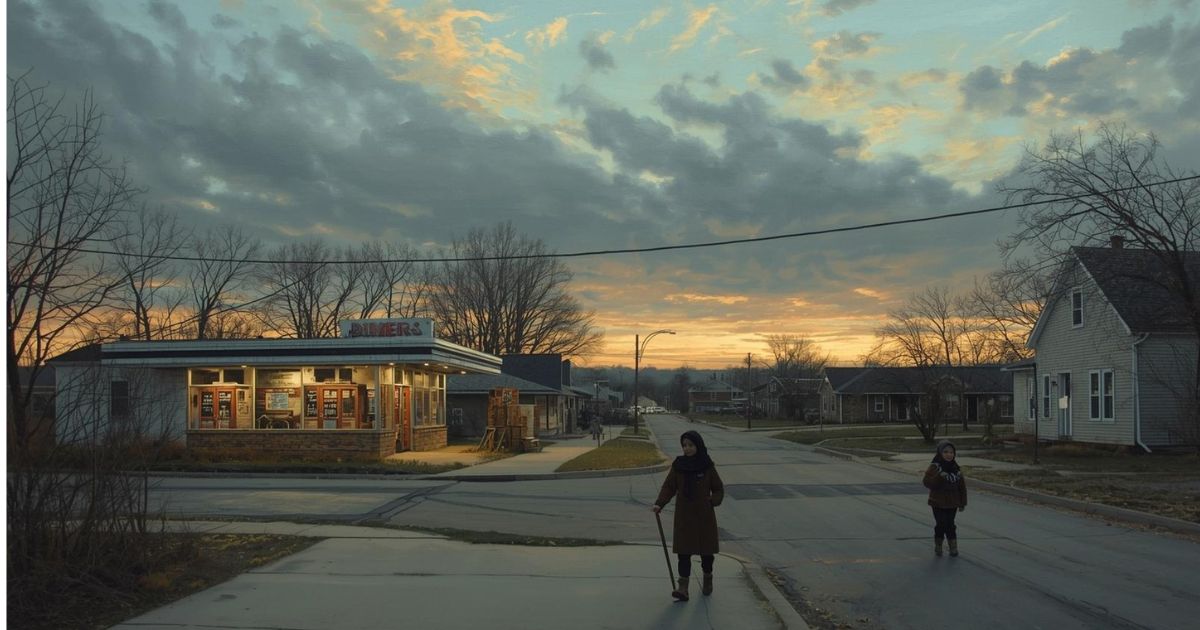
An excerpt from the original text.(complete · 3056 words)
n a morning, a week after this collapse of festal hopes, Mrs. Adams
and her daughter were concluding a three-days' disturbance, the “Spring
house-cleaning”--postponed until now by Adams's long illness--and Alice,
on her knees before a chest of drawers, in her mother's room, paused
thoughtfully after dusting a packet of letters wrapped in worn muslin.
She called to her mother, who was scrubbing the floor of the hallway
just beyond the open door,
“These old letters you had in the bottom drawer, weren't they some papa
wrote you before you were married?”
Mrs. Adams laughed and said, “Yes. Just put 'em back where they were--or
else up in the attic--anywhere you want to.”
“Do you mind if I read one, mama?”
Mrs. Adams laughed again. “Oh, I guess you can if you want to. I expect
they're pretty funny!”
Alice laughed in response, and chose the topmost letter of the packet.
“My dear, beautiful girl,” it began; and she stared at these singular
words. They gave her a shock like that caused by overhearing some
bewildering impropriety; and, having read them over to herself several
times, she went on to experience other shocks.
MY DEAR, BEAUTIFUL GIRL:
This time yesterday I had a mighty bad case of blues because I had not
had a word from you in two whole long days and when I do not hear from
you every day things look mighty down in the mouth to me. Now it is all
so different because your letter has arrived and besides I have got a
piece of news I believe you will think as fine as I do. Darling, you
will be surprised, so get ready to hear about a big effect on our
future. It is this way. I had sort of a suspicion the head of the firm
kind of took a fancy to me from the first when I went in there, and
liked the way I attended to my work and so when he took me on this
business trip with him I felt pretty sure of it and now it turns out
I was about right. In return I guess I have got about the best boss in
this world and I believe you will think so too. Yes, sweetheart, after
the talk I have just had with him if J. A. Lamb asked me to cut my hand
off for him I guess I would come pretty near doing it because what he
says means the end of our waiting to be together. From New Years on he
is going to put me in entire charge of the sundries dept. and what do
you think is going to be my salary? Eleven hundred cool dollars a year
($1,100.00). That's all! Just only a cool eleven hundred per annum!
Well, I guess that will show your mother whether I can take care of you
or not. And oh how I would like to see your dear, beautiful, loving face
when you get this news.
I would like to go out on the public streets and just dance and shout
and it is all I can do to help doing it, especially when I know we will
be talking it all over together this time next week, and oh my darling,
now that your folks have no excuse for putting it off any longer we
might be in our own little home before Xmas.
Would you be glad?
Well, darling, this settles everything and makes our future just about
as smooth for us as anybody could ask. I can hardly realize after all
this waiting life's troubles are over for you and me and we have nothing
to do but to enjoy the happiness granted us by this wonderful, beautiful
thing we call life. I know I am not any poet and the one I tried to
write about you the day of the picnic was fearful but the way I THINK
about you is a poem.
Write me what you think of the news. I know but write me anyhow.
I'll get it before we start home and I can be reading it over all the
time on the tram.
Your always loving
VIRGIL.
The sound of her mother's diligent scrubbing in the hall came back
slowly to Alice's hearing, as she restored the letter to the packet,
wrapped the packet in its muslin covering, and returned it to the
drawer. She had remained upon her knees while she read the letter; now
she sank backward, sitting upon the floor with her hands behind her, an
unconscious relaxing for better ease to think. Upon her face there had
fallen a look of wonder.
For the first time she was vaguely perceiving that life is everlasting
movement. Youth really believes what is running water to be a permanent
crystallization and sees time fixed to a point: some people have dark
hair, some people have blond hair, some people have gray hair. Until
this moment, Alice had no conviction that there was a universe before
she came into it. She had always thought of it as the background of
herself: the moon was something to make her prettier on a summer night.
But this old letter, through which she saw still flickering an ancient
starlight of young love, astounded her. Faintly before her it revealed
the whole lives of her father and mother, who had been young, after
all--they REALLY had--and their youth was now so utterly passed from
them that the picture of it, in the letter, was like a burlesque of
them. And so she, herself, must pass to such changes, too, and all that
now seemed vital to her would be nothing.
When her work was finished, that afternoon, she went into her father's
room. His recovery had progressed well enough to permit the departure
of Miss Perry; and Adams, wearing one of Mrs. Adams's wrappers over his
night-gown, sat in a high-backed chair by a closed window. The weather
was warm, but the closed window and the flannel wrapper had not sufficed
him: round his shoulders he had an old crocheted scarf of Alice's; his
legs were wrapped in a heavy comfort; and, with these swathings about
him, and his eyes closed, his thin and grizzled head making but a slight
indentation in the pillow supporting it, he looked old and little and
queer.
Alice would have gone out softly, but without opening his eyes, he spoke
to her: “Don't go, dearie. Come sit with the old man a little while.”
She brought a chair near his. “I thought you were napping.”
“No. I don't hardly ever do that. I just drift a little sometimes.”
“How do you mean you drift, papa?”
He looked at her vaguely. “Oh, I don't know. Kind of pictures. They get
a little mixed up--old times with times still ahead, like planning what
to do, you know. That's as near a nap as I get--when the pictures mix up
some. I suppose it's sort of drowsing.”
She took one of his hands and stroked it. “What do you mean when you say
you have pictures like 'planning what to do'?” she asked.
“I mean planning what to do when I get out and able to go to work
again.”
“But that doesn't need any planning,” Alice said, quickly. “You're going
back to your old place at Lamb's, of course.”
Adams closed his eyes again, sighing heavily, but made no other
response.
“Why, of COURSE you are!” she cried. “What are you talking about?”
His head turned slowly toward her, revealing the eyes, open in a haggard
stare. “I heard you the other night when you came from the party,” he
said. “I know what was the matter.”
“Indeed, you don't,” she assured him. “You don't know anything about it,
because there wasn't anything the matter at all.”
“Don't you suppose I heard you crying? What'd you cry for if there
wasn't anything the matter?”
“Just nerves, papa. It wasn't anything else in the world.”
“Never mind,” he said. “Your mother told me.”
“She promised me not to!”
At that Adams laughed mournfully. “It wouldn't be very likely I'd hear
you so upset and not ask about it, even if she didn't come and tell me
on her own hook. You needn't try to fool me; I tell you I know what was
the matter.”
“The only matter was I had a silly fit,” Alice protested. “It did me
good, too.”
“How's that?”
“Because I've decided to do something about it, papa.”
“That isn't the way your mother looks at it,” Adams said, ruefully. “She
thinks it's our place to do something about it. Well, I don't know--I
don't know; everything seems so changed these days. You've always been
a good daughter, Alice, and you ought to have as much as any of these
girls you go with; she's convinced me she's right about THAT. The
trouble is----” He faltered, apologetically, then went on, “I mean the
question is--how to get it for you.”
“No!” she cried. “I had no business to make such a fuss just because a
lot of idiots didn't break their necks to get dances with me and because
I got mortified about Walter--Walter WAS pretty terrible----”
“Oh, me, my!” Adams lamented. “I guess that's something we just have
to leave work out itself. What you going to do with a boy nineteen or
twenty years old that makes his own living? Can't whip him. Can't keep
him locked up in the house. Just got to hope he'll learn better, I
suppose.”
“Of course he didn't want to go to the Palmers',” Alice explained,
tolerantly--“and as mama and I made him take me, and he thought that was
pretty selfish in me, why, he felt he had a right to amuse himself any
way he could. Of course it was awful that this--that this Mr. Russell
should----” In spite of her, the recollection choked her.
“Yes, it was awful,” Adams agreed. “Just awful. Oh, me, my!”
But Alice recovered herself at once, and showed him a cheerful face.
“Well, just a few years from now I probably won't even remember it! I
believe hardly anything amounts to as much as we think it does at the
time.”
“Well--sometimes it don't.”
“What I've been thinking, papa: it seems to me I ought to DO something.”
“What like?”
She looked dreamy, but was obviously serious as she told him: “Well,
I mean I ought to be something besides just a kind of nobody. I ought
to----” She paused.
“What, dearie?”
“Well--there's one thing I'd like to do. I'm sure I COULD do it, too.”
“What?”
“I want to go on the stage: I know I could act.” At this, her father
abruptly gave utterance to a feeble cackling of laughter; and when
Alice, surprised and a little offended, pressed him for his reason, he
tried to evade, saying, “Nothing, dearie. I just thought of something.”
But she persisted until he had to explain.
“It made me think of your mother's sister, your Aunt Flora, that died
when you were little,” he said. “She was always telling how she was
going on the stage, and talking about how she was certain she'd make a
great actress, and all so on; and one day your mother broke out and said
she ought 'a' gone on the stage, herself, because she always knew she
had the talent for it--and, well, they got into kind of a spat about
which one'd make the best actress. I had to go out in the hall to
laugh!”
“Maybe you were wrong,” Alice said, gravely. “If they both felt it, why
wouldn't that look as if there was talent in the family? I've ALWAYS
thought----”
“No, dearie,” he said, with a final chuckle. “Your mother and Flora
weren't different from a good many others. I expect ninety per cent. of
all the women I ever knew were just sure they'd be mighty fine actresses
if they ever got the chance. Well, I guess it's a good thing; they enjoy
thinking about it and it don't do anybody any harm.”
Alice was piqued. For several days she had thought almost continuously
of a career to be won by her own genius. Not that she planned details,
or concerned herself with first steps; her picturings overleaped all
that. Principally, she saw her name great on all the bill-boards of that
unkind city, and herself, unchanged in age but glamorous with fame and
Paris clothes, returning in a private car. No doubt the pleasantest
development of her vision was a dialogue with Mildred; and this became
so real that, as she projected it, Alice assumed the proper expressions
for both parties to it, formed words with her lips, and even spoke some
of them aloud. “No, I haven't forgotten you, Mrs. Russell. I remember
you quite pleasantly, in fact. You were a Miss Palmer, I recall, in
those funny old days. Very kind of you, I'm shaw. I appreciate your
eagerness to do something for me in your own little home. As you say, a
reception WOULD renew my acquaintanceship with many old friends--but I'm
shaw you won't mind my mentioning that I don't find much inspiration in
these provincials. I really must ask you not to press me. An artist's
time is not her own, though of course I could hardly expect you to
understand----”
Thus Alice illuminated the dull time; but she retired from the interview
with her father still manfully displaying an outward cheerfulness, while
depression grew heavier within, as if she had eaten soggy cake. Her
father knew nothing whatever of the stage, and she was aware of his
ignorance, yet for some reason his innocently skeptical amusement
reduced her bright project almost to nothing. Something like this always
happened, it seemed; she was continually making these illuminations, all
gay with gildings and colourings; and then as soon as anybody else so
much as glanced at them--even her father, who loved her--the pretty
designs were stricken with a desolating pallor. “Is this LIFE?” Alice
wondered, not doubting that the question was original and all her own.
“Is it life to spend your time imagining things that aren't so, and
never will be? Beautiful things happen to other people; why should I be
the only one they never CAN happen to?”
The mood lasted overnight; and was still upon her the next afternoon
when an errand for her father took her down-town. Adams had decided
to begin smoking again, and Alice felt rather degraded, as well as
embarrassed, when she went into the large shop her father had named, and
asked for the cheap tobacco he used in his pipe. She fell back upon an
air of amused indulgence, hoping thus to suggest that her purchase
was made for some faithful old retainer, now infirm; and although the
calmness of the clerk who served her called for no such elaboration of
her sketch, she ornamented it with a little laugh and with the remark,
as she dropped the package into her coat-pocket, “I'm sure it'll please
him; they tell me it's the kind he likes.”
Still playing Lady Bountiful, smiling to herself in anticipation of the
joy she was bringing to the simple old negro or Irish follower of the
family, she left the shop; but as she came out upon the crowded pavement
her smile vanished quickly.
Next to the door of the tobacco-shop, there was the open entrance to a
stairway, and, above this rather bleak and dark aperture, a sign-board
displayed in begrimed gilt letters the information that Frincke's
Business College occupied the upper floors of the building. Furthermore,
Frincke here publicly offered “personal instruction and training in
practical mathematics, bookkeeping, and all branches of the business
life, including stenography, typewriting, etc.”
Alice halted for a moment, frowning at this signboard as though it were
something surprising and distasteful which she had never seen before.
Yet it was conspicuous in a busy quarter; she almost always passed it
when she came down-town, and never without noticing it. Nor was this the
first time she had paused to lift toward it that same glance of vague
misgiving.
The building was not what the changeful city defined as a modern one,
and the dusty wooden stairway, as seen from the pavement, disappeared
upward into a smoky darkness. So would the footsteps of a girl ascending
there lead to a hideous obscurity, Alice thought; an obscurity as dreary
and as permanent as death. And like dry leaves falling about her she saw
her wintry imaginings in the May air: pretty girls turning into
withered creatures as they worked at typing-machines; old maids “taking
dictation” from men with double chins; Alice saw old maids of a dozen
different kinds “taking dictation.” Her mind's eye was crowded with
them, as it always was when she passed that stairway entrance; and
though they were all different from one another, all of them looked a
little like herself.
She hated the place, and yet she seldom hurried by it or averted
her eyes. It had an unpleasant fascination for her, and a mysterious
reproach, which she did not seek to fathom. She walked on thoughtfully
to-day; and when, at the next corner, she turned into the street that
led toward home, she was given a surprise. Arthur Russell came rapidly
from behind her, lifting his hat as she saw him.
“Are you walking north, Miss Adams?” he asked. “Do you mind if I walk
with you?”
She was not delighted, but seemed so. “How charming!” she cried, giving
him a little flourish of the shapely hands; and then, because she
wondered if he had seen her coming out of the tobacco-shop, she laughed
and added, “I've just been on the most ridiculous errand!”
“What was that?”
“To order some cigars for my father. He's been quite ill, poor man, and
he's so particular--but what in the world do I know about cigars?”
Russell laughed. “Well, what DO you know about 'em? Did you select by
the price?”
“Mercy, no!” she exclaimed, and added, with an afterthought, “Of course
he wrote down the name of the kind he wanted and I gave it to the
shopman. I could never have pronounced it.”
Master this chapter. Complete your experience
Purchase the complete book to access all chapters and support classic literature
As an Amazon Associate, we earn a small commission from qualifying purchases at no additional cost to you.
Available in paperback, hardcover, and e-book formats
Let's Analyse the Pattern
When shame about our circumstances drives us to construct small lies that require increasingly complex maintenance, trapping us in exhausting performances instead of authentic progress.
Why This Matters
Connect literature to life
This chapter teaches how to recognize when embarrassment about our circumstances pushes us toward destructive deception patterns.
Practice This Today
This week, notice when you feel tempted to lie about something small—your job, your living situation, your purchases—and ask yourself what you're really protecting.
Now let's explore the literary elements.
Key Quotes & Analysis
"My dear, beautiful girl"
Context: Alice reads the opening of her father's love letter to her mother from before their marriage
This shocks Alice because she cannot imagine her practical, worn-down father as a passionate young man. It forces her to realize that people change dramatically over time and that her parents had full emotional lives before she existed.
In Today's Words:
Hey gorgeous
"I expect they're pretty funny!"
Context: When Alice asks to read the old love letters
Mrs. Adams dismisses what were once precious romantic words as merely amusing, showing how she's buried her younger self's dreams and emotions. This casual dismissal reveals how people protect themselves from remembering what they've lost.
In Today's Words:
Oh those old things are probably pretty cringe
"It's for a servant"
Context: Lying to the tobacco store clerk about who the cheap tobacco is for
Alice cannot bear to admit she's buying the cheapest tobacco for her own father, so she creates a fiction about having servants. This lie reveals her deep shame about her family's economic status and her desperate need to appear middle-class.
In Today's Words:
Oh, this isn't for me - it's for someone who works for us
Thematic Threads
Class Shame
In This Chapter
Alice lies about buying cheap tobacco, claiming it's for a servant, then telling Arthur it's cigars—small deceptions to hide her family's modest circumstances
Development
Escalating from previous social anxieties at the Palmer party to active deception in daily interactions
In Your Life:
You might find yourself explaining away your car, job title, or living situation instead of owning your current reality with dignity.
Identity Performance
In This Chapter
Alice constructs elaborate fictions about her purchases and activities, spending mental energy on maintaining false impressions rather than authentic self-improvement
Development
Building on her earlier social pretensions, now extending to everyday interactions with strangers and acquaintances
In Your Life:
You might exhaust yourself curating social media posts or conversations to project success while neglecting actual progress.
Generational Understanding
In This Chapter
Alice discovers her parents' love letters and realizes they had passionate lives before her existence, understanding for the first time that people change and evolve
Development
Introduced here as Alice's first recognition that her parents are full human beings with their own stories
In Your Life:
You might suddenly see your parents or older relatives as complex people who had dreams, struggles, and victories before you knew them.
Dreams vs. Reality
In This Chapter
Alice declares her intention to become an actress, but her father's gentle skepticism deflates her grand plans, forcing her to confront practical limitations
Development
Continuing her pattern of escape fantasies when faced with difficult circumstances
In Your Life:
You might find your big dreams challenged by practical concerns, requiring you to balance aspiration with realistic planning.
Social Navigation
In This Chapter
Alice encounters Frincke's Business College—simultaneously repelled by its practical nature and fascinated by its promise of independence, even as she fears becoming an 'old maid'
Development
Introduced as Alice begins considering practical alternatives to her social ambitions
In Your Life:
You might feel torn between practical choices that offer security and dreams that offer excitement, unsure which path leads to fulfillment.
You now have the context. Time to form your own thoughts.
Discussion Questions
- 1
What does Alice discover about her parents through the love letters, and how does this change her understanding of them?
analysis • surface - 2
Why does Alice lie twice about buying tobacco - first to the clerk, then to Arthur Russell? What is she really trying to protect?
analysis • medium - 3
Think about social media or dating apps. How do people today create false versions of themselves to avoid shame about their real circumstances?
application • medium - 4
Alice's father was proud of earning $1,100 a year, but Alice feels ashamed of their current poverty. What's the difference between their attitudes, and which approach serves them better?
analysis • deep - 5
When shame about our circumstances drives us to lie, what are we really losing beyond just honesty? How does this pattern trap us?
reflection • deep
Critical Thinking Exercise
Track Your Shame-Driven Stories
For the next 24 hours, notice when you feel tempted to exaggerate, minimize, or lie about your circumstances - your job, living situation, financial status, or background. Write down each instance without judgment. What triggers these moments? What story are you trying to tell instead of the truth?
Consider:
- •Pay attention to who you're talking to when these moments arise - does the audience matter?
- •Notice the difference between privacy (choosing not to share) and deception (actively misleading)
- •Consider how much mental energy goes into maintaining these false narratives
Journaling Prompt
Write about a time when you told the complete truth about a situation you felt ashamed of. What happened? How did it feel different from when you've constructed protective lies?
Coming Up Next...
Chapter 10: The Art of Strategic Flirtation
Alice finds herself walking with Arthur Russell, the very man whose discovery of Walter's behavior caused her such mortification. As her hand touches the tobacco in her pocket, she wonders why she's spinning lies for someone who represents everything she wishes she could be.



