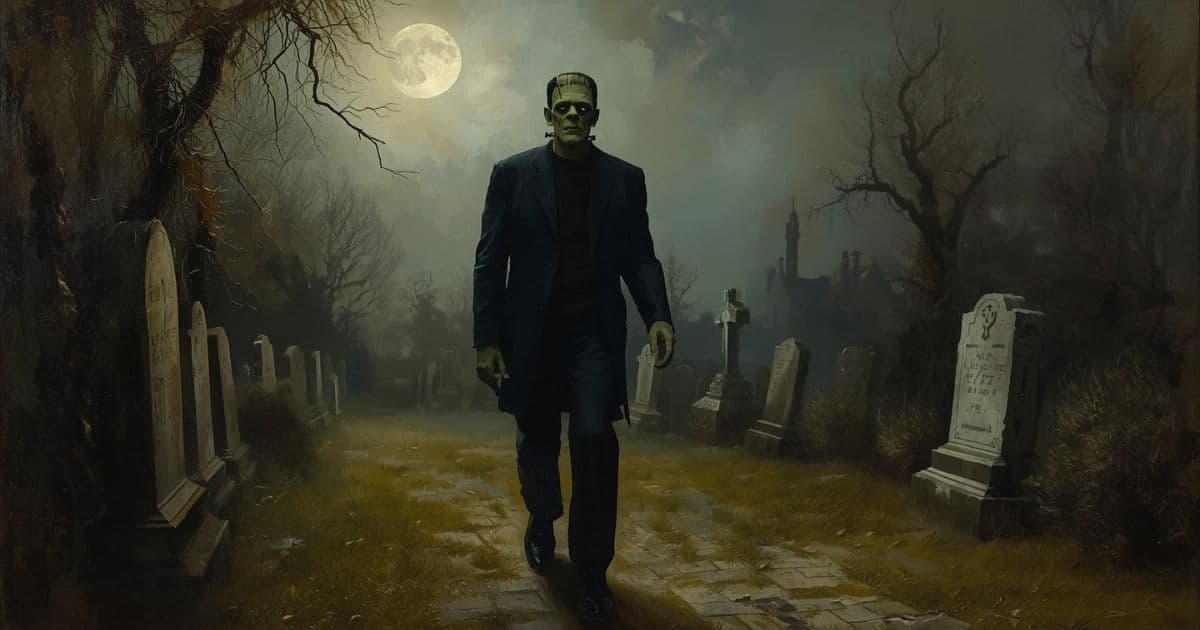
An excerpt from the original text.(complete · 275 words)
or some days after that evening, Mr. Heathcliff shunned meeting us at meals; yet he would not consent formally to exclude Hareton and Cathy. He had an aversion to yielding so completely to his feelings, choosing rather to absent himself; and eating once in twenty-four hours seemed sufficient sustenance for him. One night, after the family were in bed, I heard him go downstairs, and out at the front door. I did not hear him re-enter, and in the morning I found he was still away. We were in April then: the weather was sweet and warm, the grass as green as showers and sun could make it, and the two dwarf apple-trees near the southern wall in full bloom. After breakfast, Catherine insisted on my bringing a chair and sitting with my work under the fir-trees at the end of the house; and she beguiled Hareton, who had perfectly recovered from his accident, to dig and arrange her little garden, which was shifted to that corner by the influence of Joseph’s complaints. I was comfortably revelling in the spring fragrance around, and the beautiful soft blue overhead, when my young lady, who had run down near the gate to procure some primrose roots for a border, returned only half laden, and informed us that Mr. Heathcliff was coming in. “And he spoke to me,” she added, with a perplexed countenance. “What did he say?” asked Hareton. “He told me to begone as fast as I could,” she answered. “But he looked so different from his usual look that I stopped a moment to stare at him.” “How?” he inquired. “Why, almost bright and cheerful.
Master this chapter. Complete your experience
Purchase the complete book to access all chapters and support classic literature
As an Amazon Associate, we earn a small commission from qualifying purchases at no additional cost to you.
Available in paperback, hardcover, and e-book formats
Let's Analyse the Pattern
The Isolation Spiral: When Cutting People Off Backfires
Using physical or social isolation to avoid confronting difficult feelings, which often amplifies the original problem
Why This Matters
Connect literature to life
Learning to spot when isolation stops being self-care and starts being self-sabotage
Practice This Today
Notice your own patterns: Do you ghost people when things get complicated? Do you work extra hours to avoid going home to problems? Do you skip social events when you're struggling?
Now let's explore the literary elements.
Key Quotes & Analysis
"He had an aversion to yielding so completely to his feelings, choosing rather to absent himself"
Context: Describing Heathcliff's avoidance of family interactions
Shows how pride can make us choose isolation over vulnerability, even when it hurts us more
In Today's Words:
He'd rather ghost everyone than admit he was struggling with his emotions
"Why, almost bright and cheerful. No, almost nothing—very much excited, and wild, and glad!"
Context: Describing Heathcliff's disturbing new demeanor
This manic energy suggests someone who's made a dangerous decision and feels liberated by it
In Today's Words:
He looked like someone who'd just quit their job in a blaze of glory - excited but unhinged
Thematic Threads
Isolation as Self-Punishment
In This Chapter
Heathcliff starves himself and wanders alone rather than face his feelings
Development
His isolation has evolved from protective mechanism to self-destructive pattern
In Your Life:
Notice when you're using isolation to punish yourself or others - it usually backfires and makes everyone more miserable
The Revenge Endgame
In This Chapter
Heathcliff's strange euphoria suggests his revenge plot is reaching its conclusion
Development
The consumed avenger often becomes more damaged than their targets
In Your Life:
Long-term grudges don't just hurt the people you're mad at - they reshape who you become, usually for the worse
You now have the context. Time to form your own thoughts.
Discussion Questions
- 1
Why do you think Heathcliff chooses isolation over confronting his feelings directly?
psychological • Consider how pride, fear, and past trauma might influence this choice - 2
What does Catherine's description of Heathcliff as 'wild and glad' suggest about his mental state?
analytical • Think about how people behave when they've made a dangerous decision they think will solve their problems - 3
Have you ever used isolation as a way to avoid dealing with difficult emotions? How did it work out?
personal • Reflect on your own coping mechanisms and their effectiveness - 4
When someone in your life starts acting erratically like Heathcliff, what's your responsibility as a friend or coworker?
ethical • Consider the balance between respecting boundaries and showing concern for someone's wellbeing
Critical Thinking Exercise
Mapping Your Isolation Patterns
Think about the last time you deliberately avoided someone or some situation because it felt emotionally overwhelming. Map out what happened: What were you trying to avoid? How did you isolate yourself? What was the actual outcome versus what you hoped would happen?
Consider:
- •Was the isolation protective or punitive?
- •Did avoiding the situation make it better or worse?
- •What would have happened if you'd faced it directly?
- •How did your isolation affect other people?
Journaling Prompt
Write about a time when isolation helped you versus a time when it made things worse. What was different about those situations? How can you tell when stepping back is healthy versus when it's avoidance?