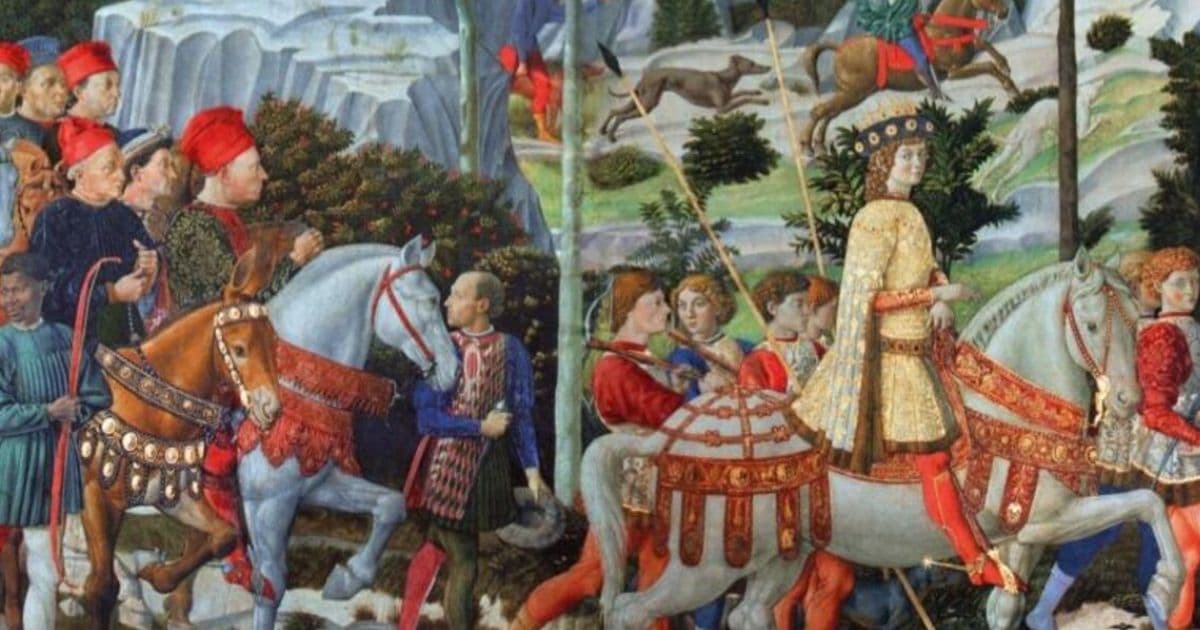
An excerpt from the original text.(complete · 9362 words)
OF THE PRINCIPLE OF THE COMMERCIAL OR
MERCANTILE SYSTEM.
That wealth consists in money, or in gold and silver, is a popular notion
which naturally arises from the double function of money, as the
instrument of commerce, and as the measure of value. In consequence of its
being the instrument of commerce, when we have money we can more readily
obtain whatever else we have occasion for, than by means of any other
commodity. The great affair, we always find, is to get money. When that is
obtained, there is no difficulty in making any subsequent purchase. In
consequence of its being the measure of value, we estimate that of all
other commodities by the quantity of money which they will exchange for.
We say of a rich man, that he is worth a great deal, and of a poor man,
that he is worth very little money. A frugal man, or a man eager to be
rich, is said to love money; and a careless, a generous, or a profuse man,
is said to be indifferent about it. To grow rich is to get money; and
wealth and money, in short, are, in common language, considered as in
every respect synonymous.
A rich country, in the same manner as a rich man, is supposed to be a
country abounding in money; and to heap up gold and silver in any country
is supposed to be the readiest way to enrich it. For some time after the
discovery of America, the first inquiry of the Spaniards, when they
arrived upon any unknown coast, used to be, if there was any gold or
silver to be found in the neighbourhood? By the information which they
received, they judged whether it was worth while to make a settlement
there, or if the country was worth the conquering. Plano Carpino, a monk
sent ambassador from the king of France to one of the sons of the famous
Gengis Khan, says, that the Tartars used frequently to ask him, if there
was plenty of sheep and oxen in the kingdom of France? Their inquiry had
the same object with that of the Spaniards. They wanted to know if the
country was rich enough to be worth the conquering. Among the Tartars, as
among all other nations of shepherds, who are generally ignorant of the
use of money, cattle are the instruments of commerce and the measures of
value. Wealth, therefore, according to them, consisted in cattle, as,
according to the Spaniards, it consisted in gold and silver. Of the two,
the Tartar notion, perhaps, was the nearest to the truth.
Mr Locke remarks a distinction between money and other moveable goods. All
other moveable goods, he says, are of so consumable a nature, that the
wealth which consists in them cannot be much depended on; and a nation
which abounds in them one year may, without any exportation, but merely by
their own waste and extravagance, be in great want of them the next.
Money, on the contrary, is a steady friend, which, though it may travel
about from hand to hand, yet if it can be kept from going out of the
country, is not very liable to be wasted and consumed. Gold and silver,
therefore, are, according to him, the must solid and substantial part of
the moveable wealth of a nation; and to multiply those metals ought, he
thinks, upon that account, to be the great object of its political
economy.
Others admit, that if a nation could be separated from all the world, it
would be of no consequence how much or how little money circulated in it.
The consumable goods, which were circulated by means of this money, would
only be exchanged for a greater or a smaller number of pieces; but the
real wealth or poverty of the country, they allow, would depend altogether
upon the abundance or scarcity of those consumable goods. But it is
otherwise, they think, with countries which have connections with foreign
nations, and which are obliged to carry on foreign wars, and to maintain
fleets and armies in distant countries. This, they say, cannot be done,
but by sending abroad money to pay them with; and a nation cannot send
much money abroad, unless it has a good deal at home. Every such nation,
therefore, must endeavour, in time of peace, to accumulate gold and
silver, that when occasion requires, it may have wherewithal to carry on
foreign wars.
In consequence of those popular notions, all the different nations of
Europe have studied, though to little purpose, every possible means of
accumulating gold and silver in their respective countries. Spain and
Portugal, the proprietors of the principal mines which supply Europe with
those metals, have either prohibited their exportation under the severest
penalties, or subjected it to a considerable duty. The like prohibition
seems anciently to have made a part of the policy of most other European
nations. It is even to be found, where we should least of all expect to
find it, in some old Scotch acts of Parliament, which forbid, under heavy
penalties, the carrying gold or silver forth of the kingdom. The like
policy anciently took place both in France and England.
When those countries became commercial, the merchants found this
prohibition, upon many occasions, extremely inconvenient. They could
frequently buy more advantageously with gold and silver, than with any
other commodity, the foreign goods which they wanted, either to import
into their own, or to carry to some other foreign country. They
remonstrated, therefore, against this prohibition as hurtful to trade.
They represented, first, that the exportation of gold and silver, in order
to purchase foreign goods, did not always diminish the quantity of those
metals in the kingdom; that, on the contrary, it might frequently increase
the quantity; because, if the consumption of foreign goods was not thereby
increased in the country, those goods might be re-exported to foreign
countries, and being there sold for a large profit, might bring back much
more treasure than was originally sent out to purchase them. Mr Mun
compares this operation of foreign trade to the seed-time and harvest of
agriculture. “If we only behold,” says he, “the actions of the husbandman
in the seed time, when he casteth away much good corn into the ground, we
shall account him rather a madman than a husbandman. But when we consider
his labours in the harvest, which is the end of his endeavours, we shall
find the worth and plentiful increase of his actions.”
They represented, secondly, that this prohibition could not hinder the
exportation of gold and silver, which, on account of the smallness of
their bulk in proportion to their value, could easily be smuggled abroad.
That this exportation could only be prevented by a proper attention to
what they called the balance of trade. That when the country exported to a
greater value than it imported, a balance became due to it from foreign
nations, which was necessarily paid to it in gold and silver, and thereby
increased the quantity of those metals in the kingdom. But that when it
imported to a greater value than it exported, a contrary balance became
due to foreign nations, which was necessarily paid to them in the same
manner, and thereby diminished that quantity: that in this case, to
prohibit the exportation of those metals, could not prevent it, but only,
by making it more dangerous, render it more expensive: that the exchange
was thereby turned more against the country which owed the balance, than
it otherwise might have been; the merchant who purchased a bill upon the
foreign country being obliged to pay the banker who sold it, not only for
the natural risk, trouble, and expense of sending the money thither, but
for the extraordinary risk arising from the prohibition; but that the more
the exchange was against any country, the more the balance of trade became
necessarily against it; the money of that country becoming necessarily of
so much less value, in comparison with that of the country to which the
balance was due. That if the exchange between England and Holland, for
example, was five per cent. against England, it would require 105 ounces
of silver in England to purchase a bill for 100 ounces of silver in
Holland: that 105 ounces of silver in England, therefore, would be worth
only 100 ounces of silver in Holland, and would purchase only a
proportionable quantity of Dutch goods; but that 100 ounces of silver in
Holland, on the contrary, would be worth 105 ounces in England, and would
purchase a proportionable quantity of English goods; that the English
goods which were sold to Holland would be sold so much cheaper, and the
Dutch goods which were sold to England so much dearer, by the difference
of the exchange: that the one would draw so much less Dutch money to
England, and the other so much more English money to Holland, as this
difference amounted to: and that the balance of trade, therefore, would
necessarily be so much more against England, and would require a greater
balance of gold and silver to be exported to Holland.
Those arguments were partly solid and partly sophistical. They were solid,
so far as they asserted that the exportation of gold and silver in trade
might frequently be advantageous to the country. They were solid, too, in
asserting that no prohibition could prevent their exportation, when
private people found any advantage in exporting them. But they were
sophistical, in supposing, that either to preserve or to augment the
quantity of those metals required more the attention of government, than
to preserve or to augment the quantity of any other useful commodities,
which the freedom of trade, without any such attention, never fails to
supply in the proper quantity. They were sophistical, too, perhaps, in
asserting that the high price of exchange necessarily increased what they
called the unfavourable balance of trade, or occasioned the exportation of
a greater quantity of gold and silver. That high price, indeed, was
extremely disadvantageous to the merchants who had any money to pay in
foreign countries. They paid so much dearer for the bills which their
bankers granted them upon those countries. But though the risk arising
from the prohibition might occasion some extraordinary expense to the
bankers, it would not necessarily carry any more money out of the country.
This expense would generally be all laid out in the country, in smuggling
the money out of it, and could seldom occasion the exportation of a single
sixpence beyond the precise sum drawn for. The high price of exchange,
too, would naturally dispose the merchants to endeavour to make their
exports nearly balance their imports, in order that they might have this
high exchange to pay upon as small a sum as possible. The high price of
exchange, besides, must necessarily have operated as a tax, in raising the
price of foreign goods, and thereby diminishing their consumption. It
would tend, therefore, not to increase, but to diminish, what they called
the unfavourable balance of trade, and consequently the exportation of
gold and silver.
Such as they were, however, those arguments convinced the people to whom
they were addressed. They were addressed by merchants to parliaments and
to the councils of princes, to nobles, and to country gentlemen; by those
who were supposed to understand trade, to those who were conscious to them
selves that they knew nothing about the matter. That foreign trade
enriched the country, experience demonstrated to the nobles and country
gentlemen, as well as to the merchants; but how, or in what manner, none
of them well knew. The merchants knew perfectly in what manner it enriched
themselves, it was their business to know it. But to know in what manner
it enriched the country, was no part of their business. The subject never
came into their consideration, but when they had occasion to apply to
their country for some change in the laws relating to foreign trade. It
then became necessary to say something about the beneficial effects of
foreign trade, and the manner in which those effects were obstructed by
the laws as they then stood. To the judges who were to decide the
business, it appeared a most satisfactory account of the matter, when they
were told that foreign trade brought money into the country, but that the
laws in question hindered it from bringing so much as it otherwise would
do. Those arguments, therefore, produced the wished-for effect. The
prohibition of exporting gold and silver was, in France and England,
confined to the coin of those respective countries. The exportation of
foreign coin and of bullion was made free. In Holland, and in some other
places, this liberty was extended even to the coin of the country. The
attention of government was turned away from guarding against the
exportation of gold and silver, to watch over the balance of trade, as the
only cause which could occasion any augmentation or diminution of those
metals. From one fruitless care, it was turned away to another care much
more intricate, much more embarrassing, and just equally fruitless. The
title of Mun’s book, England’s Treasure in Foreign Trade, became a
fundamental maxim in the political economy, not of England only, but of
all other commercial countries. The inland or home trade, the most
important of all, the trade in which an equal capital affords the greatest
revenue, and creates the greatest employment to the people of the country,
was considered as subsidiary only to foreign trade. It neither brought
money into the country, it was said, nor carried any out of it. The
country, therefore, could never become either richer or poorer by means of
it, except so far as its prosperity or decay might indirectly influence
the state of foreign trade.
A country that has no mines of its own, must undoubtedly draw its gold and
silver from foreign countries, in the same manner as one that has no
vineyards of its own must draw its wines. It does not seem necessary,
however, that the attention of government should be more turned towards
the one than towards the other object. A country that has wherewithal to
buy wine, will always get the wine which it has occasion for; and a
country that has wherewithal to buy gold and silver, will never be in want
of those metals. They are to be bought for a certain price, like all other
commodities; and as they are the price of all other commodities, so all
other commodities are the price of those metals. We trust, with perfect
security, that the freedom of trade, without any attention of government,
will always supply us with the wine which we have occasion for; and we may
trust, with equal security, that it will always supply us with all the
gold and silver which we can afford to purchase or to employ, either in
circulating our commodities or in other uses.
The quantity of every commodity which human industry can either purchase
or produce, naturally regulates itself in every country according to the
effectual demand, or according to the demand of those who are willing to
pay the whole rent, labour, and profits, which must be paid in order to
prepare and bring it to market. But no commodities regulate themselves
more easily or more exactly, according to this effectual demand, than gold
and silver; because, on account of the small bulk and great value of those
metals, no commodities can be more easily transported from one place to
another; from the places where they are cheap, to those where they are
dear; from the places where they exceed, to those where they fall short of
this effectual demand. If there were in England, for example, an effectual
demand for an additional quantity of gold, a packet-boat could bring from
Lisbon, or from wherever else it was to be had, fifty tons of gold, which
could be coined into more than five millions of guineas. But if there were
an effectual demand for grain to the same value, to import it would
require, at five guineas a-ton, a million of tons of shipping, or a
thousand ships of a thousand tons each. The navy of England would not be
sufficient.
When the quantity of gold and silver imported into any country exceeds the
effectual demand, no vigilance of government can prevent their
exportation. All the sanguinary laws of Spain and Portugal are not able to
keep their gold and silver at home. The continual importations from Peru
and Brazil exceed the effectual demand of those countries, and sink the
price of those metals there below that in the neighbouring countries. If,
on the contrary, in any particular country, their quantity fell short of
the effectual demand, so as to raise their price above that of the
neighbouring countries, the government would have no occasion to take any
pains to import them. If it were even to take pains to prevent their
importation, it would not be able to effectuate it. Those metals, when the
Spartans had got wherewithal to purchase them, broke through all the
barriers which the laws of Lycurgus opposed to their entrance into
Lacedaemon. All the sanguinary laws of the customs are not able to prevent
the importation of the teas of the Dutch and Gottenburg East India
companies; because somewhat cheaper than those of the British company. A
pound of tea, however, is about a hundred times the bulk of one of the
highest prices, sixteen shillings, that is commonly paid for it in silver,
and more than two thousand times the bulk of the same price in gold, and,
consequently, just so many times more difficult to smuggle.
It is partly owing to the easy transportation of gold and silver, from the
places where they abound to those where they are wanted, that the price of
those metals does not fluctuate continually, like that of the greater part
of other commodities, which are hindered by their bulk from shifting their
situation, when the market happens to be either over or under-stocked with
them. The price of those metals, indeed, is not altogether exempted from
variation; but the changes to which it is liable are generally slow,
gradual, and uniform. In Europe, for example, it is supposed, without much
foundation, perhaps, that during the course of the present and preceding
century, they have been constantly, but gradually, sinking in their value,
on account of the continual importations from the Spanish West Indies. But
to make any sudden change in the price of gold and silver, so as to raise
or lower at once, sensibly and remarkably, the money price of all other
commodities, requires such a revolution in commerce as that occasioned by
the discovery of America.
If, not withstanding all this, gold and silver should at any time fall
short in a country which has wherewithal to purchase them, there are more
expedients for supplying their place, than that of almost any other
commodity. If the materials of manufacture are wanted, industry must stop.
If provisions are wanted, the people must starve. But if money is wanted,
barter will supply its place, though with a good deal of inconveniency.
Buying and selling upon credit, and the different dealers compensating
their credits with one another, once a-month, or once a-year, will supply
it with less inconveniency. A well-regulated paper-money will supply it
not only without any inconveniency, but, in some cases, with some
advantages. Upon every account, therefore, the attention of government
never was so unnecessarily employed, as when directed to watch over the
preservation or increase of the quantity of money in any country.
No complaint, however, is more common than that of a scarcity of money.
Money, like wine, must always be scarce with those who have neither
wherewithal to buy it, nor credit to borrow it. Those who have either,
will seldom be in want either of the money, or of the wine which they have
occasion for. This complaint, however, of the scarcity of money, is not
always confined to improvident spendthrifts. It is sometimes general
through a whole mercantile town and the country in its neighbourhood.
Over-trading is the common cause of it. Sober men, whose projects have
been disproportioned to their capitals, are as likely to have neither
wherewithal to buy money, nor credit to borrow it, as prodigals, whose
expense has been disproportioned to their revenue. Before their projects
can be brought to bear, their stock is gone, and their credit with it.
They run about everywhere to borrow money, and everybody tells them that
they have none to lend. Even such general complaints of the scarcity of
money do not always prove that the usual number of gold and silver pieces
are not circulating in the country, but that many people want those pieces
who have nothing to give for them. When the profits of trade happen to be
greater than ordinary over-trading becomes a general error, both among
great and small dealers. They do not always send more money abroad than
usual, but they buy upon credit, both at home and abroad, an unusual
quantity of goods, which they send to some distant market, in hopes that
the returns will come in before the demand for payment. The demand comes
before the returns, and they have nothing at hand with which they can
either purchase money or give solid security for borrowing. It is not any
scarcity of gold and silver, but the difficulty which such people find in
borrowing, and which their creditor find in getting payment, that
occasions the general complaint of the scarcity of money.
It would be too ridiculous to go about seriously to prove, that wealth
does not consist in money, or in gold and silver; but in what money
purchases, and is valuable only for purchasing. Money, no doubt, makes
always a part of the national capital; but it has already been shown that
it generally makes but a small part, and always the most unprofitable part
of it.
It is not because wealth consists more essentially in money than in goods,
that the merchant finds it generally more easy to buy goods with money,
than to buy money with goods; but because money is the known and
established instrument of commerce, for which every thing is readily given
in exchange, but which is not always with equal readiness to be got in
exchange for every thing. The greater part of goods, besides, are more
perishable than money, and he may frequently sustain a much greater loss
by keeping them. When his goods are upon hand, too, he is more liable to
such demands for money as he may not be able to answer, than when he has
got their price in his coffers. Over and above all this, his profit arises
more directly from selling than from buying; and he is, upon all these
accounts, generally much more anxious to exchange his goods for money than
his money for goods. But though a particular merchant, with abundance of
goods in his warehouse, may sometimes be ruined by not being able to sell
them in time, a nation or country is not liable to the same accident, The
whole capital of a merchant frequently consists in perishable goods
destined for purchasing money. But it is but a very small part of the
annual produce of the land and labour of a country, which can ever be
destined for purchasing gold and silver from their neighbours. The far
greater part is circulated and consumed among themselves; and even of the
surplus which is sent abroad, the greater part is generally destined for
the purchase of other foreign goods. Though gold and silver, therefore,
could not be had in exchange for the goods destined to purchase them, the
nation would not be ruined. It might, indeed, suffer some loss and
inconveniency, and be forced upon some of those expedients which are
necessary for supplying the place of money. The annual produce of its land
and labour, however, would be the same, or very nearly the same as usual;
because the same, or very nearly the same consumable capital would be
employed in maintaining it. And though goods do not always draw money so
readily as money draws goods, in the long-run they draw it more
necessarily than even it draws them. Goods can serve many other purposes
besides purchasing money, but money can serve no other purpose besides
purchasing goods. Money, therefore, necessarily runs after goods, but
goods do not always or necessarily run after money. The man who buys, does
not always mean to sell again, but frequently to use or to consume;
whereas he who sells always means to buy again. The one may frequently
have done the whole, but the other can never have done more than the one
half of his business. It is not for its own sake that men desire money,
but for the sake of what they can purchase with it.
Consumable commodities, it is said, are soon destroyed; whereas gold and
silver are of a more durable nature, and were it not for this continual
exportation, might be accumulated for ages together, to the incredible
augmentation of the real wealth of the country. Nothing, therefore, it is
pretended, can be more disadvantageous to any country, than the trade
which consists in the exchange of such lasting for such perishable
commodities. We do not, however, reckon that trade disadvantageous, which
consists in the exchange of the hardware of England for the wines of
France, and yet hardware is a very durable commodity, and were it not for
this continual exportation, might too be accumulated for ages together, to
the incredible augmentation of the pots and pans of the country. But it
readily occurs, that the number of such utensils is in every country
necessarily limited by the use which there is for them; that it would be
absurd to have more pots and pans than were necessary for cooking the
victuals usually consumed there; and that, if the quantity of victuals
were to increase, the number of pots and pans would readily increase along
with it; a part of the increased quantity of victuals being employed in
purchasing them, or in maintaining an additional number of workmen whose
business it was to make them. It should as readily occur, that the
quantity of gold and silver is, in every country, limited by the use which
there is for those metals; that their use consists in circulating
commodities, as coin, and in affording a species of household furniture,
as plate; that the quantity of coin in every country is regulated by the
value of the commodities which are to be circulated by it; increase that
value, and immediately a part of it will be sent abroad to purchase,
wherever it is to be had, the additional quantity of coin requisite for
circulating them: that the quantity of plate is regulated by the number
and wealth of those private families who choose to indulge themselves in
that sort of magnificence; increase the number and wealth of such
families, and a part of this increased wealth will most probably be
employed in purchasing, wherever it is to be found, an additional quantity
of plate; that to attempt to increase the wealth of any country, either by
introducing or by detaining in it an unnecessary quantity of gold and
silver, is as absurd as it would be to attempt to increase the good cheer
of private families, by obliging them to keep an unnecessary number of
kitchen utensils. As the expense of purchasing those unnecessary utensils
would diminish, instead of increasing, either the quantity or goodness of
the family provisions; so the expense of purchasing an unnecessary
quantity of gold and silver must, in every country, as necessarily
diminish the wealth which feeds, clothes, and lodges, which maintains and
employs the people. Gold and silver, whether in the shape of coin or of
plate, are utensils, it must be remembered, as much as the furniture of
the kitchen. Increase the use of them, increase the consumable commodities
which are to be circulated, managed, and prepared by means of them, and
you will infallibly increase the quantity; but if you attempt by
extraordinary means to increase the quantity, you will as infallibly
diminish the use, and even the quantity too, which in those metals can
never be greater than what the use requires. Were they ever to be
accumulated beyond this quantity, their transportation is so easy, and the
loss which attends their lying idle and unemployed so great, that no law
could prevent their being immediately sent out of the country.
It is not always necessary to accumulate gold and silver, in order to
enable a country to carry on foreign wars, and to maintain fleets and
armies in distant countries. Fleets and armies are maintained, not with
gold and silver, but with consumable goods. The nation which, from the
annual produce of its domestic industry, from the annual revenue arising
out of its lands, and labour, and consumable stock, has wherewithal to
purchase those consumable goods in distant countries, can maintain foreign
wars there.
A nation may purchase the pay and provisions of an army in a distant
country three different ways; by sending abroad either, first, some part
of its accumulated gold and silver; or, secondly, some part of the annual
produce of its manufactures; or, last of all, some part of its annual rude
produce.
The gold and silver which can properly be considered as accumulated, or
stored up in any country, may be distinguished into three parts; first,
the circulating money; secondly, the plate of private families; and, last
of all, the money which may have been collected by many years parsimony,
and laid up in the treasury of the prince.
It can seldom happen that much can be spared from the circulating money of
the country; because in that there can seldom be much redundancy. The
value of goods annually bought and sold in any country requires a certain
quantity of money to circulate and distribute them to their proper
consumers, and can give employment to no more. The channel of circulation
necessarily draws to itself a sum sufficient to fill it, and never admits
any more. Something, however, is generally withdrawn from this channel in
the case of foreign war. By the great number of people who are maintained
abroad, fewer are maintained at home. Fewer goods are circulated there,
and less money becomes necessary to circulate them. An extraordinary
quantity of paper money of some sort or other, too, such as exchequer
notes, navy bills, and bank bills, in England, is generally issued upon
such occasions, and, by supplying the place of circulating gold and
silver, gives an opportunity of sending a greater quantity of it abroad.
All this, however, could afford but a poor resource for maintaining a
foreign war, of great expense, and several years duration.
The melting down of the plate of private families has, upon every
occasion, been found a still more insignificant one. The French, in the
beginning of the last war, did not derive so much advantage from this
expedient as to compensate the loss of the fashion.
The accumulated treasures of the prince have in former times afforded a
much greater and more lasting resource. In the present times, if you
except the king of Prussia, to accumulate treasure seems to be no part of
the policy of European princes.
The funds which maintained the foreign wars of the present century, the
most expensive perhaps which history records, seem to have had little
dependency upon the exportation either of the circulating money, or of the
plate of private families, or of the treasure of the prince. The last
French war cost Great Britain upwards of £90,000,000, including not only
the £75,000,000 of new debt that was contracted, but the additional 2s. in
the pound land-tax, and what was annually borrowed of the sinking fund.
More than two-thirds of this expense were laid out in distant countries;
in Germany, Portugal, America, in the ports of the Mediterranean, in the
East and West Indies. The kings of England had no accumulated treasure. We
never heard of any extraordinary quantity of plate being melted down. The
circulating gold and silver of the country had not been supposed to exceed
£18,000,000. Since the late recoinage of the gold, however, it is believed
to have been a good deal under-rated. Let us suppose, therefore, according
to the most exaggerated computation which I remember to have either seen
or heard of, that, gold and silver together, it amounted to £30,000,000.
Had the war been carried on by means of our money, the whole of it must,
even according to this computation, have been sent out and returned again,
at least twice in a period of between six and seven years. Should this be
supposed, it would afford the most decisive argument, to demonstrate how
unnecessary it is for government to watch over the preservation of money,
since, upon this supposition, the whole money of the country must have
gone from it, and returned to it again, two different times in so short a
period, without any body’s knowing any thing of the matter. The channel of
circulation, however, never appeared more empty than usual during any part
of this period. Few people wanted money who had wherewithal to pay for it.
The profits of foreign trade, indeed, were greater than usual during the
whole war, but especially towards the end of it. This occasioned, what it
always occasions, a general over-trading in all the ports of Great
Britain; and this again occasioned the usual complaint of the scarcity of
money, which always follows over-trading. Many people wanted it, who had
neither wherewithal to buy it, nor credit to borrow it; and because the
debtors found it difficult to borrow, the creditors found it difficult to
get payment. Gold and silver, however, were generally to be had for their
value, by those who had that value to give for them.
The enormous expense of the late war, therefore, must have been chiefly
defrayed, not by the exportation of gold and silver, but by that of
British commodities of some kind or other. When the government, or those
who acted under them, contracted with a merchant for a remittance to some
foreign country, he would naturally endeavour to pay his foreign
correspondent, upon whom he granted a bill, by sending abroad rather
commodities than gold and silver. If the commodities of Great Britain were
not in demand in that country, he would endeavour to send them to some
other country in which he could purchase a bill upon that country. The
transportation of commodities, when properly suited to the market, is
always attended with a considerable profit; whereas that of gold and
silver is scarce ever attended with any. When those metals are sent abroad
in order to purchase foreign commodities, the merchant’s profit arises,
not from the purchase, but from the sale of the returns. But when they are
sent abroad merely to pay a debt, he gets no returns, and consequently no
profit. He naturally, therefore, exerts his invention to find out a way of
paying his foreign debts, rather by the exportation of commodities, than
by that of gold and silver. The great quantity of British goods, exported
during the course of the late war, without bringing back any returns, is
accordingly remarked by the author of the Present State of the Nation.
Besides the three sorts of gold and silver above mentioned, there is in
all great commercial countries a good deal of bullion alternately imported
and exported, for the purposes of foreign trade. This bullion, as it
circulates among different commercial countries, in the same manner as the
national coin circulates in every country, may be considered as the money
of the great mercantile republic. The national coin receives its movement
and direction from the commodities circulated within the precincts of each
particular country; the money in the mercantile republic, from those
circulated between different countries. Both are employed in facilitating
exchanges, the one between different individuals of the same, the other
between those of different nations. Part of this money of the great
mercantile republic may have been, and probably was, employed in carrying
on the late war. In time of a general war, it is natural to suppose that a
movement and direction should be impressed upon it, different from what it
usually follows in profound peace, that it should circulate more about the
seat of the war, and be more employed in purchasing there, and in the
neighbouring countries, the pay and provisions of the different armies.
But whatever part of this money of the mercantile republic Great Britain
may have annually employed in this manner, it must have been annually
purchased, either with British commodities, or with something else that
had been purchased with them; which still brings us back to commodities,
to the annual produce of the land and labour of the country, as the
ultimate resources which enabled us to carry on the war. It is natural,
indeed, to suppose, that so great an annual expense must have been
defrayed from a great annual produce. The expense of 1761, for example,
amounted to more than £19,000,000. No accumulation could have supported so
great an annual profusion. There is no annual produce, even of gold and
silver, which could have supported it. The whole gold and silver annually
imported into both Spain and Portugal, according to the best accounts,
does not commonly much exceed £6,000,000 sterling, which, in some years,
would scarce have paid four months expense of the late war.
The commodities most proper for being transported to distant countries, in
order to purchase there either the pay and provisions of an army, or some
part of the money of the mercantile republic to be employed in purchasing
them, seem to be the finer and more improved manufactures; such as contain
a great value in a small bulk, and can therefore be exported to a great
distance at little expense. A country whose industry produces a great
annual surplus of such manufactures, which are usually exported to foreign
countries, may carry on for many years a very expensive foreign war,
without either exporting any considerable quantity of gold and silver, or
even having any such quantity to export. A considerable part of the annual
surplus of its manufactures must, indeed, in this case, be exported
without bringing back any returns to the country, though it does to the
merchant; the government purchasing of the merchant his bills upon foreign
countries, in order to purchase there the pay and provisions of an army.
Some part of this surplus, however, may still continue to bring back a
return. The manufacturers during; the war will have a double demand upon
them, and be called upon first to work up goods to be sent abroad, for
paying the bills drawn upon foreign countries for the pay and provisions
of the army: and, secondly, to work up such as are necessary for
purchasing the common returns that had usually been consumed in the
country. In the midst of the most destructive foreign war, therefore, the
greater part of manufactures may frequently flourish greatly; and, on the
contrary, they may decline on the return of peace. They may flourish
amidst the ruin of their country, and begin to decay upon the return of
its prosperity. The different state of many different branches of the
British manufactures during the late war, and for some time after the
peace, may serve as an illustration of what has been just now said.
No foreign war, of great expense or duration, could conveniently be
carried on by the exportation of the rude produce of the soil. The expense
of sending such a quantity of it into a foreign country as might purchase
the pay and provisions of an army would be too great. Few countries, too,
produce much more rude produce than what is sufficient for the subsistence
of their own inhabitants. To send abroad any great quantity of it,
therefore, would be to send abroad a part of the necessary subsistence of
the people. It is otherwise with the exportation of manufactures. The
maintenance of the people employed in them is kept at home, and only the
surplus part of their work is exported. Mr Hume frequently takes notice of
the inability of the ancient kings of England to carry on, without
interruption, any foreign war of long duration. The English in those days
had nothing wherewithal to purchase the pay and provisions of their armies
in foreign countries, but either the rude produce of the soil, of which no
considerable part could be spared from the home consumption, or a few
manufactures of the coarsest kind, of which, as well as of the rude
produce, the transportation was too expensive. This inability did not
arise from the want of money, but of the finer and more improved
manufactures. Buying and selling was transacted by means of money in
England then as well as now. The quantity of circulating money must have
borne the same proportion, to the number and value of purchases and sales
usually transacted at that time, which it does to those transacted at
present; or, rather, it must have borne a greater proportion, because
there was then no paper, which now occupies a great part of the employment
of gold and silver. Among nations to whom commerce and manufactures are
little known, the sovereign, upon extraordinary occasions, can seldom draw
any considerable aid from his subjects, for reasons which shall be
explained hereafter. It is in such countries, therefore, that he generally
endeavours to accumulate a treasure, as the only resource against such
emergencies. Independent of this necessity, he is, in such a situation,
naturally disposed to the parsimony requisite for accumulation. In that
simple state, the expense even of a sovereign is not directed by the
vanity which delights in the gaudy finery of a court, but is employed in
bounty to his tenants, and hospitality to his retainers. But bounty and
hospitality very seldom lead to extravagance; though vanity almost always
does. Every Tartar chief, accordingly, has a treasure. The treasures of
Mazepa, chief of the Cossacks in the Ukraine, the famous ally of Charles
XII., are said to have been very great. The French kings of the
Merovingian race had all treasures. When they divided their kingdom among
their different children, they divided their treasures too. The Saxon
princes, and the first kings after the Conquest, seem likewise to have
accumulated treasures. The first exploit of every new reign was commonly
to seize the treasure of the preceding king, as the most essential measure
for securing the succession. The sovereigns of improved and commercial
countries are not under the same necessity of accumulating treasures,
because they can generally draw from their subjects extraordinary aids
upon extraordinary occasions. They are likewise less disposed to do so.
They naturally, perhaps necessarily, follow the mode of the times; and
their expense comes to be regulated by the same extravagant vanity which
directs that of all the other great proprietors in their dominions. The
insignificant pageantry of their court becomes every day more brilliant;
and the expense of it not only prevents accumulation, but frequently
encroaches upon the funds destined for more necessary expenses. What
Dercyllidas said of the court of Persia, may be applied to that of several
European princes, that he saw there much splendour, but little strength,
and many servants, but few soldiers.
The importation of gold and silver is not the principal, much less the
sole benefit, which a nation derives from its foreign trade. Between
whatever places foreign trade is carried on, they all of them derive two
distinct benefits from it. It carries out that surplus part of the produce
of their land and labour for which there is no demand among them, and
brings back in return for it something else for which there is a demand.
It gives a value to their superfluities, by exchanging them for something
else, which may satisfy a part of their wants and increase their
enjoyments. By means of it, the narrowness of the home market does not
hinder the division of labour in any particular branch of art or
manufacture from being carried to the highest perfection. By opening a
more extensive market for whatever part of the produce of their labour may
exceed the home consumption, it encourages them to improve its productive
power, and to augment its annual produce to the utmost, and thereby to
increase the real revenue and wealth of the society. These great and
important services foreign trade is continually occupied in performing to
all the different countries between which it is carried on. They all
derive great benefit from it, though that in which the merchant resides
generally derives the greatest, as he is generally more employed in
supplying the wants, and carrying out the superfluities of his own, than
of any other particular country. To import the gold and silver which may
be wanted into the countries which have no mines, is, no doubt a part of
the business of foreign commerce. It is, however, a most insignificant
part of it. A country which carried on foreign trade merely upon this
account, could scarce have occasion to freight a ship in a century.
It is not by the importation of gold and silver that the discovery of
America has enriched Europe. By the abundance of the American mines, those
metals have become cheaper. A service of plate can now be purchased for
about a third part of the corn, or a third part of the labour, which it
would have cost in the fifteenth century. With the same annual expense of
labour and commodities, Europe can annually purchase about three times the
quantity of plate which it could have purchased at that time. But when a
commodity comes to be sold for a third part of what bad been its usual
price, not only those who purchased it before can purchase three times
their former quantity, but it is brought down to the level of a much
greater number of purchasers, perhaps to more than ten, perhaps to more
than twenty times the former number. So that there may be in Europe at
present, not only more than three times, but more than twenty or thirty
times the quantity of plate which would have been in it, even in its
present state of improvement, had the discovery of the American mines
never been made. So far Europe has, no doubt, gained a real conveniency,
though surely a very trifling one. The cheapness of gold and silver
renders those metals rather less fit for the purposes of money than they
were before. In order to make the same purchases, we must load ourselves
with a greater quantity of them, and carry about a shilling in our pocket,
where a groat would have done before. It is difficult to say which is most
trifling, this inconveniency, or the opposite conveniency. Neither the one
nor the other could have made any very essential change in the state of
Europe. The discovery of America, however, certainly made a most essential
one. By opening a new and inexhaustible market to all the commodities of
Europe, it gave occasion to new divisions of labour and improvements of
art, which in the narrow circle of the ancient commerce could never have
taken place, for want of a market to take off the greater part of their
produce. The productive powers of labour were improved, and its produce
increased in all the different countries of Europe, and together with it
the real revenue and wealth of the inhabitants. The commodities of Europe
were almost all new to America, and many of those of America were new to
Europe. A new set of exchanges, therefore, began to take place, which had
never been thought of before, and which should naturally have proved as
advantageous to the new, as it certainly did to the old continent. The
savage injustice of the Europeans rendered an event, which ought to have
been beneficial to all, ruinous and destructive to several of those
unfortunate countries.
The discovery of a passage to the East Indies by the Cape of Good Hope,
which happened much about the same time, opened perhaps a still more
extensive range to foreign commerce, than even that of America,
notwithstanding the greater distance. There were but two nations in
America, in any respect, superior to the savages, and these were destroyed
almost as soon as discovered. The rest were mere savages. But the empires
of China, Indostan, Japan, as well as several others in the East Indies,
without having richer mines of gold or silver, were, in every other
respect, much richer, better cultivated, and more advanced in all arts and
manufactures, than either Mexico or Peru, even though we should credit,
what plainly deserves no credit, the exaggerated accounts of the Spanish
writers concerning the ancient state of those empires. But rich and
civilized nations can always exchange to a much greater value with one
another, than with savages and barbarians. Europe, however, has hitherto
derived much less advantage from its commerce with the East Indies, than
from that with America. The Portuguese monopolised the East India trade to
themselves for about a century; and it was only indirectly, and through
them, that the other nations of Europe could either send out or receive
any goods from that country. When the Dutch, in the beginning of the last
century, began to encroach upon them, they vested their whole East India
commerce in an exclusive company. The English, French, Swedes, and Danes,
have all followed their example; so that no great nation of Europe has
ever yet had the benefit of a free commerce to the East Indies. No other
reason need be assigned why it has never been so advantageous as the trade
to America, which, between almost every nation of Europe and its own
colonies, is free to all its subjects. The exclusive privileges of those
East India companies, their great riches, the great favour and protection
which these have procured them from their respective governments, have
excited much envy against them. This envy has frequently represented their
trade as altogether pernicious, on account of the great quantities of
silver which it every year exports from the countries from which it is
carried on. The parties concerned have replied, that their trade by this
continual exportation of silver, might indeed tend to impoverish Europe in
general, but not the particular country from which it was carried on;
because, by the exportation of a part of the returns to other European
countries, it annually brought home a much greater quantity of that metal
than it carried out. Both the objection and the reply are founded in the
popular notion which I have been just now examining. It is therefore
unnecessary to say any thing further about either. By the annual
exportation of silver to the East Indies, plate is probably somewhat
dearer in Europe than it otherwise might have been; and coined silver
probably purchases a larger quantity both of labour and commodities. The
former of these two effects is a very small loss, the latter a very small
advantage; both too insignificant to deserve any part of the public
attention. The trade to the East Indies, by opening a market to the
commodities of Europe, or, what comes nearly to the same thing, to the
gold and silver which is purchased with those commodities, must
necessarily tend to increase the annual production of European
commodities, and consequently the real wealth and revenue of Europe. That
it has hitherto increased them so little, is probably owing to the
restraints which it everywhere labours under.
I thought it necessary, though at the hazard of being tedious, to examine
at full length this popular notion, that wealth consists in money or in
gold and silver. Money, in common language, as I have already observed,
frequently signifies wealth; and this ambiguity of expression has rendered
this popular notion so familiar to us, that even they who are convinced of
its absurdity, are very apt to forget their own principles, and, in the
course of their reasonings, to take it for granted as a certain and
undeniable truth. Some of the best English writers upon commerce set out
with observing, that the wealth of a country consists, not in its gold and
silver only, but in its lands, houses, and consumable goods of all
different kinds. In the course of their reasonings, however, the lands,
houses, and consumable goods, seem to slip out of their memory; and the
strain of their argument frequently supposes that all wealth consists in
gold and silver, and that to multiply those metals is the great object of
national industry and commerce.
The two principles being established, however, that wealth consisted in
gold and silver, and that those metals could be brought into a country
which had no mines, only by the balance of trade, or by exporting to a
greater value than it imported; it necessarily became the great object of
political economy to diminish as much as possible the importation of
foreign goods for home consumption, and to increase as much as possible
the exportation of the produce of domestic industry. Its two great engines
for enriching the country, therefore, were restraints upon importation,
and encouragement to exportation.
The restraints upon importation were of two kinds.
First, restraints upon the importation of such foreign goods for home
consumption as could be produced at home, from whatever country they were
imported.
Secondly, restraints upon the importation of goods of almost all kinds,
from those particular countries with which the balance of trade was
supposed to be disadvantageous.
Those different restraints consisted sometimes in high duties, and
sometimes in absolute prohibitions.
Exportation was encouraged sometimes by drawbacks, sometimes by bounties,
sometimes by advantageous treaties of commerce with foreign states, and
sometimes by the establishment of colonies in distant countries.
Drawbacks were given upon two different occasions. When the home
manufactures were subject to any duty or excise, either the whole or a
part of it was frequently drawn back upon their exportation; and when
foreign goods liable to a duty were imported, in order to be exported
again, either the whole or a part of this duty was sometimes given back
upon such exportation.
Bounties were given for the encouragement, either of some beginning
manufactures, or of such sorts of industry of other kinds as were supposed
to deserve particular favour.
By advantageous treaties of commerce, particular privileges were procured
in some foreign state for the goods and merchants of the country, beyond
what were granted to those of other countries.
By the establishment of colonies in distant countries, not only particular
privileges, but a monopoly was frequently procured for the goods and
merchants of the country which established them.
The two sorts of restraints upon importation above mentioned, together
with these four encouragements to exportation, constitute the six
principal means by which the commercial system proposes to increase the
quantity of gold and silver in any country, by turning the balance of
trade in its favour. I shall consider each of them in a particular
chapter, and, without taking much farther notice of their supposed
tendency to bring money into the country, I shall examine chiefly what are
likely to be the effects of each of them upon the annual produce of its
industry. According as they tend either to increase or diminish the value
of this annual produce, they must evidently tend either to increase or
diminish the real wealth and revenue of the country.
Master this chapter. Complete your experience
Purchase the complete book to access all chapters and support classic literature
As an Amazon Associate, we earn a small commission from qualifying purchases at no additional cost to you.
Available in paperback, hardcover, and e-book formats
Let's Analyse the Pattern
The Shiny Object Trap
Mistaking symbols of value for actual value, leading to decisions that undermine the very goals we're trying to achieve.
Why This Matters
Connect literature to life
This chapter teaches how to distinguish between real benefits and empty status symbols in job offers, promotions, and financial decisions.
Practice This Today
This week, notice when advertisements, employers, or salespeople emphasize symbols (prestige, status, titles) over substance (actual benefits, real value, concrete improvements to your life).
Now let's explore the literary elements.
Key Quotes & Analysis
"That wealth consists in money, or in gold and silver, is a popular notion which naturally arises from the double function of money"
Context: Smith opens by acknowledging why people naturally but wrongly equate money with wealth
This quote captures the central misconception Smith is fighting. He shows empathy for why people make this mistake while preparing to demolish the logic behind it.
In Today's Words:
People think being wealthy means having lots of cash, which makes sense since money is what we use to buy stuff and measure value
"A rich country, in the same manner as a rich man, is supposed to be a country abounding in money"
Context: Smith explains how individuals and nations make the same fundamental error about wealth
By comparing countries to people, Smith makes abstract economic policy personal and relatable. This analogy helps readers see how national economic mistakes mirror personal financial misconceptions.
In Today's Words:
We think rich countries are the ones with the most money in their vaults, just like we think rich people are the ones with the biggest bank accounts
"To heap up gold and silver in any country is supposed to be the readiest way to enrich it"
Context: Smith describes the core belief driving mercantile economic policy across Europe
This quote exposes the simplistic thinking behind centuries of harmful trade wars and colonial exploitation. Smith is setting up his argument that this 'common sense' approach actually impoverishes nations.
In Today's Words:
People figured the fastest way to make a country rich was just to pile up as much gold and silver as possible
Thematic Threads
Illusion vs Reality
In This Chapter
Nations mistaking gold accumulation for genuine wealth creation
Development
Introduced here
In Your Life:
You might chase status symbols at work while neglecting skills that actually advance your career.
System Corruption
In This Chapter
The mercantile system creating trade restrictions that backfire and harm prosperity
Development
Introduced here
In Your Life:
You might see workplace policies that look good on paper but actually make everyone's job harder.
Productive vs Unproductive
In This Chapter
Countries prosper by making useful things, not hoarding precious metals
Development
Introduced here
In Your Life:
You might realize that building real skills matters more than collecting certificates or credentials.
Unintended Consequences
In This Chapter
Policies designed to increase wealth actually making nations poorer
Development
Introduced here
In Your Life:
You might notice how trying too hard to appear successful can actually undermine your real progress.
True Value
In This Chapter
Real wealth comes from human productivity and voluntary exchange, not government vaults
Development
Introduced here
In Your Life:
You might focus more on developing relationships and skills rather than accumulating possessions.
You now have the context. Time to form your own thoughts.
Discussion Questions
- 1
Why did Spain become poorer even though it was importing massive amounts of gold and silver from America?
analysis • surface - 2
Smith compares money to kitchen utensils - how does this comparison help explain why hoarding gold doesn't create wealth?
analysis • medium - 3
Where do you see people today confusing symbols of success with actual success - at work, in relationships, or in their communities?
application • medium - 4
Think about a major purchase or career decision you're considering. How would you apply Smith's 'substance over symbol' principle to evaluate it?
application • deep - 5
What does Spain's gold obsession reveal about how entire societies can get trapped by the same thinking patterns that trap individuals?
reflection • deep
Critical Thinking Exercise
Symbol vs. Substance Audit
Make two columns on paper. In the left column, list 5 things you currently pursue or value (job title, social media followers, brand names, etc.). In the right column, write what each symbol is supposed to represent or accomplish in your actual life. Then circle the ones where you might be chasing the symbol instead of the substance.
Consider:
- •Ask yourself: 'What am I really trying to achieve here?'
- •Look for areas where you spend time or money on appearance rather than function
- •Consider whether the symbol actually delivers what you're seeking
Journaling Prompt
Write about a time when you got caught up chasing a symbol of success that didn't actually improve your life. What did you learn from that experience, and how would you handle a similar situation now?
Coming Up Next...
Chapter 22: The Hidden Costs of Trade Protection
Now Smith turns to the specific policies born from this gold obsession. He'll examine how governments try to restrict imports of foreign goods that could be made at home—and why these protectionist measures usually harm the very people they're supposed to help.