An excerpt from the original text.(complete · 1661 words)
utúzov’s order to retreat through Moscow to the Ryazán road was issued
at night on the first of September.
The first troops started at once, and during the night they marched
slowly and steadily without hurry. At daybreak, however, those nearing
the town at the Dorogomílov bridge saw ahead of them masses of soldiers
crowding and hurrying across the bridge, ascending on the opposite side
and blocking the streets and alleys, while endless masses of troops were
bearing down on them from behind, and an unreasoning hurry and alarm
overcame them. They all rushed forward to the bridge, onto it, and
to the fords and the boats. Kutúzov himself had driven round by side
streets to the other side of Moscow.
By ten o’clock in the morning of the second of September, only the rear
guard remained in the Dorogomílov suburb, where they had ample room. The
main army was on the other side of Moscow or beyond it.
At that very time, at ten in the morning of the second of September,
Napoleon was standing among his troops on the Poklónny Hill looking at
the panorama spread out before him. From the twenty-sixth of August
to the second of September, that is from the battle of Borodinó to the
entry of the French into Moscow, during the whole of that agitating,
memorable week, there had been the extraordinary autumn weather that
always comes as a surprise, when the sun hangs low and gives more heat
than in spring, when everything shines so brightly in the rare clear
atmosphere that the eyes smart, when the lungs are strengthened and
refreshed by inhaling the aromatic autumn air, when even the nights
are warm, and when in those dark warm nights, golden stars startle and
delight us continually by falling from the sky.
At ten in the morning of the second of September this weather still
held.
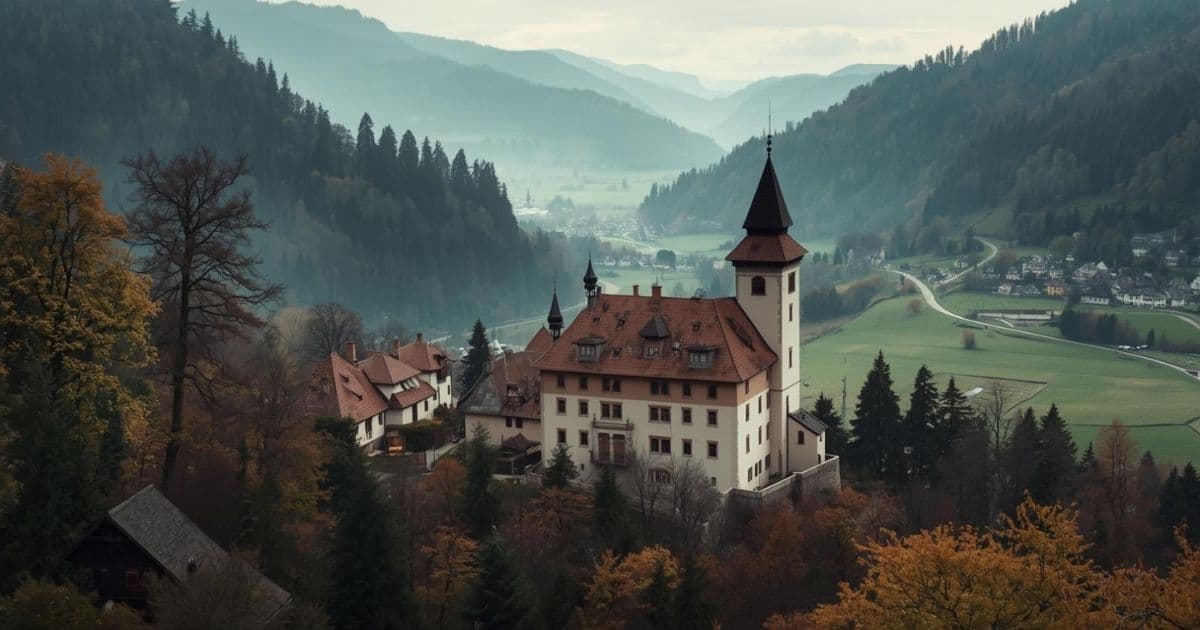
The brightness of the morning was magical. Moscow seen from the Poklónny
Hill lay spaciously spread out with her river, her gardens, and her
churches, and she seemed to be living her usual life, her cupolas
glittering like stars in the sunlight.
The view of the strange city with its peculiar architecture, such as
he had never seen before, filled Napoleon with the rather envious and
uneasy curiosity men feel when they see an alien form of life that has
no knowledge of them. This city was evidently living with the full force
of its own life. By the indefinite signs which, even at a distance,
distinguish a living body from a dead one, Napoleon from the Poklónny
Hill perceived the throb of life in the town and felt, as it were, the
breathing of that great and beautiful body.
Every Russian looking at Moscow feels her to be a mother; every
foreigner who sees her, even if ignorant of her significance as the
mother city, must feel her feminine character, and Napoleon felt it.
“Cette ville asiatique aux innombrables églises, Moscou la sainte. La
voilà donc enfin, cette fameuse ville! Il était temps,” * said he, and
dismounting he ordered a plan of Moscow to be spread out before him, and
summoned Lelorgne d’Ideville, the interpreter.
* “That Asiatic city of the innumerable churches, holy
Moscow! Here it is then at last, that famous city. It was
high time.”
“A town captured by the enemy is like a maid who has lost her honor,”
thought he (he had said so to Túchkov at Smolénsk). From that point of
view he gazed at the Oriental beauty he had not seen before. It seemed
strange to him that his long-felt wish, which had seemed unattainable,
had at last been realized. In the clear morning light he gazed now at
the city and now at the plan, considering its details, and the assurance
of possessing it agitated and awed him.
“But could it be otherwise?” he thought. “Here is this capital at my
feet. Where is Alexander now, and of what is he thinking? A strange,
beautiful, and majestic city; and a strange and majestic moment! In what
light must I appear to them!” thought he, thinking of his troops.
“Here she is, the reward for all those fainthearted men,” he reflected,
glancing at those near him and at the troops who were approaching and
forming up. “One word from me, one movement of my hand, and that ancient
capital of the Tsars would perish. But my clemency is always ready to
descend upon the vanquished. I must be magnanimous and truly great. But
no, it can’t be true that I am in Moscow,” he suddenly thought.
“Yet here she is lying at my feet, with her golden domes and crosses
scintillating and twinkling in the sunshine. But I shall spare her. On
the ancient monuments of barbarism and despotism I will inscribe great
words of justice and mercy.... It is just this which Alexander will
feel most painfully, I know him.” (It seemed to Napoleon that the chief
import of what was taking place lay in the personal struggle between
himself and Alexander.) “From the height of the Krémlin—yes, there
is the Krémlin, yes—I will give them just laws; I will teach them the
meaning of true civilization, I will make generations of boyars remember
their conqueror with love. I will tell the deputation that I did not,
and do not, desire war, that I have waged war only against the false
policy of their court; that I love and respect Alexander and that in
Moscow I will accept terms of peace worthy of myself and of my people.
I do not wish to utilize the fortunes of war to humiliate an honored
monarch. ‘Boyars,’ I will say to them, ‘I do not desire war, I desire
the peace and welfare of all my subjects.’ However, I know their
presence will inspire me, and I shall speak to them as I always do:
clearly, impressively, and majestically. But can it be true that I am in
Moscow? Yes, there she lies.”
“Qu’on m’amène les boyars,” * said he to his suite.
* “Bring the boyars to me.”
A general with a brilliant suite galloped off at once to fetch the
boyars.
Two hours passed. Napoleon had lunched and was again standing in the
same place on the Poklónny Hill awaiting the deputation. His speech to
the boyars had already taken definite shape in his imagination. That
speech was full of dignity and greatness as Napoleon understood it.
He was himself carried away by the tone of magnanimity he intended to
adopt toward Moscow. In his imagination he appointed days for assemblies
at the palace of the Tsars, at which Russian notables and his own would
mingle. He mentally appointed a governor, one who would win the
hearts of the people. Having learned that there were many charitable
institutions in Moscow he mentally decided that he would shower favors
on them all. He thought that, as in Africa he had to put on a burnoose
and sit in a mosque, so in Moscow he must be beneficent like the Tsars.
And in order finally to touch the hearts of the Russians—and being like
all Frenchmen unable to imagine anything sentimental without a reference
to ma chère, ma tendre, ma pauvre mère * —he decided that he would
place an inscription on all these establishments in large letters:
“This establishment is dedicated to my dear mother.” Or no, it should
be simply: Maison de ma Mère, *(2) he concluded. “But am I really in
Moscow? Yes, here it lies before me, but why is the deputation from the
city so long in appearing?” he wondered.
* “My dear, my tender, my poor mother.”
* (2) “House of my Mother.”
Meanwhile an agitated consultation was being carried on in whispers
among his generals and marshals at the rear of his suite. Those sent to
fetch the deputation had returned with the news that Moscow was empty,
that everyone had left it. The faces of those who were not conferring
together were pale and perturbed. They were not alarmed by the fact
that Moscow had been abandoned by its inhabitants (grave as that fact
seemed), but by the question how to tell the Emperor—without putting
him in the terrible position of appearing ridiculous—that he had been
awaiting the boyars so long in vain: that there were drunken mobs left
in Moscow but no one else. Some said that a deputation of some sort must
be scraped together, others disputed that opinion and maintained that
the Emperor should first be carefully and skillfully prepared, and then
told the truth.
“He will have to be told, all the same,” said some gentlemen of the
suite. “But, gentlemen...”
The position was the more awkward because the Emperor, meditating upon
his magnanimous plans, was pacing patiently up and down before the
outspread map, occasionally glancing along the road to Moscow from under
his lifted hand with a bright and proud smile.
“But it’s impossible...” declared the gentlemen of the suite, shrugging
their shoulders but not venturing to utter the implied word—le
ridicule....
At last the Emperor, tired of futile expectation, his actor’s instinct
suggesting to him that the sublime moment having been too long drawn out
was beginning to lose its sublimity, gave a sign with his hand. A single
report of a signaling gun followed, and the troops, who were already
spread out on different sides of Moscow, moved into the city through the
Tver, Kalúga, and Dorogomílov gates. Faster and faster, vying with
one another, they moved at the double or at a trot, vanishing amid the
clouds of dust they raised and making the air ring with a deafening roar
of mingling shouts.
Drawn on by the movement of his troops Napoleon rode with them as far as
the Dorogomílov gate, but there again stopped and, dismounting from his
horse, paced for a long time by the Kámmer-Kollézski rampart, awaiting
the deputation.
Master this chapter. Complete your experience
Purchase the complete book to access all chapters and support classic literature
As an Amazon Associate, we earn a small commission from qualifying purchases at no additional cost to you.
Available in paperback, hardcover, and e-book formats
Let's Analyse the Pattern
Mistaking the appearance of success for actual success, then building plans on foundations that don't exist.
Why This Matters
Connect literature to life
This chapter teaches how to distinguish between achieving a goal and achieving something worthwhile.
Practice This Today
This week, notice when victories feel empty—when you get what you wanted but something essential is missing, and ask what substance has been removed from the shell.
Now let's explore the literary elements.
Key Quotes & Analysis
"Moscow, the Asiatic capital of this great empire, the sacred city of Alexander's people, Moscow with its innumerable churches, Moscow the holy!"
Context: Describing Napoleon's romanticized view of the city spread before him
Shows how Napoleon has built up Moscow in his mind as some mystical prize. The religious language reveals he sees this as almost a spiritual conquest, which makes the reality of an empty city even more devastating.
In Today's Words:
This is it - the big prize I've been dreaming about, the ultimate achievement that will prove I'm the greatest.
"Where are the boyars, where is the deputation, where are the keys to the city?"
Context: Growing nervous as no one comes to officially surrender Moscow
Captures the awkward moment when reality doesn't match expectations. Napoleon expected a formal ceremony acknowledging his victory, but there's no one left to surrender to him.
In Today's Words:
Um, boss... where is everybody? Shouldn't someone be here to congratulate you or at least acknowledge what just happened?
"The city was empty. Moscow had been abandoned by its inhabitants."
Context: The stark reality that finally becomes undeniable
This simple statement destroys all of Napoleon's elaborate fantasies. After months of dreaming about ruling Moscow, he discovers he's conquered nothing but empty buildings.
In Today's Words:
There was nobody there. The whole place was deserted.
Thematic Threads
Pride
In This Chapter
Napoleon's pride prevents him from seeing his 'victory' is actually a trap—he's so invested in being the conqueror that he can't process the reality of an empty city
Development
Evolved from earlier chapters showing how pride blinds characters to obvious truths about their situations
In Your Life:
You might see this when you're so proud of landing a job or relationship that you ignore red flags about what you've actually gotten into
Expectations
In This Chapter
Napoleon's elaborate mental preparations for ruling Moscow—charitable works, assemblies, benevolent governance—all based on assumptions that prove completely wrong
Development
Builds on the theme of characters creating detailed plans without checking if their assumptions match reality
In Your Life:
You might see this when you plan your future around a promotion or relationship without confirming the other party shares your vision
Power
In This Chapter
Napoleon discovers that conquest without willing subjects is meaningless—real power requires people who acknowledge it, not just territory you can occupy
Development
Develops the theme that true power comes from genuine relationships and respect, not just position or force
In Your Life:
You might see this when you get authority at work but find people just go through the motions instead of actually following your leadership
Reality vs Fantasy
In This Chapter
The stark contrast between Napoleon's golden vision of ruling Moscow and the empty streets that actually await him
Development
Continues the pattern of characters whose internal fantasies prevent them from seeing what's actually happening
In Your Life:
You might see this when you're so focused on how you want something to work out that you miss obvious signs it's not going that way
Social Expectations
In This Chapter
Napoleon expects the traditional surrender ceremony with city leaders presenting keys—but social rituals only work when both sides participate
Development
Builds on how characters assume others will follow expected social scripts, even when circumstances have changed
In Your Life:
You might see this when you expect normal workplace or family dynamics to continue even after major changes have shifted everyone's priorities
You now have the context. Time to form your own thoughts.
Discussion Questions
- 1
Napoleon finally reaches Moscow and expects a delegation to surrender the city to him. What actually happens instead?
analysis • surface - 2
Why couldn't Napoleon see that his 'victory' was actually hollow? What was blocking his ability to recognize the truth?
analysis • medium - 3
Where do you see this pattern today - people celebrating achievements that look successful on the outside but are empty underneath?
application • medium - 4
If you were Napoleon's advisor in this moment, how would you help him face reality without destroying his confidence entirely?
application • deep - 5
What does this chapter reveal about the difference between winning something and actually having power or control?
reflection • deep
Critical Thinking Exercise
Test Your Victory
Think of a recent 'win' in your life - a goal you achieved, a problem you solved, or something you finally got. Now imagine you're Napoleon's scout, sent to investigate what you actually won. Write down what the victory looks like from the outside, then what it actually gives you in practice.
Consider:
- •Are the people involved genuinely engaged, or just going through the motions?
- •Does this achievement give you real influence or just the appearance of success?
- •What would you need to see or hear to know this victory has substance behind it?
Journaling Prompt
Write about a time when you got something you wanted but it felt empty once you had it. What were the warning signs you might have missed? How would you approach a similar situation differently now?
Coming Up Next...
Chapter 249: The Empty Hive
As Napoleon's troops pour into the eerily quiet streets of Moscow, they discover what the Russian people have left behind for their 'conquerors'—and it's not what anyone expected.