An excerpt from the original text.(complete · 4008 words)
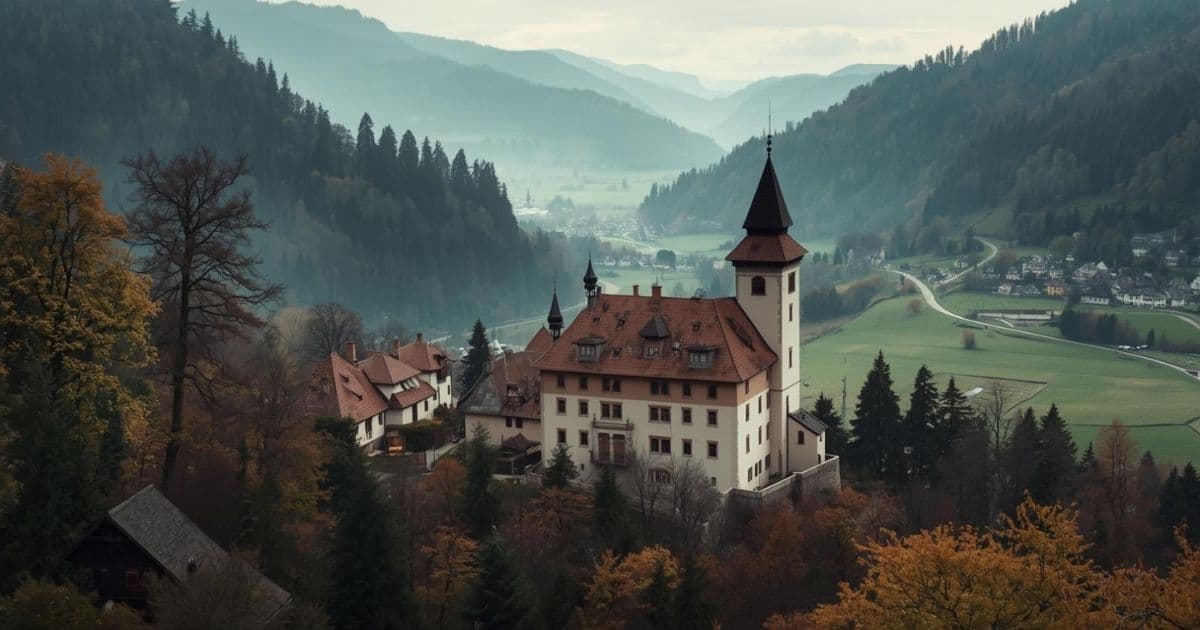
ald Hills, Prince Nicholas Bolkónski’s estate, lay forty miles east
from Smolénsk and two miles from the main road to Moscow.
The same evening that the prince gave his instructions to Alpátych,
Dessalles, having asked to see Princess Mary, told her that, as the
prince was not very well and was taking no steps to secure his safety,
though from Prince Andrew’s letter it was evident that to remain at Bald
Hills might be dangerous, he respectfully advised her to send a letter
by Alpátych to the Provincial Governor at Smolénsk, asking him to let
her know the state of affairs and the extent of the danger to which
Bald Hills was exposed. Dessalles wrote this letter to the Governor
for Princess Mary, she signed it, and it was given to Alpátych with
instructions to hand it to the Governor and to come back as quickly as
possible if there was danger.
Having received all his orders Alpátych, wearing a white beaver hat—a
present from the prince—and carrying a stick as the prince did, went out
accompanied by his family. Three well-fed roans stood ready harnessed to
a small conveyance with a leather hood.
The larger bell was muffled and the little bells on the harness stuffed
with paper. The prince allowed no one at Bald Hills to drive with
ringing bells; but on a long journey Alpátych liked to have them. His
satellites—the senior clerk, a countinghouse clerk, a scullery maid,
a cook, two old women, a little pageboy, the coachman, and various
domestic serfs—were seeing him off.
His daughter placed chintz-covered down cushions for him to sit on and
behind his back. His old sister-in-law popped in a small bundle, and one
of the coachmen helped him into the vehicle.
“There! There! Women’s fuss! Women, women!” said Alpátych, puffing and
speaking rapidly just as the prince did, and he climbed into the trap.
After giving the clerk orders about the work to be done, Alpátych, not
trying to imitate the prince now, lifted the hat from his bald head and
crossed himself three times.
“If there is anything... come back, Yákov Alpátych! For Christ’s sake
think of us!” cried his wife, referring to the rumors of war and the
enemy.
“Women, women! Women’s fuss!” muttered Alpátych to himself and started
on his journey, looking round at the fields of yellow rye and the
still-green, thickly growing oats, and at other quite black fields just
being plowed a second time.
As he went along he looked with pleasure at the year’s splendid crop
of corn, scrutinized the strips of ryefield which here and there were
already being reaped, made his calculations as to the sowing and the
harvest, and asked himself whether he had not forgotten any of the
prince’s orders.
Having baited the horses twice on the way, he arrived at the town toward
evening on the fourth of August.
Alpátych kept meeting and overtaking baggage trains and troops on the
road. As he approached Smolénsk he heard the sounds of distant firing,
but these did not impress him. What struck him most was the sight of a
splendid field of oats in which a camp had been pitched and which
was being mown down by the soldiers, evidently for fodder. This fact
impressed Alpátych, but in thinking about his own business he soon
forgot it.
All the interests of his life for more than thirty years had been
bounded by the will of the prince, and he never went beyond that limit.
Everything not connected with the execution of the prince’s orders did
not interest and did not even exist for Alpátych.
On reaching Smolénsk on the evening of the fourth of August he put up
in the Gáchina suburb across the Dnieper, at the inn kept by Ferapóntov,
where he had been in the habit of putting up for the last thirty years.
Some thirty years ago Ferapóntov, by Alpátych’s advice, had bought a
wood from the prince, had begun to trade, and now had a house, an
inn, and a corn dealer’s shop in that province. He was a stout, dark,
red-faced peasant in the forties, with thick lips, a broad knob of a
nose, similar knobs over his black frowning brows, and a round belly.
Wearing a waistcoat over his cotton shirt, Ferapóntov was standing
before his shop which opened onto the street. On seeing Alpátych he went
up to him.
“You’re welcome, Yákov Alpátych. Folks are leaving the town, but you
have come to it,” said he.
“Why are they leaving the town?” asked Alpátych.
“That’s what I say. Folks are foolish! Always afraid of the French.”
“Women’s fuss, women’s fuss!” said Alpátych.
“Just what I think, Yákov Alpátych. What I say is: orders have been
given not to let them in, so that must be right. And the peasants are
asking three rubles for carting—it isn’t Christian!”
Yákov Alpátych heard without heeding. He asked for a samovar and for hay
for his horses, and when he had had his tea he went to bed.
All night long troops were moving past the inn. Next morning Alpátych
donned a jacket he wore only in town and went out on business. It was a
sunny morning and by eight o’clock it was already hot. “A good day for
harvesting,” thought Alpátych.
From beyond the town firing had been heard since early morning. At eight
o’clock the booming of cannon was added to the sound of musketry. Many
people were hurrying through the streets and there were many soldiers,
but cabs were still driving about, tradesmen stood at their shops, and
service was being held in the churches as usual. Alpátych went to the
shops, to government offices, to the post office, and to the Governor’s.
In the offices and shops and at the post office everyone was talking
about the army and about the enemy who was already attacking the town,
everybody was asking what should be done, and all were trying to calm
one another.
In front of the Governor’s house Alpátych found a large number of
people, Cossacks, and a traveling carriage of the Governor’s. At the
porch he met two of the landed gentry, one of whom he knew. This man, an
ex-captain of police, was saying angrily:
“It’s no joke, you know! It’s all very well if you’re single. ‘One man
though undone is but one,’ as the proverb says, but with thirteen in
your family and all the property... They’ve brought us to utter ruin!
What sort of governors are they to do that? They ought to be hanged—the
brigands!...”
“Oh come, that’s enough!” said the other.
“What do I care? Let him hear! We’re not dogs,” said the ex-captain of
police, and looking round he noticed Alpátych.
“Oh, Yákov Alpátych! What have you come for?”
“To see the Governor by his excellency’s order,” answered Alpátych,
lifting his head and proudly thrusting his hand into the bosom of his
coat as he always did when he mentioned the prince.... “He has ordered
me to inquire into the position of affairs,” he added.
“Yes, go and find out!” shouted the angry gentleman. “They’ve brought
things to such a pass that there are no carts or anything!... There it
is again, do you hear?” said he, pointing in the direction whence came
the sounds of firing.
“They’ve brought us all to ruin... the brigands!” he repeated, and
descended the porch steps.
Alpátych swayed his head and went upstairs. In the waiting room were
tradesmen, women, and officials, looking silently at one another. The
door of the Governor’s room opened and they all rose and moved forward.
An official ran out, said some words to a merchant, called a stout
official with a cross hanging on his neck to follow him, and vanished
again, evidently wishing to avoid the inquiring looks and questions
addressed to him. Alpátych moved forward and next time the official came
out addressed him, one hand placed in the breast of his buttoned coat,
and handed him two letters.
“To his Honor Baron Asch, from General-in-Chief Prince Bolkónski,” he
announced with such solemnity and significance that the official turned
to him and took the letters.
A few minutes later the Governor received Alpátych and hurriedly said to
him:
“Inform the prince and princess that I knew nothing: I acted on the
highest instructions—here...” and he handed a paper to Alpátych. “Still,
as the prince is unwell my advice is that they should go to Moscow. I am
just starting myself. Inform them...”
But the Governor did not finish: a dusty perspiring officer ran into the
room and began to say something in French. The Governor’s face expressed
terror.
“Go,” he said, nodding his head to Alpátych, and began questioning the
officer.
Eager, frightened, helpless glances were turned on Alpátych when he came
out of the Governor’s room. Involuntarily listening now to the firing,
which had drawn nearer and was increasing in strength, Alpátych hurried
to his inn. The paper handed to him by the Governor said this:
“I assure you that the town of Smolénsk is not in the slightest danger
as yet and it is unlikely that it will be threatened with any. I from
the one side and Prince Bagratión from the other are marching to unite
our forces before Smolénsk, which junction will be effected on the
22nd instant, and both armies with their united forces will defend our
compatriots of the province entrusted to your care till our efforts
shall have beaten back the enemies of our Fatherland, or till the last
warrior in our valiant ranks has perished. From this you will see that
you have a perfect right to reassure the inhabitants of Smolénsk, for
those defended by two such brave armies may feel assured of victory.”
(Instructions from Barclay de Tolly to Baron Asch, the civil governor of
Smolénsk, 1812.)
People were anxiously roaming about the streets.
Carts piled high with household utensils, chairs, and cupboards kept
emerging from the gates of the yards and moving along the streets.
Loaded carts stood at the house next to Ferapóntov’s and women were
wailing and lamenting as they said good-by. A small watchdog ran round
barking in front of the harnessed horses.
Alpátych entered the innyard at a quicker pace than usual and went
straight to the shed where his horses and trap were. The coachman was
asleep. He woke him up, told him to harness, and went into the passage.
From the host’s room came the sounds of a child crying, the despairing
sobs of a woman, and the hoarse angry shouting of Ferapóntov. The cook
began running hither and thither in the passage like a frightened hen,
just as Alpátych entered.
“He’s done her to death. Killed the mistress!... Beat her... dragged her
about so!...”
“What for?” asked Alpátych.
“She kept begging to go away. She’s a woman! ‘Take me away,’ says she,
‘don’t let me perish with my little children! Folks,’ she says, ‘are all
gone, so why,’ she says, ‘don’t we go?’ And he began beating and pulling
her about so!”
At these words Alpátych nodded as if in approval, and not wishing to
hear more went to the door of the room opposite the innkeeper’s, where
he had left his purchases.
“You brute, you murderer!” screamed a thin, pale woman who, with a baby
in her arms and her kerchief torn from her head, burst through the door
at that moment and down the steps into the yard.
Ferapóntov came out after her, but on seeing Alpátych adjusted his
waistcoat, smoothed his hair, yawned, and followed Alpátych into the
opposite room.
“Going already?” said he.
Alpátych, without answering or looking at his host, sorted his packages
and asked how much he owed.
“We’ll reckon up! Well, have you been to the Governor’s?” asked
Ferapóntov. “What has been decided?”
Alpátych replied that the Governor had not told him anything definite.
“With our business, how can we get away?” said Ferapóntov. “We’d have
to pay seven rubles a cartload to Dorogobúzh and I tell them they’re
not Christians to ask it! Selivánov, now, did a good stroke last
Thursday—sold flour to the army at nine rubles a sack. Will you have
some tea?” he added.
While the horses were being harnessed Alpátych and Ferapóntov over their
tea talked of the price of corn, the crops, and the good weather for
harvesting.
“Well, it seems to be getting quieter,” remarked Ferapóntov, finishing
his third cup of tea and getting up. “Ours must have got the best of it.
The orders were not to let them in. So we’re in force, it seems....
They say the other day Matthew Iványch Plátov drove them into the river
Márina and drowned some eighteen thousand in one day.”
Alpátych collected his parcels, handed them to the coachman who had come
in, and settled up with the innkeeper. The noise of wheels, hoofs, and
bells was heard from the gateway as a little trap passed out.
It was by now late in the afternoon. Half the street was in shadow, the
other half brightly lit by the sun. Alpátych looked out of the window
and went to the door. Suddenly the strange sound of a far-off whistling
and thud was heard, followed by a boom of cannon blending into a dull
roar that set the windows rattling.
He went out into the street: two men were running past toward the
bridge. From different sides came whistling sounds and the thud of
cannon balls and bursting shells falling on the town. But these sounds
were hardly heard in comparison with the noise of the firing outside the
town and attracted little attention from the inhabitants. The town was
being bombarded by a hundred and thirty guns which Napoleon had ordered
up after four o’clock. The people did not at once realize the meaning of
this bombardment.
At first the noise of the falling bombs and shells only aroused
curiosity. Ferapóntov’s wife, who till then had not ceased wailing under
the shed, became quiet and with the baby in her arms went to the gate,
listening to the sounds and looking in silence at the people.
The cook and a shop assistant came to the gate. With lively curiosity
everyone tried to get a glimpse of the projectiles as they flew over
their heads. Several people came round the corner talking eagerly.
“What force!” remarked one. “Knocked the roof and ceiling all to
splinters!”
“Routed up the earth like a pig,” said another.
“That’s grand, it bucks one up!” laughed the first. “Lucky you jumped
aside, or it would have wiped you out!”
Others joined those men and stopped and told how cannon balls had fallen
on a house close to them. Meanwhile still more projectiles, now with
the swift sinister whistle of a cannon ball, now with the agreeable
intermittent whistle of a shell, flew over people’s heads incessantly,
but not one fell close by, they all flew over. Alpátych was getting into
his trap. The innkeeper stood at the gate.
“What are you staring at?” he shouted to the cook, who in her red skirt,
with sleeves rolled up, swinging her bare elbows, had stepped to the
corner to listen to what was being said.
“What marvels!” she exclaimed, but hearing her master’s voice she turned
back, pulling down her tucked-up skirt.
Once more something whistled, but this time quite close, swooping
downwards like a little bird; a flame flashed in the middle of the
street, something exploded, and the street was shrouded in smoke.
“Scoundrel, what are you doing?” shouted the innkeeper, rushing to the
cook.
At that moment the pitiful wailing of women was heard from different
sides, the frightened baby began to cry, and people crowded silently
with pale faces round the cook. The loudest sound in that crowd was her
wailing.
“Oh-h-h! Dear souls, dear kind souls! Don’t let me die! My good
souls!...”
Five minutes later no one remained in the street. The cook, with her
thigh broken by a shell splinter, had been carried into the kitchen.
Alpátych, his coachman, Ferapóntov’s wife and children and the house
porter were all sitting in the cellar, listening. The roar of guns, the
whistling of projectiles, and the piteous moaning of the cook, which
rose above the other sounds, did not cease for a moment. The mistress
rocked and hushed her baby and when anyone came into the cellar asked
in a pathetic whisper what had become of her husband who had remained
in the street. A shopman who entered told her that her husband had
gone with others to the cathedral, whence they were fetching the
wonder-working icon of Smolénsk.
Toward dusk the cannonade began to subside. Alpátych left the cellar
and stopped in the doorway. The evening sky that had been so clear was
clouded with smoke, through which, high up, the sickle of the new moon
shone strangely. Now that the terrible din of the guns had ceased a hush
seemed to reign over the town, broken only by the rustle of footsteps,
the moaning, the distant cries, and the crackle of fires which seemed
widespread everywhere. The cook’s moans had now subsided. On two sides
black curling clouds of smoke rose and spread from the fires. Through
the streets soldiers in various uniforms walked or ran confusedly in
different directions like ants from a ruined ant-hill. Several of them
ran into Ferapóntov’s yard before Alpátych’s eyes. Alpátych went out
to the gate. A retreating regiment, thronging and hurrying, blocked the
street.
Noticing him, an officer said: “The town is being abandoned. Get away,
get away!” and then, turning to the soldiers, shouted:
“I’ll teach you to run into the yards!”
Alpátych went back to the house, called the coachman, and told him to
set off. Ferapóntov’s whole household came out too, following Alpátych
and the coachman. The women, who had been silent till then, suddenly
began to wail as they looked at the fires—the smoke and even the flames
of which could be seen in the failing twilight—and as if in reply the
same kind of lamentation was heard from other parts of the street.
Inside the shed Alpátych and the coachman arranged the tangled reins and
traces of their horses with trembling hands.
As Alpátych was driving out of the gate he saw some ten soldiers in
Ferapóntov’s open shop, talking loudly and filling their bags and
knapsacks with flour and sunflower seeds. Just then Ferapóntov returned
and entered his shop. On seeing the soldiers he was about to shout at
them, but suddenly stopped and, clutching at his hair, burst into sobs
and laughter:
“Loot everything, lads! Don’t let those devils get it!” he cried, taking
some bags of flour himself and throwing them into the street.
Some of the soldiers were frightened and ran away, others went on
filling their bags. On seeing Alpátych, Ferapóntov turned to him:
“Russia is done for!” he cried. “Alpátych, I’ll set the place on fire
myself. We’re done for!...” and Ferapóntov ran into the yard.
Soldiers were passing in a constant stream along the street blocking
it completely, so that Alpátych could not pass out and had to wait.
Ferapóntov’s wife and children were also sitting in a cart waiting till
it was possible to drive out.
Night had come. There were stars in the sky and the new moon shone out
amid the smoke that screened it. On the sloping descent to the Dnieper
Alpátych’s cart and that of the innkeeper’s wife, which were slowly
moving amid the rows of soldiers and of other vehicles, had to stop.
In a side street near the crossroads where the vehicles had stopped, a
house and some shops were on fire. This fire was already burning itself
out. The flames now died down and were lost in the black smoke, now
suddenly flared up again brightly, lighting up with strange distinctness
the faces of the people crowding at the crossroads. Black figures
flitted about before the fire, and through the incessant crackling of
the flames talking and shouting could be heard. Seeing that his trap
would not be able to move on for some time, Alpátych got down and turned
into the side street to look at the fire. Soldiers were continually
rushing backwards and forwards near it, and he saw two of them and a
man in a frieze coat dragging burning beams into another yard across the
street, while others carried bundles of hay.
Alpátych went up to a large crowd standing before a high barn which was
blazing briskly. The walls were all on fire and the back wall had fallen
in, the wooden roof was collapsing, and the rafters were alight. The
crowd was evidently watching for the roof to fall in, and Alpátych
watched for it too.
“Alpátych!” a familiar voice suddenly hailed the old man.
“Mercy on us! Your excellency!” answered Alpátych, immediately
recognizing the voice of his young prince.
Prince Andrew in his riding cloak, mounted on a black horse, was looking
at Alpátych from the back of the crowd.
“Why are you here?” he asked.
“Your... your excellency,” stammered Alpátych and broke into sobs. “Are
we really lost? Master!...”
“Why are you here?” Prince Andrew repeated.
At that moment the flames flared up and showed his young master’s pale
worn face. Alpátych told how he had been sent there and how difficult it
was to get away.
“Are we really quite lost, your excellency?” he asked again.
Prince Andrew without replying took out a notebook and raising his knee
began writing in pencil on a page he tore out. He wrote to his sister:
“Smolénsk is being abandoned. Bald Hills will be occupied by the enemy
within a week. Set off immediately for Moscow. Let me know at once when
you will start. Send by special messenger to Usvyázh.”
Having written this and given the paper to Alpátych, he told him how
to arrange for departure of the prince, the princess, his son, and the
boy’s tutor, and how and where to let him know immediately. Before
he had had time to finish giving these instructions, a chief of staff
followed by a suite galloped up to him.
“You are a colonel?” shouted the chief of staff with a German accent,
in a voice familiar to Prince Andrew. “Houses are set on fire in your
presence and you stand by! What does this mean? You will answer for
it!” shouted Berg, who was now assistant to the chief of staff of the
commander of the left flank of the infantry of the first army, a place,
as Berg said, “very agreeable and well en évidence.”
Prince Andrew looked at him and without replying went on speaking to
Alpátych.
“So tell them that I shall await a reply till the tenth, and if by the
tenth I don’t receive news that they have all got away I shall have to
throw up everything and come myself to Bald Hills.”
“Prince,” said Berg, recognizing Prince Andrew, “I only spoke because
I have to obey orders, because I always do obey exactly.... You must
please excuse me,” he went on apologetically.
Something cracked in the flames. The fire died down for a moment and
wreaths of black smoke rolled from under the roof. There was another
terrible crash and something huge collapsed.
“Ou-rou-rou!” yelled the crowd, echoing the crash of the collapsing roof
of the barn, the burning grain in which diffused a cakelike aroma all
around. The flames flared up again, lighting the animated, delighted,
exhausted faces of the spectators.
The man in the frieze coat raised his arms and shouted:
“It’s fine, lads! Now it’s raging... It’s fine!”
“That’s the owner himself,” cried several voices.
“Well then,” continued Prince Andrew to Alpátych, “report to them as I
have told you”; and not replying a word to Berg who was now mute beside
him, he touched his horse and rode down the side street.
Master this chapter. Complete your experience
Purchase the complete book to access all chapters and support classic literature
As an Amazon Associate, we earn a small commission from qualifying purchases at no additional cost to you.
Available in paperback, hardcover, and e-book formats
Let's Analyse the Pattern
When loyalty to systems overrides personal judgment, trapping people in failing institutions until crisis forces recognition.
Why This Matters
Connect literature to life
This chapter teaches how to recognize when organizations use official communications to deny obvious reality.
Practice This Today
This week, notice when official statements contradict what you can observe—at work, in news, or in your community, and trust your direct experience over reassuring paperwork.
Now let's explore the literary elements.
Key Quotes & Analysis
"The prince allowed no one at Bald Hills to drive with ringing bells; but on a long journey Alpátych liked to have them."
Context: As Alpátych prepares to leave for Smolénsk with his small act of rebellion
This tiny detail shows how even the most loyal servants find small ways to assert their humanity. Alpátych follows every rule except this one harmless pleasure, revealing the human need for some personal choice even within rigid systems.
In Today's Words:
Even the most obedient employee will bend the rules in small ways that don't hurt anyone.
"Everything's quiet, thank God, though there is talk about war everywhere."
Context: In his official letter to Princess Mary about the safety of their estate
This perfectly captures how authorities use official language to deny obvious problems. The Governor admits there's 'talk about war everywhere' while simultaneously claiming everything is 'quiet.' It's bureaucratic doublespeak at its most dangerous.
In Today's Words:
'Yeah, everyone's talking about the problem, but officially there's no problem.'
"It's all women's fuss! What are you afraid of? They won't come here."
Context: Dismissing his wife's fears about the approaching French army
Ferapóntov uses gender stereotypes to dismiss legitimate concerns, calling women's fears 'fuss' while positioning himself as the rational one. This shows how people often attack the messenger rather than face uncomfortable truths.
In Today's Words:
'You're just being dramatic - that could never happen here.'
"They must leave at once, at once! Tell them that I order it."
Context: Giving Alpátych urgent evacuation orders in the burning streets
Prince Andrew cuts through all the confusion and denial with clear, direct commands. Unlike the Governor's empty reassurances or Ferapóntov's breakdown, he provides the decisive action the situation demands.
In Today's Words:
'Stop talking and get out now - that's an order.'
Thematic Threads
Class
In This Chapter
Alpátych's servant mentality makes him follow orders even when they endanger everyone
Development
Evolved from earlier themes about how class position shapes thinking patterns
In Your Life:
Your job title might be making you ignore warning signs that someone with different perspective would catch immediately
Identity
In This Chapter
Characters define themselves by institutional roles rather than independent judgment
Development
Deepened from previous exploration of how social roles constrain authentic selfhood
In Your Life:
You might be so identified with being 'the reliable one' that you can't admit when reliability becomes dangerous
Power
In This Chapter
The Governor uses official documents to maintain illusion of control while town burns
Development
Continued examination of how those in authority protect themselves through bureaucracy
In Your Life:
Your boss might be sending positive memos while the department falls apart around you
Reality
In This Chapter
Official reassurances clash violently with observable destruction and chaos
Development
Introduced here as theme about truth versus institutional narrative
In Your Life:
Company training videos about 'great workplace culture' might contradict your daily experience of toxic management
Loyalty
In This Chapter
Faithful service becomes a trap that prevents necessary action for survival
Development
New exploration of how virtues can become weaknesses in wrong context
In Your Life:
Your dedication to your workplace might be preventing you from seeing better opportunities elsewhere
You now have the context. Time to form your own thoughts.
Discussion Questions
- 1
Why does Alpátych trust the Governor's letter more than what he can see and hear happening around him?
analysis • surface - 2
How does thirty years of faithful service actually work against Alpátych in this crisis situation?
analysis • medium - 3
Where do you see people today following official reassurances even when reality suggests something different?
application • medium - 4
If you were in Alpátych's position, how would you balance loyalty to your employer with protecting people from obvious danger?
application • deep - 5
What does this chapter reveal about the difference between being loyal to people versus being loyal to systems?
reflection • deep
Critical Thinking Exercise
Map Your Official vs. Reality Check
Think of a situation in your life where official information (from work, school, healthcare, government) doesn't match what you're actually experiencing. Write down what the official message says, then what you observe with your own eyes. Identify who benefits from maintaining the official version and who pays the price when reality is ignored.
Consider:
- •Consider how your role or position might make you more likely to accept official explanations
- •Think about what you would lose (job security, relationships, status) by questioning the official line
- •Examine whether your loyalty is to specific people you care about or to abstract systems and procedures
Journaling Prompt
Write about a time when you followed proper channels or official guidance even though your gut told you something was wrong. What happened? What would you do differently now?
Coming Up Next...
Chapter 195: The Weight of Command and Loss
As Smolénsk burns behind him, Alpátych races back to Bald Hills with Prince Andrew's warning. But will the old prince accept that his world is truly ending, or will pride and stubbornness doom the family he's spent his life protecting?