An excerpt from the original text.(complete · 754 words)
oo far did I fly into the future: a horror seized upon me.
And when I looked around me, lo! there time was my sole contemporary.
Then did I fly backwards, homewards—and always faster. Thus did I come
unto you, ye present-day men, and into the land of culture.
For the first time brought I an eye to see you, and good desire: verily,
with longing in my heart did I come.
But how did it turn out with me? Although so alarmed—I had yet to
laugh! Never did mine eye see anything so motley-coloured!
I laughed and laughed, while my foot still trembled, and my heart as
well. “Here forsooth, is the home of all the paintpots,”—said I.
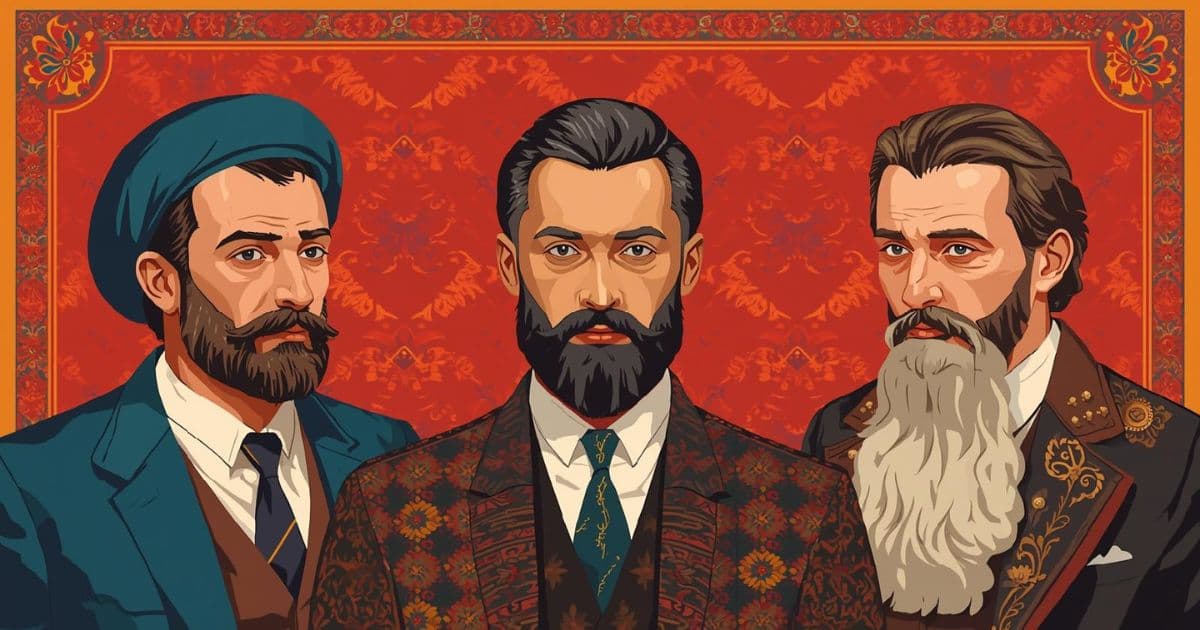
With fifty patches painted on faces and limbs—so sat ye there to mine
astonishment, ye present-day men!
And with fifty mirrors around you, which flattered your play of colours,
and repeated it!
Verily, ye could wear no better masks, ye present-day men, than your own
faces! Who could—RECOGNISE you!
Written all over with the characters of the past, and these characters
also pencilled over with new characters—thus have ye concealed
yourselves well from all decipherers!
And though one be a trier of the reins, who still believeth that ye have
reins! Out of colours ye seem to be baked, and out of glued scraps.
All times and peoples gaze divers-coloured out of your veils; all
customs and beliefs speak divers-coloured out of your gestures.
He who would strip you of veils and wrappers, and paints and gestures,
would just have enough left to scare the crows.
Verily, I myself am the scared crow that once saw you naked, and without
paint; and I flew away when the skeleton ogled at me.
Rather would I be a day-labourer in the nether-world, and among the
shades of the bygone!—Fatter and fuller than ye, are forsooth the
nether-worldlings!
This, yea this, is bitterness to my bowels, that I can neither endure
you naked nor clothed, ye present-day men!
All that is unhomelike in the future, and whatever maketh strayed birds
shiver, is verily more homelike and familiar than your “reality.”
For thus speak ye: “Real are we wholly, and without faith and
superstition”: thus do ye plume yourselves—alas! even without plumes!
Indeed, how would ye be ABLE to believe, ye divers-coloured ones!—ye
who are pictures of all that hath ever been believed!
Perambulating refutations are ye, of belief itself, and a dislocation of
all thought. UNTRUSTWORTHY ONES: thus do I call you, ye real ones!
All periods prate against one another in your spirits; and the dreams
and pratings of all periods were even realer than your awakeness!
Unfruitful are ye: THEREFORE do ye lack belief. But he who had to
create, had always his presaging dreams and astral premonitions—and
believed in believing!—
Half-open doors are ye, at which grave-diggers wait. And this is YOUR
reality: “Everything deserveth to perish.”
Alas, how ye stand there before me, ye unfruitful ones; how lean your
ribs! And many of you surely have had knowledge thereof.
Many a one hath said: “There hath surely a God filched something from
me secretly whilst I slept? Verily, enough to make a girl for himself
therefrom!
“Amazing is the poverty of my ribs!” thus hath spoken many a present-day
man.
Yea, ye are laughable unto me, ye present-day men! And especially when
ye marvel at yourselves!
And woe unto me if I could not laugh at your marvelling, and had to
swallow all that is repugnant in your platters!
As it is, however, I will make lighter of you, since I have to carry
what is heavy; and what matter if beetles and May-bugs also alight on
my load!
Verily, it shall not on that account become heavier to me! And not from
you, ye present-day men, shall my great weariness arise.—
Ah, whither shall I now ascend with my longing! From all mountains do I
look out for fatherlands and motherlands.
But a home have I found nowhere: unsettled am I in all cities, and
decamping at all gates.
Alien to me, and a mockery, are the present-day men, to whom of late my
heart impelled me; and exiled am I from fatherlands and motherlands.
Thus do I love only my CHILDREN’S LAND, the undiscovered in the remotest
sea: for it do I bid my sails search and search.
Unto my children will I make amends for being the child of my fathers:
and unto all the future—for THIS present-day!—
Thus spake Zarathustra.
Master this chapter. Complete your experience
Purchase the complete book to access all chapters and support classic literature
As an Amazon Associate, we earn a small commission from qualifying purchases at no additional cost to you.
Available in paperback, hardcover, and e-book formats
Let's Analyse the Pattern
People accumulate borrowed identities, beliefs, and behaviors to avoid the work of discovering their authentic self, becoming empty performers with no genuine core.
Why This Matters
Connect literature to life
This chapter teaches you to recognize when someone is performing borrowed beliefs rather than expressing genuine convictions.
Practice This Today
This week, notice when people quote others' ideas versus sharing their own experience—the difference between 'Studies show...' and 'In my life, I've found...'
Now let's explore the literary elements.
Key Quotes & Analysis
"Here forsooth, is the home of all the paintpots"
Context: His first reaction upon seeing modern civilization after his journey
This reveals Zarathustra's immediate recognition that modern life is essentially theatrical performance. The paintpots reference suggests everyone is an actor putting on makeup rather than showing their true face. It captures his shock at how artificial human society has become.
In Today's Words:
This place is like one giant costume party where everyone's wearing a fake identity
"Who could—RECOGNISE you!"
Context: Describing how modern people have hidden themselves under layers of borrowed characteristics
This expresses the tragedy of modern identity crisis - people have become so layered with external influences that even they don't know who they really are. The capitalized 'RECOGNISE' shows Zarathustra's frustrated emphasis on this fundamental problem.
In Today's Words:
You've put on so many different personas that nobody - including yourself - knows who you actually are anymore
"Out of colours ye seem to be baked, and out of glued scraps"
Context: Describing the artificial composition of modern people's identities
This powerful metaphor suggests modern people aren't grown or developed naturally, but artificially constructed from random pieces like a craft project. It emphasizes how disconnected modern identity is from authentic self-development.
In Today's Words:
You're like a collage made from magazine cutouts - just random pieces stuck together with no real substance underneath
"All times and peoples gaze divers-coloured out of your veils"
Context: Explaining how modern people display influences from every culture and era simultaneously
This shows how modern people collect cultural elements like souvenirs without understanding or committing to any of them. The 'veils' suggest these are just surface decorations that actually hide rather than reveal the person's true nature.
In Today's Words:
You wear pieces of every culture and time period like accessories, but none of it actually means anything to you
Thematic Threads
Identity
In This Chapter
Zarathustra sees people as painted actors wearing masks of borrowed beliefs with no authentic self underneath
Development
Deepens from earlier themes of self-creation to show the opposite—complete loss of self
In Your Life:
You might recognize this when you realize you're expressing opinions you don't actually hold just to fit in
Performance
In This Chapter
Humanity appears as theatrical performers covered in makeup and costumes, playing roles they don't understand
Development
Introduced here as the mechanism by which authentic identity gets buried
In Your Life:
This shows up when you catch yourself acting differently with different groups instead of being consistently yourself
Emptiness
In This Chapter
Despite their colorful performance, people are fundamentally hollow and unfruitful, unable to create anything genuine
Development
Builds on earlier themes of spiritual poverty to show its ultimate consequence
In Your Life:
You experience this as feeling disconnected from your own life, like you're going through the motions without meaning
Alienation
In This Chapter
Zarathustra feels homeless and alien among his own species, unable to connect with or help these performers
Development
Develops from his earlier struggles with humanity to complete disconnection
In Your Life:
This appears when you feel isolated because you can't find genuine connection in a world of surface-level interactions
Authenticity
In This Chapter
The complete absence of authenticity in modern people who have layered borrowed identities over their true selves
Development
Contrasts sharply with Zarathustra's earlier calls for self-creation and genuine becoming
In Your Life:
You face this choice daily between expressing your real thoughts and feelings versus saying what you think others want to hear
You now have the context. Time to form your own thoughts.
Discussion Questions
- 1
What does Zarathustra see when he looks at the people around him, and why does this disturb him so much?
analysis • surface - 2
Why do people keep adding layers of borrowed identities instead of developing their authentic selves?
analysis • medium - 3
Where do you see this 'painted performer' behavior in modern life - at work, on social media, or in relationships?
application • medium - 4
How can someone begin to peel back these borrowed layers and discover what's genuinely theirs underneath?
application • deep - 5
What does this chapter suggest about the relationship between authenticity and loneliness in modern society?
reflection • deep
Critical Thinking Exercise
Identity Inventory Audit
Make three columns on paper: 'Borrowed,' 'Authentic,' and 'Unsure.' List aspects of your current identity - your opinions, interests, speaking style, values, even your taste in music or clothes. Sort them honestly into these columns. Focus on what you actually think versus what you've adopted from others or what you think you should believe.
Consider:
- •Notice which borrowed identities serve you well versus which feel like heavy costumes
- •Pay attention to areas where you feel most confident and natural - these often point to authentic parts
- •Consider whether some borrowed elements have become genuinely yours through conscious choice rather than unconscious copying
Journaling Prompt
Write about one borrowed identity you're ready to question or let go of, and one authentic part of yourself you want to express more boldly.
Coming Up Next...
Chapter 37: The Moon's False Promise
As night falls, Zarathustra contemplates the moon rising like a pregnant sun on the horizon. Something about this celestial sight stirs new thoughts about creation, birth, and the cycles that govern both nature and human consciousness.