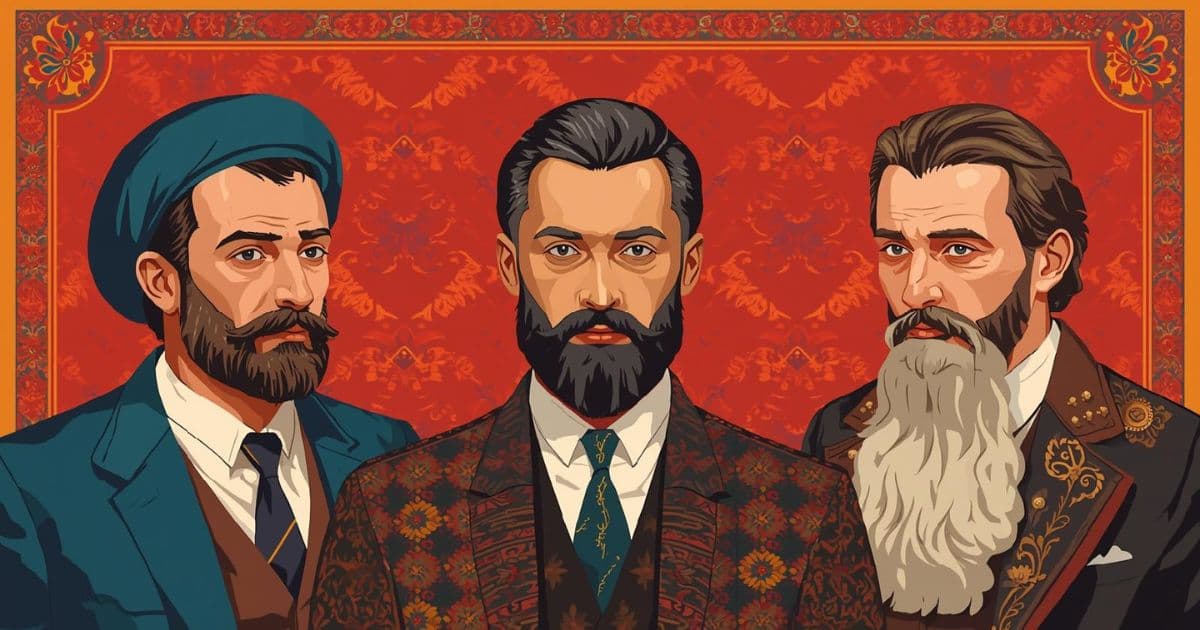
An excerpt from the original text.(complete · 730 words)
any lands saw Zarathustra, and many peoples: thus he discovered the
good and bad of many peoples. No greater power did Zarathustra find on
earth than good and bad.
No people could live without first valuing; if a people will maintain
itself, however, it must not value as its neighbour valueth.
Much that passed for good with one people was regarded with scorn and
contempt by another: thus I found it. Much found I here called bad,
which was there decked with purple honours.
Never did the one neighbour understand the other: ever did his soul
marvel at his neighbour’s delusion and wickedness.
A table of excellencies hangeth over every people. Lo! it is the table
of their triumphs; lo! it is the voice of their Will to Power.
It is laudable, what they think hard; what is indispensable and hard
they call good; and what relieveth in the direst distress, the unique
and hardest of all,—they extol as holy.
Whatever maketh them rule and conquer and shine, to the dismay and envy
of their neighbours, they regard as the high and foremost thing, the
test and the meaning of all else.
Verily, my brother, if thou knewest but a people’s need, its land,
its sky, and its neighbour, then wouldst thou divine the law of its
surmountings, and why it climbeth up that ladder to its hope.
“Always shalt thou be the foremost and prominent above others: no one
shall thy jealous soul love, except a friend”—that made the soul of a
Greek thrill: thereby went he his way to greatness.
“To speak truth, and be skilful with bow and arrow”—so seemed it alike
pleasing and hard to the people from whom cometh my name—the name which
is alike pleasing and hard to me.
“To honour father and mother, and from the root of the soul to do their
will”—this table of surmounting hung another people over them, and
became powerful and permanent thereby.
“To have fidelity, and for the sake of fidelity to risk honour and
blood, even in evil and dangerous courses”—teaching itself so, another
people mastered itself, and thus mastering itself, became pregnant and
heavy with great hopes.
Verily, men have given unto themselves all their good and bad. Verily,
they took it not, they found it not, it came not unto them as a voice
from heaven.
Values did man only assign to things in order to maintain himself—he
created only the significance of things, a human significance!
Therefore, calleth he himself “man,” that is, the valuator.
Valuing is creating: hear it, ye creating ones! Valuation itself is the
treasure and jewel of the valued things.
Through valuation only is there value; and without valuation the nut of
existence would be hollow. Hear it, ye creating ones!
Change of values—that is, change of the creating ones. Always doth he
destroy who hath to be a creator.
Creating ones were first of all peoples, and only in late times
individuals; verily, the individual himself is still the latest
creation.
Peoples once hung over them tables of the good. Love which would rule
and love which would obey, created for themselves such tables.
Older is the pleasure in the herd than the pleasure in the ego: and as
long as the good conscience is for the herd, the bad conscience only
saith: ego.
Verily, the crafty ego, the loveless one, that seeketh its advantage in
the advantage of many—it is not the origin of the herd, but its ruin.
Loving ones, was it always, and creating ones, that created good and
bad. Fire of love gloweth in the names of all the virtues, and fire of
wrath.
Many lands saw Zarathustra, and many peoples: no greater power did
Zarathustra find on earth than the creations of the loving ones—“good”
and “bad” are they called.
Verily, a prodigy is this power of praising and blaming. Tell me, ye
brethren, who will master it for me? Who will put a fetter upon the
thousand necks of this animal?
A thousand goals have there been hitherto, for a thousand peoples have
there been. Only the fetter for the thousand necks is still lacking;
there is lacking the one goal. As yet humanity hath not a goal.
But pray tell me, my brethren, if the goal of humanity be still lacking,
is there not also still lacking—humanity itself?—
Thus spake Zarathustra.
Master this chapter. Complete your experience
Purchase the complete book to access all chapters and support classic literature
As an Amazon Associate, we earn a small commission from qualifying purchases at no additional cost to you.
Available in paperback, hardcover, and e-book formats
Let's Analyse the Pattern
Groups create moral rules for survival, then forget they made them up, treating human inventions as eternal truths.
Why This Matters
Connect literature to life
This chapter teaches you to recognize that every group's 'obvious' moral rules are actually survival strategies they invented and then forgot were inventions.
Practice This Today
This week, notice when someone gets heated defending their values and ask yourself: what problem does this belief solve for their group or situation?
Now let's explore the literary elements.
Key Quotes & Analysis
"A table of excellencies hangeth over every people. Lo! it is the table of their triumphs; lo! it is the voice of their Will to Power."
Context: He's explaining how every culture creates its own definition of what's admirable and worth striving for
This reveals that moral systems aren't about abstract right and wrong, but about what helps a group feel powerful and successful. Each culture's values reflect what they think will make them thrive and dominate.
In Today's Words:
Every group has its own scoreboard for what counts as winning in life, and those scoreboards tell you what that group thinks will make them successful.
"Much that passed for good with one people was regarded with scorn and contempt by another: thus I found it."
Context: He's describing what shocked him most during his travels around the world
This observation shatters the comfortable assumption that there are universal moral truths everyone agrees on. It forces us to confront that our deepest beliefs might just be local customs.
In Today's Words:
What one group thinks makes you a good person, another group thinks makes you a loser.
"A thousand goals have there been hitherto, for a thousand peoples have there been. Only the fetter for the thousand necks is still lacking; lacking is the one goal."
Context: He's reflecting on humanity's lack of a unified purpose despite having many different cultural values
This points to Zarathustra's deeper concern: without some shared human purpose, we're just a collection of competing tribes with incompatible values. The question is whether we can create unity without destroying diversity.
In Today's Words:
Every group has figured out what they're trying to accomplish, but nobody's figured out what we're all supposed to be doing together as human beings.
Thematic Threads
Identity
In This Chapter
Zarathustra questions whether humanity has a coherent identity without shared values
Development
Evolved from individual identity crisis to species-wide identity confusion
In Your Life:
You might struggle with who you are when your personal values conflict with your family's or workplace's expectations
Social Expectations
In This Chapter
Different societies create completely contradictory expectations for what counts as good behavior
Development
Expanded from personal social pressure to recognition that all social expectations are human creations
In Your Life:
You might feel torn between different groups' expectations—your family wants loyalty, your job rewards individual achievement
Personal Growth
In This Chapter
Understanding that values are human creations opens possibility for conscious choice about which ones to follow
Development
Shifted from rejecting false values to recognizing the power to create new ones
In Your Life:
You might realize you can choose which family traditions to keep and which workplace cultures to embrace
Class
In This Chapter
Different social classes develop different moral systems based on their survival needs
Development
Introduced here as explanation for why different groups have conflicting values
In Your Life:
You might notice that working-class values like loyalty clash with middle-class values like individual advancement
You now have the context. Time to form your own thoughts.
Discussion Questions
- 1
What did Zarathustra discover about how different cultures define good and bad behavior?
analysis • surface - 2
Why do you think societies forget that they created their own moral rules?
analysis • medium - 3
Where do you see conflicts between different value systems in your workplace, family, or community?
application • medium - 4
How would you handle a situation where your personal values clash with your workplace culture?
application • deep - 5
What does this chapter suggest about finding common ground with people who have completely different values?
reflection • deep
Critical Thinking Exercise
Map Your Value Conflicts
Think of a recent disagreement you had with someone at work, in your family, or in your community. Write down what each person valued in that situation. Instead of judging who was right or wrong, try to identify what survival need or life experience might have shaped each person's values. What problem was each value system trying to solve?
Consider:
- •Consider what generation, background, or job role might have shaped their values
- •Look for practical reasons why their values might make sense for their situation
- •Think about whether there's a way both value systems could coexist
Journaling Prompt
Write about a time when you changed your mind about what was important. What caused that shift, and how did it affect your relationships with others who still held your old values?
Coming Up Next...
Chapter 16: The Problem with People-Pleasing
Zarathustra turns his attention to a more personal moral failing: the way we use love of our neighbors to avoid dealing with our own problems. He's about to challenge one of our most cherished beliefs about caring for others.