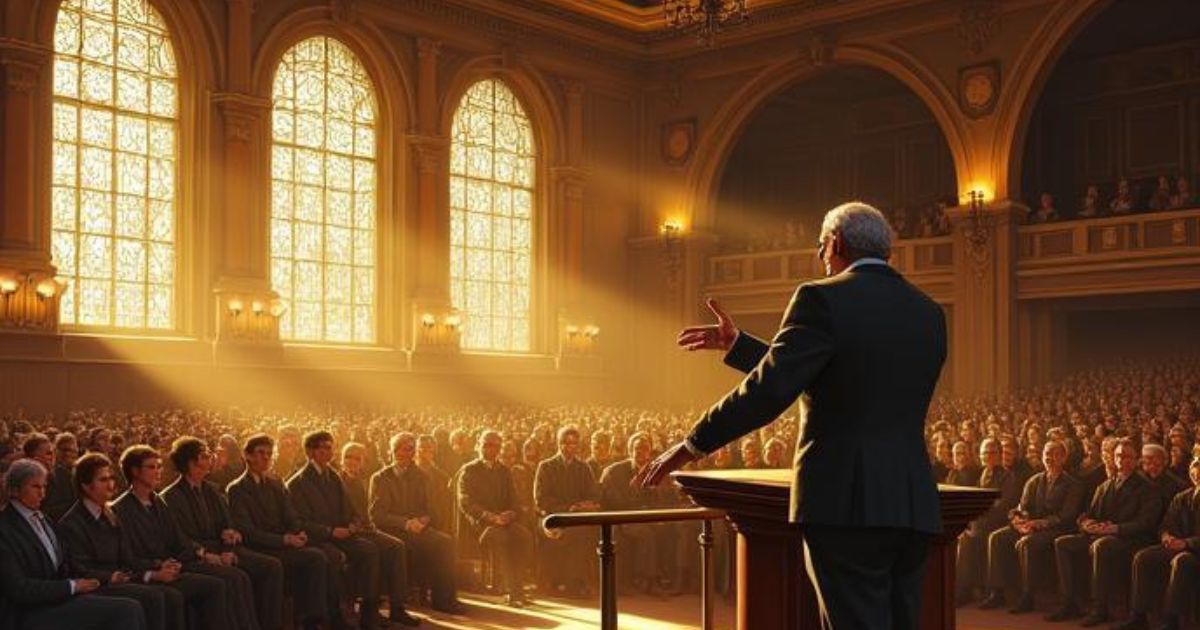
An excerpt from the original text.(complete · 3844 words)
f the beauty which the appearance of Utility bestows upon all the productions of art, and of the extensive influence of this species of beauty.
That utility is one of the principal sources
of beauty has been observed by every body, who
has considered with any attention what constitutes
the nature of beauty. The conveniency of a
house gives pleasure to the spectator as well as its
regularity, and he is as much hurt when he observes
the contrary defect, as when he sees the correspondent
windows of different forms, or the door not
placed exactly in the middle of the building. That
the fitness of any system or machine to produce the
end for which it was intended, bestows a certain
propriety and beauty upon the whole, and renders
the very thought and contemplation of it agreeable,
is so very obvious that nobody has overlooked it.
238The cause too, why utility pleases, has of late
been assigned by an ingenious and agreeable philosopher,
who joins the greatest depth of thought to
the greatest elegance of expression, and possesses the
singular and happy talent of treating the abstrusest
subjects not only with the most perfect perspicuity,
but with the most lively eloquence. The utility of
any object, according to him, pleases the master by
perpetually suggesting to him the pleasure or conveniency
which it is fitted to promote. Every time he
looks at it, he is put in mind of this pleasure; and
the object in this manner becomes a source of perpetual
satisfaction and enjoyment. The spectator
enters by sympathy into the sentiments of the master,
and necessarily views the object under the same agreeable
aspect. When we visit the palaces of the great,
we cannot help conceiving the satisfaction we should
enjoy if we ourselves were the masters, and were possessed
of so much artful and ingeniously contrived
accommodation. A similar account is given why
the appearance of inconveniency should render any
object disagreeable both to the owner and to the
spectator.
But that this fitness, this happy contrivance of
any production of art, should often be more valued,
than the very end for which it was intended; and
that the exact adjustment of the means for attaining
any conveniency or pleasure, should frequently be
more regarded, than that very conveniency or pleasure,
in the attainment of which their whole merit
would seem to consist, has not, so far as I know,
been yet taken notice of by any body. That this
however is very frequently the case, may be observed
239in a thousand instances, both in the most frivolous
and in the most important concerns of human life.
When a person comes into his chamber, and finds
the chairs all standing in the middle of the room, he
is angry with his servant, and rather than see them
continue in that disorder, perhaps takes the trouble
himself to set them all in their places with their backs
to the wall. The whole propriety of this new situation
arises from its superior conveniency in leaving
the floor free and disengaged. To attain this conveniency
he voluntarily puts himself to more trouble
than all he could have suffered from the want of it;
since nothing was more easy, than to have set himself
down upon one of them, which is probably
what he does when his labour is over. What he
wanted therefore, it seems, was not so much this
conveniency, as that arrangement of things which
promotes it. Yet it is this conveniency which ultimately
recommends that arrangement, and bestows
upon it the whole of its propriety and beauty.
A watch, in the same manner, that falls behind
above two minutes in a day, is despised by one curious
in watches. He sells it perhaps for a couple of
guineas, and purchases another at fifty, which will
not lose above a minute in a fortnight. The sole
use of watches however, is to tell us what o’clock
it is, and to hinder us from breaking any engagement,
or suffering any other inconveniency by our
ignorance in that particular point. But the person
so nice with regard to this machine, will not always
be found either more scrupulously punctual than
other men, or more anxiously concerned upon any
other account, to know precisely what time of day
240it is. What interests him is not so much the attainment
of this piece of knowledge, as the perfection
of the machine which serves to attain it.
How many people ruin themselves by laying out
money on trinkets of frivolous utility? What
pleases these lovers of toys is not so much the utility,
as the aptness of the machines which are fitted to
promote it. All their pockets are fluffed with little
conveniencies. They contrive new pockets, unknown
in the clothes of other people, in order to
carry a greater number. They walk about loaded
with a multitude of baubles, in weight and sometimes
in value not inferior to an ordinary Jew’s-box,
some of which may sometimes be of some little
use, but all of which might at all times be very well
spared, and of which the whole utility is certainly not
worth the fatigue of bearing the burden.
Nor is it only with regard to such frivolous objects
that our conduct is influenced by this principle;
it is often the secret motive of the most serious
and important pursuits of both private and public
life.
The poor man’s son, whom Heaven in its anger
has visited with ambition, when he begins to look
around him admires the condition of the rich. He
finds the cottage of his father too small for his accommodation,
and fancies he should be lodged more
at his ease in a palace. He is displeased with being
obliged to walk a-foot, or to endure the fatigue of
riding on horseback. He sees his superiors carried
about in machines, and imagines that in one of
these he could travel with less inconveniency. He
241feels himself naturally indolent, and willing to serve
himself with his own hands as little as possible; and
judges, that a numerous retinue of servants would
save him from a great deal of trouble. He thinks
if he had attained all these, he would sit still contentedly,
and be quiet, enjoying himself in the
thought of the happiness and tranquillity of his situation.
He is enchanted with the distant idea of this
felicity. It appears in his fancy like the life of some
superior rank of beings, and in order to arrive at it,
he devotes himself for ever to the pursuit of wealth
and greatness. To obtain the conveniencies which
these afford, he submits in the first year, nay in the
first month of his application, to more fatigue of
body and more uneasiness of mind than he could
have suffered through the whole of his life from the
want of them. He studies to distinguish himself in
some laborious profession. With the most unrelenting
industry he labours night and day to acquire
talents superior to all his competitors. He endeavours
next to bring those talents into public view,
and with equal assiduity solicits every opportunity of
employment. For this purpose he makes his court
to all mankind, he serves those whom he hates, and
is obsequious to those whom he despises. Through
the whole of his life he pursues the idea of a certain
artificial and elegant repose which he may never arrive
at, for which he sacrifices a real tranquillity
that is at all times in his power, and which, if in
the extremity of old age he should at last attain to
it, he will find to be in no respect preferable to that
humble security and contentment which he had abandoned
for it. It is then, in the last dregs of life,
his body wailed with toil and diseases, his mind
galled and ruffled by the memory of a thousand
242injuries and disappointments which he imagines
he has met with from the injustice of his enemies,
or from the perfidy and ingratitude of his friends,
that he begins at last to find that wealth and greatness
are mere trinkets of frivolous utility, no more
adapted for procuring ease of body or tranquillity
of mind than the tweezer-cases of the lover of toys;
and like them too, more troublesome to the person
who carries them about with him than all the advantages
they can afford him are commodious.
There is no other real difference between them, except
that the conveniencies of the one are somewhat
more observable than those of the other. The palaces,
the gardens, the equipage, the retinue of the
great are objects of which the obvious conveniency
strikes every body. They do not require that their
masters should point out to us wherein consists their
utility. Of our own accord we readily enter into it,
and by sympathy enjoy and thereby applaud the satisfaction
which they are fitted to afford him. But
the curiosity of a tooth-pick, of an ear-picker, of a
machine for cutting the nails, or of any other trinket
of the same kind, is not so obvious. Their convenience
may perhaps be equally great, but it is not so
striking, and we do not so readily enter into the satisfaction
of the man who possesses them. They are
therefore less reasonable subjects of vanity than the
magnificence of wealth and greatness; and in this
consists the sole advantage of these last. They more
effectually gratify that love of distinction so natural
to man. To one who was to live alone in a desolate
island it might be a matter of doubt, perhaps, whether
a palace, or a collection of such small conveniencies
as are commonly contained in a tweezer-case,
would contribute most to his happiness and enjoyment.
243If he is to live in society, indeed, there can
be no comparison, because in this, as in all other
cases, we constantly pay more regard to the sentiments
of the spectator, than to those of the person
principally concerned, and consider rather how his
situation will appear to other people, than how it
will appear to himself. If we examine, however,
why the spectator distinguishes with such admiration
the condition of the rich and the great, we shall find
that it is not so much upon account of the superior
ease or pleasure which they are supposed to enjoy, as
of the numberless artificial and elegant contrivances
for promoting this ease or pleasure. He does not
even imagine that they are really happier than other
people: but he imagines that they possess more
means of happiness. And it is the ingenious and
artful adjustment of those means to the end for
which they were intended, that is the principal
source of his admiration. But in the languor of
disease, and the weariness of old age, the pleasures
of the vain and empty distinctions of greatness disappear.
To one, in this situation, they are no
longer capable of recommending those toilsome pursuits
in which they had formerly engaged him. In
his heart he curses ambition, and vainly regrets the
ease and the indolence of youth, pleasures which are
fled for ever, and which he has foolishly sacrificed for
what, when he has got it, can afford him no real
satisfaction. In this miserable aspect does greatness
appear to every man when reduced either by spleen
or disease to observe with attention his own situation,
and to consider what it is that is really wanting to
his happiness. Power and riches appear then to be
what they are, enormous and operose machines
contrived to produce a few trifling conveniencies to
244the body, consisting of springs the most nice and delicate,
which must be kept in order with the most
anxious attention, and which in spite of all our care
are ready every moment to burst into pieces, and to
crush in their ruins their unfortunate possessor. They
are immense fabrics, which it requires the labour of a
life to raise, which threaten every moment to overwhelm
the person that dwells in them, and which
while they stand, though they may save him from some
smaller inconveniencies, can protect him from none
of the severer inclemencies of the season. They keep
off the summer shower, not the winter storm, but
leave him always as much, and sometimes more exposed
than before, to anxiety, to fear, and to sorrow;
to diseases, to danger, and to death.
But though this splenetic philosophy, which in
time of sickness or low spirits is familiar to every
man, thus entirely depreciates those great objects of
human desire, when in better health and in better
humour, we never fail to regard them under a
more agreeable aspect. Our imagination, which
in pain and sorrow seems to be confined and
cooped up within our own persons, in times of
ease and prosperity expands itself to every thing
around us. We are then charmed with the beauty
of that accommodation which reigns in the palaces
and œconomy of the great; and admire how every
thing is adapted to promote their ease, to prevent
their wants, to gratify their wishes, and to amuse
and entertain their most frivolous desires. If we
consider the real satisfaction which all these things
are capable of affording, by itself and separated
from the beauty of that arrangement which is fitted
to promote it, it will always appear in the highest
245degree contemptible and trifling. But we rarely
view it in this abstract and philosophical light. We
naturally confound it in our imagination with the
order, the regular and harmonious movement of the
system, the machine or œconomy by means of which
it is produced. The pleasures of wealth and greatness,
when considered in this complex view, strike
the imagination as something grand and beautiful and
noble, of which the attainment is well worth all the
toil and anxiety which we are so apt to bestow
upon it.
And it is well that nature imposes upon us in this
manner. It is this deception which rouses and keeps
in continual motion the industry of mankind. It is
this which first prompted them to cultivate the
ground, to build houses, to found cities and commonwealths,
and to invent and improve all the
sciences and arts, which ennoble and embellish human
life; which have entirely changed the whole
face of the globe, have turned the rude forests of
nature into agreeable and fertile plains, and made the
trackless and barren ocean a new fund of subsistence,
and the great high road of communication to the
different nations of the earth. The earth by these
labours of mankind has been obliged to redouble her
natural fertility, and to maintain a greater multitude
of inhabitants. It is to no purpose, that the proud
and unfeeling landlord views his extensive fields,
and without a thought for the wants of his brethren,
in imagination consumes himself the whole harvest
that grows upon them. The homely and vulgar
proverb, that the eye is larger than the belly, never
was more fully verified than with regard to him.
The capacity of his stomach bears no proportion to
246the immensity of his desires, and will receive no
more than that of the meanest peasant. The rest he
is obliged to distribute among those, who prepare,
in the nicest manner, that little which he himself
makes use of, among those who sit up the palace in
which this little is to be consumed, among those
who provide and keep in order all the different baubles
and trinkets, which are employed in the œconomy
of greatness; all of whom thus derive from his
luxury and caprice, that share of the necessaries of
life, which they would in vain have expected from
his humanity or his justice. The produce of the soil
maintains at all times nearly that number of inhabitants,
which it is capable of maintaining. The rich
only select from the heap what is most precious and
agreeable. They consume little more than the poor,
and in spite of their natural selfishness and rapacity,
though they mean only their own conveniency,
though the sole end which they propose from the
labours of all the thousands whom they employ, be
the gratification of their own vain and insatiable desires,
they divide with the poor the produce of all
their improvements. They are led by an invisible
hand to make nearly the same distribution of the necessaries
of life, which would have been made,
had the earth been divided into equal portions among
all its inhabitants, and thus without intending it,
without knowing it, advance the interest of the
society, and afford means to the multiplication of
the species. When Providence divided the earth
among a few lordly masters, it neither forgot nor
abandoned those who seemed to have been left
out in the partition. These last too enjoy their
share of all that it produces. In what constitutes
247the real happiness of human life, they are in no respect
inferior to those who would seem so much above
them. In ease of body and peace of mind, all the
different ranks of life are nearly upon a level, and
the beggar, who suns himself by the side of the highway,
possesses that security which kings are fighting
for.
The same principle, the same love of system, the
same regard to the beauty of order, of art and contrivance,
frequently serves to recommend those institutions,
which tend to promote the public welfare.
When a patriot exerts himself for the improvement
of any part of the public police, his conduct does
not always arise from pure sympathy with the happiness
of those who are to reap the benefit of it. It
is not commonly from a fellow-feeling with carriers
and waggoners that a public-spirited man encourages
the mending of high roads. When the legislature
establishes premiums and other encouragements to
advance the linen or woollen manufactures, its conduct
seldom proceeds from pure sympathy with the
wearer of cheap or fine cloth, and much less from
that with the manufacturer, or merchant. The perfection
of police, the extension of trade and manufactures,
are noble and magnificent objects. The
contemplation of them pleases us, and we are interested
in whatever can tend to advance them. They
make part of the great system of government, and
the wheels of the political machine seem to move
with more harmony and ease by means of them.
We take pleasure in beholding the perfection of so
beautiful and grand a system, and we are uneasy till
we remove any obstruction that can in the least disturb
or encumber the regularity of its motions. All
248constitutions of government, however, are valued
only in proportion, as they tend to promote the happiness
of those who live under them. This is their
sole use and end. From a certain spirit of system,
however, from a certain love of art and contrivance,
we sometimes seem to value the means more than the
end, and to be eager to promote the happiness of
our fellow-creatures, rather from a view to perfect
and improve a certain beautiful and orderly system,
than from any immediate sense or feeling of what
they either suffer or enjoy. There have been men of
the greatest public spirit, who have shewn themselves
in other respects not very sensible to the feelings of
humanity. And on the contrary, there have been
men of the greatest humanity, who seem to have
been entirely devoid of public spirit. Every man
may find in the circle of his acquaintance instances
both of the one kind and the other. Who had ever
less humanity, or more public spirit, than the celebrated
legislator of Muscovy? The social and well
natured James the First of Great Britain seems, on
the contrary, to have had scarce any passion, either
for the glory, or the interest of his country. Would
you awaken the industry of the man, who seems almost
dead to ambition, it will often be to no purpose
to describe to him the happiness of the rich and the
great; to tell him that they are generally sheltered
from the sun and the rain, that they are seldom hungry,
that they are seldom cold, and that they are rarely
exposed to weariness, or to want of any kind.
The most eloquent exhortation of this kind will have
little effect upon him. If you would hope to succeed,
you must describe to him the conveniency and
arrangement of the different apartments in their
palaces, you must explain to him the propriety of
249their equipages, and point out to him the number,
the order, and the different offices of all their attendants.
If any thing is capable of making impression
upon him, this will. Yet all these things tend only
to keep off the sun and the rain, to save them from
hunger and cold, from want and weariness. In the
same manner, if you would implant public virtue in
the breast of him, who seems heedless of the interest
of his country, it will often be to no purpose to tell
him, what superior advantages the subjects of a well-governed
state enjoy; that they are better lodged,
that they are better clothed, that they are better fed.
These considerations will commonly make no great
impression. You will be more likely to persuade,
if you describe the great system of public police
which procures these advantages, if you explain the
connexions and dependencies of its several parts,
their mutual subordination to one another, and their
general subserviency to the happiness of the society;
if you show how this system might be introduced into
his own country, what it is that hinders it from taking
place there at present, how those obstructions
might be removed, and all the several wheels of the
machine of government be made to move with more
harmony and smoothness, without grating upon one
another, or mutually retarding one another’s motions.
It is scarce possible that a man should listen to
a discourse of this kind, and not feel himself animated
to some degree of public spirit. He will, at
least for the moment, feel some desire to remove those
obstructions, and to put into motion so beautiful and
so orderly a machine. Nothing tends so much to
promote public spirit as the study of politics, of the
several systems of civil government, their advantages
and disadvantages, of the constitution of our own
250country, its situation, and interest with regard to
foreign nations, its commerce, its defence, the disadvantages
it labours under, the dangers to which it
may be exposed, how to remove the one, and how
to guard against the other. Upon this account political
disquisitions, if just and reasonable, and practicable,
are of all the works of speculation the most
useful. Even the weakest and the worst of them are not
altogether without their utility. They serve at least
to animate the public passions of men, and rouse them
to seek out the means of promoting the happiness of
the society.
Master this chapter. Complete your experience
Purchase the complete book to access all chapters and support classic literature
As an Amazon Associate, we earn a small commission from qualifying purchases at no additional cost to you.
Available in paperback, hardcover, and e-book formats
Let's Analyse the Pattern
The tendency to value elegant systems and complex machinery more than the actual results they produce.
Why This Matters
Connect literature to life
This chapter teaches how to recognize when we're pursuing impressive processes instead of actual results.
Practice This Today
This week, notice when you spend more time organizing your tools than using them, or when you're attracted to complex solutions for simple problems.
Now let's explore the literary elements.
Key Quotes & Analysis
"The utility of any object pleases the master by perpetually suggesting to him the pleasure or conveniency which it is fitted to promote."
Context: Smith explaining why we find beautiful, functional things appealing even when we don't use them
This reveals how our minds work - we get satisfaction just from knowing something could work perfectly, even if we never actually use it. It's about the potential for pleasure, not the actual experience.
In Today's Words:
We love owning things that look like they'd work amazingly, even if we never actually use them that way.
"Power and riches appear then to be, what they are, enormous and operose machines contrived to produce a few trifling conveniencies to the body."
Context: Smith describing what the poor man's son realizes when he finally achieves wealth
This captures the core irony - all that wealth and status creates massive, complicated systems that barely improve your actual daily life. The machinery of success becomes more burdensome than beneficial.
In Today's Words:
Being rich and powerful is like owning a bunch of complicated gadgets that barely make your life easier but require constant maintenance.
"The beggar, who suns himself by the side of the highway, possesses that security which kings are fighting for."
Context: Smith contrasting the simple contentment of the poor with the anxiety of the powerful
This challenges our assumptions about who's really better off. The person with nothing to lose has a kind of peace that even the most successful people lack because they're always worried about protecting what they have.
In Today's Words:
The person with no responsibilities might actually sleep better than the CEO who's constantly stressed about the business.
Thematic Threads
Class
In This Chapter
Smith shows how the poor man's son sacrifices his natural happiness pursuing the lifestyle of the wealthy, only to discover their 'enormous machines' create more problems than they solve
Development
Deepens from earlier observations about social comparison to reveal the tragic cost of class aspiration
In Your Life:
You might recognize this when you find yourself working extra shifts to afford things that don't actually improve your daily happiness
Identity
In This Chapter
The chapter explores how we construct identity around sophisticated systems and status symbols rather than actual contentment
Development
Builds on previous themes by showing how identity pursuit can undermine the very satisfaction we seek
In Your Life:
This appears when you realize you're more stressed trying to maintain an image than you were before you 'succeeded'
Social Expectations
In This Chapter
Smith reveals how society's admiration for wealth and complexity drives individuals to abandon simpler, more satisfying lives
Development
Expands earlier social pressure themes to show how collective values can mislead individual choices
In Your Life:
You see this when you pursue goals that look impressive to others but don't align with what actually makes you feel good
Personal Growth
In This Chapter
True wisdom comes from recognizing that elaborate systems often complicate rather than improve our lives
Development
Introduces the idea that growth sometimes means choosing simplicity over sophistication
In Your Life:
This shows up when you learn to value peace and contentment over impressive achievements that exhaust you
You now have the context. Time to form your own thoughts.
Discussion Questions
- 1
Why does Smith say people spend more energy arranging their chairs perfectly than they'd save from the convenience?
analysis • surface - 2
What happened to the 'poor man's son' who chased wealth and status? Why was this pursuit ultimately tragic?
analysis • medium - 3
Where do you see people today falling in love with beautiful systems or impressive tools instead of focusing on actual results?
application • medium - 4
How can you tell when you're pursuing elegant machinery instead of what you actually want? What questions should you ask yourself?
application • deep - 5
Smith suggests the roadside beggar might be as content as the stressed king. What does this reveal about where happiness actually comes from?
reflection • deep
Critical Thinking Exercise
Audit Your Beautiful Complications
Make two lists: 1) Complex systems or tools you've bought, downloaded, or adopted in the past year (apps, equipment, organizational methods, etc.). 2) Simple things that actually make you happy or productive. Compare the lists. Circle anything on list #1 that you rarely use or that creates more work than it saves.
Consider:
- •Notice if you spend more time setting up systems than using them
- •Ask whether each tool solves a real problem or just looks impressive
- •Consider if you were happier before adopting some of these complications
Journaling Prompt
Write about a time when you chose complexity over simplicity and later regretted it. What were you really seeking, and did the complicated solution deliver it?
Coming Up Next...
Chapter 30: When Usefulness Looks Like Beauty
Smith turns from examining our love of elegant systems to exploring how this same principle shapes our judgments about people. How does the beauty of well-designed character and graceful action influence who we admire and trust?