An excerpt from the original text.(complete · 1511 words)
AWAKENING
When Siddhartha left the grove, where the Buddha, the perfected one,
stayed behind, where Govinda stayed behind, then he felt that in this
grove his past life also stayed behind and parted from him. He pondered
about this sensation, which filled him completely, as he was slowly
walking along. He pondered deeply, like diving into a deep water he let
himself sink down to the ground of the sensation, down to the place
where the causes lie, because to identify the causes, so it seemed to
him, is the very essence of thinking, and by this alone sensations turn
into realizations and are not lost, but become entities and start to
emit like rays of light what is inside of them.
Slowly walking along, Siddhartha pondered. He realized that he was no
youth any more, but had turned into a man. He realized that one thing
had left him, as a snake is left by its old skin, that one thing no
longer existed in him, which had accompanied him throughout his youth
and used to be a part of him: the wish to have teachers and to listen
to teachings. He had also left the last teacher who had appeared on his
path, even him, the highest and wisest teacher, the most holy one,
Buddha, he had left him, had to part with him, was not able to accept
his teachings.
Slower, he walked along in his thoughts and asked himself: “But what is
this, what you have sought to learn from teachings and from teachers,
and what they, who have taught you much, were still unable to teach
you?” And he found: “It was the self, the purpose and essence of which
I sought to learn. It was the self, I wanted to free myself from, which
I sought to overcome. But I was not able to overcome it, could only
deceive it, could only flee from it, only hide from it. Truly, no thing
in this world has kept my thoughts thus busy, as this my very own self,
this mystery of me being alive, of me being one and being separated and
isolated from all others, of me being Siddhartha! And there is no thing
in this world I know less about than about me, about Siddhartha!”
Having been pondering while slowly walking along, he now stopped as
these thoughts caught hold of him, and right away another thought
sprang forth from these, a new thought, which was: “That I know nothing
about myself, that Siddhartha has remained thus alien and unknown to
me, stems from one cause, a single cause: I was afraid of myself, I was
fleeing from myself! I searched Atman, I searched Brahman, I was
willing to dissect my self and peel off all of its layers, to find the
core of all peels in its unknown interior, the Atman, life, the divine
part, the ultimate part. But I have lost myself in the process.”
Siddhartha opened his eyes and looked around, a smile filled his face
and a feeling of awakening from long dreams flowed through him from his
head down to his toes. And it was not long before he walked again,
walked quickly like a man who knows what he has got to do.
“Oh,” he thought, taking a deep breath, “now I would not let Siddhartha
escape from me again! No longer, I want to begin my thoughts and my
life with Atman and with the suffering of the world. I do not want to
kill and dissect myself any longer, to find a secret behind the ruins.
Neither Yoga-Veda shall teach me any more, nor Atharva-Veda, nor the
ascetics, nor any kind of teachings. I want to learn from myself, want
to be my student, want to get to know myself, the secret of
Siddhartha.”
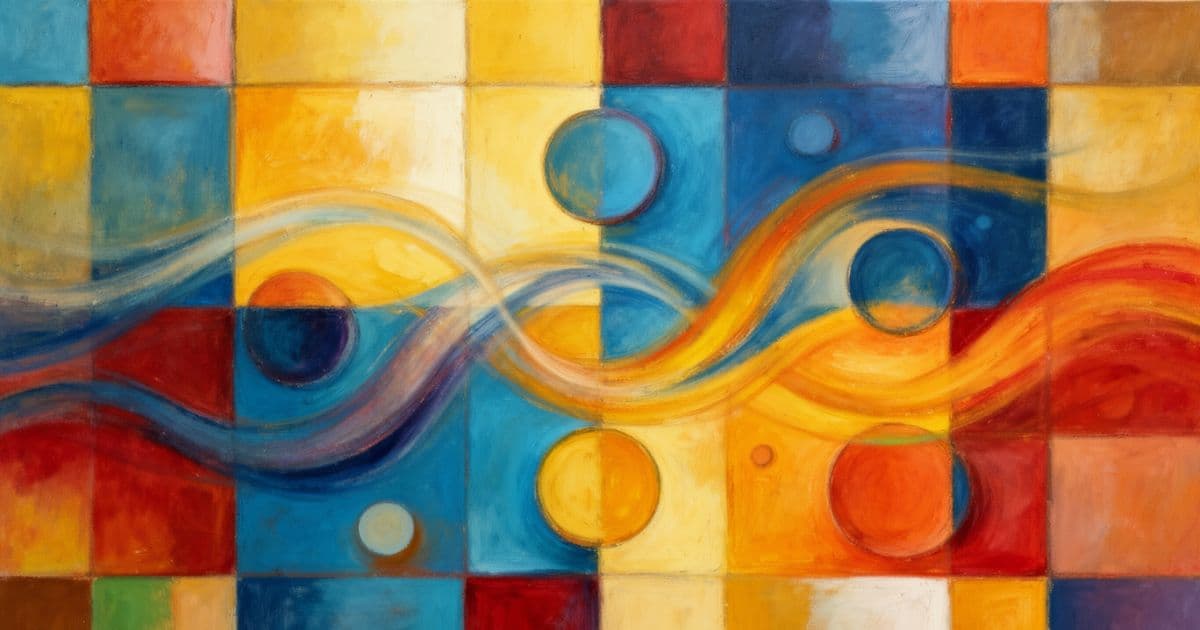
He looked around, as if he was seeing the world for the first time.
Beautiful was the world, colourful was the world, strange and
mysterious was the world! Here was blue, here was yellow, here was
green, the sky and the river flowed, the forest and the mountains were
rigid, all of it was beautiful, all of it was mysterious and magical,
and in its midst was he, Siddhartha, the awakening one, on the path to
himself. All of this, all this yellow and blue, river and forest,
entered Siddhartha for the first time through the eyes, was no longer a
spell of Mara, was no longer the veil of Maya, was no longer a
pointless and coincidental diversity of mere appearances, despicable to
the deeply thinking Brahman, who scorns diversity, who seeks unity.
Blue was blue, river was river, and if also in the blue and the river,
in Siddhartha, the singular and divine lived hidden, so it was still
that very divinity’s way and purpose, to be here yellow, here blue,
there sky, there forest, and here Siddhartha. The purpose and the
essential properties were not somewhere behind the things, they were in
them, in everything.
“How deaf and stupid have I been!” he thought, walking swiftly along.
“When someone reads a text, wants to discover its meaning, he will not
scorn the symbols and letters and call them deceptions, coincidence,
and worthless hull, but he will read them, he will study and love them,
letter by letter. But I, who wanted to read the book of the world and
the book of my own being, I have, for the sake of a meaning I had
anticipated before I read, scorned the symbols and letters, I called
the visible world a deception, called my eyes and my tongue
coincidental and worthless forms without substance. No, this is over, I
have awakened, I have indeed awakened and have not been born before
this very day.”
In thinking these thoughts, Siddhartha stopped once again, suddenly, as
if there was a snake lying in front of him on the path.
Because suddenly, he had also become aware of this: He, who was indeed
like someone who had just woken up or like a new-born baby, he had to
start his life anew and start again at the very beginning. When he had
left in this very morning from the grove Jetavana, the grove of that
exalted one, already awakening, already on the path towards himself, he
had every intention, regarded as natural and took for granted, that he,
after years as an ascetic, would return to his home and his father. But
now, only in this moment, when he stopped as if a snake was lying on
his path, he also awoke to this realization: “But I am no longer the
one I was, I am no ascetic any more, I am not a priest any more, I am
no Brahman any more. Whatever should I do at home and at my father’s
place? Study? Make offerings? Practise meditation? But all this is
over, all of this is no longer alongside my path.”
Motionless, Siddhartha remained standing there, and for the time of one
moment and breath, his heart felt cold, he felt a cold in his chest, as
a small animal, a bird or a rabbit, would when seeing how alone he was.
For many years, he had been without home and had felt nothing. Now, he
felt it. Still, even in the deepest meditation, he had been his
father’s son, had been a Brahman, of a high caste, a cleric. Now, he
was nothing but Siddhartha, the awoken one, nothing else was left.
Deeply, he inhaled, and for a moment, he felt cold and shivered. Nobody
was thus alone as he was. There was no nobleman who did not belong to
the noblemen, no worker that did not belong to the workers, and found
refuge with them, shared their life, spoke their language. No Brahman,
who would not be regarded as Brahmans and lived with them, no ascetic
who would not find his refuge in the caste of the Samanas, and even the
most forlorn hermit in the forest was not just one and alone, he was
also surrounded by a place he belonged to, he also belonged to a caste,
in which he was at home. Govinda had become a monk, and a thousand
monks were his brothers, wore the same robe as he, believed in his
faith, spoke his language. But he, Siddhartha, where did he belong to?
With whom would he share his life? Whose language would he speak?
Out of this moment, when the world melted away all around him, when he
stood alone like a star in the sky, out of this moment of a cold and
despair, Siddhartha emerged, more a self than before, more firmly
concentrated. He felt: This had been the last tremor of the awakening,
the last struggle of this birth. And it was not long until he walked
again in long strides, started to proceed swiftly and impatiently,
heading no longer for home, no longer to his father, no longer back.
SECOND PART
Dedicated to Wilhelm Gundert, my cousin in Japan
Master this chapter. Complete your experience
Purchase the complete book to access all chapters and support classic literature
As an Amazon Associate, we earn a small commission from qualifying purchases at no additional cost to you.
Available in paperback, hardcover, and e-book formats
Let's Analyse the Pattern
Using external pursuits and noble goals as ways to avoid confronting and accepting who you really are.
Why This Matters
Connect literature to life
This chapter teaches how to recognize when self-improvement activities are actually sophisticated forms of self-avoidance.
Practice This Today
This week, notice when you feel the urge to start something new—ask yourself: 'Am I moving toward growth or running from discomfort?'
Now let's explore the literary elements.
Key Quotes & Analysis
"He realized that one thing had left him, as a snake is left by its old skin, that one thing no longer existed in him which had accompanied him throughout his youth: the wish to have teachers and to listen to teachings."
Context: As Siddhartha walks away from Buddha and reflects on his transformation
This marks the end of Siddhartha's dependence on external authority. The snake metaphor shows this is a natural process of growth, not rebellion. He's outgrown the need for others to tell him how to live.
In Today's Words:
He finally stopped looking for someone else to give him the answers and realized he had to figure it out himself.
"But what is this, what you have sought to learn from teachings and from teachers, and what they, who have taught you much, were still unable to teach you?"
Context: As he questions what he's been missing in all his spiritual education
This is the key question that leads to his awakening. He realizes that self-knowledge cannot be taught - it must be experienced directly. All his learning was about everything except himself.
In Today's Words:
What is it that I've been trying to learn that no one else can actually teach me?
"I was afraid of myself, I was fleeing from myself! I searched Atman, I searched Brahman, I was willing to dissect myself and peel off all its layers, to find the core of all peels in its unknown interior, the Atman, life, the divine part, the ultimate part. But I have lost myself in the process."
Context: His moment of complete self-realization about his years of spiritual seeking
The brutal honesty of recognizing that all his spiritual practices were sophisticated forms of self-avoidance. He was so busy trying to find his 'higher self' that he lost touch with his actual self.
In Today's Words:
I was so scared of who I really was that I kept trying to become someone else, and I lost myself in the process.
Thematic Threads
Identity
In This Chapter
Siddhartha realizes he's been defining himself by what he's seeking rather than who he is
Development
Evolved from earlier questioning of inherited identity to complete self-confrontation
In Your Life:
You might recognize this when you realize you don't know who you are without your job title or role.
Isolation
In This Chapter
Siddhartha faces the terror of belonging to no group or category
Development
Introduced here as the price of authentic self-discovery
In Your Life:
You might feel this when making choices that separate you from family or peer expectations.
Awakening
In This Chapter
The world becomes vivid and real rather than something to transcend
Development
Represents the culmination of his spiritual seeking
In Your Life:
You might experience this when you stop trying to be someone else and start appreciating what's actually here.
Self-Determination
In This Chapter
Choosing uncertainty and authenticity over security and conformity
Development
Built from earlier acts of leaving comfort zones
In Your Life:
You face this choice every time you have to pick between what's expected and what feels true.
Fear
In This Chapter
The terrifying realization that he no longer fits any established category
Development
Introduced as the emotional cost of genuine independence
In Your Life:
You might feel this panic when you realize you're truly on your own to figure things out.
You now have the context. Time to form your own thoughts.
Discussion Questions
- 1
What does Siddhartha realize he's been doing his whole life instead of truly knowing himself?
analysis • surface - 2
Why does Siddhartha suddenly see the world differently - colors more vivid, nature more real - after his awakening?
analysis • medium - 3
Where do you see people today using 'noble' pursuits - education, career advancement, activism, even parenting - to avoid facing who they really are?
application • medium - 4
How would you handle the terrifying moment Siddhartha faces - realizing you don't belong to any group or category and must face life completely on your own terms?
application • deep - 5
What does this chapter suggest about the difference between genuine growth and elaborate self-avoidance?
reflection • deep
Critical Thinking Exercise
Map Your Escape Routes
Create an honest inventory of how you might be using seemingly positive activities to avoid confronting who you really are. List three current pursuits in your life - work goals, hobbies, causes, relationships, or self-improvement projects. For each one, ask yourself: 'Am I doing this to become someone, or to avoid being myself?' Look for patterns in how you stay busy versus how you create space for uncomfortable self-honesty.
Consider:
- •The most noble-seeming activities can be the most effective escape routes
- •Self-avoidance often disguises itself as self-improvement
- •Recognizing the pattern doesn't mean abandoning the activity - it means approaching it with different awareness
Journaling Prompt
Write about a time when you realized you were using a goal or activity to avoid dealing with something deeper about yourself. What were you really running from, and what happened when you stopped running?
Coming Up Next...
Chapter 5: Awakening to Beauty and Desire
Siddhartha enters the material world for the first time, where he will encounter Kamala, a beautiful courtesan who will teach him about love, desire, and the pleasures he's never experienced. His spiritual journey takes an unexpected turn into the realm of the senses.