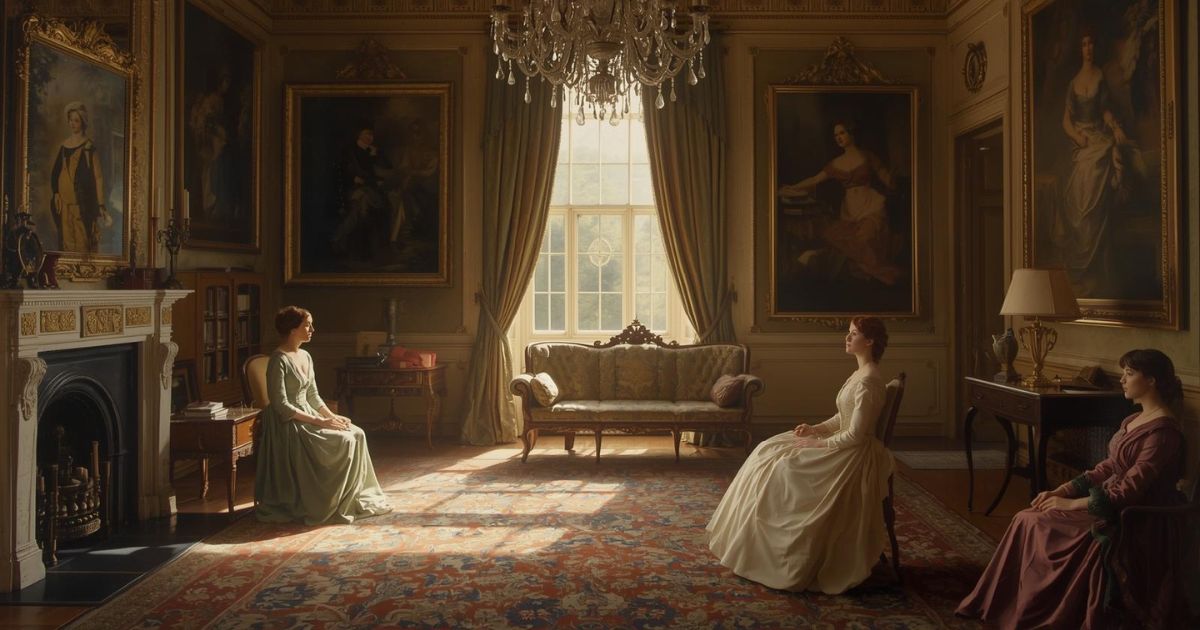
An excerpt from the original text.(complete · 1343 words)
he first part of their journey was performed in too melancholy a
disposition to be otherwise than tedious and unpleasant. But as they
drew towards the end of it, their interest in the appearance of a
country which they were to inhabit overcame their dejection, and a view
of Barton Valley as they entered it gave them cheerfulness. It was a
pleasant fertile spot, well wooded, and rich in pasture. After winding
along it for more than a mile, they reached their own house. A small
green court was the whole of its demesne in front; and a neat wicket
gate admitted them into it.
As a house, Barton Cottage, though small, was comfortable and compact;
but as a cottage it was defective, for the building was regular, the
roof was tiled, the window shutters were not painted green, nor were
the walls covered with honeysuckles. A narrow passage led directly
through the house into the garden behind. On each side of the entrance
was a sitting room, about sixteen feet square; and beyond them were the
offices and the stairs. Four bed-rooms and two garrets formed the rest
of the house. It had not been built many years and was in good repair.
In comparison of Norland, it was poor and small indeed!—but the tears
which recollection called forth as they entered the house were soon
dried away. They were cheered by the joy of the servants on their
arrival, and each for the sake of the others resolved to appear happy.
It was very early in September; the season was fine, and from first
seeing the place under the advantage of good weather, they received an
impression in its favour which was of material service in recommending
it to their lasting approbation.
The situation of the house was good. High hills rose immediately
behind, and at no great distance on each side; some of which were open
downs, the others cultivated and woody. The village of Barton was
chiefly on one of these hills, and formed a pleasant view from the
cottage windows. The prospect in front was more extensive; it commanded
the whole of the valley, and reached into the country beyond. The hills
which surrounded the cottage terminated the valley in that direction;
under another name, and in another course, it branched out again
between two of the steepest of them.
With the size and furniture of the house Mrs. Dashwood was upon the
whole well satisfied; for though her former style of life rendered many
additions to the latter indispensable, yet to add and improve was a
delight to her; and she had at this time ready money enough to supply
all that was wanted of greater elegance to the apartments. “As for the
house itself, to be sure,” said she, “it is too small for our family,
but we will make ourselves tolerably comfortable for the present, as it
is too late in the year for improvements. Perhaps in the spring, if I
have plenty of money, as I dare say I shall, we may think about
building. These parlors are both too small for such parties of our
friends as I hope to see often collected here; and I have some thoughts
of throwing the passage into one of them with perhaps a part of the
other, and so leave the remainder of that other for an entrance; this,
with a new drawing room which may be easily added, and a bed-chamber
and garret above, will make it a very snug little cottage. I could wish
the stairs were handsome. But one must not expect every thing; though I
suppose it would be no difficult matter to widen them. I shall see how
much I am before-hand with the world in the spring, and we will plan
our improvements accordingly.”
In the mean time, till all these alterations could be made from the
savings of an income of five hundred a-year by a woman who never saved
in her life, they were wise enough to be contented with the house as it
was; and each of them was busy in arranging their particular concerns,
and endeavoring, by placing around them books and other possessions, to
form themselves a home. Marianne’s pianoforte was unpacked and properly
disposed of; and Elinor’s drawings were affixed to the walls of their
sitting room.
In such employments as these they were interrupted soon after breakfast
the next day by the entrance of their landlord, who called to welcome
them to Barton, and to offer them every accommodation from his own
house and garden in which theirs might at present be deficient. Sir
John Middleton was a good looking man about forty. He had formerly
visited at Stanhill, but it was too long for his young cousins to
remember him. His countenance was thoroughly good-humoured; and his
manners were as friendly as the style of his letter. Their arrival
seemed to afford him real satisfaction, and their comfort to be an
object of real solicitude to him. He said much of his earnest desire of
their living in the most sociable terms with his family, and pressed
them so cordially to dine at Barton Park every day till they were
better settled at home, that, though his entreaties were carried to a
point of perseverance beyond civility, they could not give offence. His
kindness was not confined to words; for within an hour after he left
them, a large basket full of garden stuff and fruit arrived from the
park, which was followed before the end of the day by a present of
game. He insisted, moreover, on conveying all their letters to and from
the post for them, and would not be denied the satisfaction of sending
them his newspaper every day.
Lady Middleton had sent a very civil message by him, denoting her
intention of waiting on Mrs. Dashwood as soon as she could be assured
that her visit would be no inconvenience; and as this message was
answered by an invitation equally polite, her ladyship was introduced
to them the next day.
They were, of course, very anxious to see a person on whom so much of
their comfort at Barton must depend; and the elegance of her appearance
was favourable to their wishes. Lady Middleton was not more than six or
seven and twenty; her face was handsome, her figure tall and striking,
and her address graceful. Her manners had all the elegance which her
husband’s wanted. But they would have been improved by some share of
his frankness and warmth; and her visit was long enough to detract
something from their first admiration, by showing that, though
perfectly well-bred, she was reserved, cold, and had nothing to say for
herself beyond the most common-place inquiry or remark.
Conversation however was not wanted, for Sir John was very chatty, and
Lady Middleton had taken the wise precaution of bringing with her their
eldest child, a fine little boy about six years old, by which means
there was one subject always to be recurred to by the ladies in case of
extremity, for they had to enquire his name and age, admire his beauty,
and ask him questions which his mother answered for him, while he hung
about her and held down his head, to the great surprise of her
ladyship, who wondered at his being so shy before company, as he could
make noise enough at home. On every formal visit a child ought to be of
the party, by way of provision for discourse. In the present case it
took up ten minutes to determine whether the boy were most like his
father or mother, and in what particular he resembled either, for of
course every body differed, and every body was astonished at the
opinion of the others.
An opportunity was soon to be given to the Dashwoods of debating on the
rest of the children, as Sir John would not leave the house without
securing their promise of dining at the park the next day.
Master this chapter. Complete your experience
Purchase the complete book to access all chapters and support classic literature
As an Amazon Associate, we earn a small commission from qualifying purchases at no additional cost to you.
Available in paperback, hardcover, and e-book formats
Let's Analyse the Pattern
When genuine desire to help becomes burdensome because the helper projects their own needs rather than listening to what's actually needed.
Why This Matters
Connect literature to life
This chapter teaches how to recognize when someone's assistance serves their emotional needs more than yours.
Practice This Today
This week, notice when someone offers help—ask yourself whether they're listening to what you need or projecting what they think you should need.
Now let's explore the literary elements.
Key Quotes & Analysis
"As a house, Barton Cottage, though small, was comfortable and compact; but as a cottage it was defective, for the building was regular, the roof was tiled, the window shutters were not painted green, nor were the walls covered with honeysuckles."
Context: Describing the Dashwoods' new home and Marianne's disappointment with its ordinary appearance
This shows how expectations shape our satisfaction. Marianne wanted a romantic, picturesque cottage from her novels, but got a practical, normal house. The gap between fantasy and reality becomes a source of unhappiness.
In Today's Words:
The house was fine, but it didn't look like the cute cottages you see on Pinterest
"Sir John was a sporting man, a man of the world, and lived in the style of a country gentleman."
Context: Introducing Sir John's character and social position
This establishes Sir John as someone with leisure time and social confidence. His comfortable position allows him to be generous, but also means he might not understand others' struggles.
In Today's Words:
Sir John was the kind of guy who had money, free time, and was used to being the center of attention
"The whole country about them abounded in beautiful walks. The high downs which invited them from almost every window of the cottage to seek the exquisite enjoyment of air on their summits, were a happy alternative when the dirt of the valleys beneath shut up their superior beauties."
Context: Describing the natural beauty surrounding their new home
Austen shows that beauty and happiness don't require wealth - nature is free and accessible. This suggests that the sisters can find contentment in their new situation if they adjust their expectations.
In Today's Words:
The area had gorgeous hiking trails and amazing views that you could see right from the house - perfect for getting outside when you needed fresh air
Thematic Threads
Class
In This Chapter
The stark contrast between Norland's grandeur and Barton Cottage's simplicity forces the women to confront their new social position
Development
Evolved from abstract financial worries to concrete daily reality of reduced circumstances
In Your Life:
You might feel this when downsizing homes, changing jobs, or when your financial situation shifts and affects your social interactions
Social Expectations
In This Chapter
Sir John expects the Dashwoods to be grateful for his constant social invitations and doesn't recognize they might want privacy
Development
Building on earlier themes of how society expects women to be perpetually available and gracious
In Your Life:
You see this when people expect you to be constantly social or available, not understanding that saying no doesn't mean you're ungrateful
Identity
In This Chapter
Marianne struggles to reconcile her romantic self-image with the reality of cottage life, while Elinor adapts more pragmatically
Development
Deepening the contrast between the sisters' approaches to change established in earlier chapters
In Your Life:
You experience this when major life changes force you to question who you are versus who you thought you were
Personal Growth
In This Chapter
Elinor demonstrates emotional intelligence by managing both her own feelings and protecting her family from additional stress
Development
Showing Elinor's emerging role as the family's emotional anchor and practical problem-solver
In Your Life:
You might recognize this when you find yourself being the 'strong one' who handles crisis while others fall apart
Human Relationships
In This Chapter
The chapter explores how good intentions don't always translate to helpful actions, and how dependency affects social dynamics
Development
Introduced here as a key theme about the complexity of accepting help and managing relationships across class differences
In Your Life:
You see this in any relationship where someone's help comes with strings attached or expectations that make you uncomfortable
You now have the context. Time to form your own thoughts.
Discussion Questions
- 1
How do Elinor and Marianne each handle their family's move from wealth to modest circumstances, and what does this reveal about their personalities?
analysis • surface - 2
Why does Sir John Middleton's constant invitations and help create stress for the Dashwood women, even though his intentions are good?
analysis • medium - 3
Think about someone in your life who 'helps' in overwhelming ways. What drives them to offer more assistance than you actually want or need?
application • medium - 4
When someone offers help that feels more burdensome than beneficial, how could you respond in a way that protects your boundaries while acknowledging their good intentions?
application • deep - 5
What does this chapter suggest about the difference between helping someone and truly supporting them during a difficult transition?
reflection • deep
Critical Thinking Exercise
Map Your Help Network
Draw a simple map of the people in your life who offer help during tough times. For each person, note whether their help typically makes your life easier or adds pressure. Then identify what type of support you actually need most when you're struggling - practical assistance, emotional space, someone to listen, or something else entirely.
Consider:
- •Consider whether the 'helpful' people in your life ask what you need or assume they know
- •Think about whether their help comes with expectations or strings attached
- •Notice if certain people's assistance requires you to manage their emotions about your situation
Journaling Prompt
Write about a time when someone's well-meaning help became overwhelming. What did you actually need in that moment, and how could you communicate that more clearly in the future?
Coming Up Next...
Chapter 7: Edward Arrives
The social whirlwind intensifies as Sir John insists on proper introductions to his family circle. Marianne is about to meet someone who will challenge everything she believes about love and romance.