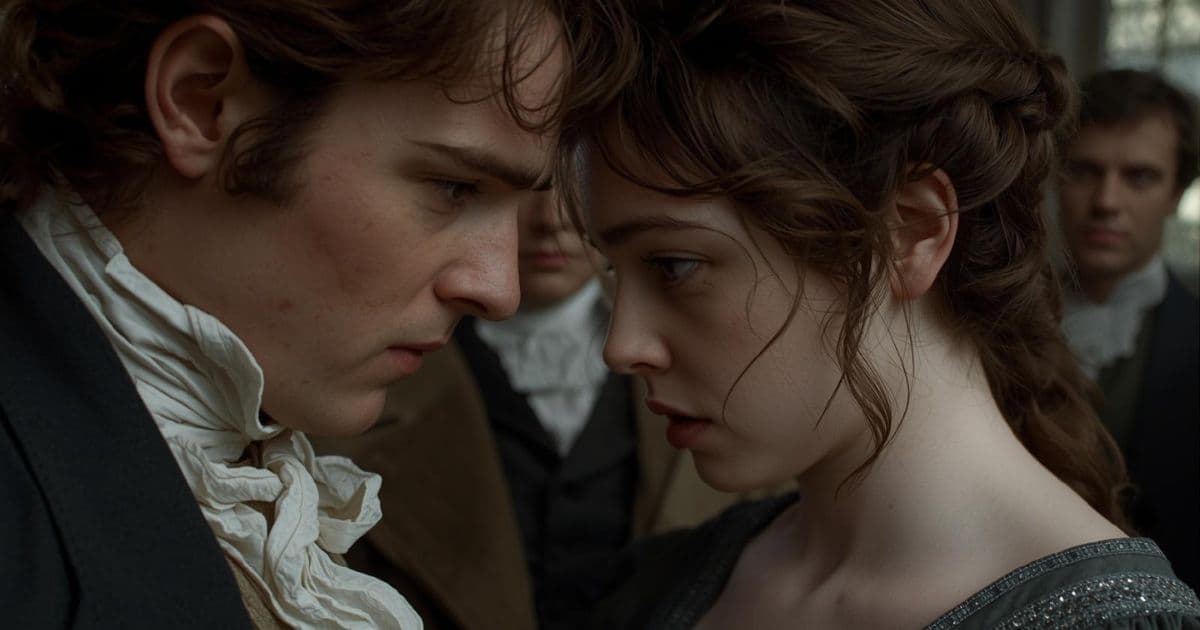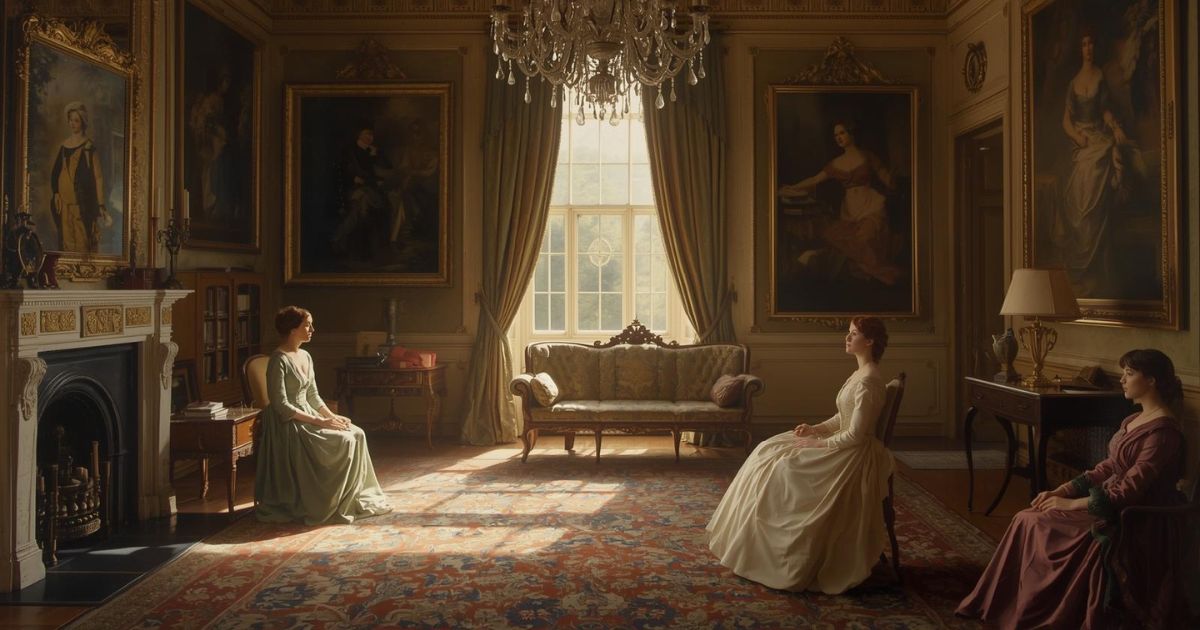
An excerpt from the original text.(complete · 1282 words)
VIII.
Elinor now found the difference between the expectation of an
unpleasant event, however certain the mind may be told to consider it,
and certainty itself. She now found, that in spite of herself, she had
always admitted a hope, while Edward remained single, that something
would occur to prevent his marrying Lucy; that some resolution of his
own, some mediation of friends, or some more eligible opportunity of
establishment for the lady, would arise to assist the happiness of all.
But he was now married; and she condemned her heart for the lurking
flattery, which so much heightened the pain of the intelligence.
That he should be married soon, before (as she imagined) he could be in
orders, and consequently before he could be in possession of the
living, surprised her a little at first. But she soon saw how likely it
was that Lucy, in her self-provident care, in her haste to secure him,
should overlook every thing but the risk of delay. They were married,
married in town, and now hastening down to her uncle’s. What had Edward
felt on being within four miles from Barton, on seeing her mother’s
servant, on hearing Lucy’s message!
They would soon, she supposed, be settled at Delaford.—Delaford,—that
place in which so much conspired to give her an interest; which she
wished to be acquainted with, and yet desired to avoid. She saw them in
an instant in their parsonage-house; saw in Lucy, the active,
contriving manager, uniting at once a desire of smart appearance with
the utmost frugality, and ashamed to be suspected of half her
economical practices;—pursuing her own interest in every thought,
courting the favour of Colonel Brandon, of Mrs. Jennings, and of every
wealthy friend. In Edward—she knew not what she saw, nor what she
wished to see;—happy or unhappy,—nothing pleased her; she turned away
her head from every sketch of him.
Elinor flattered herself that some one of their connections in London
would write to them to announce the event, and give farther
particulars,—but day after day passed off, and brought no letter, no
tidings. Though uncertain that any one were to blame, she found fault
with every absent friend. They were all thoughtless or indolent.
“When do you write to Colonel Brandon, ma’am?” was an inquiry which
sprung from the impatience of her mind to have something going on.
“I wrote to him, my love, last week, and rather expect to see, than to
hear from him again. I earnestly pressed his coming to us, and should
not be surprised to see him walk in today or tomorrow, or any day.”
This was gaining something, something to look forward to. Colonel
Brandon must have some information to give.
Scarcely had she so determined it, when the figure of a man on
horseback drew her eyes to the window. He stopt at their gate. It was a
gentleman, it was Colonel Brandon himself. Now she could hear more; and
she trembled in expectation of it. But it was not Colonel Brandon;
neither his air, nor his height. Were it possible, she must say it must
be Edward. She looked again. He had just dismounted: she could not be
mistaken,—it was Edward. She moved away and sat down. “He comes from
Mr. Pratt’s purposely to see us. I will be calm; I will be mistress
of myself.”
In a moment she perceived that the others were likewise aware of the
mistake. She saw her mother and Marianne change colour; saw them look
at herself, and whisper a few sentences to each other. She would have
given the world to be able to speak—and to make them understand that
she hoped no coolness, no slight, would appear in their behaviour to
him;—but she had no utterance, and was obliged to leave all to their
own discretion.
Not a syllable passed aloud. They all waited in silence for the
appearance of their visitor. His footsteps were heard along the gravel
path; in a moment he was in the passage, and in another he was before
them.
His countenance, as he entered the room, was not too happy, even for
Elinor. His complexion was white with agitation, and he looked as if
fearful of his reception, and conscious that he merited no kind one.
Mrs. Dashwood, however, conforming, as she trusted, to the wishes of
that daughter, by whom she then meant in the warmth of her heart to be
guided in every thing, met him with a look of forced complacency, gave
him her hand, and wished him joy.
He coloured, and stammered out an unintelligible reply. Elinor’s lips
had moved with her mother’s, and, when the moment of action was over,
she wished that she had shaken hands with him too. But it was then too
late, and with a countenance meaning to be open, she sat down again and
talked of the weather.
Marianne had retreated as much as possible out of sight, to conceal her
distress; and Margaret, understanding some part, but not the whole of
the case, thought it incumbent on her to be dignified, and therefore
took a seat as far from him as she could, and maintained a strict
silence.
When Elinor had ceased to rejoice in the dryness of the season, a very
awful pause took place. It was put an end to by Mrs. Dashwood, who felt
obliged to hope that he had left Mrs. Ferrars very well. In a hurried
manner, he replied in the affirmative.
Another pause.
Elinor resolving to exert herself, though fearing the sound of her own
voice, now said,
“Is Mrs. Ferrars at Longstaple?”
“At Longstaple!” he replied, with an air of surprise. “No, my mother is
in town.”
“I meant,” said Elinor, taking up some work from the table, “to enquire
for Mrs. Edward Ferrars.”
She dared not look up;—but her mother and Marianne both turned their
eyes on him. He coloured, seemed perplexed, looked doubtingly, and,
after some hesitation, said,—
“Perhaps you mean—my brother—you mean Mrs.—Mrs. Robert Ferrars.”
“Mrs. Robert Ferrars!” was repeated by Marianne and her mother in an
accent of the utmost amazement; and though Elinor could not speak, even
her eyes were fixed on him with the same impatient wonder. He rose
from his seat, and walked to the window, apparently from not knowing
what to do; took up a pair of scissors that lay there, and while
spoiling both them and their sheath by cutting the latter to pieces as
he spoke, said, in a hurried voice,—
“Perhaps you do not know: you may not have heard that my brother is
lately married to—to the youngest—to Miss Lucy Steele.”
His words were echoed with unspeakable astonishment by all but Elinor,
who sat with her head leaning over her work, in a state of such
agitation as made her hardly know where she was.
“Yes,” said he, “they were married last week, and are now at Dawlish.”
Elinor could sit it no longer. She almost ran out of the room, and as
soon as the door was closed, burst into tears of joy, which at first
she thought would never cease. Edward, who had till then looked any
where, rather than at her, saw her hurry away, and perhaps saw—or even
heard, her emotion; for immediately afterwards he fell into a reverie,
which no remarks, no inquiries, no affectionate address of Mrs.
Dashwood could penetrate, and at last, without saying a word, quitted
the room, and walked out towards the village—leaving the others in the
greatest astonishment and perplexity on a change in his situation, so
wonderful and so sudden;—a perplexity which they had no means of
lessening but by their own conjectures.
Master this chapter. Complete your experience
Purchase the complete book to access all chapters and support classic literature
As an Amazon Associate, we earn a small commission from qualifying purchases at no additional cost to you.
Available in paperback, hardcover, and e-book formats
Let's Analyse the Pattern
Waiting for authentic opportunities while maintaining integrity often yields better outcomes than grabbing convenient but ill-fitting options.
Why This Matters
Connect literature to life
This chapter teaches how to distinguish between relationships or situations that genuinely fit versus those we force ourselves into from obligation or convenience.
Practice This Today
This week, notice when interactions feel natural versus forced—pay attention to which conversations energize you and which drain you, then adjust your time accordingly.
Now let's explore the literary elements.
Key Quotes & Analysis
"I have never been so happy in my life before."
Context: When he tells Elinor about being freed from his engagement to Lucy
This simple statement shows how miserable Edward was in the wrong relationship. His happiness comes not from gaining something new, but from being released from something that never fit.
In Today's Words:
I feel like I can finally breathe again
"Your brother has quite conquered her."
Context: Explaining how Lucy chose Robert over him
Edward recognizes that Lucy was always motivated by status and money. Robert's wealth and social position made him the better catch in her eyes.
In Today's Words:
She upgraded to the brother with more money
"I was simple enough to think, that because my faith was plighted to another, there could be no danger in my being with you."
Context: Confessing to Elinor why he spent time with her despite being engaged
Edward admits he was fooling himself about his feelings. He thought his engagement would protect him from falling for Elinor, but real attraction doesn't work that way.
In Today's Words:
I thought having a girlfriend meant I couldn't catch feelings for you - I was wrong
Thematic Threads
Authenticity
In This Chapter
Edward's relief at being freed from an engagement that never felt right to him
Development
Evolved from earlier hints about his discomfort with Lucy to full revelation of the mismatch
In Your Life:
You might recognize this when you feel constant tension in a job, relationship, or situation that looks good on paper but feels wrong inside.
Patience
In This Chapter
Elinor's quiet waiting and Edward's endurance both rewarded with genuine connection
Development
Built throughout the novel as Elinor consistently chooses steady hope over dramatic action
In Your Life:
You see this when rushing into decisions leads to regret, while careful timing leads to better outcomes.
Class
In This Chapter
Edward's freedom from Lucy removes the class barrier that complicated their relationship
Development
Continued exploration of how social positioning affects romantic possibilities
In Your Life:
You might notice how economic or social differences create real obstacles in relationships, requiring practical navigation.
Recognition
In This Chapter
Marianne observing Edward and Elinor's steady love and understanding its value compared to passion
Development
Marianne's growing wisdom about different types of love and attachment
In Your Life:
You experience this when you start recognizing the difference between exciting relationships and sustainable ones.
Communication
In This Chapter
Edward and Elinor's careful, meaningful exchanges where every word carries weight
Development
Consistent pattern of their relationship built on understanding rather than drama
In Your Life:
You see this in relationships where you can communicate complex feelings without having to spell everything out.
You now have the context. Time to form your own thoughts.
Discussion Questions
- 1
What news does Edward bring that changes everything for him and Elinor?
analysis • surface - 2
Why do you think Lucy chose to marry Robert instead of Edward, and what does this reveal about her true motivations?
analysis • medium - 3
Where have you seen people stay in situations that don't fit them out of obligation or fear? What usually happens?
application • medium - 4
If you were advising someone trapped in a commitment that feels wrong, how would you help them navigate their options while maintaining their integrity?
application • deep - 5
What does Edward and Elinor's relationship teach us about the difference between authentic connection and convenient arrangements?
reflection • deep
Critical Thinking Exercise
Map Your Authentic Alignment
Think about a current situation in your life - job, relationship, living arrangement, or commitment. Draw two columns: 'Fits My True Self' and 'Feels Forced or Wrong.' List specific aspects of this situation in each column. Then identify one small step you could take to move toward better alignment without abandoning your responsibilities.
Consider:
- •Consider whether you're staying out of genuine commitment or just fear of change
- •Look for signs of internal tension or energy drain as indicators of poor fit
- •Remember that authentic alignment often requires patience and strategic positioning
Journaling Prompt
Write about a time when you waited for the right opportunity instead of settling for what was available. What did that patience teach you about yourself and what you truly wanted?
Coming Up Next...
Chapter 49: Settled at Delaford
With Edward free from his previous obligations, the path seems clear for him and Elinor - but will they finally find the courage to speak their hearts? Meanwhile, the implications of Lucy's surprising choice ripple through both families.