An excerpt from the original text.(complete · 2604 words)
.
“Well, Miss Dashwood,” said Mrs. Jennings, sagaciously smiling, as soon
as the gentleman had withdrawn, “I do not ask you what the Colonel has
been saying to you; for though, upon my honour, I tried to keep out
of hearing, I could not help catching enough to understand his
business. And I assure you I never was better pleased in my life, and I
wish you joy of it with all my heart.”
“Thank you, ma’am,” said Elinor. “It is a matter of great joy to me;
and I feel the goodness of Colonel Brandon most sensibly. There are not
many men who would act as he has done. Few people who have so
compassionate a heart! I never was more astonished in my life.”
“Lord! my dear, you are very modest. I an’t the least astonished at it
in the world, for I have often thought of late, there was nothing more
likely to happen.”
“You judged from your knowledge of the Colonel’s general benevolence;
but at least you could not foresee that the opportunity would so very
soon occur.”
“Opportunity!” repeated Mrs. Jennings—“Oh! as to that, when a man has
once made up his mind to such a thing, somehow or other he will soon
find an opportunity. Well, my dear, I wish you joy of it again and
again; and if ever there was a happy couple in the world, I think I
shall soon know where to look for them.”
“You mean to go to Delaford after them I suppose,” said Elinor, with a
faint smile.
“Aye, my dear, that I do, indeed. And as to the house being a bad one,
I do not know what the Colonel would be at, for it is as good a one as
ever I saw.”
“He spoke of its being out of repair.”
“Well, and whose fault is that? why don’t he repair it?—who should do
it but himself?”
They were interrupted by the servant’s coming in to announce the
carriage being at the door; and Mrs. Jennings immediately preparing to
go, said,—
“Well, my dear, I must be gone before I have had half my talk out. But,
however, we may have it all over in the evening; for we shall be quite
alone. I do not ask you to go with me, for I dare say your mind is too
full of the matter to care for company; and besides, you must long to
tell your sister all about it.”
Marianne had left the room before the conversation began.
“Certainly, ma’am, I shall tell Marianne of it; but I shall not mention
it at present to any body else.”
“Oh! very well,” said Mrs. Jennings rather disappointed. “Then you
would not have me tell it to Lucy, for I think of going as far as
Holborn to-day.”
“No, ma’am, not even Lucy if you please. One day’s delay will not be
very material; and till I have written to Mr. Ferrars, I think it ought
not to be mentioned to any body else. I shall do that directly. It is
of importance that no time should be lost with him, for he will of
course have much to do relative to his ordination.”
This speech at first puzzled Mrs. Jennings exceedingly. Why Mr. Ferrars
was to have been written to about it in such a hurry, she could not
immediately comprehend. A few moments’ reflection, however, produced a
very happy idea, and she exclaimed;—
“Oh, ho!—I understand you. Mr. Ferrars is to be the man. Well, so much
the better for him. Ay, to be sure, he must be ordained in readiness;
and I am very glad to find things are so forward between you. But, my
dear, is not this rather out of character? Should not the Colonel write
himself?—sure, he is the proper person.”
Elinor did not quite understand the beginning of Mrs. Jennings’s
speech, neither did she think it worth inquiring into; and therefore
only replied to its conclusion.
“Colonel Brandon is so delicate a man, that he rather wished any one to
announce his intentions to Mr. Ferrars than himself.”
“And so you are forced to do it. Well that is an odd kind of
delicacy! However, I will not disturb you (seeing her preparing to
write.) You know your own concerns best. So goodby, my dear. I have not
heard of any thing to please me so well since Charlotte was brought to
bed.”
And away she went; but returning again in a moment,
“I have just been thinking of Betty’s sister, my dear. I should be very
glad to get her so good a mistress. But whether she would do for a
lady’s maid, I am sure I can’t tell. She is an excellent housemaid, and
works very well at her needle. However, you will think of all that at
your leisure.”
“Certainly, ma’am,” replied Elinor, not hearing much of what she said,
and more anxious to be alone, than to be mistress of the subject.
How she should begin—how she should express herself in her note to
Edward, was now all her concern. The particular circumstances between
them made a difficulty of that which to any other person would have
been the easiest thing in the world; but she equally feared to say too
much or too little, and sat deliberating over her paper, with the pen
in her hand, till broken in on by the entrance of Edward himself.
He had met Mrs. Jennings at the door in her way to the carriage, as he
came to leave his farewell card; and she, after apologising for not
returning herself, had obliged him to enter, by saying that Miss
Dashwood was above, and wanted to speak with him on very particular
business.
Elinor had just been congratulating herself, in the midst of her
perplexity, that however difficult it might be to express herself
properly by letter, it was at least preferable to giving the
information by word of mouth, when her visitor entered, to force her
upon this greatest exertion of all. Her astonishment and confusion were
very great on his so sudden appearance. She had not seen him before
since his engagement became public, and therefore not since his knowing
her to be acquainted with it; which, with the consciousness of what she
had been thinking of, and what she had to tell him, made her feel
particularly uncomfortable for some minutes. He too was much
distressed; and they sat down together in a most promising state of
embarrassment.—Whether he had asked her pardon for his intrusion on
first coming into the room, he could not recollect; but determining to
be on the safe side, he made his apology in form as soon as he could
say any thing, after taking a chair.
“Mrs. Jennings told me,” said he, “that you wished to speak with me, at
least I understood her so—or I certainly should not have intruded on
you in such a manner; though at the same time, I should have been
extremely sorry to leave London without seeing you and your sister;
especially as it will most likely be some time—it is not probable that
I should soon have the pleasure of meeting you again. I go to Oxford
tomorrow.”
“You would not have gone, however,” said Elinor, recovering herself,
and determined to get over what she so much dreaded as soon as
possible, “without receiving our good wishes, even if we had not been
able to give them in person. Mrs. Jennings was quite right in what she
said. I have something of consequence to inform you of, which I was on
the point of communicating by paper. I am charged with a most agreeable
office (breathing rather faster than usual as she spoke.) Colonel
Brandon, who was here only ten minutes ago, has desired me to say, that
understanding you mean to take orders, he has great pleasure in
offering you the living of Delaford now just vacant, and only wishes it
were more valuable. Allow me to congratulate you on having so
respectable and well-judging a friend, and to join in his wish that the
living—it is about two hundred a-year—were much more considerable, and
such as might better enable you to—as might be more than a temporary
accommodation to yourself—such, in short, as might establish all your
views of happiness.”
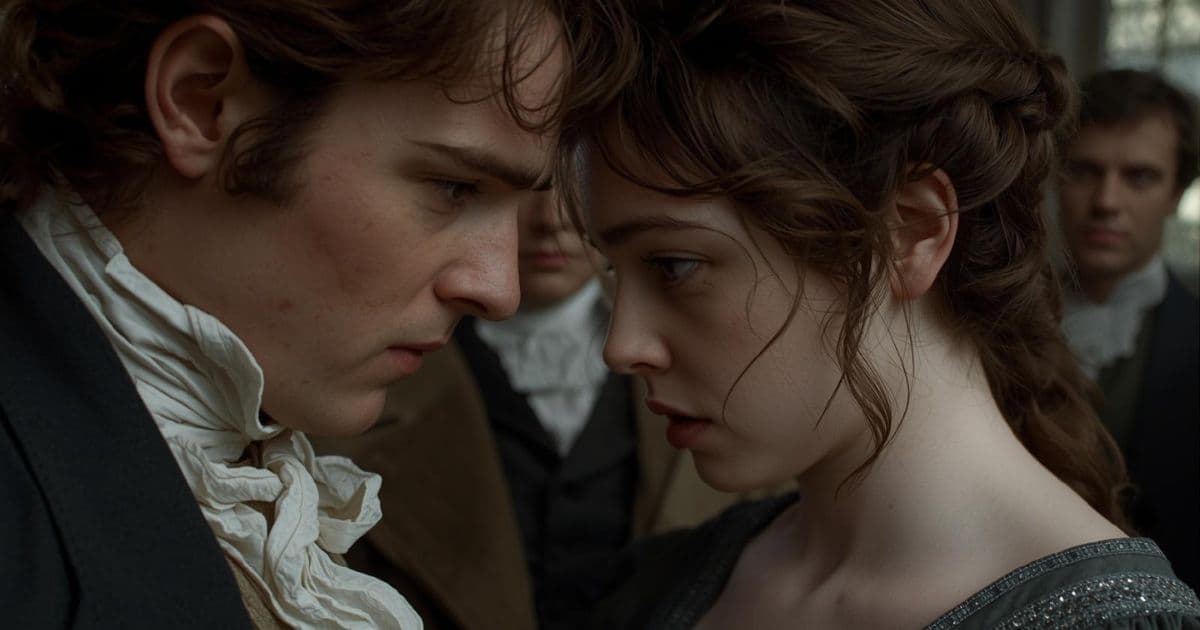
What Edward felt, as he could not say it himself, it cannot be expected
that any one else should say for him. He looked all the astonishment
which such unexpected, such unthought-of information could not fail of
exciting; but he said only these two words,—
“Colonel Brandon!”
“Yes,” continued Elinor, gathering more resolution, as some of the
worst was over, “Colonel Brandon means it as a testimony of his concern
for what has lately passed—for the cruel situation in which the
unjustifiable conduct of your family has placed you—a concern which I
am sure Marianne, myself, and all your friends, must share; and
likewise as a proof of his high esteem for your general character, and
his particular approbation of your behaviour on the present occasion.”
“Colonel Brandon give me a living!—Can it be possible?”
“The unkindness of your own relations has made you astonished to find
friendship any where.”
“No,” replied he, with sudden consciousness, “not to find it in you;
for I cannot be ignorant that to you, to your goodness, I owe it all.—I
feel it—I would express it if I could—but, as you well know, I am no
orator.”
“You are very much mistaken. I do assure you that you owe it entirely,
at least almost entirely, to your own merit, and Colonel Brandon’s
discernment of it. I have had no hand in it. I did not even know, till
I understood his design, that the living was vacant; nor had it ever
occurred to me that he might have had such a living in his gift. As a
friend of mine, of my family, he may, perhaps—indeed I know he has,
still greater pleasure in bestowing it; but, upon my word, you owe
nothing to my solicitation.”
Truth obliged her to acknowledge some small share in the action, but
she was at the same time so unwilling to appear as the benefactress of
Edward, that she acknowledged it with hesitation; which probably
contributed to fix that suspicion in his mind which had recently
entered it. For a short time he sat deep in thought, after Elinor had
ceased to speak;—at last, and as if it were rather an effort, he said,
“Colonel Brandon seems a man of great worth and respectability. I have
always heard him spoken of as such, and your brother I know esteems him
highly. He is undoubtedly a sensible man, and in his manners perfectly
the gentleman.”
“Indeed,” replied Elinor, “I believe that you will find him, on farther
acquaintance, all that you have heard him to be, and as you will be
such very near neighbours (for I understand the parsonage is almost
close to the mansion-house,) it is particularly important that he
should be all this.”
Edward made no answer; but when she had turned away her head, gave her
a look so serious, so earnest, so uncheerful, as seemed to say, that he
might hereafter wish the distance between the parsonage and the
mansion-house much greater.
“Colonel Brandon, I think, lodges in St. James Street,” said he, soon
afterwards, rising from his chair.
Elinor told him the number of the house.
“I must hurry away then, to give him those thanks which you will not
allow me to give you; to assure him that he has made me a very—an
exceedingly happy man.”
Elinor did not offer to detain him; and they parted, with a very
earnest assurance on her side of her unceasing good wishes for his
happiness in every change of situation that might befall him; on his,
with rather an attempt to return the same good will, than the power of
expressing it.
“When I see him again,” said Elinor to herself, as the door shut him
out, “I shall see him the husband of Lucy.”
And with this pleasing anticipation, she sat down to reconsider the
past, recall the words and endeavour to comprehend all the feelings of
Edward; and, of course, to reflect on her own with discontent.
When Mrs. Jennings came home, though she returned from seeing people
whom she had never seen before, and of whom therefore she must have a
great deal to say, her mind was so much more occupied by the important
secret in her possession, than by anything else, that she reverted to
it again as soon as Elinor appeared.
“Well, my dear,” she cried, “I sent you up the young man. Did not I do
right?—And I suppose you had no great difficulty—You did not find him
very unwilling to accept your proposal?”
“No, ma’am; that was not very likely.”
“Well, and how soon will he be ready?—For it seems all to depend upon
that.”
“Really,” said Elinor, “I know so little of these kind of forms, that I
can hardly even conjecture as to the time, or the preparation
necessary; but I suppose two or three months will complete his
ordination.”
“Two or three months!” cried Mrs. Jennings; “Lord! my dear, how calmly
you talk of it; and can the Colonel wait two or three months! Lord
bless me!—I am sure it would put me quite out of patience!—And though
one would be very glad to do a kindness by poor Mr. Ferrars, I do think
it is not worth while to wait two or three months for him. Sure
somebody else might be found that would do as well; somebody that is in
orders already.”
“My dear ma’am,” said Elinor, “what can you be thinking of? Why,
Colonel Brandon’s only object is to be of use to Mr. Ferrars.”
“Lord bless you, my dear! Sure you do not mean to persuade me that the
Colonel only marries you for the sake of giving ten guineas to Mr.
Ferrars!”
The deception could not continue after this; and an explanation
immediately took place, by which both gained considerable amusement for
the moment, without any material loss of happiness to either, for Mrs.
Jennings only exchanged one form of delight for another, and still
without forfeiting her expectation of the first.
“Aye, aye, the parsonage is but a small one,” said she, after the first
ebullition of surprise and satisfaction was over, “and very likely
may be out of repair; but to hear a man apologising, as I thought,
for a house that to my knowledge has five sitting rooms on the
ground-floor, and I think the housekeeper told me could make up fifteen
beds! and to you too, that had been used to live in Barton cottage! It
seems quite ridiculous. But, my dear, we must touch up the Colonel to
do some thing to the parsonage, and make it comfortable for them,
before Lucy goes to it.”
“But Colonel Brandon does not seem to have any idea of the living’s
being enough to allow them to marry.”
“The Colonel is a ninny, my dear; because he has two thousand a-year
himself, he thinks that nobody else can marry on less. Take my word for
it, that, if I am alive, I shall be paying a visit at Delaford
Parsonage before Michaelmas; and I am sure I shan’t go if Lucy an’t
there.”
Elinor was quite of her opinion, as to the probability of their not
waiting for any thing more.
Master this chapter. Complete your experience
Purchase the complete book to access all chapters and support classic literature
As an Amazon Associate, we earn a small commission from qualifying purchases at no additional cost to you.
Available in paperback, hardcover, and e-book formats
Let's Analyse the Pattern
When moral behavior gets punished by systems designed to reward self-interest and compliance.
Why This Matters
Connect literature to life
This chapter teaches how to recognize when organizations punish moral behavior while rewarding calculated self-interest.
Practice This Today
This week, notice which behaviors actually get rewarded at your workplace versus which ones get praised in company meetings—the gap reveals everything.
Now let's explore the literary elements.
Key Quotes & Analysis
"His mother has determined, with a very natural kind of spirit, to settle that estate upon Robert immediately, which might have been Edward's, on proper conditions."
Context: Mrs. Jennings explains how Mrs. Ferrars has transferred Edward's inheritance to his brother
This quote shows how quickly financial power can shift based on family approval. The phrase 'very natural kind of spirit' is ironic - there's nothing natural about using money to control your children's lives.
In Today's Words:
His mom decided to give his brother everything that should have been Edward's, just because Edward wouldn't do what she wanted.
"Edward will only hold the curacy of Delaford, if that should be offered him, and how little that is!"
Context: Discussing Edward's bleak financial prospects after being disinherited
This highlights the harsh reality of Edward's situation - he's gone from wealthy heir to struggling clergyman overnight. The exclamation shows how shocking this fall from grace appears to others.
In Today's Words:
Edward will be lucky to get a basic church job, and that pays almost nothing!
"Lucy does not want sense, and that is the foundation on which every thing good may be built."
Context: Elinor trying to think charitably about Lucy despite everything
This shows Elinor's generous nature even when she has every reason to dislike Lucy. The irony is that Lucy's 'sense' is purely calculating - she's smart about getting what she wants, not about being good.
In Today's Words:
Lucy isn't stupid, and you can build something decent from there - though we're about to see how wrong this is.
Thematic Threads
Honor vs. Survival
In This Chapter
Edward chooses to honor his engagement despite losing his inheritance, while Lucy abandons honor for financial security
Development
This builds on earlier themes of duty versus desire, now showing the extreme cost of choosing duty
In Your Life:
You see this when staying loyal to principles costs you opportunities that compromise would have provided
Class Mobility
In This Chapter
Edward falls from wealth to poverty through moral choice, while Lucy climbs through calculated abandonment
Development
Develops the ongoing theme of how quickly social position can change based on strategic decisions
In Your Life:
You experience this when financial pressures tempt you to abandon your values for better opportunities
True Character
In This Chapter
Crisis reveals who people really are—Edward's integrity, Lucy's opportunism, Elinor's grace under pressure
Development
Culminates the novel's exploration of how extreme situations strip away pretense
In Your Life:
You see this when stress or opportunity reveals whether people will stick to their word or abandon you
Social Punishment
In This Chapter
Society punishes Edward for moral behavior while rewarding Lucy for calculated betrayal
Development
Intensifies earlier themes about how social systems often work against individual integrity
In Your Life:
You face this when doing the right thing makes you the target while those who cut corners get ahead
Love's Impossibility
In This Chapter
Edward's freedom comes with poverty, making love with Elinor seem even more impossible despite being morally available
Development
Develops the ongoing tension between heart and practical reality that has driven the entire novel
In Your Life:
You know this feeling when circumstances make love seem impossible even when both people are willing
You now have the context. Time to form your own thoughts.
Discussion Questions
- 1
What choice did Edward make that cost him his inheritance, and what did Lucy do when she learned about the consequences?
analysis • surface - 2
Why do you think Edward stuck to his engagement with Lucy even when it meant losing everything, while Lucy immediately switched to his brother Robert?
analysis • medium - 3
Where have you seen people get punished for doing the right thing while others get rewarded for being opportunistic?
application • medium - 4
If you were in Edward's position - having to choose between your principles and your financial security - how would you prepare yourself to handle the consequences?
application • deep - 5
What does this chapter reveal about the difference between having character and having strategy, and why might you need both?
reflection • deep
Critical Thinking Exercise
Map Your Integrity Costs
Think of a situation where doing the right thing might cost you something important - a job opportunity, family approval, social acceptance, or financial security. Write down what the principled choice would be, what it would cost you, and what you could do to prepare for those consequences. Then identify one person who shares your values who might support you through it.
Consider:
- •Consider both the immediate costs and long-term benefits of principled choices
- •Think about how you can build support systems before you need them
- •Remember that institutions often reward compliance over character
Journaling Prompt
Write about a time when you compromised your principles for practical reasons. What did you learn about yourself, and how would you handle a similar situation now?
Coming Up Next...
Chapter 41: Edward's Freedom
With Edward finally free but financially ruined, the question becomes whether love can survive without fortune. Meanwhile, Marianne's own romantic situation takes an unexpected turn that will test everything she's learned about the heart versus the head.