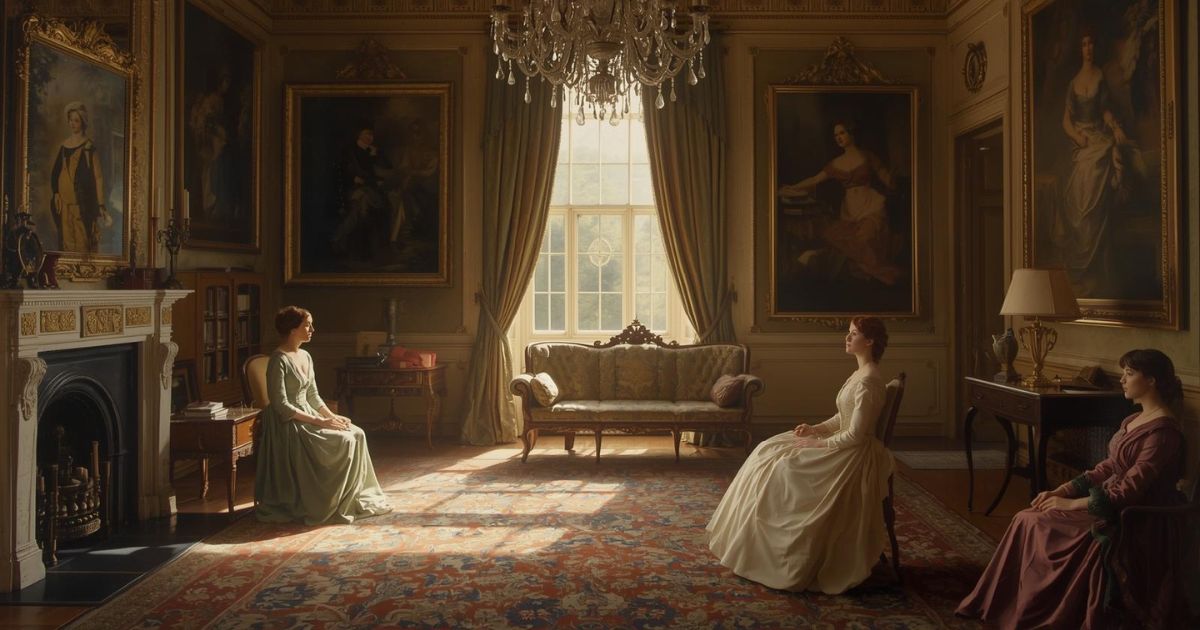
An excerpt from the original text.(complete · 2524 words)
linor could not find herself in the carriage with Mrs. Jennings, and
beginning a journey to London under her protection, and as her guest,
without wondering at her own situation, so short had their acquaintance
with that lady been, so wholly unsuited were they in age and
disposition, and so many had been her objections against such a measure
only a few days before! But these objections had all, with that happy
ardour of youth which Marianne and her mother equally shared, been
overcome or overlooked; and Elinor, in spite of every occasional doubt
of Willoughby’s constancy, could not witness the rapture of delightful
expectation which filled the whole soul and beamed in the eyes of
Marianne, without feeling how blank was her own prospect, how cheerless
her own state of mind in the comparison, and how gladly she would
engage in the solicitude of Marianne’s situation to have the same
animating object in view, the same possibility of hope. A short, a very
short time however must now decide what Willoughby’s intentions were;
in all probability he was already in town. Marianne’s eagerness to be
gone declared her dependence on finding him there; and Elinor was
resolved not only upon gaining every new light as to his character
which her own observation or the intelligence of others could give her,
but likewise upon watching his behaviour to her sister with such
zealous attention, as to ascertain what he was and what he meant,
before many meetings had taken place. Should the result of her
observations be unfavourable, she was determined at all events to open
the eyes of her sister; should it be otherwise, her exertions would be
of a different nature—she must then learn to avoid every selfish
comparison, and banish every regret which might lessen her satisfaction
in the happiness of Marianne.
They were three days on their journey, and Marianne’s behaviour as they
travelled was a happy specimen of what future complaisance and
companionableness to Mrs. Jennings might be expected to be. She sat in
silence almost all the way, wrapt in her own meditations, and scarcely
ever voluntarily speaking, except when any object of picturesque beauty
within their view drew from her an exclamation of delight exclusively
addressed to her sister. To atone for this conduct therefore, Elinor
took immediate possession of the post of civility which she had
assigned herself, behaved with the greatest attention to Mrs. Jennings,
talked with her, laughed with her, and listened to her whenever she
could; and Mrs. Jennings on her side treated them both with all
possible kindness, was solicitous on every occasion for their ease and
enjoyment, and only disturbed that she could not make them choose their
own dinners at the inn, nor extort a confession of their preferring
salmon to cod, or boiled fowls to veal cutlets. They reached town by
three o’clock the third day, glad to be released, after such a journey,
from the confinement of a carriage, and ready to enjoy all the luxury
of a good fire.
The house was handsome, and handsomely fitted up, and the young ladies
were immediately put in possession of a very comfortable apartment. It
had formerly been Charlotte’s, and over the mantelpiece still hung a
landscape in coloured silks of her performance, in proof of her having
spent seven years at a great school in town to some effect.
As dinner was not to be ready in less than two hours from their
arrival, Elinor determined to employ the interval in writing to her
mother, and sat down for that purpose. In a few moments Marianne did
the same. “I am writing home, Marianne,” said Elinor; “had not you
better defer your letter for a day or two?”
“I am not going to write to my mother,” replied Marianne, hastily,
and as if wishing to avoid any farther inquiry. Elinor said no more; it
immediately struck her that she must then be writing to Willoughby; and
the conclusion which as instantly followed was, that, however
mysteriously they might wish to conduct the affair, they must be
engaged. This conviction, though not entirely satisfactory, gave her
pleasure, and she continued her letter with greater alacrity.
Marianne’s was finished in a very few minutes; in length it could be no
more than a note; it was then folded up, sealed, and directed with
eager rapidity. Elinor thought she could distinguish a large W in the
direction; and no sooner was it complete than Marianne, ringing the
bell, requested the footman who answered it to get that letter conveyed
for her to the two-penny post. This decided the matter at once.
Her spirits still continued very high; but there was a flutter in them
which prevented their giving much pleasure to her sister, and this
agitation increased as the evening drew on. She could scarcely eat any
dinner, and when they afterwards returned to the drawing room, seemed
anxiously listening to the sound of every carriage.
It was a great satisfaction to Elinor that Mrs. Jennings, by being much
engaged in her own room, could see little of what was passing. The tea
things were brought in, and already had Marianne been disappointed more
than once by a rap at a neighbouring door, when a loud one was suddenly
heard which could not be mistaken for one at any other house, Elinor
felt secure of its announcing Willoughby’s approach, and Marianne,
starting up, moved towards the door. Every thing was silent; this could
not be borne many seconds; she opened the door, advanced a few steps
towards the stairs, and after listening half a minute, returned into
the room in all the agitation which a conviction of having heard him
would naturally produce; in the ecstasy of her feelings at that instant
she could not help exclaiming, “Oh, Elinor, it is Willoughby, indeed it
is!” and seemed almost ready to throw herself into his arms, when
Colonel Brandon appeared.
It was too great a shock to be borne with calmness, and she immediately
left the room. Elinor was disappointed too; but at the same time her
regard for Colonel Brandon ensured his welcome with her; and she felt
particularly hurt that a man so partial to her sister should perceive
that she experienced nothing but grief and disappointment in seeing
him. She instantly saw that it was not unnoticed by him, that he even
observed Marianne as she quitted the room, with such astonishment and
concern, as hardly left him the recollection of what civility demanded
towards herself.
“Is your sister ill?” said he.
Elinor answered in some distress that she was, and then talked of
head-aches, low spirits, and over fatigues; and of every thing to which
she could decently attribute her sister’s behaviour.
He heard her with the most earnest attention, but seeming to recollect
himself, said no more on the subject, and began directly to speak of
his pleasure at seeing them in London, making the usual inquiries about
their journey, and the friends they had left behind.
In this calm kind of way, with very little interest on either side,
they continued to talk, both of them out of spirits, and the thoughts
of both engaged elsewhere. Elinor wished very much to ask whether
Willoughby were then in town, but she was afraid of giving him pain by
any enquiry after his rival; and at length, by way of saying something,
she asked if he had been in London ever since she had seen him last.
“Yes,” he replied, with some embarrassment, “almost ever since; I have
been once or twice at Delaford for a few days, but it has never been in
my power to return to Barton.”
This, and the manner in which it was said, immediately brought back to
her remembrance all the circumstances of his quitting that place, with
the uneasiness and suspicions they had caused to Mrs. Jennings, and she
was fearful that her question had implied much more curiosity on the
subject than she had ever felt.
Mrs. Jennings soon came in. “Oh! Colonel,” said she, with her usual
noisy cheerfulness, “I am monstrous glad to see you—sorry I could not
come before—beg your pardon, but I have been forced to look about me a
little, and settle my matters; for it is a long while since I have been
at home, and you know one has always a world of little odd things to do
after one has been away for any time; and then I have had Cartwright to
settle with. Lord, I have been as busy as a bee ever since dinner! But
pray, Colonel, how came you to conjure out that I should be in town
today?”
“I had the pleasure of hearing it at Mr. Palmer’s, where I have been
dining.”
“Oh, you did; well, and how do they all do at their house? How does
Charlotte do? I warrant you she is a fine size by this time.”
“Mrs. Palmer appeared quite well, and I am commissioned to tell you,
that you will certainly see her to-morrow.”
“Ay, to be sure, I thought as much. Well, Colonel, I have brought two
young ladies with me, you see—that is, you see but one of them now, but
there is another somewhere. Your friend, Miss Marianne, too—which you
will not be sorry to hear. I do not know what you and Mr. Willoughby
will do between you about her. Ay, it is a fine thing to be young and
handsome. Well! I was young once, but I never was very handsome—worse
luck for me. However, I got a very good husband, and I don’t know what
the greatest beauty can do more. Ah! poor man! he has been dead these
eight years and better. But Colonel, where have you been to since we
parted? And how does your business go on? Come, come, let’s have no
secrets among friends.”
He replied with his accustomary mildness to all her inquiries, but
without satisfying her in any. Elinor now began to make the tea, and
Marianne was obliged to appear again.
After her entrance, Colonel Brandon became more thoughtful and silent
than he had been before, and Mrs. Jennings could not prevail on him to
stay long. No other visitor appeared that evening, and the ladies were
unanimous in agreeing to go early to bed.
Marianne rose the next morning with recovered spirits and happy looks.
The disappointment of the evening before seemed forgotten in the
expectation of what was to happen that day. They had not long finished
their breakfast before Mrs. Palmer’s barouche stopped at the door, and
in a few minutes she came laughing into the room: so delighted to see
them all, that it was hard to say whether she received most pleasure
from meeting her mother or the Miss Dashwoods again. So surprised at
their coming to town, though it was what she had rather expected all
along; so angry at their accepting her mother’s invitation after having
declined her own, though at the same time she would never have forgiven
them if they had not come!
“Mr. Palmer will be so happy to see you,” said she; “What do you think
he said when he heard of your coming with Mama? I forget what it was
now, but it was something so droll!”
After an hour or two spent in what her mother called comfortable chat,
or in other words, in every variety of inquiry concerning all their
acquaintance on Mrs. Jennings’s side, and in laughter without cause on
Mrs. Palmer’s, it was proposed by the latter that they should all
accompany her to some shops where she had business that morning, to
which Mrs. Jennings and Elinor readily consented, as having likewise
some purchases to make themselves; and Marianne, though declining it at
first was induced to go likewise.
Wherever they went, she was evidently always on the watch. In Bond
Street especially, where much of their business lay, her eyes were in
constant inquiry; and in whatever shop the party were engaged, her mind
was equally abstracted from every thing actually before them, from all
that interested and occupied the others. Restless and dissatisfied
every where, her sister could never obtain her opinion of any article
of purchase, however it might equally concern them both: she received
no pleasure from anything; was only impatient to be at home again, and
could with difficulty govern her vexation at the tediousness of Mrs.
Palmer, whose eye was caught by every thing pretty, expensive, or new;
who was wild to buy all, could determine on none, and dawdled away her
time in rapture and indecision.
It was late in the morning before they returned home; and no sooner had
they entered the house than Marianne flew eagerly up stairs, and when
Elinor followed, she found her turning from the table with a sorrowful
countenance, which declared that no Willoughby had been there.
“Has no letter been left here for me since we went out?” said she to
the footman who then entered with the parcels. She was answered in the
negative. “Are you quite sure of it?” she replied. “Are you certain
that no servant, no porter has left any letter or note?”
The man replied that none had.
“How very odd!” said she, in a low and disappointed voice, as she
turned away to the window.
“How odd, indeed!” repeated Elinor within herself, regarding her sister
with uneasiness. “If she had not known him to be in town she would not
have written to him, as she did; she would have written to Combe Magna;
and if he is in town, how odd that he should neither come nor write!
Oh! my dear mother, you must be wrong in permitting an engagement
between a daughter so young, a man so little known, to be carried on in
so doubtful, so mysterious a manner! I long to inquire; and how will
my interference be borne.”
She determined, after some consideration, that if appearances continued
many days longer as unpleasant as they now were, she would represent in
the strongest manner to her mother the necessity of some serious
enquiry into the affair.
Mrs. Palmer and two elderly ladies of Mrs. Jennings’s intimate
acquaintance, whom she had met and invited in the morning, dined with
them. The former left them soon after tea to fulfill her evening
engagements; and Elinor was obliged to assist in making a whist table
for the others. Marianne was of no use on these occasions, as she would
never learn the game; but though her time was therefore at her own
disposal, the evening was by no means more productive of pleasure to
her than to Elinor, for it was spent in all the anxiety of expectation
and the pain of disappointment. She sometimes endeavoured for a few
minutes to read; but the book was soon thrown aside, and she returned
to the more interesting employment of walking backwards and forwards
across the room, pausing for a moment whenever she came to the window,
in hopes of distinguishing the long-expected rap.
Master this chapter. Complete your experience
Purchase the complete book to access all chapters and support classic literature
As an Amazon Associate, we earn a small commission from qualifying purchases at no additional cost to you.
Available in paperback, hardcover, and e-book formats
Let's Analyse the Pattern
When someone's current behavior completely contradicts their past actions, creating confusion and self-doubt in the recipient.
Why This Matters
Connect literature to life
This chapter teaches how to recognize when someone's dramatic behavior change is designed to make you question your own memory and judgment.
Practice This Today
This week, notice when someone treats you completely differently than they did before—document what actually happened earlier so you don't let their new coldness rewrite history.
Now let's explore the literary elements.
Key Quotes & Analysis
"My esteem for your whole family is very sincere; but if I have been so unfortunate as to give rise to a belief of more than I felt, or meant to express, I shall reproach myself for not having been more guarded in my professions of that esteem."
Context: Part of his formal letter dismissing any serious intentions toward Marianne
This is lawyer-speak designed to hurt. He's claiming their entire relationship was just 'esteem' and blaming her for misunderstanding his intentions. It's calculated cruelty disguised as politeness.
In Today's Words:
I was just being friendly and you read too much into it - that's your fault, not mine.
"I have no other apology to offer for my behaviour than that it was the involuntary effect of good intentions misunderstood."
Context: His attempt to justify his previous romantic behavior toward Marianne
He's rewriting history, claiming his romantic gestures were innocent and misinterpreted. This gaslights Marianne into questioning her own experience of their relationship.
In Today's Words:
You completely misunderstood everything I did - I was never actually into you.
"No professions of regret, no entreaty, no explanation was offered by him."
Context: Describing the tone and content of Willoughby's letter
This emphasizes how completely cold and final his dismissal is. There's no softness, no acknowledgment of what they shared, no attempt to ease the blow.
In Today's Words:
He didn't even try to let her down easy or explain what happened.
Thematic Threads
Trust
In This Chapter
Marianne's trust in Willoughby is shattered not just by rejection, but by the complete contradiction between his past behavior and current coldness
Development
Builds on earlier themes of trusting too quickly versus Elinor's cautious approach
In Your Life:
You might recognize this when someone you trusted professionally or personally suddenly treats you like a stranger.
Class
In This Chapter
Willoughby's formal, distant letter suggests he's conforming to social expectations rather than following his heart
Development
Continues the theme of how class pressures influence romantic choices
In Your Life:
You might see this when someone changes their behavior toward you based on what others might think.
Communication
In This Chapter
The letter's coldness contrasts sharply with Willoughby's previous warm, intimate conversations with Marianne
Development
Introduced here as a major theme - how people can use formal communication to create distance
In Your Life:
You might notice this when someone suddenly becomes formal and distant in texts or emails after being warm and personal.
Resilience
In This Chapter
Elinor demonstrates quiet strength by supporting Marianne despite her own heartbreak over Edward
Development
Develops from earlier chapters showing Elinor's emotional control and sense of duty
In Your Life:
You might recognize this when you have to be strong for others even when you're struggling yourself.
Self-Knowledge
In This Chapter
Marianne's complete emotional collapse reveals how her passionate nature becomes a vulnerability when betrayed
Development
Continues exploring how the sisters' different temperaments affect their ability to handle crisis
In Your Life:
You might see this in recognizing whether you're someone who falls apart publicly or suffers privately during emotional crises.
You now have the context. Time to form your own thoughts.
Discussion Questions
- 1
What exactly does Willoughby's letter say to Marianne, and how does it contradict his previous behavior toward her?
analysis • surface - 2
Why might someone who seemed genuinely caring suddenly become cold and dismissive? What are the possible explanations for such a dramatic shift?
analysis • medium - 3
Where do you see this pattern of emotional whiplash in modern relationships, workplaces, or family dynamics?
application • medium - 4
If you were Marianne's friend, what specific advice would you give her to protect herself from questioning her own judgment?
application • deep - 5
What does Marianne's complete emotional collapse versus Elinor's quiet strength teach us about different ways people handle betrayal and disappointment?
reflection • deep
Critical Thinking Exercise
Document the Evidence
Think of a time when someone's behavior toward you changed dramatically, leaving you confused and hurt. Create two columns: write down specific things they said or did BEFORE the change, then list their behavior AFTER. Look at the evidence objectively - what story does it tell about their character versus your judgment?
Consider:
- •Focus on concrete actions and words, not your interpretations of their feelings
- •Notice if you started questioning your own memory or judgment after their behavior changed
- •Consider whether there might be external pressures affecting their behavior that you don't know about
Journaling Prompt
Write about how you would handle a similar situation now, knowing what you know about the pattern of emotional whiplash. What would you do differently to protect your sense of reality while still remaining open to genuine relationships?
Coming Up Next...
Chapter 27: Willoughby's Marriage
As Marianne spirals deeper into despair, Mrs. Jennings discovers something shocking about Willoughby that might explain his cruel letter. The truth about his sudden change of heart is more complicated than anyone imagined.