An excerpt from the original text.(complete · 2043 words)
arianne’s preserver, as Margaret, with more elegance than precision,
styled Willoughby, called at the cottage early the next morning to make
his personal enquiries. He was received by Mrs. Dashwood with more than
politeness; with a kindness which Sir John’s account of him and her own
gratitude prompted; and every thing that passed during the visit tended
to assure him of the sense, elegance, mutual affection, and domestic
comfort of the family to whom accident had now introduced him. Of their
personal charms he had not required a second interview to be convinced.
Miss Dashwood had a delicate complexion, regular features, and a
remarkably pretty figure. Marianne was still handsomer. Her form,
though not so correct as her sister’s, in having the advantage of
height, was more striking; and her face was so lovely, that when in the
common cant of praise, she was called a beautiful girl, truth was less
violently outraged than usually happens. Her skin was very brown, but,
from its transparency, her complexion was uncommonly brilliant; her
features were all good; her smile was sweet and attractive; and in her
eyes, which were very dark, there was a life, a spirit, an eagerness,
which could hardly be seen without delight. From Willoughby their
expression was at first held back, by the embarrassment which the
remembrance of his assistance created. But when this passed away, when
her spirits became collected, when she saw that to the perfect
good-breeding of the gentleman, he united frankness and vivacity, and
above all, when she heard him declare, that of music and dancing he was
passionately fond, she gave him such a look of approbation as secured
the largest share of his discourse to herself for the rest of his stay.
It was only necessary to mention any favourite amusement to engage her
to talk. She could not be silent when such points were introduced, and
she had neither shyness nor reserve in their discussion. They speedily
discovered that their enjoyment of dancing and music was mutual, and
that it arose from a general conformity of judgment in all that related
to either. Encouraged by this to a further examination of his opinions,
she proceeded to question him on the subject of books; her favourite
authors were brought forward and dwelt upon with so rapturous a
delight, that any young man of five and twenty must have been
insensible indeed, not to become an immediate convert to the excellence
of such works, however disregarded before. Their taste was strikingly
alike. The same books, the same passages were idolized by each—or if
any difference appeared, any objection arose, it lasted no longer than
till the force of her arguments and the brightness of her eyes could be
displayed. He acquiesced in all her decisions, caught all her
enthusiasm; and long before his visit concluded, they conversed with
the familiarity of a long-established acquaintance.
“Well, Marianne,” said Elinor, as soon as he had left them, “for one
morning I think you have done pretty well. You have already ascertained
Mr. Willoughby’s opinion in almost every matter of importance. You know
what he thinks of Cowper and Scott; you are certain of his estimating
their beauties as he ought, and you have received every assurance of
his admiring Pope no more than is proper. But how is your acquaintance
to be long supported, under such extraordinary despatch of every
subject for discourse? You will soon have exhausted each favourite
topic. Another meeting will suffice to explain his sentiments on
picturesque beauty, and second marriages, and then you can have nothing
farther to ask.”
“Elinor,” cried Marianne, “is this fair? is this just? are my ideas so
scanty? But I see what you mean. I have been too much at my ease, too
happy, too frank. I have erred against every common-place notion of
decorum; I have been open and sincere where I ought to have been
reserved, spiritless, dull, and deceitful—had I talked only of the
weather and the roads, and had I spoken only once in ten minutes, this
reproach would have been spared.”
“My love,” said her mother, “you must not be offended with Elinor—she
was only in jest. I should scold her myself, if she were capable of
wishing to check the delight of your conversation with our new friend.”
Marianne was softened in a moment.
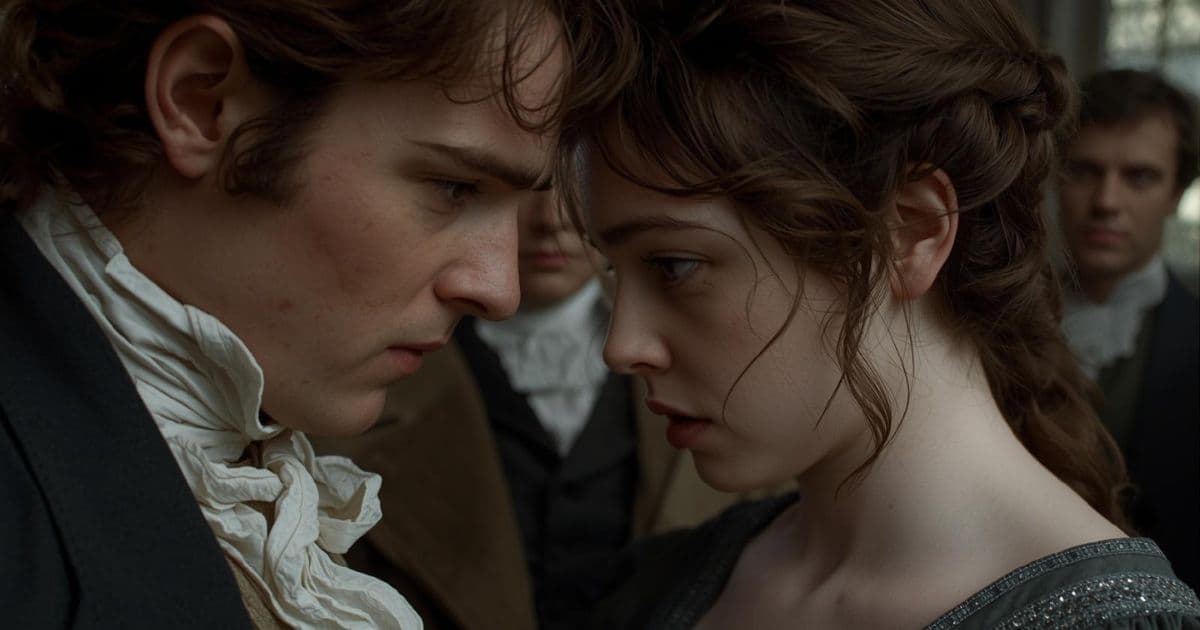
Willoughby, on his side, gave every proof of his pleasure in their
acquaintance, which an evident wish of improving it could offer. He
came to them every day. To enquire after Marianne was at first his
excuse; but the encouragement of his reception, to which every day gave
greater kindness, made such an excuse unnecessary before it had ceased
to be possible, by Marianne’s perfect recovery. She was confined for
some days to the house; but never had any confinement been less
irksome. Willoughby was a young man of good abilities, quick
imagination, lively spirits, and open, affectionate manners. He was
exactly formed to engage Marianne’s heart, for with all this, he joined
not only a captivating person, but a natural ardour of mind which was
now roused and increased by the example of her own, and which
recommended him to her affection beyond every thing else.
His society became gradually her most exquisite enjoyment. They read,
they talked, they sang together; his musical talents were considerable;
and he read with all the sensibility and spirit which Edward had
unfortunately wanted.
In Mrs. Dashwood’s estimation he was as faultless as in Marianne’s; and
Elinor saw nothing to censure in him but a propensity, in which he
strongly resembled and peculiarly delighted her sister, of saying too
much what he thought on every occasion, without attention to persons or
circumstances. In hastily forming and giving his opinion of other
people, in sacrificing general politeness to the enjoyment of undivided
attention where his heart was engaged, and in slighting too easily the
forms of worldly propriety, he displayed a want of caution which Elinor
could not approve, in spite of all that he and Marianne could say in
its support.
Marianne began now to perceive that the desperation which had seized
her at sixteen and a half, of ever seeing a man who could satisfy her
ideas of perfection, had been rash and unjustifiable. Willoughby was
all that her fancy had delineated in that unhappy hour and in every
brighter period, as capable of attaching her; and his behaviour
declared his wishes to be in that respect as earnest, as his abilities
were strong.
Her mother too, in whose mind not one speculative thought of their
marriage had been raised, by his prospect of riches, was led before the
end of a week to hope and expect it; and secretly to congratulate
herself on having gained two such sons-in-law as Edward and Willoughby.
Colonel Brandon’s partiality for Marianne, which had so early been
discovered by his friends, now first became perceptible to Elinor, when
it ceased to be noticed by them. Their attention and wit were drawn off
to his more fortunate rival; and the raillery which the other had
incurred before any partiality arose, was removed when his feelings
began really to call for the ridicule so justly annexed to sensibility.
Elinor was obliged, though unwillingly, to believe that the sentiments
which Mrs. Jennings had assigned him for her own satisfaction, were now
actually excited by her sister; and that however a general resemblance
of disposition between the parties might forward the affection of Mr.
Willoughby, an equally striking opposition of character was no
hindrance to the regard of Colonel Brandon. She saw it with concern;
for what could a silent man of five and thirty hope, when opposed to a
very lively one of five and twenty? and as she could not even wish him
successful, she heartily wished him indifferent. She liked him—in spite
of his gravity and reserve, she beheld in him an object of interest.
His manners, though serious, were mild; and his reserve appeared rather
the result of some oppression of spirits than of any natural gloominess
of temper. Sir John had dropped hints of past injuries and
disappointments, which justified her belief of his being an unfortunate
man, and she regarded him with respect and compassion.
Perhaps she pitied and esteemed him the more because he was slighted by
Willoughby and Marianne, who, prejudiced against him for being neither
lively nor young, seemed resolved to undervalue his merits.
“Brandon is just the kind of man,” said Willoughby one day, when they
were talking of him together, “whom every body speaks well of, and
nobody cares about; whom all are delighted to see, and nobody remembers
to talk to.”
“That is exactly what I think of him,” cried Marianne.
“Do not boast of it, however,” said Elinor, “for it is injustice in
both of you. He is highly esteemed by all the family at the park, and I
never see him myself without taking pains to converse with him.”
“That he is patronised by you,” replied Willoughby, “is certainly in
his favour; but as for the esteem of the others, it is a reproach in
itself. Who would submit to the indignity of being approved by such a
woman as Lady Middleton and Mrs. Jennings, that could command the
indifference of any body else?”
“But perhaps the abuse of such people as yourself and Marianne will
make amends for the regard of Lady Middleton and her mother. If their
praise is censure, your censure may be praise, for they are not more
undiscerning, than you are prejudiced and unjust.”
“In defence of your protégé you can even be saucy.”
“My protégé, as you call him, is a sensible man; and sense will
always have attractions for me. Yes, Marianne, even in a man between
thirty and forty. He has seen a great deal of the world; has been
abroad, has read, and has a thinking mind. I have found him capable of
giving me much information on various subjects; and he has always
answered my inquiries with readiness of good-breeding and good nature.”
“That is to say,” cried Marianne contemptuously, “he has told you, that
in the East Indies the climate is hot, and the mosquitoes are
troublesome.”
“He would have told me so, I doubt not, had I made any such
inquiries, but they happened to be points on which I had been
previously informed.”
“Perhaps,” said Willoughby, “his observations may have extended to the
existence of nabobs, gold mohrs, and palanquins.”
“I may venture to say that his observations have stretched much
further than your candour. But why should you dislike him?”
“I do not dislike him. I consider him, on the contrary, as a very
respectable man, who has every body’s good word, and nobody’s notice;
who has more money than he can spend, more time than he knows how to
employ, and two new coats every year.”
“Add to which,” cried Marianne, “that he has neither genius, taste, nor
spirit. That his understanding has no brilliancy, his feelings no
ardour, and his voice no expression.”
“You decide on his imperfections so much in the mass,” replied Elinor,
“and so much on the strength of your own imagination, that the
commendation I am able to give of him is comparatively cold and
insipid. I can only pronounce him to be a sensible man, well-bred,
well-informed, of gentle address, and, I believe, possessing an amiable
heart.”
“Miss Dashwood,” cried Willoughby, “you are now using me unkindly. You
are endeavouring to disarm me by reason, and to convince me against my
will. But it will not do. You shall find me as stubborn as you can be
artful. I have three unanswerable reasons for disliking Colonel
Brandon; he threatened me with rain when I wanted it to be fine; he has
found fault with the hanging of my curricle, and I cannot persuade him
to buy my brown mare. If it will be any satisfaction to you, however,
to be told, that I believe his character to be in other respects
irreproachable, I am ready to confess it. And in return for an
acknowledgment, which must give me some pain, you cannot deny me the
privilege of disliking him as much as ever.”
Master this chapter. Complete your experience
Purchase the complete book to access all chapters and support classic literature
As an Amazon Associate, we earn a small commission from qualifying purchases at no additional cost to you.
Available in paperback, hardcover, and e-book formats
Let's Analyse the Pattern
When dramatic circumstances create instant intimacy that feels like love but is actually just intensity and story-telling.
Why This Matters
Connect literature to life
This chapter teaches how to distinguish between genuine connection and relationships built on dramatic circumstances that create artificial intimacy.
Practice This Today
This week, notice when someone seems most interested in you during your vulnerable moments - are they attracted to you, or to being your rescuer?
Now let's explore the literary elements.
Key Quotes & Analysis
"The same books, the same passages were idolized by each—or if any difference appeared, any objection arose, it lasted no longer than till the force of her arguments and the brightness of her eyes could be displayed."
Context: Describing how Marianne and Willoughby seem to agree on everything, especially literature and poetry
This reveals how Marianne is so swept up in romance that she doesn't notice Willoughby might be telling her what she wants to hear. The phrase about her 'bright eyes' suggests he's charmed by her passion rather than genuinely sharing her views.
In Today's Words:
They agreed on everything, and when they didn't, he'd let her convince him because he was enchanted by how passionate she got about things.
"Marianne began now to perceive that the desperation which had seized her at sixteen and a half, of ever seeing a man who could satisfy her ideas of perfection, had been rash and unjustifiable."
Context: After meeting Willoughby, Marianne thinks she's found her perfect match
This shows Marianne's all-or-nothing thinking - she went from believing no perfect man existed to being certain she'd found him. The irony is that she's still being 'rash' by falling so completely for someone she barely knows.
In Today's Words:
Marianne realized she'd been wrong to think at sixteen that she'd never find the perfect guy - clearly she'd found him now.
"Their taste was strikingly alike. The same books, the same passages were idolized by each."
Context: Describing the apparent perfect compatibility between Marianne and Willoughby
This seems romantic but hints at something artificial. Perfect compatibility is rare, and the repetition suggests Willoughby might be mirroring Marianne's interests rather than genuinely sharing them.
In Today's Words:
They liked exactly the same things - the same books, the same favorite parts.
Thematic Threads
Emotional Intensity
In This Chapter
Marianne mistakes the rush of being rescued and the daily intensity of shared passions for true love
Development
Building on her earlier emotional extremes, now focused on romantic feelings
In Your Life:
You might confuse drama and intensity for deep connection in your own relationships
Social Expectations
In This Chapter
Elinor worries that Marianne is ignoring proper courtship conventions in her enthusiasm
Development
Continuing tension between following social rules versus following your heart
In Your Life:
You face pressure to follow unwritten rules about how relationships should progress
Fantasy vs Reality
In This Chapter
Marianne's rescue feels like her beloved novels come to life, making her blind to potential red flags
Development
Her romantic idealism now has a specific target in Willoughby
In Your Life:
You might project your ideal relationship onto someone new instead of seeing who they really are
Sisterly Concern
In This Chapter
Elinor watches Marianne's whirlwind romance with growing worry about potential heartbreak
Development
Deepening the contrast between their approaches to love and life
In Your Life:
You might worry about a loved one making impulsive romantic decisions while feeling powerless to intervene
Identity Through Romance
In This Chapter
Marianne defines herself through her passionate connection with Willoughby, losing her individual identity
Development
New theme showing how romantic love can consume personal identity
In Your Life:
You might lose yourself in a new relationship, making your partner's interests and opinions your own
You now have the context. Time to form your own thoughts.
Discussion Questions
- 1
What creates the instant connection between Marianne and Willoughby, and how does their first meeting set up their entire relationship dynamic?
analysis • surface - 2
Why is Marianne so willing to ignore social conventions and her sister's concerns when it comes to Willoughby?
analysis • medium - 3
Where do you see this 'rescue romance' pattern in modern relationships - dating apps, workplace dynamics, or social media interactions?
application • medium - 4
If you were Elinor watching your sister fall this hard this fast, how would you express concern without pushing her away?
application • deep - 5
What does Marianne's instant devotion reveal about the difference between falling in love with a person versus falling in love with a story?
reflection • deep
Critical Thinking Exercise
Rewrite the Meet-Cute
Take Marianne and Willoughby's dramatic first meeting and rewrite it as a modern scenario. Maybe she's stranded with a dead car battery, or he helps her when she drops groceries in a parking lot. Then analyze: what makes this type of meeting feel so romantic, and what red flags might be hidden in the rescue dynamic?
Consider:
- •How does being vulnerable change the power balance in a first meeting?
- •What do we actually learn about someone's character when they help us in a crisis?
- •How might the 'rescued' person feel obligated to the rescuer?
Journaling Prompt
Write about a time when someone 'rescued' you or you rescued someone else. Looking back, how did that dramatic beginning affect the relationship that followed? What did you learn about the difference between crisis chemistry and real compatibility?
Coming Up Next...
Chapter 11: Willoughby's Departure
Willoughby's daily visits become the highlight of Marianne's existence, but their growing intimacy starts raising eyebrows in the neighborhood. Meanwhile, Elinor faces her own romantic complications that she's trying desperately to hide.