A chapter overview excerpt.(~500 words)
momentary grace of mortal men,
Which we more hunt for than the grace of God!
How doth your lordship bear this heavy change
From liberty unto this dark restraint?
HASTINGS.
The better that my Lord of Buckingham
Hath in his own person and in me
Show'd good example of his loyalty.
But come, my lord, you wish to know the reason
Of this our sudden summons hither.
RICHARD.
I do, my lord, and for that reason
Have I this morning sent for you hither.
We are not safe, my lord; we are not safe.
Hastings, I tell thee, thou art a traitor.
HASTINGS.
What, I a traitor? By my faith, no.
RICHARD.
Look to it, then; I charge thee, look to it.
HASTINGS.
I do beseech your grace to pardon me,
And withal to forbear your conference
Till I have better grounds for what I speak.
RICHARD.
Talk'st thou to me of 'ifs'? Thou art a traitor.
Off with his head! Now, by Saint Paul I swear,
I will not dine until I see the same.
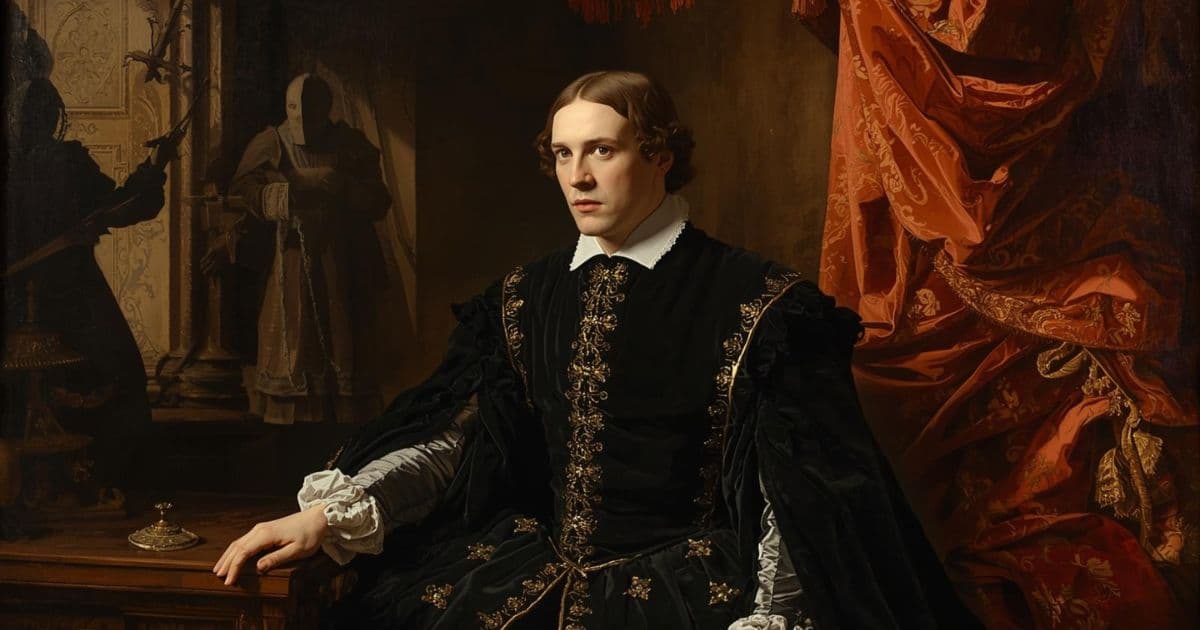
The chapter opens at Pomfret Castle where Rivers, Grey, and Vaughan are led to execution. Rivers calls it 'bloody prison' where Richard II was murdered. Grey remembers Margaret's curse—she cursed them all for standing by when Richard stabbed her son. 'Now Margaret's curse is fallen upon our heads,' he says. They embrace and go to their deaths, Margaret's prophecy fulfilled. The scene shifts to the Tower council meeting to plan Prince Edward's coronation. Hastings cheerfully declares Richard 'knows me well and loves me well.' Richard arrives in excellent spirits, casually requesting strawberries from the Bishop of Ely's garden—a detail that makes what follows even more chilling. Richard and Buckingham step aside. Buckingham reports Catesby's test: Hastings 'will lose his head' before consenting to Richard taking the throne. Minutes later, Richard returns transformed—raging, demanding to know what conspirators against him deserve. Hastings eagerly condemns them: 'They have deserved death.' Richard displays his withered arm (which he's had since birth) and absurdly claims Queen Elizabeth and Mistress Shore bewitched it. Hastings cautiously says 'If they have done this deed...' Richard explodes at the word 'if': 'Talk'st thou to me of ifs? Thou art a traitor. Off with his head! Now by Saint Paul I swear, I will not dine until I see the same.' Instant execution. No trial. No evidence. Just rage and death. Left with guards, Hastings finally sees clearly—Stanley's prophetic dream of the boar, his horse stumbling three times at the Tower, all the warnings he scorned. His last words: 'O momentary grace of mortal men, which we more hunt for than the grace of God! Who builds his hope in air of your good looks, lives like a drunken sailor on a mast, ready with every nod to tumble down into the fatal bowels of the deep.' He prophesies 'the fearfullest time' for England. Immediately, Richard and Buckingham don old armor and stage a theatrical performance for the Mayor—pretending to be under...
Master this chapter. Complete your experience
Purchase the complete book to access all chapters and support classic literature
As an Amazon Associate, we earn a small commission from qualifying purchases at no additional cost to you.
Available in paperback, hardcover, and e-book formats
Let's Analyse the Pattern
Eliminating former allies without cause or process to demonstrate absolute power and show that no one is safe
Why This Matters
Connect literature to life
When someone eliminates former allies without cause or process, they're showing they have no limits. This is a dangerous sign that should not be ignored.
Practice This Today
Watch for people who eliminate others arbitrarily, without process or justification. When someone shows they have no limits, believe them. Protect yourself. Distance yourself if possible.
Now let's explore the literary elements.
Key Quotes & Analysis
"Off with his head! Now, by Saint Paul I swear, I will not dine until I see the same."
Context: Richard ordering Hastings's immediate execution
This is one of literature's most chilling lines. Richard orders execution without trial, without evidence, without process. The urgency - he won't even wait to eat - shows his absolute power and ruthlessness.
In Today's Words:
Kill him now! I won't rest until he's dead
"Talk'st thou to me of 'ifs'? Thou art a traitor."
Context: Richard dismissing Hastings's defense
Richard doesn't need evidence or process. He simply declares Hastings a traitor. This is tyranny - power without constraint, accusation without proof.
In Today's Words:
You're questioning me? You're guilty - that's all that matters
"O momentary grace of mortal men, Which we more hunt for than the grace of God!"
Context: Hastings realizing his mistake too late
Hastings recognizes that he sought favor from men rather than living by principles. His realization comes too late - he trusted the wrong person.
In Today's Words:
We seek approval from people more than we seek to do what's right
Thematic Threads
Ruthlessness
In This Chapter
Richard executes a former friend without trial or evidence
Development
The elimination shows absolute ruthlessness - no one is safe
In Your Life:
When someone eliminates former allies without cause, they're showing they have no limits
Power
In This Chapter
Richard demonstrates absolute power through arbitrary execution
Development
Power without constraint becomes tyranny
In Your Life:
Watch for people who exercise power arbitrarily, without process or justification
Betrayal
In This Chapter
A friend is betrayed and eliminated
Development
Loyalty means nothing to Richard
In Your Life:
When someone betrays former allies, they have no loyalty to anyone
You now have the context. Time to form your own thoughts.
Discussion Questions
- 1
Why does Richard execute Hastings without trial? What does this reveal about Richard's character and his view of power?
analysis • deep - 2
How does the speed of Hastings's execution function as a weapon? What message does it send to others?
analysis • medium - 3
Have you witnessed someone eliminate a former ally without cause? What happened?
application • surface - 4
What's the difference between legitimate authority and tyranny? How can you tell?
reflection • medium
Critical Thinking Exercise
The No-Limit Analysis
Richard executes Hastings without trial, showing he has no limits. Think of someone who eliminated a former ally without cause or process. What did this reveal about them? How did it affect others?
Consider:
- •What does eliminating allies without cause reveal about someone's limits?
- •How does arbitrary power affect those who witness it?
- •What are the signs of no-limit behavior?
- •How do you protect yourself from people with no limits?
- •What's the difference between legitimate authority and tyranny?
Journaling Prompt
Write about a time when you witnessed someone exercise power arbitrarily. How did it affect you? How did it affect others? What did it reveal about that person?
Coming Up Next...
Chapter 12: Act III, Scenes 5-7: The Propaganda Machine
With Hastings dead, Richard moves to eliminate the final obstacles standing between him and the crown.