An excerpt from the original text.(complete · 1254 words)
XI.
[Illustration]
Happy for all her maternal feelings was the day on which Mrs. Bennet got
rid of her two most deserving daughters. With what delighted pride she
afterwards visited Mrs. Bingley, and talked of Mrs. Darcy, may be
guessed. I wish I could say, for the sake of her family, that the
accomplishment of her earnest desire in the establishment of so many of
her children produced so happy an effect as to make her a sensible,
amiable, well-informed woman for the rest of her life; though, perhaps,
it was lucky for her husband, who might not have relished domestic
felicity in so unusual a form, that she still was occasionally nervous
and invariably silly.
Mr. Bennet missed his second daughter exceedingly; his affection for her
drew him oftener from home than anything else could do. He delighted in
going to Pemberley, especially when he was least expected.
Mr. Bingley and Jane remained at Netherfield only a twelvemonth. So near
a vicinity to her mother and Meryton relations was not desirable even to
his easy temper, or her affectionate heart. The darling wish of his
sisters was then gratified: he bought an estate in a neighbouring county
to Derbyshire; and Jane and Elizabeth, in addition to every other source
of happiness, were within thirty miles of each other.
Kitty, to her very material advantage, spent the chief of her time with
her two elder sisters. In society so superior to what she had generally
known, her improvement was great. She was not of so ungovernable a
temper as Lydia; and, removed from the influence of Lydia’s example, she
became, by proper attention and management, less irritable, less
ignorant, and less insipid. From the further disadvantage of Lydia’s
society she was of course carefully kept; and though Mrs. Wickham
frequently invited her to come and stay with her, with the promise of
balls and young men, her father would never consent to her going.
Mary was the only daughter who remained at home; and she was necessarily
drawn from the pursuit of accomplishments by Mrs. Bennet’s being quite
unable to sit alone. Mary was obliged to mix more with the world, but
she could still moralize over every morning visit; and as she was no
longer mortified by comparisons between her sisters’ beauty and her own,
it was suspected by her father that she submitted to the change without
much reluctance.
As for Wickham and Lydia, their characters suffered no revolution from
the marriage of her sisters. He bore with philosophy the conviction that
Elizabeth must now become acquainted with whatever of his ingratitude
and falsehood had before been unknown to her; and, in spite of
everything, was not wholly without hope that Darcy might yet be
prevailed on to make his fortune. The congratulatory letter which
Elizabeth received from Lydia on her marriage explained to her that, by
his wife at least, if not by himself, such a hope was cherished. The
letter was to this effect:--
/* “My dear Lizzy, */
“I wish you joy. If you love Mr. Darcy half so well as I do my dear
Wickham, you must be very happy. It is a great comfort to have you
so rich; and when you have nothing else to do, I hope you will
think of us. I am sure Wickham would like a place at court very
much; and I do not think we shall have quite money enough to live
upon without some help. Any place would do of about three or four
hundred a year; but, however, do not speak to Mr. Darcy about it,
if you had rather not.
“Yours,” etc.
As it happened that Elizabeth had much rather not, she endeavoured in
her answer to put an end to every entreaty and expectation of the kind.
Such relief, however, as it was in her power to afford, by the practice
of what might be called economy in her own private expenses, she
frequently sent them. It had always been evident to her that such an
income as theirs, under the direction of two persons so extravagant in
their wants, and heedless of the future, must be very insufficient to
their support; and whenever they changed their quarters, either Jane or
herself were sure of being applied to for some little assistance towards
discharging their bills. Their manner of living, even when the
restoration of peace dismissed them to a home, was unsettled in the
extreme. They were always moving from place to place in quest of a
cheap situation, and always spending more than they ought. His affection
for her soon sunk into indifference: hers lasted a little longer; and,
in spite of her youth and her manners, she retained all the claims to
reputation which her marriage had given her. Though Darcy could never
receive him at Pemberley, yet, for Elizabeth’s sake, he assisted him
further in his profession. Lydia was occasionally a visitor there, when
her husband was gone to enjoy himself in London or Bath; and with the
Bingleys they both of them frequently stayed so long, that even
Bingley’s good-humour was overcome, and he proceeded so far as to talk
of giving them a hint to be gone.
Miss Bingley was very deeply mortified by Darcy’s marriage; but as she
thought it advisable to retain the right of visiting at Pemberley, she
dropped all her resentment; was fonder than ever of Georgiana, almost as
attentive to Darcy as heretofore, and paid off every arrear of civility
to Elizabeth.
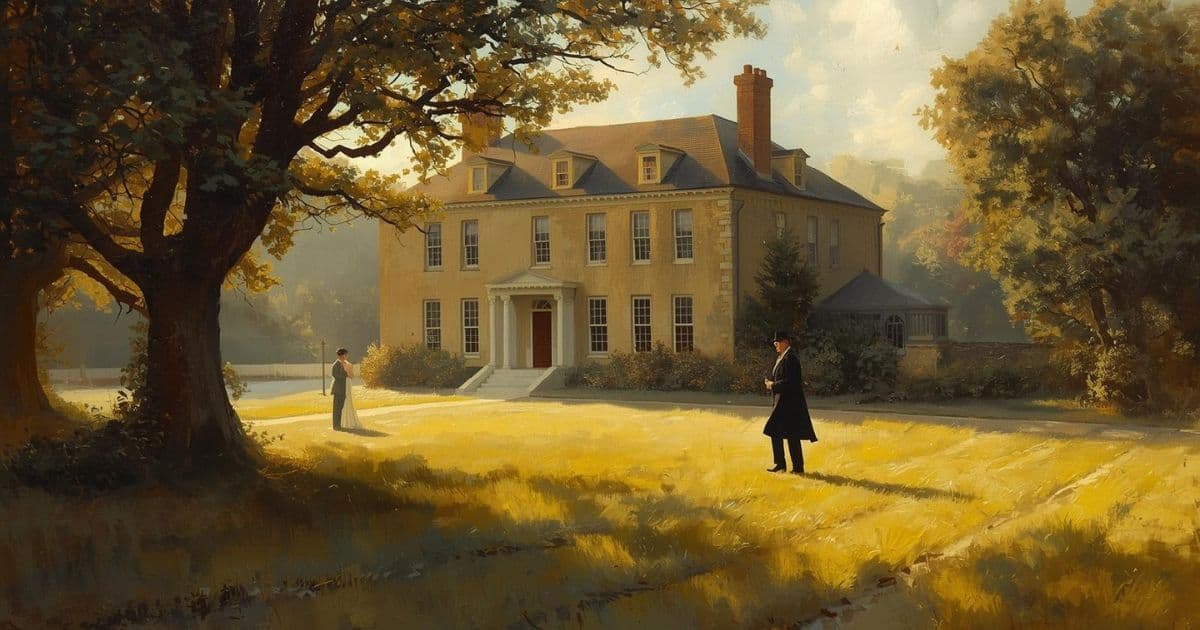
Pemberley was now Georgiana’s home; and the attachment of the sisters
was exactly what Darcy had hoped to see. They were able to love each
other, even as well as they intended. Georgiana had the highest opinion
in the world of Elizabeth; though at first she often listened with an
astonishment bordering on alarm at her lively, sportive manner of
talking to her brother. He, who had always inspired in herself a respect
which almost overcame her affection, she now saw the object of open
pleasantry. Her mind received knowledge which had never before fallen in
her way. By Elizabeth’s instructions she began to comprehend that a
woman may take liberties with her husband, which a brother will not
always allow in a sister more than ten years younger than himself.
Lady Catherine was extremely indignant on the marriage of her nephew;
and as she gave way to all the genuine frankness of her character, in
her reply to the letter which announced its arrangement, she sent him
language so very abusive, especially of Elizabeth, that for some time
all intercourse was at an end. But at length, by Elizabeth’s persuasion,
he was prevailed on to overlook the offence, and seek a reconciliation;
and, after a little further resistance on the part of his aunt, her
resentment gave way, either to her affection for him, or her curiosity
to see how his wife conducted herself; and she condescended to wait on
them at Pemberley, in spite of that pollution which its woods had
received, not merely from the presence of such a mistress, but the
visits of her uncle and aunt from the city.
With the Gardiners they were always on the most intimate terms. Darcy,
as well as Elizabeth, really loved them; and they were both ever
sensible of the warmest gratitude towards the persons who, by bringing
her into Derbyshire, had been the means of uniting them.
[Illustration:
THE
END
]
CHISWICK PRESS:--CHARLES WHITTINGHAM AND CO.
TOOKS COURT, CHANCERY LANE, LONDON.
Master this chapter. Complete your experience
Purchase the complete book to access all chapters and support classic literature
As an Amazon Associate, we earn a small commission from qualifying purchases at no additional cost to you.
Available in paperback, hardcover, and e-book formats
Let's Analyse the Pattern
Why This Matters
Connect literature to life
This chapter teaches how to accept that some people change and others don't—and to build contentment without expecting everyone to transform.
Now let's explore the literary elements.
Key Quotes & Analysis
"Happy for all her maternal feelings was the day on which Mrs. Bennet got rid of her two most deserving daughters."
Context: Opening of the epilogue
Austen's ironic wit frames the conclusion: Mrs. Bennet achieves her goal of marrying off her daughters, but the narrator suggests her character remains unchanged.
"I wish you joy. If you love Mr. Darcy half so well as I do my dear Wickham, you must be very happy. It is a great comfort to have you so rich."
Context: Lydia's congratulatory letter to Elizabeth after her marriage
Lydia's letter reveals her unchanged character—she immediately asks for financial help and assumes Elizabeth will use her wealth to benefit the Wickhams, showing she learned nothing from her elopement.
"By Elizabeth's instructions she began to comprehend that a woman may take liberties with her husband, which a brother will not always allow in a sister more than ten years younger than himself."
Context: Describing Georgiana's observation of Elizabeth and Darcy's relationship
This shows how Georgiana learns about marriage and affectionate partnership through Elizabeth's example—a contrast to the formal reserve she knew with Darcy as her guardian.
Thematic Threads
Stasis vs. change
In This Chapter
Mrs. Bennet remains silly; Wickham and Lydia stay troubled; Kitty blossoms away from Lydia
Development
Epilogue reveals who changes and who doesn't—a realistic view of human nature
In Your Life:
Looking at your family or friends, who has genuinely changed over time and who has stayed essentially the same?
Environment shapes growth
In This Chapter
Kitty improves with her elder sisters; Mary is drawn into the world; Lydia's influence is kept at bay
Development
Proximity to better models enables growth; distance from bad influences helps
In Your Life:
How has your environment—who you spend time with—affected your own growth or stagnation?
Boundaries with difficult people
In This Chapter
Darcy never receives Wickham at Pemberley but helps him professionally; Elizabeth refuses Lydia's requests
Development
Love doesn't mean enabling; you can assist without endorsing
In Your Life:
When have you had to help someone you don't fully respect, or set boundaries with family who won't change?
Reconciliation and curiosity
In This Chapter
Lady Catherine eventually visits Pemberley—her curiosity overcomes her resentment
Development
Even entrenched opposition can soften when curiosity outweighs pride
In Your Life:
Have you seen a long-standing feud ease when someone's curiosity about the other party outweighed their hurt?
Gratitude for catalysts
In This Chapter
Elizabeth and Darcy remain grateful to the Gardiners for bringing her to Derbyshire
Development
Recognizing who made your happiness possible—not taking it for granted
In Your Life:
Who played a small but crucial role in a good thing that happened to you? Have you thanked them?
You now have the context. Time to form your own thoughts.
Discussion Questions
- 1
Who changes by the end of the novel and who stays the same? What does Austen suggest about human nature?
- 2
How does Kitty's improvement differ from Lydia's continued troubles? What role does environment play?
- 3
Why does Darcy help Wickham professionally but never receive him at Pemberley? What does this show about boundaries?
- 4
How does Lady Catherine eventually reconcile with Darcy and Elizabeth? What overcomes her resentment?
- 5
What is the significance of Elizabeth and Darcy's lasting gratitude to the Gardiners?
Critical Thinking Exercise
Map Your Epilogue
Think of a chapter that has closed in your life—a job, a school, a relationship, a phase. Who in that chapter genuinely changed? Who stayed the same? Who improved when their environment changed? Who continued patterns despite new circumstances? Write a brief 'epilogue' that, like Austen's, is honest about both transformation and stasis—and about how you've learned to invest and set boundaries accordingly.
Consider:
- •Realistic closure acknowledges that good fortune doesn't fix everyone
- •Environment often matters as much as character for who grows
- •You can help people you don't fully respect without endorsing their behavior