An excerpt from the original text.(complete · 1911 words)
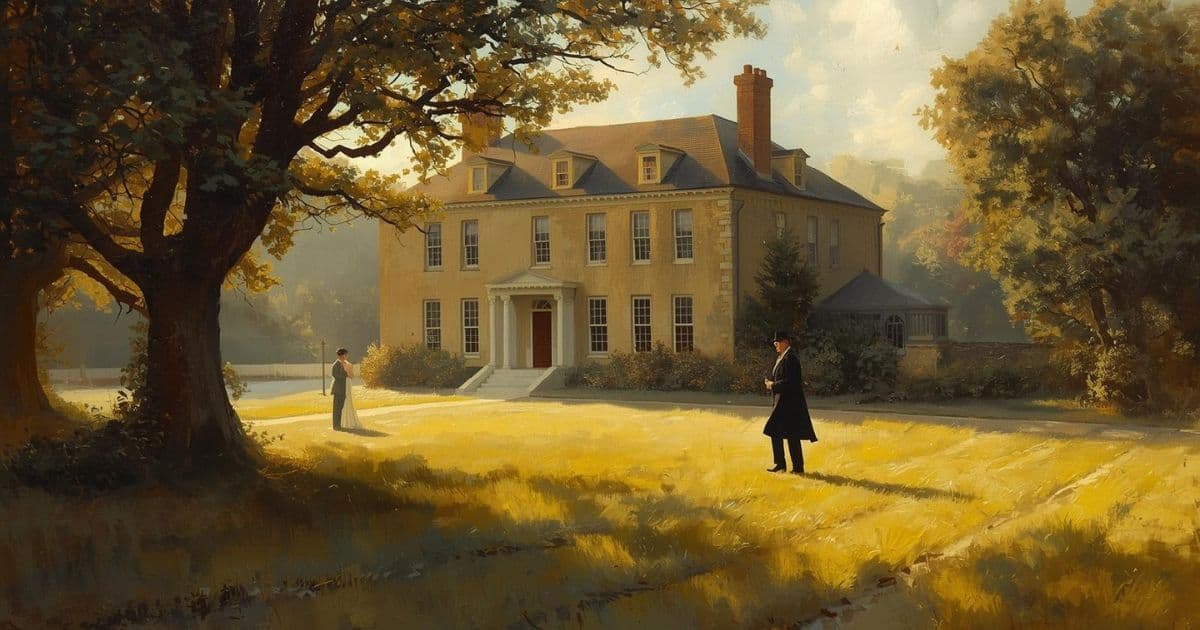
[llustration]
The next day opened a new scene at Longbourn. Mr. Collins made his
declaration in form. Having resolved to do it without loss of time, as
his leave of absence extended only to the following Saturday, and having
no feelings of diffidence to make it distressing to himself even at the
moment, he set about it in a very orderly manner, with all the
observances which he supposed a regular part of the business. On finding
Mrs. Bennet, Elizabeth, and one of the younger girls together, soon
after breakfast, he addressed the mother in these words,--
“May I hope, madam, for your interest with your fair daughter Elizabeth,
when I solicit for the honour of a private audience with her in the
course of this morning?”
Before Elizabeth had time for anything but a blush of surprise, Mrs.
Bennet instantly answered,--
“Oh dear! Yes, certainly. I am sure Lizzy will be very happy--I am sure
she can have no objection. Come, Kitty, I want you upstairs.” And
gathering her work together, she was hastening away, when Elizabeth
called out,--
“Dear ma’am, do not go. I beg you will not go. Mr. Collins must excuse
me. He can have nothing to say to me that anybody need not hear. I am
going away myself.”
“No, no, nonsense, Lizzy. I desire you will stay where you are.” And
upon Elizabeth’s seeming really, with vexed and embarrassed looks, about
to escape, she added, “Lizzy, I insist upon your staying and hearing
Mr. Collins.”
Elizabeth would not oppose such an injunction; and a moment’s
consideration making her also sensible that it would be wisest to get it
over as soon and as quietly as possible, she sat down again, and tried
to conceal, by incessant employment, the feelings which were divided
between distress and diversion. Mrs. Bennet and Kitty walked off, and as
soon as they were gone, Mr. Collins began,--
“Believe me, my dear Miss Elizabeth, that your modesty, so far from
doing you any disservice, rather adds to your other perfections. You
would have been less amiable in my eyes had there not been this little
unwillingness; but allow me to assure you that I have your respected
mother’s permission for this address. You can hardly doubt the purport
of my discourse, however your natural delicacy may lead you to
dissemble; my attentions have been too marked to be mistaken. Almost as
soon as I entered the house I singled you out as the companion of my
future life. But before I am run away with by my feelings on this
subject, perhaps it will be advisable for me to state my reasons for
marrying--and, moreover, for coming into Hertfordshire with the design
of selecting a wife, as I certainly did.”
The idea of Mr. Collins, with all his solemn composure, being run away
with by his feelings, made Elizabeth so near laughing that she could not
use the short pause he allowed in any attempt to stop him farther, and
he continued,--
“My reasons for marrying are, first, that I think it a right thing for
every clergyman in easy circumstances (like myself) to set the example
of matrimony in his parish; secondly, that I am convinced it will add
very greatly to my happiness; and, thirdly, which perhaps I ought to
have mentioned earlier, that it is the particular advice and
recommendation of the very noble lady whom I have the honour of calling
patroness. Twice has she condescended to give me her opinion (unasked
too!) on this subject; and it was but the very Saturday night before I
left Hunsford,--between our pools at quadrille, while Mrs. Jenkinson was
arranging Miss De Bourgh’s footstool,--that she said, ‘Mr. Collins, you
must marry. A clergyman like you must marry. Choose properly, choose a
gentlewoman for my sake, and for your own; let her be an active,
useful sort of person, not brought up high, but able to make a small
income go a good way. This is my advice. Find such a woman as soon as
you can, bring her to Hunsford, and I will visit her.’ Allow me, by the
way, to observe, my fair cousin, that I do not reckon the notice and
kindness of Lady Catherine de Bourgh as among the least of the
advantages in my power to offer. You will find her manners beyond
anything I can describe; and your wit and vivacity, I think, must be
acceptable to her, especially when tempered with the silence and respect
which her rank will inevitably excite. Thus much for my general
intention in favour of matrimony; it remains to be told why my views
were directed to Longbourn instead of my own neighbourhood, where I
assure you there are many amiable young women. But the fact is, that
being, as I am, to inherit this estate after the death of your honoured
father (who, however, may live many years longer), I could not satisfy
myself without resolving to choose a wife from among his daughters, that
the loss to them might be as little as possible when the melancholy
event takes place--which, however, as I have already said, may not be
for several years. This has been my motive, my fair cousin, and I
flatter myself it will not sink me in your esteem. And now nothing
remains for me but to assure you in the most animated language of the
violence of my affection. To fortune I am perfectly indifferent, and
shall make no demand of that nature on your father, since I am well
aware that it could not be complied with; and that one thousand pounds
in the 4 per cents., which will not be yours till after your mother’s
decease, is all that you may ever be entitled to. On that head,
therefore, I shall be uniformly silent: and you may assure yourself that
no ungenerous reproach shall ever pass my lips when we are married.”
It was absolutely necessary to interrupt him now.
“You are too hasty, sir,” she cried. “You forget that I have made no
answer. Let me do it without further loss of time. Accept my thanks for
the compliment you are paying me. I am very sensible of the honour of
your proposals, but it is impossible for me to do otherwise than decline
them.”
“I am not now to learn,” replied Mr. Collins, with a formal wave of the
hand, “that it is usual with young ladies to reject the addresses of the
man whom they secretly mean to accept, when he first applies for their
favour; and that sometimes the refusal is repeated a second or even a
third time. I am, therefore, by no means discouraged by what you have
just said, and shall hope to lead you to the altar ere long.”
“Upon my word, sir,” cried Elizabeth, “your hope is rather an
extraordinary one after my declaration. I do assure you that I am not
one of those young ladies (if such young ladies there are) who are so
daring as to risk their happiness on the chance of being asked a second
time. I am perfectly serious in my refusal. You could not make me
happy, and I am convinced that I am the last woman in the world who
would make you so. Nay, were your friend Lady Catherine to know me, I
am persuaded she would find me in every respect ill qualified for the
situation.”
“Were it certain that Lady Catherine would think so,” said Mr. Collins,
very gravely--“but I cannot imagine that her Ladyship would at all
disapprove of you. And you may be certain that when I have the honour of
seeing her again I shall speak in the highest terms of your modesty,
economy, and other amiable qualifications.”
“Indeed, Mr. Collins, all praise of me will be unnecessary. You must
give me leave to judge for myself, and pay me the compliment of
believing what I say. I wish you very happy and very rich, and by
refusing your hand, do all in my power to prevent your being otherwise.
In making me the offer, you must have satisfied the delicacy of your
feelings with regard to my family, and may take possession of Longbourn
estate whenever it falls, without any self-reproach. This matter may be
considered, therefore, as finally settled.” And rising as she thus
spoke, she would have quitted the room, had not Mr. Collins thus
addressed her,--
“When I do myself the honour of speaking to you next on the subject, I
shall hope to receive a more favourable answer than you have now given
me; though I am far from accusing you of cruelty at present, because I
know it to be the established custom of your sex to reject a man on the
first application, and, perhaps, you have even now said as much to
encourage my suit as would be consistent with the true delicacy of the
female character.”
“Really, Mr. Collins,” cried Elizabeth, with some warmth, “you puzzle me
exceedingly. If what I have hitherto said can appear to you in the form
of encouragement, I know not how to express my refusal in such a way as
may convince you of its being one.”
“You must give me leave to flatter myself, my dear cousin, that your
refusal of my addresses are merely words of course. My reasons for
believing it are briefly these:--It does not appear to me that my hand
is unworthy of your acceptance, or that the establishment I can offer
would be any other than highly desirable. My situation in life, my
connections with the family of De Bourgh, and my relationship to your
own, are circumstances highly in my favour; and you should take it into
further consideration that, in spite of your manifold attractions, it is
by no means certain that another offer of marriage may ever be made you.
Your portion is unhappily so small, that it will in all likelihood undo
the effects of your loveliness and amiable qualifications. As I must,
therefore, conclude that you are not serious in your rejection of me, I
shall choose to attribute it to your wish of increasing my love by
suspense, according to the usual practice of elegant females.”
“I do assure you, sir, that I have no pretensions whatever to that kind
of elegance which consists in tormenting a respectable man. I would
rather be paid the compliment of being believed sincere. I thank you
again and again for the honour you have done me in your proposals, but
to accept them is absolutely impossible. My feelings in every respect
forbid it. Can I speak plainer? Do not consider me now as an elegant
female intending to plague you, but as a rational creature speaking the
truth from her heart.”
“You are uniformly charming!” cried he, with an air of awkward
gallantry; “and I am persuaded that, when sanctioned by the express
authority of both your excellent parents, my proposals will not fail of
being acceptable.”
To such perseverance in wilful self-deception Elizabeth would make no
reply, and immediately and in silence withdrew; determined, that if he
persisted in considering her repeated refusals as flattering
encouragement, to apply to her father, whose negative might be uttered
in such a manner as must be decisive, and whose behaviour at least could
not be mistaken for the affectation and coquetry of an elegant female.
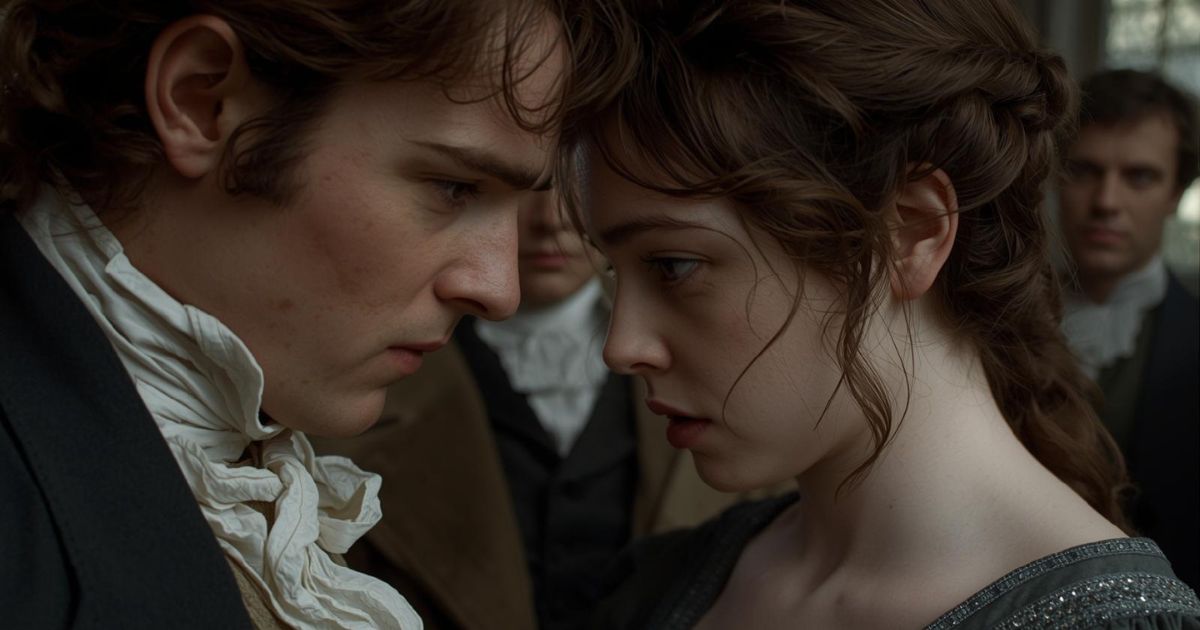
[Illustration]
Master this chapter. Complete your experience
Purchase the complete book to access all chapters and support classic literature
As an Amazon Associate, we earn a small commission from qualifying purchases at no additional cost to you.
Available in paperback, hardcover, and e-book formats
Let's Analyse the Pattern
Why This Matters
Connect literature to life
This chapter teaches how to identify when someone's social position makes them unable to hear your clear communication as valid.
Now let's explore the literary elements.
Key Quotes & Analysis
"My reasons for marrying are, first, that I think it a right thing for every clergyman in easy circumstances to set the example of matrimony in his parish."
Context: Collins begins his proposal by listing his practical reasons for marriage.
This reveals how Collins sees marriage as a duty to perform, not an expression of love. He's literally checking boxes rather than proposing to someone he cares about, showing how society reduced marriage to a social obligation.
"I am not now to learn that it is usual with young ladies to reject the addresses of the man whom they secretly mean to accept."
Context: Collins refuses to believe Elizabeth's rejection is real.
This shows the dangerous assumption that women don't mean what they say. Collins has been taught that women's 'no' means 'yes,' which completely dismisses their autonomy and right to make their own choices.
"You could not make me happy, and I am convinced that I am the last woman in the world who could make you happy."
Context: Elizabeth tries to make Collins understand why they're incompatible.
Elizabeth appeals to logic and mutual happiness, showing her mature understanding of what marriage should be. She's trying to save them both from misery, but Collins can't hear her because he sees marriage as duty, not partnership.
Thematic Threads
Gender Power Dynamics
In This Chapter
Collins assumes Elizabeth's refusal is feminine modesty rather than genuine choice, demonstrating how men dismiss women's autonomy
Development
Builds on earlier hints of women's limited agency, now explicitly showing male entitlement to female compliance
In Your Life:
Have you ever had someone dismiss your clear 'no' as just you being dramatic or not knowing what you really want?
Economic Coercion
In This Chapter
Collins believes his financial stability makes rejection impossible, treating marriage as a business transaction where money trumps personal preference
Development
Expands from Charlotte's earlier pragmatic view to show how economic pressure becomes a tool of control
In Your Life:
When has someone tried to convince you that their financial advantages should make you overlook red flags in a relationship or opportunity?
Class Privilege
In This Chapter
Collins's position as clergyman and future inheritor gives him confidence that his judgment supersedes Elizabeth's, showing how social rank creates assumed authority
Development
Continues the theme of class determining whose voice matters, now in intimate personal decisions
In Your Life:
Have you experienced someone using their job title, education, or social status to act like their opinion matters more than yours in personal decisions?
Personal Autonomy
In This Chapter
Elizabeth's firm refusal represents revolutionary self-determination, choosing potential hardship over surrendering her agency
Development
Crystallizes Elizabeth's emerging pattern of resisting social expectations in favor of personal integrity
In Your Life:
What's a situation where you've had to choose between doing what others expected and staying true to what you actually wanted?
Communication Breakdown
In This Chapter
Collins literally cannot process Elizabeth's clear words, hearing what he expects rather than what she says
Development
Introduced here as a new theme showing how power imbalances corrupt basic human communication
In Your Life:
Have you ever felt frustrated when someone completely misinterpreted your clear communication because they only heard what they wanted to hear?
You now have the context. Time to form your own thoughts.
Discussion Questions
- 1
What reasons does Mr. Collins give for wanting to marry Elizabeth, and what's missing from his list?
- 2
Why does Collins refuse to accept Elizabeth's rejection as final, and what does this reveal about how he views women?
- 3
Where do you see this pattern of 'privileged dismissal' in modern workplaces, healthcare, or relationships?
- 4
If you were Elizabeth's friend, what advice would you give her about dealing with people who won't accept 'no' for an answer?
- 5
What does Collins's proposal teach us about the difference between hearing someone's words and actually listening to them?
Critical Thinking Exercise
Map Your Own Power Dynamics
Think of a time when someone wouldn't accept your 'no' or kept pushing after you'd made your position clear. Write down what power advantage they had over you (money, position, gender, age, etc.) and how that shaped the interaction. Then identify one person whose 'no' you might have trouble accepting and honestly examine what advantage you have in that relationship.
Consider:
- •Power isn't always obvious - sometimes it's cultural expectations or family roles rather than formal authority
- •We can be both the dismissed person and the dismissive person in different relationships
- •Recognizing these patterns helps you prepare better responses and check your own behavior with others
Coming Up Next...
Chapter 20
Collins isn't giving up that easily, and he's about to get some powerful backup. Meanwhile, Elizabeth faces mounting pressure from an unexpected source as the consequences of her refusal begin to unfold.