A chapter overview excerpt.(~344 words)
nne's journey continues as she navigates finding moments of connection. This chapter explores themes of hope, small gestures, persistence.
Wentworth becomes a fixture at Uppercross, drawn by the Musgroves' warm hospitality and the admiration of the young ladies. A romantic triangle emerges: Charles Hayter, a cousin and curate, had been courting Henrietta before Wentworth arrived. Now Henrietta's attention has shifted entirely. Charles Hayter returns to find himself forgotten, Captain Wentworth everywhere, and his previous understanding with Henrietta apparently dissolved. Mary and Charles debate which sister Wentworth prefers, calculating the social advantages of such a match—"Lady Wentworth sounds very well!" Anne says nothing. She knows Wentworth is deliberately courting either Musgrove sister, perhaps both, proving to himself and Anne that he's moved on. His power with her may be gone, but hers with him clearly isn't, or he wouldn't need to prove anything.
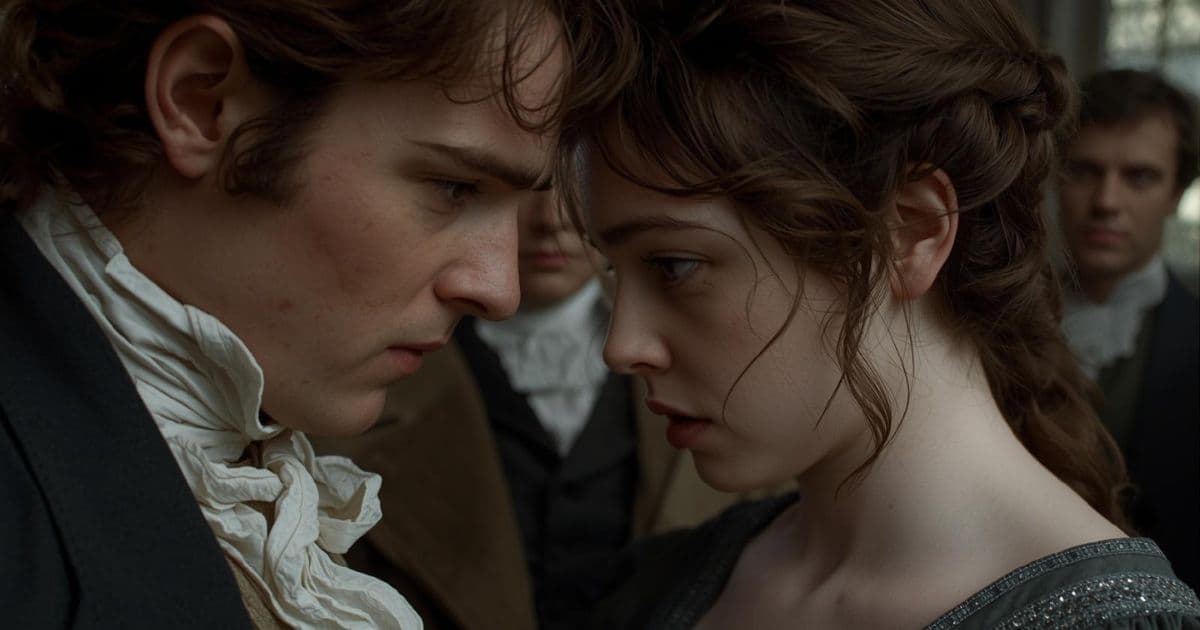
Then comes a moment that undoes Anne completely. Wentworth calls at the Cottage, expecting to find the Miss Musgroves. Instead he finds Anne alone with the invalid child. The surprise deprives him of his usual composure—he startles, retreats to the window, clearly wishes to be anywhere else. They speak the bare minimum. The tension is unbearable. Then Charles Hayter arrives, sullen and resentful. The room fills with awkward silence.
Mary's toddler Walter bursts in and immediately fastens himself onto Anne, climbing on her back while she's kneeling by the sick child. She can't shake him off. She orders, entreats, insists—nothing works. Charles Hayter tries to call the boy away; Walter ignores him. Then suddenly Anne is released. Someone has lifted the child off her—Wentworth has stepped forward and removed him, silently, without a word. She can't even thank him. He makes noise with the child, studiously avoiding her gratitude, making clear that her conversation is "the last of his wants." But he touched her. After eight years of nothing, he helped her. It's a trifle, yet Anne can barely function afterward. She flees the room, ashamed of being so overcome by such a small kindness. But it wasn't small. It was everything.
Master this chapter. Complete your experience
Purchase the complete book to access all chapters and support classic literature
As an Amazon Associate, we earn a small commission from qualifying purchases at no additional cost to you.
Available in paperback, hardcover, and e-book formats
Let's Analyse the Pattern
Recognizing and navigating hope, small gestures, persistence
Why This Matters
Connect literature to life
Finding moments of connection
Practice This Today
Observe how hope, small gestures, persistence operate in your own relationships and social settings.
Now let's explore the literary elements.
Key Quotes & Analysis
"Anne reflected on the events unfolding before her, seeing clearly what others could not."
Context: Reflecting on the walk to winthrop
Austen uses Anne's perception to illuminate hope, small gestures, persistence.
In Today's Words:
Sometimes the quiet observer sees most clearly, especially regarding hope.
Thematic Threads
The Walk to Winthrop
In This Chapter
Anne experiences finding moments of connection
Development
This connects to the broader themes of constancy and second chances
In Your Life:
Consider how hope, small gestures, persistence appear in your own relationships
You now have the context. Time to form your own thoughts.
Discussion Questions
- 1
How does Anne handle finding moments of connection? What can we learn from her approach?
analysis • medium - 2
Think of a time when you experienced hope. How did you navigate it?
reflection • deep
Critical Thinking Exercise
Understanding The Walk to Winthrop
Reflect on a situation in your life involving hope, small gestures, persistence. How did you handle it, and what would you do differently now?
Consider:
- •How did hope affect your decisions?
- •What did you learn from the experience?
Journaling Prompt
Write about how understanding hope, small gestures, persistence has changed your approach to relationships.
Coming Up Next...
Chapter 10: The Nut Gathering
Anne's journey continues as new revelations and challenges emerge...