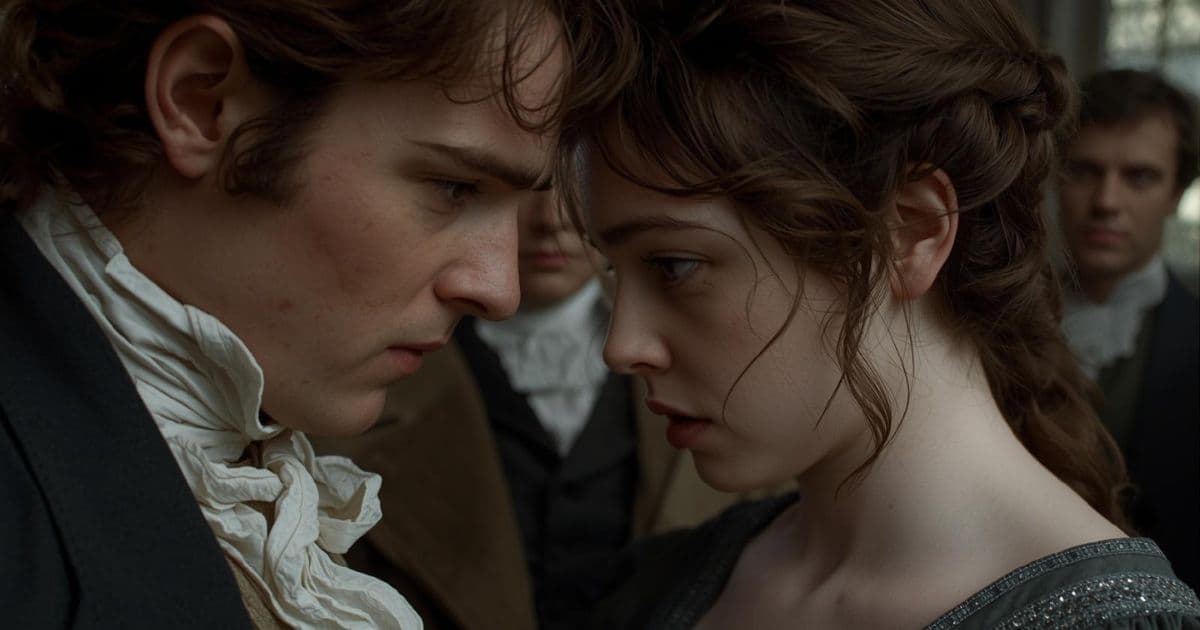
A chapter overview excerpt.(~339 words)
nne had never seen her father and sister before in contact with nobility, and she acknowledged, it must be owned, that the sight of this rich man in their house was a satisfaction to her.
Admiral and Mrs. Croft arrive to finalize the rental of Kellynch Hall, and the contrast couldn't be starker. Sir Walter and Elizabeth perform their aristocratic superiority for tenants they consider beneath them—people who've earned their money through work rather than inherited it through proper bloodlines. The Elliots are all manners and pretension, obsessed with appearances, measuring the Crofts by their lack of noble connections. But Anne sees what her family cannot: the Crofts possess every quality that actually matters. They're genuine, unpretentious, comfortable in themselves, and clearly devoted to each other. Mrs. Croft has spent years at sea with her husband, facing danger and adventure as his partner rather than sitting home waiting like a proper lady. She's weathered and confident, unimpressed by aristocratic posturing. The Admiral is straightforward and honest, a man who's commanded ships and men through war, unbothered by Sir Walter's subtle condescension.
Anne watches this encounter with devastating clarity. Her father and sister value title over character, appearance over substance, inherited status over earned respect. They're performing superiority while being objectively inferior in every meaningful way. The Crofts are renting Kellynch not because they're desperate for the honor, but because it's conveniently located. They have the power in this transaction—the money, the options, the dignity. The Elliots are the ones forced to accommodate.
This chapter deepens Austen's critique of a status system that elevates vanity over virtue. Anne's isolation becomes more apparent: she's the only member of her family capable of recognizing real worth, yet she lacks any power to speak or act on what she sees. She can't tell her father he's a fool. She can't explain that the people he condescends to are better than him. She can only watch, see clearly, and remain silent. It's a particular kind of torture—understanding everything while being able to change nothing.
Master this chapter. Complete your experience
Purchase the complete book to access all chapters and support classic literature
As an Amazon Associate, we earn a small commission from qualifying purchases at no additional cost to you.
Available in paperback, hardcover, and e-book formats
Let's Analyse the Pattern
Seeing truth clearly while lacking the power or standing to act on it
Why This Matters
Connect literature to life
The ability to evaluate people based on character rather than position
Practice This Today
Next time you meet someone, notice whether you're evaluating them by their status or their substance. Practice looking past titles and appearances.
Now let's explore the literary elements.
Key Quotes & Analysis
"Anne had no Uppercross Hall before her, no landed estate, no headship of a family; and if she could be persuaded to command no more than any other woman who worked, she could certainly claim no more."
Context: Reflecting on Anne's position
Anne's lack of status in her family mirrors her lack of power over her own life. Without property or position, she has been subject to others' decisions.
In Today's Words:
When you have no power, everyone feels entitled to tell you what to do.
Thematic Threads
True Worth vs. Social Status
In This Chapter
The Crofts outshine the Elliots in every meaningful way
Development
This contrast will sharpen throughout the novel
In Your Life:
Think of people you know who lack status but possess genuine worth. How are they treated?
You now have the context. Time to form your own thoughts.
Discussion Questions
- 1
Why are Sir Walter and Elizabeth blind to the Crofts' real worth? What does this say about how status affects perception?
analysis • medium - 2
Anne sees clearly but says nothing. Is this wisdom or weakness? When should we speak up?
reflection • deep
Critical Thinking Exercise
The Worth Inventory
Think of someone you initially dismissed because of their status (or lack of it). Did you later discover their real worth? What does this teach you about your own biases?
Consider:
- •What signals made you dismiss them initially?
- •What revealed their true character?
- •How has this changed how you evaluate people?
Journaling Prompt
Write about a time you judged someone by status and were proven wrong.
Coming Up Next...
Chapter 4: Mary's Complaints
Anne must leave Kellynch and take up residence with her married sister Mary, bringing her closer to Captain Wentworth's circle.