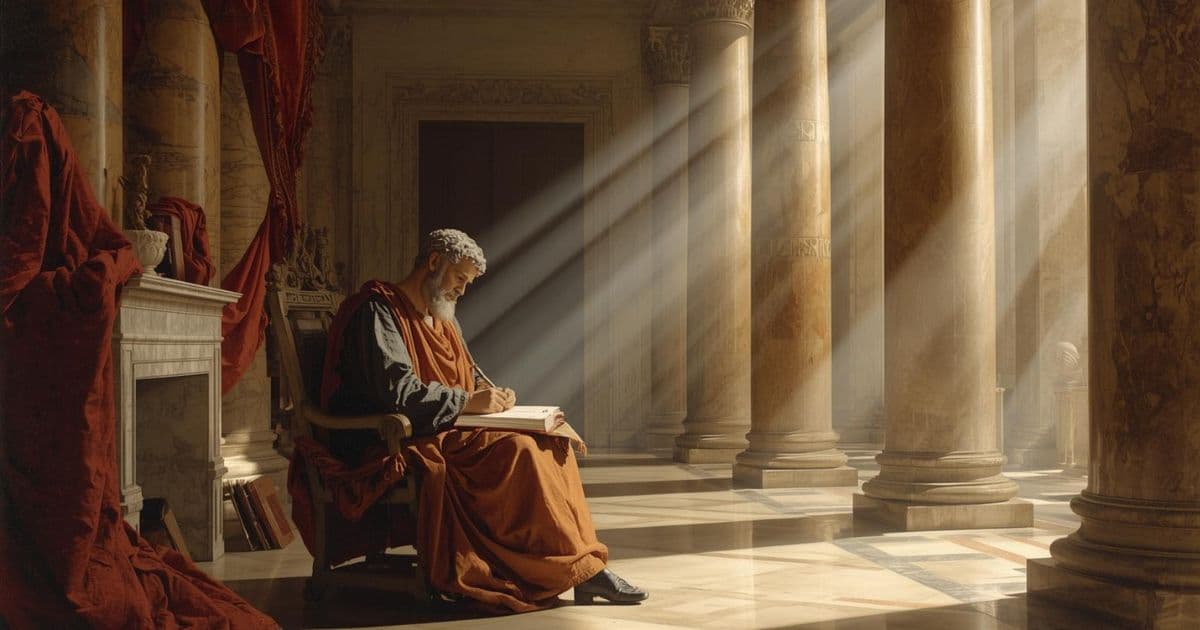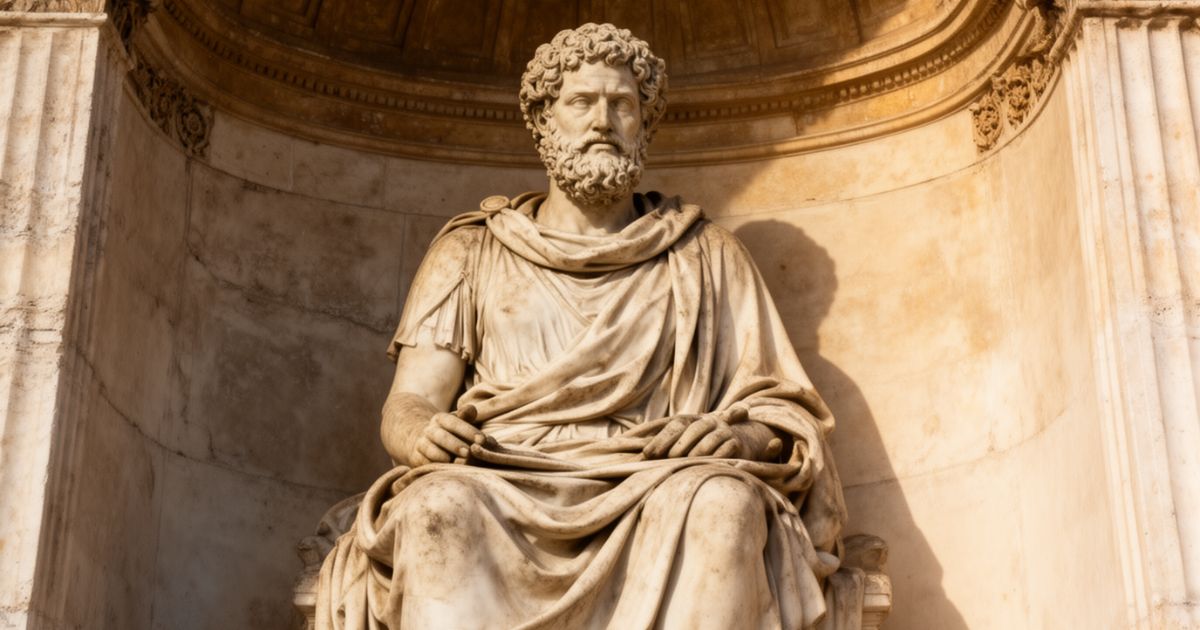
An excerpt from the original text.(complete · 5342 words)
THE NINTH BOOK
I. He that is unjust, is also impious. For the nature of the universe,
having made all reasonable creatures one for another, to the end that
they should do one another good; more or less according to the several
persons and occasions but in nowise hurt one another: it is manifest
that he that doth transgress against this her will, is guilty of impiety
towards the most ancient and venerable of all the deities. For the
nature of the universe, is the nature the common parent of all, and
therefore piously to be observed of all things that are, and that which
now is, to whatsoever first was, and gave it its being, hath relation
of blood and kindred. She is also called truth and is the first cause
of all truths. He therefore that willingly and wittingly doth lie, is
impious in that he doth receive, and so commit injustice: but he that
against his will, in that he disagreeth from the nature of the universe,
and in that striving with the nature of the world he doth in his
particular, violate the general order of the world. For he doth no
better than strive and war against it, who contrary to his own nature
applieth himself to that which is contrary to truth. For nature had
before furnished him with instincts and opportunities sufficient for the
attainment of it; which he having hitherto neglected, is not now able
to discern that which is false from that which is true. He also that
pursues after pleasures, as that which is truly good and flies from
pains, as that which is truly evil: is impious. For such a one must of
necessity oftentimes accuse that common nature, as distributing many
things both unto the evil, and unto the good, not according to the
deserts of either: as unto the bad oftentimes pleasures, and the causes
of pleasures; so unto the good, pains, and the occasions of pains.
Again, he that feareth pains and crosses in this world, feareth some of
those things which some time or other must needs happen in the world.
And that we have already showed to be impious. And he that pursueth
after pleasures, will not spare, to compass his desires, to do that
which is unjust, and that is manifestly impious. Now those things which
unto nature are equally indifferent (for she had not created both, both
pain and pleasure, if both had not been unto her equally indifferent):
they that will live according to nature, must in those things (as being
of the same mind and disposition that she is) be as equally indifferent.
Whosoever therefore in either matter of pleasure and pain; death and
life; honour and dishonour, (which things nature in the administration
of the world, indifferently doth make use of), is not as indifferent,
it is apparent that he is impious. When I say that common nature
doth indifferently make use of them, my meaning is, that they happen
indifferently in the ordinary course of things, which by a necessary
consequence, whether as principal or accessory, come to pass in the
world, according to that first and ancient deliberation of Providence,
by which she from some certain beginning, did resolve upon the creation
of such a world, conceiving then in her womb as it were some certain
rational generative seeds and faculties of things future, whether
subjects, changes, successions; both such and such, and just so many.
II. It were indeed more happy and comfortable, for a man to depart out
of this world, having lived all his life long clear from all falsehood,
dissimulation, voluptuousness, and pride. But if this cannot be, yet it
is some comfort for a man joyfully to depart as weary, and out of love
with those; rather than to desire to live, and to continue long in those
wicked courses. Hath not yet experience taught thee to fly from the
plague? For a far greater plague is the corruption of the mind, than any
certain change and distemper of the common air can be. This is a plague
of creatures, as they are living creatures; but that of men as they are
men or reasonable.
III. Thou must not in matter of death carry thyself scornfully, but as
one that is well pleased with it, as being one of those things that
nature hath appointed. For what thou dost conceive of these, of a boy to
become a young man, to wax old, to grow, to ripen, to get teeth, or a
beard, or grey hairs to beget, to bear, or to be delivered; or what
other action soever it be, that is natural unto man according to the
several seasons of his life; such a thing is it also to be dissolved. It
is therefore the part of a wise man, in matter of death, not in any wise
to carry himself either violently, or proudly but patiently to wait for
it, as one of nature's operations: that with the same mind as now thou
dost expect when that which yet is but an embryo in thy wife's belly
shall come forth, thou mayst expect also when thy soul shall fall off
from that outward coat or skin: wherein as a child in the belly it lieth
involved and shut up. But thou desirest a more popular, and though not
so direct and philosophical, yet a very powerful and penetrative recipe
against the fear of death, nothing can make they more willing to part
with thy life, than if thou shalt consider, both what the subjects
themselves are that thou shalt part with, and what manner of disposition
thou shalt no more have to do with. True it is, that, offended with them
thou must not be by no means, but take care of them, and meekly bear
with them However, this thou mayst remember, that whensoever it happens
that thou depart, it shall not be from men that held the same opinions
that thou dost. For that indeed, (if it were so) is the only thing that
might make thee averse from death, and willing to continue here, if it
were thy hap to live with men that had obtained the same belief that
thou hast. But now, what a toil it is for thee to live with men of
different opinions, thou seest: so that thou hast rather occasion to
say, Hasten, I thee pray, O Death; lest I also in time forget myself.
IV. He that sinneth, sinneth unto himself. He that is unjust, hurts
himself, in that he makes himself worse than he was before. Not he only
that committeth, but he also that omitteth something, is oftentimes
unjust.
V. If my present apprehension of the object be right, and my present
action charitable, and this, towards whatsoever doth proceed from God,
be my present disposition, to be well pleased with it, it sufficeth.
VI. To wipe away fancy, to use deliberation, to quench concupiscence, to
keep the mind free to herself.
VII. Of all unreasonable creatures, there is but one unreasonable soul;
and of all that are reasonable, but one reasonable soul, divided betwixt
them all. As of all earthly things there is but one earth, and but one
light that we see by; and but one air that we breathe in, as many as
either breathe or see. Now whatsoever partakes of some common thing,
naturally affects and inclines unto that whereof it is part, being of
one kind and nature with it. Whatsoever is earthly, presseth downwards
to the common earth. Whatsoever is liquid, would flow together. And
whatsoever is airy, would be together likewise. So that without some
obstacle, and some kind of violence, they cannot well be kept asunder.
Whatsoever is fiery, doth not only by reason of the elementary fire tend
upwards; but here also is so ready to join, and to burn together, that
whatsoever doth want sufficient moisture to make resistance, is easily
set on fire. Whatsoever therefore is partaker of that reasonable common
nature, naturally doth as much and more long after his own kind. For by
how much in its own nature it excels all other things, by so much more
is it desirous to be joined and united unto that, which is of its own
nature. As for unreasonable creatures then, they had not long been, but
presently begun among them swarms, and flocks, and broods of young ones,
and a kind of mutual love and affection. For though but unreasonable,
yet a kind of soul these had, and therefore was that natural desire of
union more strong and intense in them, as in creatures of a more
excellent nature, than either in plants, or stones, or trees. But among
reasonable creatures, begun commonwealths, friendships, families, public
meetings, and even in their wars, conventions, and truces. Now among
them that were yet of a more excellent nature, as the stars and planets,
though by their nature far distant one from another, yet even among them
began some mutual correspondency and unity. So proper is it to
excellency in a high degree to affect unity, as that even in things so
far distant, it could operate unto a mutual sympathy. But now behold,
what is now come to pass. Those creatures that are reasonable, are now
the only creatures that have forgotten their natural affection and
inclination of one towards another. Among them alone of all other things
that are of one kind, there is not to be found a general disposition to
flow together. But though they fly from nature, yet are they stopt in
their course, and apprehended. Do they what they can, nature doth
prevail. And so shalt thou confess, if thou dost observe it. For sooner
mayst thou find a thing earthly, where no earthly thing is, than find a
man that naturally can live by himself alone.
VIII. Man, God, the world, every one in their kind, bear some fruits.
All things have their proper time to bear. Though by custom, the word
itself is in a manner become proper unto the vine, and the like, yet is
it so nevertheless, as we have said. As for reason, that beareth both
common fruit for the use of others; and peculiar, which itself doth
enjoy. Reason is of a diffusive nature, what itself is in itself, it
begets in others, and so doth multiply.
IX. Either teach them better if it be in thy power; or if it be not,
remember that for this use, to bear with them patiently, was mildness
and goodness granted unto thee. The Gods themselves are good unto such;
yea and in some things, (as in matter of health, of wealth, of honour,)
are content often to further their endeavours: so good and gracious are
they. And mightest thou not be so too? or, tell me, what doth hinder
thee?
X. Labour not as one to whom it is appointed to be wretched, nor as one
that either would be pitied, or admired; but let this be thine only care
and desire; so always and in all things to prosecute or to forbear, as
the law of charity, or mutual society doth require.
XI. This day I did come out of all my trouble. Nay I have cast out all
my trouble; it should rather be for that which troubled thee, whatsoever
it was, was not without anywhere that thou shouldest come out of it, but
within in thine own opinions, from whence it must be cast out, before
thou canst truly and constantly be at ease.
XII. All those things, for matter of experience are usual and ordinary;
for their continuance but for a day; and for their matter, most base and
filthy. As they were in the days of those whom we have buried, so are
they now also, and no otherwise.
XIII. The things themselves that affect us, they stand without doors,
neither knowing anything themselves nor able to utter anything unto
others concerning themselves. What then is it, that passeth verdict on
them? The understanding.
XIV. As virtue and wickedness consist not in passion, but in action; so
neither doth the true good or evil of a reasonable charitable man
consist in passion, but in operation and action.
XV. To the stone that is cast up, when it comes down it is no hurt unto
it; as neither benefit, when it doth ascend.
XVI. Sift their minds and understandings, and behold what men they be,
whom thou dost stand in fear of what they shall judge of thee, what they
themselves judge of themselves.
XVII. All things that are in the world, are always in the estate
of alteration. Thou also art in a perpetual change, yea and under
corruption too, in some part: and so is the whole world.
XVIII. it is not thine, but another man's sin. Why should it trouble
thee? Let him look to it, whose sin it is.
XIX. Of an operation and of a purpose there is an ending, or of an
action and of a purpose we say commonly, that it is at an end: from
opinion also there is an absolute cessation, which is as it were the
death of it. In all this there is no hurt. Apply this now to a man's
age, as first, a child; then a youth, then a young man, then an old man;
every change from one age to another is a kind of death And all this
while here no matter of grief yet. Pass now unto that life first, that
which thou livedst under thy grandfather, then under thy mother, then
under thy father. And thus when through the whole course of thy life
hitherto thou hast found and observed many alterations, many changes,
many kinds of endings and cessations, put this question to thyself What
matter of grief or sorrow dost thou find in any of these? Or what doest
thou suffer through any of these? If in none of these, then neither
in the ending and consummation of thy whole life, which is also but a
cessation and change.
XX. As occasion shall require, either to thine own understanding, or to
that of the universe, or to his, whom thou hast now to do with, let thy
refuge be with all speed. To thine own, that it resolve upon nothing
against justice. To that of the universe, that thou mayest remember,
part of whom thou art. Of his, that thou mayest consider whether in the
estate of ignorance, or of knowledge. And then also must thou call to
mind, that he is thy kinsman.
XXI. As thou thyself, whoever thou art, were made for the perfection and
consummation, being a member of it, of a common society; so must every
action of thine tend to the perfection and consummation of a life that
is truly sociable. What action soever of thine therefore that either
immediately or afar off, hath not reference to the common good, that is
an exorbitant and disorderly action; yea it is seditious; as one among
the people who from such and such a consent and unity, should factiously
divide and separate himself.
XXII. Children's anger, mere babels; wretched souls bearing up dead
bodies, that they may not have their fall so soon: even as it is in that
common dirge song.
XXIII. Go to the quality of the cause from which the effect doth
proceed. Behold it by itself bare and naked, separated from all that is
material. Then consider the utmost bounds of time that that cause, thus
and thus qualified, can subsist and abide.
XXIV. Infinite are the troubles and miseries, that thou hast already
been put to, by reason of this only, because that for all happiness
it did not suffice thee, or, that thou didst not account it sufficient
happiness, that thy understanding did operate according to its natural
constitution.
XXV. When any shall either impeach thee with false accusations, or
hatefully reproach thee, or shall use any such carriage towards thee,
get thee presently to their minds and understandings, and look in them,
and behold what manner of men they be. Thou shalt see, that there is no
such occasion why it should trouble thee, what such as they are think of
thee. Yet must thou love them still, for by nature they are thy friends.
And the Gods themselves, in those things that they seek from them as
matters of great moment, are well content, all manner of ways, as by
dreams and oracles, to help them as well as others.
XXVI. Up and down, from one age to another, go the ordinary things of
the world; being still the same. And either of everything in particular
before it come to pass, the mind of the universe doth consider with
itself and deliberate: and if so, then submit for shame unto the
determination of such an excellent understanding: or once for all it did
resolve upon all things in general; and since that whatsoever happens,
happens by a necessary consequence, and all things indivisibly in a
manner and inseparably hold one of another. In sum, either there is a
God, and then all is well; or if all things go by chance and fortune,
yet mayest thou use thine own providence in those things that concern
thee properly; and then art thou well.
XXVII. Within a while the earth shall cover us all, and then she herself
shall have her change. And then the course will be, from one period of
eternity unto another, and so a perpetual eternity. Now can any man
that shall consider with himself in his mind the several rollings or
successions of so many changes and alterations, and the swiftness of all
these rulings; can he otherwise but contemn in his heart and despise
all worldly things? The cause of the universe is as it were a strong
torrent, it carrieth all away.
XXVIII. And these your professed politicians, the only true practical
philosophers of the world, (as they think of themselves) so full of
affected gravity, or such professed lovers of virtue and honesty, what
wretches be they in very deed; how vile and contemptible in themselves?
O man! what ado doest thou keep? Do what thy nature doth now require.
Resolve upon it, if thou mayest: and take no thought, whether anybody
shall know it or no. Yea, but sayest thou, I must not expect a Plato's
commonwealth. If they profit though never so little, I must be content;
and think much even of that little progress. Doth then any of them
forsake their former false opinions that I should think they profit? For
without a change of opinions, alas! what is all that ostentation, but
mere wretchedness of slavish minds, that groan privately, and yet would
make a show of obedience to reason, and truth? Go too now and tell me
of Alexander and Philippus, and Demetrius Phalereus. Whether they
understood what the common nature requireth, and could rule themselves
or no, they know best themselves. But if they kept a life, and
swaggered; I (God be thanked) am not bound to imitate them. The effect
of true philosophy is, unaffected simplicity and modesty. Persuade me
not to ostentation and vainglory.
XXIX. From some high place as it were to look down, and to behold
here flocks, and there sacrifices, without number; and all kind of
navigation; some in a rough and stormy sea, and some in a calm: the
general differences, or different estates of things, some, that are now
first upon being; the several and mutual relations of those things that
are together; and some other things that are at their last. Their lives
also, who were long ago, and theirs who shall be hereafter, and the
present estate and life of those many nations of barbarians that are
now in the world, thou must likewise consider in thy mind. And how many
there be, who never so much as heard of thy name, how many that will
soon forget it; how many who but even now did commend thee, within a
very little while perchance will speak ill of thee. So that neither
fame, nor honour, nor anything else that this world doth afford, is
worth the while. The sum then of all; whatsoever doth happen unto thee,
whereof God is the cause, to accept it contentedly: whatsoever thou
doest, whereof thou thyself art the cause, to do it justly: which will
be, if both in thy resolution and in thy action thou have no further
end, than to do good unto others, as being that, which by thy natural
constitution, as a man, thou art bound unto.
XXX. Many of those things that trouble and straiten thee, it is in thy
power to cut off, as wholly depending from mere conceit and opinion; and
then thou shalt have room enough.
XXXI. To comprehend the whole world together in thy mind, and the whole
course of this present age to represent it unto thyself, and to fix thy
thoughts upon the sudden change of every particular object. How short
the time is from the generation of anything, unto the dissolution of
the same; but how immense and infinite both that which was before the
generation, and that which after the generation of it shall be. All
things that thou seest, will soon be perished, and they that see their
corruptions, will soon vanish away themselves. He that dieth a hundred
years old, and he that dieth young, shall come all to one.
XXXII. What are their minds and understandings; and what the things that
they apply themselves unto: what do they love, and what do they hate
for? Fancy to thyself the estate of their souls openly to be seen. When
they think they hurt them shrewdly, whom they speak ill of; and when
they think they do them a very good turn, whom they commend and extol: O
how full are they then of conceit, and opinion!
XXXIII. Loss and corruption, is in very deed nothing else but change and
alteration; and that is it, which the nature of the universe doth most
delight in, by which, and according to which, whatsoever is done, is
well done. For that was the estate of worldly things from the beginning,
and so shall it ever be. Or wouldest thou rather say, that all things
in the world have gone ill from the beginning for so many ages, and
shall ever go ill? And then among so many deities, could no divine power
be found all this while, that could rectify the things of the world? Or
is the world, to incessant woes and miseries, for ever condemned?
XXXIV. How base and putrid, every common matter is! Water, dust, and
from the mixture of these bones, and all that loathsome stuff that our
bodies do consist of: so subject to be infected, and corrupted. And
again those other things that are so much prized and admired, as marble
stones, what are they, but as it were the kernels of the earth? gold and
silver, what are they, but as the more gross faeces of the earth? Thy
most royal apparel, for matter, it is but as it were the hair of a silly
sheep, and for colour, the very blood of a shell-fish; of this nature
are all other things. Thy life itself, is some such thing too; a mere
exhalation of blood: and it also, apt to be changed into some other
common thing.
XXXV. Will this querulousness, this murmuring, this complaining and
dissembling never be at an end? What then is it, that troubleth thee?
Doth any new thing happen unto thee? What doest thou so wonder at? At
the cause, or the matter? Behold either by itself, is either of that
weight and moment indeed? And besides these, there is not anything. But
thy duty towards the Gods also, it is time thou shouldst acquit thyself
of it with more goodness and simplicity.
XXXVI. It is all one to see these things for a hundred of years together
or but for three years.
XXXVII. If he have sinned, his is the harm, not mine. But perchance he
hath not.
XXXVIII. Either all things by the providence of reason happen unto every
particular, as a part of one general body; and then it is against reason
that a part should complain of anything that happens for the good of the
whole; or if, according to Epicurus, atoms be the cause of all things
and that life be nothing else but an accidentary confusion of things,
and death nothing else, but a mere dispersion and so of all other
things: what doest thou trouble thyself for?
XXXIX. Sayest thou unto that rational part, Thou art dead; corruption
hath taken hold on thee? Doth it then also void excrements? Doth it like
either oxen, or sheep, graze or feed; that it also should be mortal, as
well as the body?
XL. Either the Gods can do nothing for us at all, or they can still and
allay all the distractions and distempers of thy mind. If they can do
nothing, why doest thou pray? If they can, why wouldst not thou rather
pray, that they will grant unto thee, that thou mayst neither fear, nor
lust after any of those worldly things which cause these distractions
and distempers of it? Why not rather, that thou mayst not at either
their absence or presence, be grieved and discontented: than either that
thou mayst obtain them, or that thou mayst avoid them? For certainly
it must needs be, that if the Gods can help us in anything, they may in
this kind also. But thou wilt say perchance, 'In those things the Gods
have given me my liberty: and it is in mine own power to do what I
will.' But if thou mayst use this liberty, rather to set thy mind at
true liberty, than wilfully with baseness and servility of mind to
affect those things, which either to compass or to avoid is not in thy
power, wert not thou better? And as for the Gods, who hath told thee,
that they may not help us up even in those things that they have put in
our own power? whether it be so or no, thou shalt soon perceive, if
thou wilt but try thyself and pray. One prayeth that he may compass his
desire, to lie with such or such a one, pray thou that thou mayst not
lust to lie with her. Another how he may be rid of such a one; pray thou
that thou mayst so patiently bear with him, as that thou have no such
need to be rid of him. Another, that he may not lose his child. Pray
thou that thou mayst not fear to lose him. To this end and purpose, let
all thy prayer be, and see what will be the event.
XLI. 'In my sickness' (saith Epicurus of himself:) 'my discourses were
not concerning the nature of my disease, neither was that, to them that
came to visit me, the subject of my talk; but in the consideration and
contemplation of that, which was of especial weight and moment, was all
my time bestowed and spent, and among others in this very thing, how my
mind, by a natural and unavoidable sympathy partaking in some sort with
the present indisposition of my body, might nevertheless keep herself
free from trouble, and in present possession of her own proper
happiness. Neither did I leave the ordering of my body to the physicians
altogether to do with me what they would, as though I expected any
great matter from them, or as though I thought it a matter of such great
consequence, by their means to recover my health: for my present estate,
methought, liked me very well, and gave me good content.' Whether
therefore in sickness (if thou chance to sicken) or in what other kind
of extremity soever, endeavour thou also to be in thy mind so affected,
as he doth report of himself: not to depart from thy philosophy for
anything that can befall thee, nor to give ear to the discourses of
silly people, and mere naturalists.
XLII. It is common to all trades and professions to mind and intend that
only, which now they are about, and the instrument whereby they work.
XLIII. When at any time thou art offended with any one's impudency, put
presently this question to thyself: 'What? Is it then possible, that
there should not be any impudent men in the world! Certainly it is not
possible.' Desire not then that which is impossible. For this one, (thou
must think) whosoever he be, is one of those impudent ones, that
the world cannot be without. So of the subtile and crafty, so of the
perfidious, so of every one that offendeth, must thou ever be ready to
reason with thyself. For whilst in general thou dost thus reason with
thyself, that the kind of them must needs be in the world, thou wilt be
the better able to use meekness towards every particular. This also
thou shalt find of very good use, upon every such occasion, presently
to consider with thyself, what proper virtue nature hath furnished man
with, against such a vice, or to encounter with a disposition vicious
in this kind. As for example, against the unthankful, it hath given
goodness and meekness, as an antidote, and so against another vicious
in another kind some other peculiar faculty. And generally, is it not
in thy power to instruct him better, that is in an error? For whosoever
sinneth, doth in that decline from his purposed end, and is certainly
deceived, And again, what art thou the worse for his sin? For thou shalt
not find that any one of these, against whom thou art incensed, hath in
very deed done anything whereby thy mind (the only true subject of
thy hurt and evil) can be made worse than it was. And what a matter of
either grief or wonder is this, if he that is unlearned, do the deeds of
one that is unlearned? Should not thou rather blame thyself, who, when
upon very good grounds of reason, thou mightst have thought it very
probable, that such a thing would by such a one be committed, didst not
only not foresee it, but moreover dost wonder at it, that such a thing
should be. But then especially, when thou dost find fault with either an
unthankful, or a false man, must thou reflect upon thyself. For without
all question, thou thyself art much in fault, if either of one that were
of such a disposition, thou didst expect that he should be true unto
thee: or when unto any thou didst a good turn, thou didst not there
bound thy thoughts, as one that had obtained his end; nor didst not
think that from the action itself thou hadst received a full reward of
the good that thou hadst done. For what wouldst thou have more? Unto him
that is a man, thou hast done a good turn: doth not that suffice thee?
What thy nature required, that hast thou done. Must thou be rewarded for
it? As if either the eye for that it seeth, or the feet that they go,
should require satisfaction. For as these being by nature appointed for
such an use, can challenge no more, than that they may work according
to their natural constitution: so man being born to do good unto others
whensoever he doth a real good unto any by helping them out of error; or
though but in middle things, as in matter of wealth, life, preferment,
and the like, doth help to further their desires he doth that for which
he was made, and therefore can require no more.
Master this chapter. Complete your experience
Purchase the complete book to access all chapters and support classic literature
As an Amazon Associate, we earn a small commission from qualifying purchases at no additional cost to you.
Available in paperback, hardcover, and e-book formats
Let's Analyse the Pattern
Fighting against natural order or inevitable reality wastes energy and creates more suffering than acceptance and strategic adaptation.
Why This Matters
Connect literature to life
This chapter teaches the crucial skill of separating what we can influence from what we cannot, preventing wasted energy on futile battles.
Practice This Today
This week, notice when you feel frustrated or angry, then ask yourself: 'Is this something I can actually change, or am I fighting reality?'
Now let's explore the literary elements.
Key Quotes & Analysis
"To act unjustly is impiety. For since universal nature has made rational animals for the sake of one another to help one another according to their deserts, but in no way to injure one another, he who transgresses her will is clearly guilty of impiety toward the highest divinity."
Context: Opening the chapter by establishing that harming others goes against the universe's design
This sets up Marcus's core argument that cooperation isn't just nice - it's our cosmic duty. He's telling himself that when people hurt others, they're fighting against the fundamental order of reality.
In Today's Words:
Being mean to people isn't just rude - it goes against how we're wired to work together.
"Death smiles at all of us, but all a man can do is smile back."
Context: Discussing how to face mortality with acceptance rather than fear
Marcus reframes death from something terrifying to something natural that deserves respect, not panic. He's coaching himself to meet life's ultimate challenge with dignity.
In Today's Words:
Death is coming for everyone, so you might as well face it with grace.
"Very little is needed to make a happy life; it is all within yourself, in your way of thinking."
Context: Reflecting on how our internal state matters more than external circumstances
This captures the Stoic emphasis on internal control versus external events. Marcus is reminding himself that happiness comes from how we process life, not what happens to us.
In Today's Words:
Happiness is an inside job - it's about your mindset, not your situation.
Thematic Threads
Class
In This Chapter
Marcus shows how even emperors must accept natural limits and work within cosmic order rather than above it
Development
Evolved from earlier themes about duty—now showing that true power comes from alignment, not opposition
In Your Life:
You might see this when trying to maintain appearances that drain your resources instead of accepting your actual circumstances
Identity
In This Chapter
Death reframed not as identity loss but as natural transformation, like aging or seasons changing
Development
Building on earlier acceptance themes—identity isn't fixed but part of larger flow
In Your Life:
You might struggle with this when facing major life changes that threaten your sense of who you are
Social Expectations
In This Chapter
Fame and reputation revealed as fleeting distractions from what actually matters in human cooperation
Development
Deepening the theme of external validation vs internal worth from previous chapters
In Your Life:
You might see this in social media pressure or workplace politics that distract from meaningful relationships
Personal Growth
In This Chapter
Growth happens through accepting difficult people and situations as teachers rather than obstacles
Development
Advanced application of earlier stoic principles—using adversity as curriculum
In Your Life:
You might find this when dealing with difficult family members or coworkers who trigger your worst reactions
Human Relationships
In This Chapter
Even when humans forget how to cooperate, nature still pulls us toward each other—connection is our default
Development
Introduced here as fundamental insight about human nature and social bonds
In Your Life:
You might notice this when conflict with someone reveals underlying care or when strangers help during crises
You now have the context. Time to form your own thoughts.
Discussion Questions
- 1
Anthony says injustice is 'impiety' because rational beings were designed to help each other. What examples does he give of people working against this natural order?
analysis • surface - 2
Why does Anthony argue that fearing death is as pointless as a stone worrying about falling? What does this reveal about his view of natural processes?
analysis • medium - 3
Anthony notes that even unreasonable animals naturally cooperate, while humans struggle with harmony. Where do you see this pattern in your workplace, family, or community?
application • medium - 4
When you catch yourself fighting against something that's already happened or inevitable, how could you redirect that energy more productively?
application • deep - 5
Anthony suggests our troubles come from our opinions about events, not the events themselves. What does this teach us about where real power lies in difficult situations?
reflection • deep
Critical Thinking Exercise
Map Your Resistance Points
Think of a current situation that's causing you stress or frustration. Write it down, then identify what parts of this situation you're fighting against versus what you're actually able to control. Create two columns: 'Fighting Reality' and 'Can Actually Influence.' Be brutally honest about which column has more items.
Consider:
- •Notice if you're spending more energy on the 'Fighting Reality' column than the 'Can Actually Influence' column
- •Ask yourself what would happen if you fully accepted everything in the first column
- •Consider how you could redirect your resistance energy toward the things you can actually change
Journaling Prompt
Write about a time when you stopped fighting an unchangeable situation and focused on what you could control instead. What shifted? How did this change your stress level and your results?
Coming Up Next...
Chapter 10: The Soul's Journey to Simplicity
In the tenth chapter, Marcus turns his attention to the art of living each day as if it were complete in itself, exploring how to find meaning in the present moment while preparing for whatever may come.