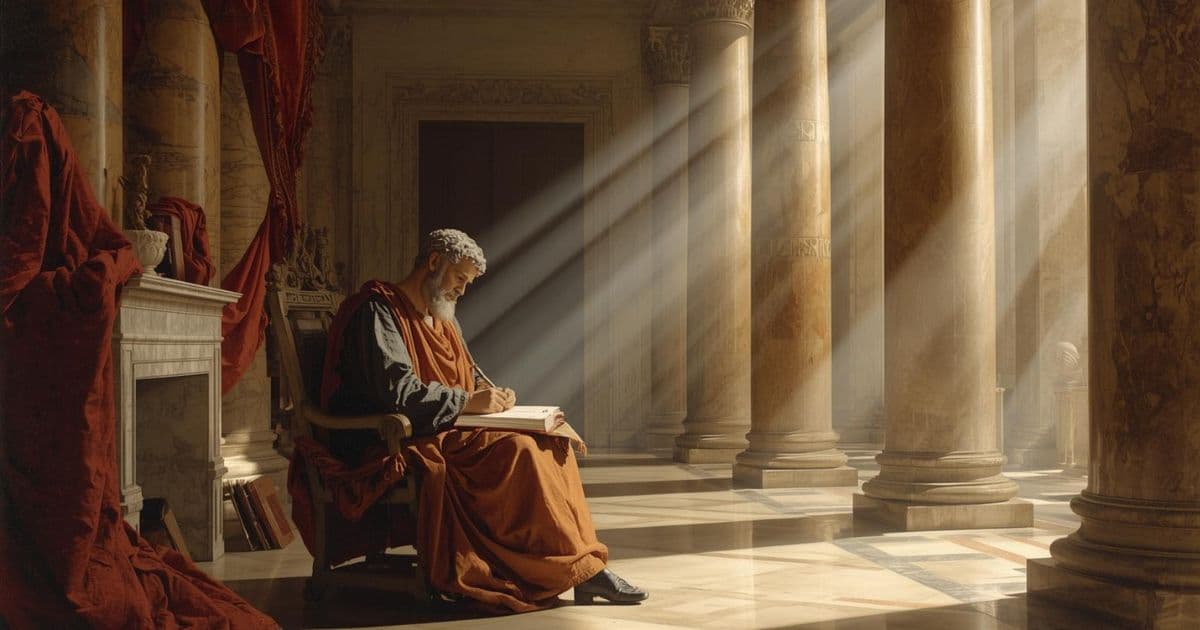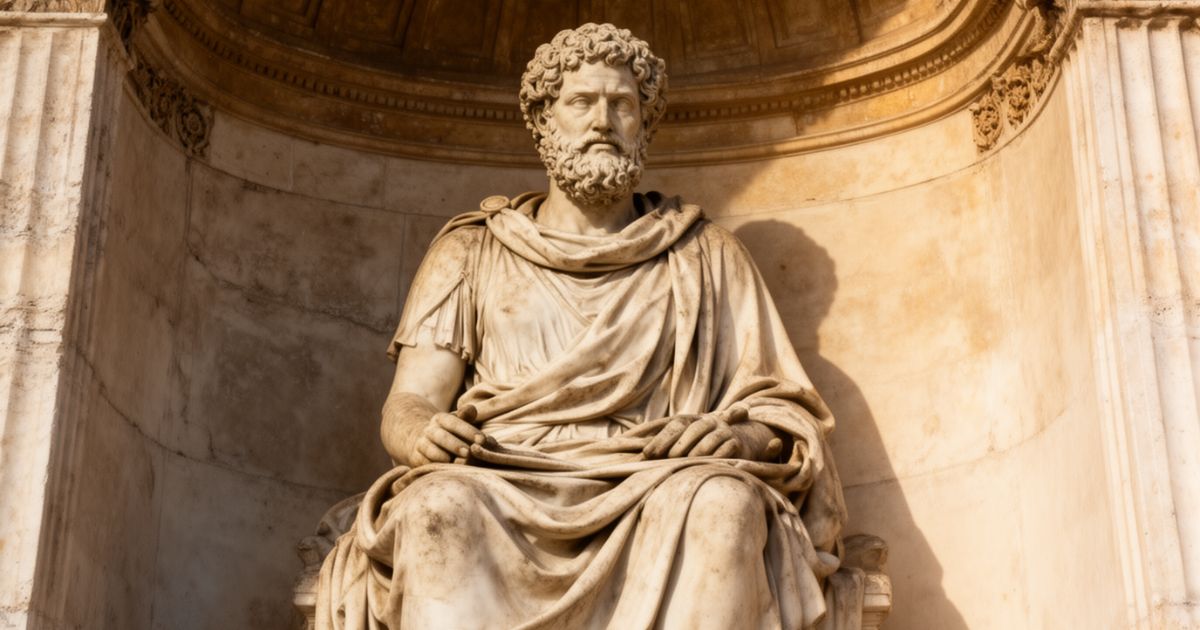
An excerpt from the original text.(complete · 6226 words)
THE TENTH BOOK
I. O my soul, the time I trust will be, when thou shalt be good, simple,
single, more open and visible, than that body by which it is enclosed.
Thou wilt one day be sensible of their happiness, whose end is love, and
their affections dead to all worldly things. Thou shalt one day be full,
and in want of no external thing: not seeking pleasure from anything,
either living or insensible, that this world can afford; neither wanting
time for the continuation of thy pleasure, nor place and opportunity,
nor the favour either of the weather or of men. When thou shalt have
content in thy present estate, and all things present shall add to thy
content: when thou shalt persuade thyself, that thou hast all things;
all for thy good, and all by the providence of the Gods: and of things
future also shalt be as confident, that all will do well, as tending to
the maintenance and preservation in some sort, of his perfect welfare
and happiness, who is perfection of life, of goodness, and beauty; who
begets all things, and containeth all things in himself, and in himself
doth recollect all things from all places that are dissolved, that of
them he may beget others again like unto them. Such one day shall be thy
disposition, that thou shalt be able, both in regard of the Gods, and
in regard of men, so to fit and order thy conversation, as neither
to complain of them at any time, for anything that they do; nor to do
anything thyself, for which thou mayest justly be condemned.
II. As one who is altogether governed by nature, let it be thy care to
observe what it is that thy nature in general doth require. That
done, if thou find not that thy nature, as thou art a living sensible
creature, will be the worse for it, thou mayest proceed. Next then thou
must examine, what thy nature as thou art a living sensible creature,
doth require. And that, whatsoever it be, thou mayest admit of and do
it, if thy nature as thou art a reasonable living creature, will not be
the worse for it. Now whatsoever is reasonable, is also sociable, Keep
thyself to these rules, and trouble not thyself about idle things.
III. Whatsoever doth happen unto thee, thou art naturally by thy natural
constitution either able, or not able to bear. If thou beest able, be
not offended, but bear it according to thy natural constitution, or as
nature hath enabled thee. If thou beest not able, be not offended. For
it will soon make an end of thee, and itself, (whatsoever it be) at the
same time end with thee. But remember, that whatsoever by the strength
of opinion, grounded upon a certain apprehension of both true profit and
duty, thou canst conceive tolerable; that thou art able to bear that by
thy natural constitution.
IV. Him that offends, to teach with love and meek ness, and to show him
his error. But if thou canst not, then to blame thyself; or rather not
thyself neither, if thy will and endeavours have not been wanting.
V. Whatsoever it be that happens unto thee, it is that which from all
time was appointed unto thee. For by the same coherence of causes, by
which thy substance from all eternity was appointed to be, was also
whatsoever should happen unto it, destinated and appointed.
VI. Either with Epicurus, we must fondly imagine the atoms to be the
cause of all things, or we must needs grant a nature. Let this then be
thy first ground, that thou art part of that universe, which is governed
by nature. Then secondly, that to those parts that are of the same kind
and nature as thou art, thou hast relation of kindred. For of these,
if I shall always be mindful, first as I am a part, I shall never be
displeased with anything, that falls to my particular share of the
common chances of the world. For nothing that is behoveful unto the
whole, can be truly hurtful to that which is part of it. For this
being the common privilege of all natures, that they contain nothing in
themselves that is hurtful unto them; it cannot be that the nature of
the universe (whose privilege beyond other particular natures, is,
that she cannot against her will by any higher external cause be
constrained,) should beget anything and cherish it in her bosom that
should tend to her own hurt and prejudice. As then I bear in mind that
I am a part of such an universe, I shall not be displeased with anything
that happens. And as I have relation of kindred to those parts that
are of the same kind and nature that I am, so I shall be careful to
do nothing that is prejudicial to the community, but in all my
deliberations shall they that are of my kind ever be; and the common
good, that, which all my intentions and resolutions shall drive unto,
as that which is contrary unto it, I shall by all means endeavour to
prevent and avoid. These things once so fixed and concluded, as thou
wouldst think him a happy citizen, whose constant study and practice
were for the good and benefit of his fellow citizens, and the carriage
of the city such towards him, that he were well pleased with it; so must
it needs be with thee, that thou shalt live a happy life.
VII. All parts of the world, (all things I mean that are contained
within the whole world), must of necessity at some time or other come to
corruption. Alteration I should say, to speak truly and properly; but
that I may be the better understood, I am content at this time to use
that more common word. Now say I, if so be that this be both hurtful
unto them, and yet unavoidable, would not, thinkest thou, the whole
itself be in a sweet case, all the parts of it being subject to
alteration, yea and by their making itself fitted for corruption, as
consisting of things different and contrary? And did nature then either
of herself thus project and purpose the affliction and misery of her
parts, and therefore of purpose so made them, not only that haply they
might, but of necessity that they should fall into evil; or did not she
know what she did, when she made them? For either of these two to say,
is equally absurd. But to let pass nature in general, and to reason of
things particular according to their own particular natures; how absurd
and ridiculous is it, first to say that all parts of the whole are, by
their proper natural constitution, subject to alteration; and then when
any such thing doth happen, as when one doth fall sick and dieth, to
take on and wonder as though some strange thing had happened? Though
this besides might move not so grievously to take on when any such thing
doth happen, that whatsoever is dissolved, it is dissolved into those
things, whereof it was compounded. For every dissolution is either
a mere dispersion, of the elements into those elements again whereof
everything did consist, or a change, of that which is more solid into
earth; and of that which is pure and subtile or spiritual, into air.
So that by this means nothing is lost, but all resumed again into those
rational generative seeds of the universe; and this universe, either
after a certain period of time to lie consumed by fire, or by continual
changes to be renewed, and so for ever to endure. Now that solid and
spiritual that we speak of, thou must not conceive it to be that very
same, which at first was, when thou wert born. For alas! all this that
now thou art in either kind, either for matter of substance, or of life,
hath but two or three days ago partly from meats eaten, and partly from
air breathed in, received all its influx, being the same then in no
other respect, than a running river, maintained by the perpetual influx
and new supply of waters, is the same. That therefore which thou hast
since received, not that which came from thy mother, is that which
comes to change and corruption. But suppose that that for the general
substance, and more solid part of it, should still cleave unto thee
never so close, yet what is that to the proper qualities and affections
of it, by which persons are distinguished, which certainly are quite
different?
VIII. Now that thou hast taken these names upon thee of good, modest,
true; of ἔμφρων, σύμφρων, ὑπέρφρων; take heed lest at any times by
doing anything that is contrary, thou be but improperly so called, and
lose thy right to these appellations. Or if thou do, return unto them
again with all possible speed. And remember, that the word ἔμφρων notes
unto thee an intent and intelligent consideration of every object that
presents itself unto thee, without distraction. And the word σύμφρων, a
ready and contented acceptation of whatsoever by the appointment of the
common nature, happens unto thee. And the word ὑπέρφρων, a
super-extension, or a transcendent, and outreaching disposition of thy
mind, whereby it passeth by all bodily pains and pleasures, honour and
credit, death and whatsoever is of the same nature, as matters of
absolute indifferency, and in no wise to be stood upon by a wise man.
These then if inviolably thou shalt observe, and shalt not be ambitious
to be so called by others, both thou thyself shalt become a new man,
and thou shalt begin a new life. For to continue such as hitherto thou
hast been, to undergo those distractions and distempers as thou must
needs for such a life as hitherto thou hast lived, is the part of one
that is very foolish, and is overfond of his life. Whom a man might
compare to one of those half-eaten wretches, matched in the
amphitheatre with wild beasts; who as full as they are all the body
over with wounds and blood, desire for a great favour, that they may be
reserved till the next day, then also, and in the same estate to be
exposed to the same nails and teeth as before. Away therefore, ship
thyself; and from the troubles and distractions of thy former life
convey thyself as it were unto these few names; and if thou canst abide
in them, or be constant in the practice and possession of them,
continue there as glad and joyful as one that were translated unto some
such place of bliss and happiness as that which by Hesiod and Plato is
called the Islands of the Blessed, by others called the Elysian Fields.
And whensoever thou findest thyself; that thou art in danger of a
relapse, and that thou art not able to master and overcome those
difficulties and temptations that present themselves in thy present
station: get thee into any private corner, where thou mayst be better
able. Or if that will not serve forsake even thy life rather. But so
that it be not in passion but in a plain voluntary modest way: this
being the only commendable action of thy whole life that thus thou art
departed, or this having been the main work and business of thy whole
life, that thou mightest thus depart. Now for the better remembrance of
those names that we have spoken of, thou shalt find it a very good
help, to remember the Gods as often as may be: and that, the thing
which they require at our hands of as many of us, as are by nature
reasonable creation is not that with fair words, and outward show of
piety and devotion we should flatter them, but that we should become
like unto them: and that as all other natural creatures, the fig tree
for example; the dog the bee: both do, all of them, and apply
themselves unto that which by their natural constitution, is proper
unto them; so man likewise should do that, which by his nature, as he
is a man, belongs unto him.
IX. Toys and fooleries at home, wars abroad: sometimes terror, sometimes
torpor, or stupid sloth: this is thy daily slavery. By little and
little, if thou doest not better look to it, those sacred dogmata will
be blotted out of thy mind. How many things be there, which when as
a mere naturalist, thou hast barely considered of according to their
nature, thou doest let pass without any further use? Whereas thou
shouldst in all things so join action and contemplation, that thou
mightest both at the same time attend all present occasions, to perform
everything duly and carefully and yet so intend the contemplative part
too, that no part of that delight and pleasure, which the contemplative
knowledge of everything according to its true nature doth of itself
afford, might be lost. Or, that the true and contemnplative knowledge
of everything according to its own nature, might of itself, (action
being subject to many lets and impediments) afford unto thee sufficient
pleasure and happiness. Not apparent indeed, but not concealed. And when
shalt thou attain to the happiness of true simplicity, and unaffected
gravity? When shalt thou rejoice in the certain knowledge of every
particular object according to its true nature: as what the matter and
substance of it is; what use it is for in the world: how long it can
subsist: what things it doth consist of: who they be that are capable of
it, and who they that can give it, and take it away?
X. As the spider, when it hath caught the fly that it hunted after, is
not little proud, nor meanly conceited of herself: as he likewise that
hath caught an hare, or hath taken a fish with his net: as another for
the taking of a boar, and another of a bear: so may they be proud,
and applaud themselves for their valiant acts against the Sarmatai, or
northern nations lately defeated. For these also, these famous soldiers
and warlike men, if thou dost look into their minds and opinions, what
do they for the most part but hunt after prey?
XI. To find out, and set to thyself some certain way and method of
contemplation, whereby thou mayest clearly discern and represent unto
thyself, the mutual change of all things, the one into the other. Bear
it in thy mind evermore, and see that thou be throughly well exercised
in this particular. For there is not anything more effectual to beget
true magnanimity.
XII. He hath got loose from the bonds of his body, and perceiving that
within a very little while he must of necessity bid the world farewell,
and leave all these things behind him, he wholly applied himself, as to
righteousness in all his actions, so to the common nature in all things
that should happen unto him. And contenting himself with these two
things, to do all things justly, and whatsoever God doth send to like
well of it: what others shall either say or think of him, or shall do
against him, he doth not so much as trouble his thoughts with it. To go
on straight, whither right and reason directed him, and by so doing to
follow God, was the only thing that he did mind, that, his only business
and occupation.
XIII. What use is there of suspicion at all? or, why should thoughts
of mistrust, and suspicion concerning that which is future, trouble thy
mind at all? What now is to be done, if thou mayest search and inquiry
into that, what needs thou care for more? And if thou art well able to
perceive it alone, let no man divert thee from it. But if alone thou
doest not so well perceive it, suspend thine action, and take advice
from the best. And if there be anything else that doth hinder thee, go
on with prudence and discretion, according to the present occasion
and opportunity, still proposing that unto thyself, which thou doest
conceive most right and just. For to hit that aright, and to speed in
the prosecution of it, must needs be happiness, since it is that only
which we can truly and properly be said to miss of, or miscarry in.
XIV. What is that that is slow, and yet quick? merry, and yet grave? He
that in all things doth follow reason for his guide.
XV. In the morning as soon as thou art awaked, when thy judgment, before
either thy affections, or external objects have wrought upon it, is yet
most free and impartial: put this question to thyself, whether if that
which is right and just be done, the doing of it by thyself, or by
others when thou art not able thyself; be a thing material or no. For
sure it is not. And as for these that keep such a life, and stand so
much upon the praises, or dispraises of other men, hast thou forgotten
what manner of men they be? that such and such upon their beds, and such
at their board: what their ordinary actions are: what they pursue after,
and what they fly from: what thefts and rapines they commit, if not with
their hands and feet, yet with that more precious part of theirs, their
minds: which (would it but admit of them) might enjoy faith, modesty,
truth, justice, a good spirit.
XVI. Give what thou wilt, and take away what thou wilt, saith he that is
well taught and truly modest, to Him that gives, and takes away. And it
is not out of a stout and peremptory resolution, that he saith it, but
in mere love, and humble submission.
XVII. So live as indifferent to the world and all worldly objects, as
one who liveth by himself alone upon some desert hill. For whether here,
or there, if the whole world be but as one town, it matters not much for
the place. Let them behold and see a man, that is a man indeed, living
according to the true nature of man. If they cannot bear with me, let
them kill me. For better were it to die, than so to live as they would
have thee.
XVIII. Make it not any longer a matter of dispute or discourse, what are
the signs and proprieties of a good man, but really and actually to be
such.
XIX. Ever to represent unto thyself; and to set before thee, both the
general age and time of the world, and the whole substance of it. And
how all things particular in respect of these are for their substance,
as one of the least seeds that is: and for their duration, as the
turning of the pestle in the mortar once about. Then to fix thy mind
upon every particular object of the world, and to conceive it, (as it
is indeed,) as already being in the state of dissolution, and of change;
tending to some kind of either putrefaction or dispersion; or whatsoever
else it is, that is the death as it were of everything in his own kind.
XX. Consider them through all actions and occupations, of their lives:
as when they eat, and when they sleep: when they are in the act of
necessary exoneration, and when in the act of lust. Again, when they
either are in their greatest exultation; and in the middle of all
their pomp and glory; or being angry and displeased, in great state and
majesty, as from an higher place, they chide and rebuke. How base and
slavish, but a little while ago, they were fain to be, that they might
come to this; and within a very little while what will be their estate,
when death hath once seized upon them.
XXI. That is best for every one, that the common nature of all doth send
unto every one, and then is it best, when she doth send it.
XXII. The earth, saith the poet, doth often long after the rain. So is
the glorious sky often as desirous to fall upon the earth, which argues
a mutual kind of love between them. And so (say I) doth the world bear
a certain affection of love to whatsoever shall come to pass With thine
affections shall mine concur, O world. The same (and no other) shall the
object of my longing be which is of thine. Now that the world doth love
it is true indeed so is it as commonly said, and acknowledged ledged,
when, according to the Greek phrase, imitated by the Latins, of things
that used to be, we say commonly, that they love to be.
XXIII. Either thou dost Continue in this kind of life and that is it,
which so long thou hast been used unto and therefore tolerable: or thou
doest retire, or leave the world, and that of thine own accord, and then
thou hast thy mind: or thy life is cut off; and then mayst thou
rejoice that thou hast ended thy charge. One of these must needs be.
Be therefore of good comfort.
XXIV Let it always appear and be manifest unto thee that solitariness,
and desert places, by many philosophers so much esteemed of and
affected, are of themselves but thus and thus; and that all things are
them to them that live in towns, and converse with others as they are
the same nature everywhere to be seen and observed: to them that have
retired themselves to the top of mountains, and to desert havens, or
what other desert and inhabited places soever. For anywhere it thou wilt
mayest thou quickly find and apply that to thyself; which Plato saith of
his philosopher, in a place: as private and retired, saith he, as if he
were shut up and enclosed about in some shepherd's lodge, on the top of
a hill. There by thyself to put these questions to thyself or to enter
in these considerations: What is my chief and principal part, which hath
power over the rest? What is now the present estate of it, as I use it;
and what is it, that I employ it about? Is it now void of reason ir no?
Is it free, and separated; or so affixed, so congealed and grown
together as it were with the flesh, that it is swayed by the motions and
inclinations of it?
XXV. He that runs away from his master is a fugitive. But the law is
every man's master. He therefore that forsakes the law, is a fugitive.
So is he, whosoever he be, that is either sorry, angry, or afraid, or
for anything that either hath been, is, or shall be by his appointment,
who is the Lord and Governor of the universe. For he truly and properly
is Νόμος, or the law, as the only νέμων, or distributor and dispenser
of all things that happen unto any one in his lifetime--Whatsoever then
is either sorry, angry, or afraid, is a fugitive.
XXVI. From man is the seed, that once cast into the womb man hath no
more to do with it. Another cause succeedeth, and undertakes the
work, and in time brings a child (that wonderful effect from such a
beginning!) to perfection. Again, man lets food down through his
throat; and that once down, he hath no more to do with it. Another
cause succeedeth and distributeth this food into the senses, and the
affections: into life, and into strength; and doth with it those other
many and marvellous things, that belong unto man. These things therefore
that are so secretly and invisibly wrought and brought to pass, thou
must use to behold and contemplate; and not the things themselves only,
but the power also by which they are effected; that thou mayst behold
it, though not with the eyes of the body, yet as plainly and visibly as
thou canst see and discern the outward efficient cause of the depression
and elevation of anything.
XXVII. Ever to mind and consider with thyself; how all things that now
are, have been heretofore much after the same sort, and after the same
fashion that now they are: and so to think of those things which shall
be hereafter also. Moreover, whole dramata, and uniform scenes, or
scenes that comprehend the lives and actions of men of one calling and
profession, as many as either in thine own experience thou hast known,
or by reading of ancient histories; (as the whole court of Adrianus,
the whole court of Antoninus Pius, the whole court of Philippus, that of
Alexander, that of Crœsus): to set them all before thine eyes. For thou
shalt find that they are all but after one sort and fashion: only that
the actors were others.
XXVIII. As a pig that cries and flings when his throat is cut, fancy to
thyself every one to be, that grieves for any worldly thing and takes
on. Such a one is he also, who upon his bed alone, doth bewail
the miseries of this our mortal life. And remember this, that Unto
reasonable creatures only it is granted that they may willingly and
freely submit unto Providence: but absolutely to submit, is a necessity
imposed upon all creatures equally.
XXIX. Whatsoever it is that thou goest about, consider of it by thyself,
and ask thyself, What? because I shall do this no more when I am dead,
should therefore death seem grievous unto me?
XXX. When thou art offended with any man's transgression, presently
reflect upon thyself; and consider what thou thyself art guilty of in
the same kind. As that thou also perchance dost think it a happiness
either to be rich, or to live in pleasure, or to be praised and
commended, and so of the rest in particular. For this if thou shalt call
to mind, thou shalt soon forget thine anger; especially when at the same
time this also shall concur in thy thoughts, that he was constrained by
his error and ignorance so to do: for how can he choose as long as he
is of that opinion? Do thou therefore if thou canst, take away that from
him, that forceth him to do as he doth.
XXXI. When thou seest Satyro, think of Socraticus and Eutyches, or
Hymen, and when Euphrates, think of Eutychio, and Sylvanus, when
Alciphron, of Tropaeophorus, when Xenophon, of Crito, or Severus. And
when thou doest look upon thyself, fancy unto thyself some one or other
of the Cæsars; and so for every one, some one or other that hath been
for estate and profession answerable unto him. Then let this come to thy
mind at the same time; and where now are they all? Nowhere or anywhere?
For so shalt thou at all time be able to perceive how all worldly
things are but as the smoke, that vanisheth away: or, indeed, mere
nothing. Especially when thou shalt call to mind this also, that
whatsoever is once changed, shall never be again as long as the world
endureth. And thou then, how long shalt thou endure? And why doth it not
suffice thee, if virtuously, and as becometh thee, thou mayest pass that
portion of time, how little soever it be, that is allotted unto thee?
XXXII. What a subject, and what a course of life is it, that thou doest
so much desire to be rid of. For all these things, what are they, but
fit objects for an understanding, that beholdeth everything according to
its true nature, to exercise itself upon? Be patient, therefore, until
that (as a strong stomach that turns all things into his own nature; and
as a great fire that turneth in flame and light, whatsoever thou doest
cast into it) thou have made these things also familiar, and as it were
natural unto thee.
XXXIII. Let it not be in any man's power, to say truly of thee, that
thou art not truly simple, or sincere and open, or not good. Let him be
deceived whosoever he be that shall have any such opinion of thee. For
all this doth depend of thee. For who is it that should hinder thee from
being either truly simple or good? Do thou only resolve rather not to
live, than not to be such. For indeed neither doth it stand with reason
that he should live that is not such. What then is it that may upon this
present occasion according to best reason and discretion, either be said
or done? For whatsoever it be, it is in thy power either to do it, or
to say it, and therefore seek not any pretences, as though thou wert
hindered. Thou wilt never cease groaning and complaining, until such
time as that, what pleasure is unto the voluptuous, be unto thee, to do
in everything that presents itself, whatsoever may be done conformably
and agreeably to the proper constitution of man, or, to man as he is a
man. For thou must account that pleasure, whatsoever it be, that thou
mayest do according to thine own nature. And to do this, every place
will fit thee. Unto the cylindrus, or roller, it is not granted to
move everywhere according to its own proper motion, as neither unto
the water, nor unto the fire, nor unto any other thing, that either is
merely natural, or natural and sensitive; but not rational for many
things there be that can hinder their operations. But of the mind and
understanding this is the proper privilege, that according to its own
nature, and as it will itself, it can pass through every obstacle that
it finds, and keep straight on forwards. Setting therefore before thine
eyes this happiness and felicity of thy mind, whereby it is able to pass
through all things, and is capable of all motions, whether as the fire,
upwards; or as the stone downwards, or as the cylindrus through that
which is sloping: content thyself with it, and seek not after any other
thing. For all other kind of hindrances that are not hindrances of thy
mind either they are proper to the body, or merely proceed from the
opinion, reason not making that resistance that it should, but basely,
and cowardly suffering itself to be foiled; and of themselves can
neither wound, nor do any hurt at all. Else must he of necessity,
whosoever he be that meets with any of them, become worse than he was
before. For so is it in all other subjects, that that is thought hurtful
unto them, whereby they are made worse. But here contrariwise, man (if
he make that good use of them that he should) is rather the better
and the more praiseworthy for any of those kind of hindrances, than
otherwise. But generally remember that nothing can hurt a natural
citizen, that is not hurtful unto the city itself, nor anything hurt
the city, that is not hurtful unto the law itself. But none of these
casualties, or external hindrances, do hurt the law itself; or, are
contrary to that course of justice and equity, by which public societies
are maintained: neither therefore do they hurt either city or citizen.
XXXIV. As he that is bitten by a mad dog, is afraid of everything almost
that he seeth: so unto him, whom the dogmata have once bitten, or in
whom true knowledge hath made an impression, everything almost that
he sees or reads be it never so short or ordinary, doth afford a good
memento; to put him out of all grief and fear, as that of the poet, 'The
winds blow upon the trees, and their leaves fall upon the ground. Then
do the trees begin to bud again, and by the spring-time they put forth
new branches. So is the generation of men; some come into the world, and
others go out of it.' Of these leaves then thy children are. And they
also that applaud thee so gravely, or, that applaud thy speeches, with
that their usual acclamation, ἀξιοπίστως, O wisely spoken I and speak
well of thee, as on the other side, they that stick not to curse thee,
they that privately and secretly dispraise and deride thee, they also
are but leaves. And they also that shall follow, in whose memories
the names of men famous after death, is preserved, they are but leaves
neither. For even so is it of all these worldly things. Their spring
comes, and they are put forth. Then blows the wind, and they go down.
And then in lieu of them grow others out of the wood or common matter
of all things, like unto them. But, to endure but for a while, is common
unto all. Why then shouldest thou so earnestly either seek after these
things, or fly from them, as though they should endure for ever? Yet a
little while, and thine eyes will be closed up, and for him that carries
thee to thy grave shall another mourn within a while after.
XXXV. A good eye must be good to see whatsoever is to be seen, and not
green things only. For that is proper to sore eyes. So must a good
ear, and a good smell be ready for whatsoever is either to be heard,
or smelt: and a good stomach as indifferent to all kinds of food, as
a millstone is, to whatsoever she was made for to grind. As ready
therefore must a sound understanding be for whatsoever shall happen. But
he that saith, O that my children might live! and, O that all men might
commend me for whatsoever I do! is an eye that seeks after green things;
or as teeth, after that which is tender.
XXXVI. There is not any man that is so happy in his death, but that some
of those that are by him when he dies, will be ready to rejoice at his
supposed calamity. Is it one that was virtuous and wise indeed? will
there not some one or other be found, who thus will say to himself;
'Well now at last shall I be at rest from this pedagogue. He did not
indeed otherwise trouble us much: but I know well enough that in his
heart, he did much condemn us.' Thus will they speak of the virtuous.
But as for us, alas I how many things be there, for which there be many
that glad would be to be rid of us. This therefore if thou shalt think
of whensoever thou diest, thou shalt die the more willingly, when thou
shalt think with thyself; I am now to depart from that world, wherein
those that have been my nearest friends and acquaintances, they whom I
have so much suffered for, so often prayed for, and for whom I have
taken such care, even they would have me die, hoping that after my death
they shall live happier, than they did before. What then should any man
desire to continue here any longer? Nevertheless, whensoever thou diest,
thou must not be less kind and loving unto them for it; but as before,
see them, continue to be their friend, to wish them well, and meekly,
and gently to carry thyself towards them, but yet so that on the other
side, it make thee not the more unwilling to die. But as it fareth with
them that die an easy quick death, whose soul is soon separated from
their bodies, so must thy separation from them be. To these had nature
joined and annexed me: now she parts us; I am ready to depart, as from
friends and kinsmen, but yet without either reluctancy or compulsion.
For this also is according to Nature.
XXXVII. Use thyself; as often, as thou seest any man do anything,
presently (if it be possible) to say unto thyself, What is this man's
end in this his action? But begin this course with thyself first of all,
and diligently examine thyself concerning whatsoever thou doest.
XXXVIII. Remember, that that which sets a man at work, and hath power
over the affections to draw them either one way, or the other way, is
not any external thing properly, but that which is hidden within every
man's dogmata, and opinions: That, that is rhetoric; that is life; that
(to speak true) is man himself. As for thy body, which as a vessel, or
a case, compasseth thee about, and the many and curious instruments
that it hath annexed unto it, let them not trouble thy thoughts. For
of themselves they are but as a carpenter's axe, but that they are born
with us, and naturally sticking unto us. But otherwise, without the
inward cause that hath power to move them, and to restrain them, those
parts are of themselves of no more use unto us, than the shuttle is
of itself to the weaver, or the pen to the writer, or the whip to the
coachman.
Master this chapter. Complete your experience
Purchase the complete book to access all chapters and support classic literature
As an Amazon Associate, we earn a small commission from qualifying purchases at no additional cost to you.
Available in paperback, hardcover, and e-book formats
Let's Analyse the Pattern
True stability comes from controlling what you can control and accepting what you cannot, rather than fighting reality or depending on external circumstances for peace.
Why This Matters
Connect literature to life
This chapter teaches how to identify what you can actually influence versus what operates by its own rules.
Practice This Today
This week, notice when you feel frustrated and ask: 'What part of this situation can I actually control?' Then redirect your energy there.
Now let's explore the literary elements.
Key Quotes & Analysis
"You will be simple, you will be transparent, you will be free from dependence on external things."
Context: Marcus is speaking to his own soul about the future state he wants to achieve
This quote captures the entire goal of Stoic practice - becoming someone who doesn't need outside validation or circumstances to be happy. It's about inner transformation, not changing your situation.
In Today's Words:
You'll stop needing other people's approval or perfect circumstances to feel good about yourself.
"Either teach them or put up with them."
Context: His advice for dealing with difficult people who won't listen to reason
This is Marcus being brutally practical about human relationships. You can try to help people, but if they won't change, getting angry is pointless. Accept reality and move on.
In Today's Words:
Try to help them see better, but if they won't listen, that's on them - don't let it eat you up.
"What is not good for the hive cannot be good for the bee."
Context: Explaining why we should care about the common good, not just ourselves
Marcus uses this simple metaphor to show that individual success means nothing if the whole system fails. We're all connected, so what hurts the group eventually hurts us too.
In Today's Words:
If the team fails, you fail too - your success is tied to everyone else's.
"Stop discussing what a good person is and be one."
Context: His final call to action, urging himself to quit overthinking and start acting
This captures Marcus's impatience with endless philosophical debates. He's saying that talking about virtue is worthless if you don't actually practice it in daily life.
In Today's Words:
Quit talking about being better and just do it already.
Thematic Threads
Personal Growth
In This Chapter
Marcus maps the transformation from external dependency to inner sovereignty, showing how to become truly self-possessed
Development
Deepened from earlier chapters - now providing a complete roadmap for psychological independence
In Your Life:
You might recognize this when you realize your happiness depends more on other people's moods than your own choices
Identity
In This Chapter
True identity emerges from alignment with rational nature and community role, not from external validation or circumstances
Development
Evolved to show identity as something you actively create through choices rather than something that happens to you
In Your Life:
You see this when you catch yourself defining your worth by your job title, relationship status, or what others think of you
Human Relationships
In This Chapter
Relationships work best when you focus on teaching gently rather than controlling outcomes, accepting that all connections are temporary
Development
Built on earlier themes to show how acceptance of impermanence actually improves relationships
In Your Life:
This appears when you're frustrated trying to change someone or devastated by the natural end of a relationship
Social Expectations
In This Chapter
Freedom from social pressure comes through focusing on being good rather than appearing good or meeting others' definitions of success
Development
Culminated into a complete rejection of external validation as a guide for living
In Your Life:
You experience this when you're exhausted from trying to meet everyone else's expectations instead of your own values
Class
In This Chapter
True nobility comes from character and virtue, not from circumstances or social position—anyone can achieve inner sovereignty
Development
Reinforced throughout as the ultimate equalizer - wisdom and virtue are available to all regardless of station
In Your Life:
This shows up when you feel 'less than' because of your background, education, or economic situation
You now have the context. Time to form your own thoughts.
Discussion Questions
- 1
Anthony talks about his soul becoming 'simple, transparent, and free from dependence on external pleasures.' What does he mean by this transformation, and what would it look like in daily life?
analysis • surface - 2
Why does Anthony argue that everything happening to you 'was always meant to happen'? How does this perspective change how someone might handle difficult situations?
analysis • medium - 3
Think about someone you know who stays calm during crises while others panic. What patterns do you notice in how they approach problems versus how anxious people approach the same situations?
application • medium - 4
Anthony says to stop debating what makes a good person and simply become one. What would this look like if you applied it to a current challenge you're facing?
application • deep - 5
Anthony finds liberation in accepting that all things are temporary, including our closest relationships. Why might accepting impermanence actually make us more present and caring, rather than less?
reflection • deep
Critical Thinking Exercise
Map Your Control Territory
Think of a current situation that's causing you stress or frustration. Draw two columns: 'I Can Control' and 'I Cannot Control.' Be ruthlessly honest about what actually belongs in each column. Then look at where you've been spending your mental energy - is it mostly in the 'Cannot Control' column? For everything in your 'Can Control' column, write one specific action you could take this week.
Consider:
- •Most of our stress comes from trying to control things that aren't actually in our power
- •People often put things in 'I Can Control' that they can only influence, not control
- •Your responses and character are always in your control, even when outcomes aren't
Journaling Prompt
Write about a time when you found peace by letting go of something you couldn't control. What did that teach you about where your real power lies?
Coming Up Next...
Chapter 11: The Soul's True Powers
As Marcus approaches the final chapters of his personal reflections, he turns to examine the fundamental questions that have guided his entire philosophical journey: What does it mean to live according to reason? How do we maintain our humanity in the face of power and responsibility?