An excerpt from the original text.(complete · 1098 words)
←etter 7. On crowdsMoral letters to Luciliusby Seneca, translated by Richard Mott GummereLetter 8. On the philosopher's seclusionLetter 9. On philosophy and friendship→482834Moral letters to Lucilius — Letter 8. On the philosopher's seclusionRichard Mott GummereSeneca VIII. ON THE PHILOSOPHER’S SECLUSION 1. “Do you bid me,” you say, “shun the throng, and withdraw from men, and be content with my own conscience? Where are the counsels of your school, which order a man to die in the midst of active work?” As to the course[1] which I seem to you to be urging on you now and then, my object in shutting myself up and locking the door is to be able to help a greater number. I never spend a day in idleness; I appropriate even a part of the night for study. I do not allow time for sleep but yield to it when I must, and when my eyes are wearied with waking and ready to fall shut, I keep them at their task. 2. I have withdrawn not only from men, but from affairs, especially from my own affairs; I am working for later generations, writing down some ideas that may be of assistance to them. There are certain wholesome counsels, which may be compared to prescriptions of useful drugs; these I am putting into writing; for I have found them helpful in ministering to my own sores, which, if not wholly cured, have at any rate ceased to spread. 3. I point other men to the right path, which I have found late in life, when wearied with wandering. I cry out to them: “Avoid whatever pleases the throng: avoid the gifts of Chance! Halt before every good which Chance brings to you, in a spirit of doubt and fear; for it is the dumb animals and fish that are deceived by tempting hopes. Do you call these things the ‘gifts’ of Fortune? They are snares. And any man among you who wishes to live a life of safety will avoid, to the utmost of his power, these limed twigs of her favour, by which we mortals, most wretched in this respect also, are deceived; for we think that we hold them in our grasp, but they hold us in theirs. 4. Such a career leads us into precipitous ways, and life on such heights ends in a fall. Moreover, we cannot even stand up against prosperity when she begins to drive us to leeward; nor can we go down, either, ‘with the ship at least on her course,’ or once for all[2]; Fortune does not capsize us,—she plunges our bows under[3] and dashes us on the rocks. 5. “Hold fast, then, to this sound and wholesome rule of life; that you indulge the body only so far as is needful for good health. The body should be treated more rigorously, that it may not be disobedient to the mind. Eat merely to relieve your hunger; drink merely to quench your thirst; dress merely to keep out the cold; house yourself merely as a protection against personal discomfort. It matters little whether the house be built of turf, or of variously coloured imported marble; understand that a man is sheltered just as well by a thatch as by a roof of gold. Despise everything that useless toil creates as an ornament and an object of beauty. And reflect that nothing except the soul is worthy of wonder; for to the soul, if it be great, naught is great.”[4] 6. When I commune in such terms with myself and with future generations, do you not think that I am doing more good than when I appear as counsel in court, or stamp my seal upon a will, or lend my assistance in the senate, by word or action, to a candidate? Believe me, those who seem to be busied with nothing are busied with the greater tasks; they are dealing at the same time with things mortal and things immortal. 7. But I must stop, and pay my customary contribution, to balance this letter. The payment shall not be made from my own property; for I am still conning Epicurus.[5] I read to-day, in his works, the following sentence: “If you would enjoy real freedom, you must be the slave of Philosophy.” The man who submits and surrenders himself to her is not kept waiting; he is emancipated[6] on the spot. For the very service of Philosophy is freedom. 8. It is likely that you will ask me why I quote so many of Epicurus’s noble words instead of words taken from our own school. But is there any reason why you should regard them as sayings of Epicurus and not common property? How many poets give forth ideas that have been uttered, or may be uttered, by philosophers! I need not touch upon the tragedians and our writers of national drama[7]; for these last are also somewhat serious, and stand half-way between comedy and tragedy. What a quantity of sagacious verses lie buried in the mime! How many of Publilius’s lines are worthy of being spoken by buskin-clad actors, as well as by wearers of the slipper[8]! 9. I shall quote one verse of his, which concerns philosophy, and particularly that phase of it which we were discussing a moment ago, wherein he says that the gifts of Chance are not to be regarded as part of our possessions: Still alien is whatever you have gained By coveting.[9] 10. I recall that you yourself expressed this idea much more happily and concisely: What Chance has made yours is not really yours.[10] And a third, spoken by you still more happily, shall not be omitted: The good that could be given, can be removed.[11] I shall not charge this up to the expense account, because I have given it to you from your own stock. Farewell. ↑ As contrasted with the general Stoic doctrine of taking part in the world’s work. ↑ See Ep. lxxxv. 33 for the famous saying of the Rhodian pilot. ↑ cernulat, equivalent to Greek ἀναχαιτίζω, of a horse which throws a rider over its head. ↑ Cf. the Stoic precept nil admirandum. ↑ Frag. 199 Usener. ↑ Literally “spun around” by the master and dismissed to freedom. Cf. Persius, v. 75f. ↑ Fabulae togatae were plays which dealt with Roman subject matter, as contrasted with adaptations from the Greek, called palliatae. The term, in the widest sense includes both comedy and tragedy. ↑ i.e., comedians or mimes. ↑ Syri Sententiae, p. 309 Ribbeck². ↑ Com. Rom. Frag. p. 394 Ribbeck². ↑ ibidem.
Master this chapter. Complete your experience
Purchase the complete book to access all chapters and support classic literature
As an Amazon Associate, we earn a small commission from qualifying purchases at no additional cost to you.
Available in paperback, hardcover, and e-book formats
Let's Analyse the Pattern
The deliberate choice to step away from immediate action to build something more valuable, often misunderstood by others as laziness or abandonment.
Why This Matters
Connect literature to life
This chapter teaches how to recognize when stepping back serves a larger purpose versus when it's simply escape from difficulty.
Practice This Today
This week, notice when you feel pulled to withdraw from something - ask yourself: 'Am I building something specific with this time, or just avoiding discomfort?'
Now let's explore the literary elements.
Key Quotes & Analysis
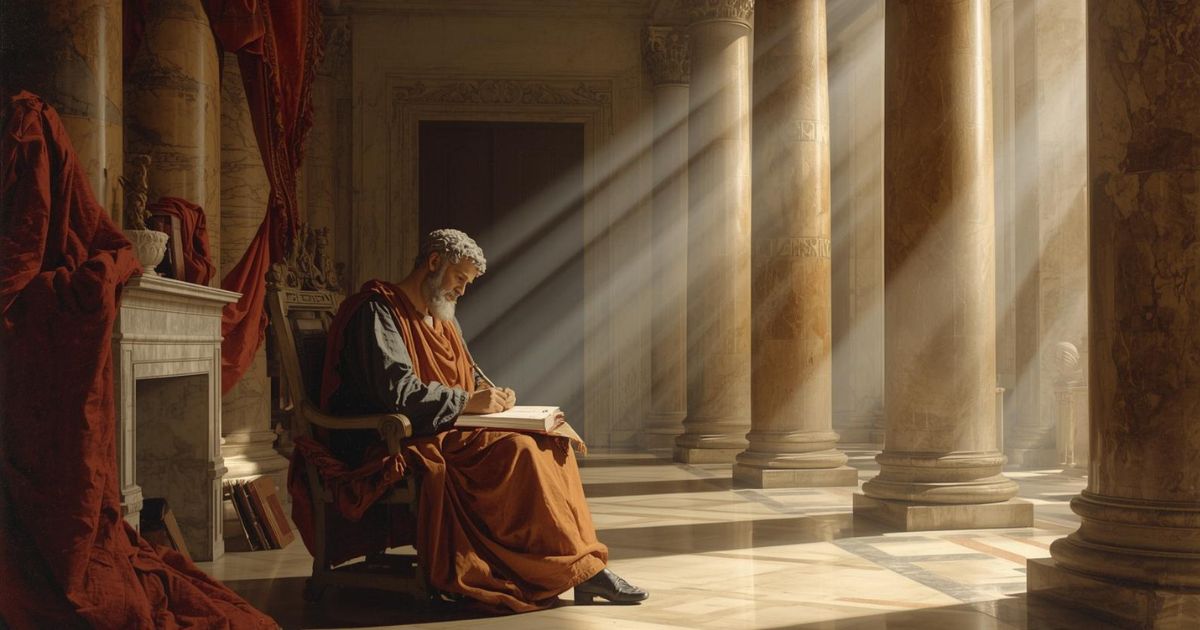
"I never spend a day in idleness; I appropriate even a part of the night for study."
Context: Defending himself against accusations of laziness and withdrawal from useful work
Seneca redefines productivity - he's not idle, he's doing different work. This challenges the assumption that visible busyness equals meaningful contribution.
In Today's Words:
Just because I'm not in meetings all day doesn't mean I'm not working - I'm building something that will actually last.
"I have withdrawn not only from men, but from affairs, especially from my own affairs; I am working for later generations."
Context: Explaining why he's stepped away from his legal career and social obligations
He's trading immediate, visible impact for long-term influence. This letter itself proves his point - we're still reading it 2000 years later.
In Today's Words:
I stopped chasing the daily grind to create something that will actually matter in the long run.
"There are certain wholesome counsels, which may be compared to prescriptions of useful drugs; these I am putting into writing."
Context: Describing his writing as medicine for life's problems
He's positioning philosophy as practical medicine, not abstract theory. His advice is meant to heal real problems that real people face.
In Today's Words:
I'm writing down the life advice that actually works - the stuff that helped me get through my own mess.
Thematic Threads
Social Expectations
In This Chapter
Seneca faces criticism for withdrawing from public duties, revealing how society pressures individuals to conform to visible productivity
Development
Building on earlier themes about external validation, now showing the cost of defying social expectations
In Your Life:
You might feel this when choosing personal development over social obligations and facing judgment for it
Class
In This Chapter
The tension between aristocratic leisure and duty to society reflects class-based assumptions about how different people should spend their time
Development
Evolving from individual class anxiety to broader questions about social responsibility across class lines
In Your Life:
You might experience this when your choices don't match what people expect from someone in your position
Identity
In This Chapter
Seneca redefines what it means to be useful to society, shifting from public performance to private contribution
Development
Deepening the theme of self-definition versus external definition that runs throughout the letters
In Your Life:
You might struggle with this when your sense of purpose conflicts with how others see your role
Personal Growth
In This Chapter
The letter advocates for choosing long-term development over short-term social approval
Development
Expanding on earlier growth themes to include the social costs of self-improvement
In Your Life:
You might face this when prioritizing learning or skill-building over immediate social or financial gains
Human Relationships
In This Chapter
Seneca's withdrawal affects his relationships but he argues it ultimately serves others better through his writing
Development
Complicating earlier relationship themes by showing how helping others sometimes requires disappointing them
In Your Life:
You might experience this when setting boundaries that hurt people's feelings but serve everyone's long-term interests
You now have the context. Time to form your own thoughts.
Discussion Questions
- 1
What criticism was Seneca facing, and how did he defend his choice to withdraw from public life?
analysis • surface - 2
Why does Seneca argue that stepping away from society can actually be more helpful than staying actively involved?
analysis • medium - 3
Think about someone you know who got criticized for 'stepping back' - from overtime, social events, or busy activities. What were they really trying to accomplish?
application • medium - 4
Seneca warns against chasing promotions, possessions, and status symbols as 'traps.' How would you tell the difference between a genuine opportunity and a shiny trap in your own life?
application • deep - 5
What does Seneca's approach reveal about why society often rewards visible busyness over meaningful impact?
reflection • deep
Critical Thinking Exercise
Map Your Strategic Withdrawal
Think of an area where you feel pressure to stay constantly busy or visible. Map out what stepping back might look like: What would you stop doing? What would you focus on instead? What criticism might you face, and from whom? Finally, imagine the long-term results of both staying busy versus stepping back strategically.
Consider:
- •Consider who benefits from keeping you busy in the current situation
- •Think about the difference between temporary discomfort and long-term regret
- •Remember that explaining your strategy to critics often backfires - results speak louder
Journaling Prompt
Write about a time when you stepped back from something everyone expected you to do. What did you gain from that withdrawal? If you've never done this, describe what you might step back from now and why it scares you.
Coming Up Next...
Chapter 9: The Art of True Friendship
Next, Seneca tackles a fundamental question about relationships: can a truly wise person be self-sufficient, or do we need others? His exploration of friendship versus independence reveals surprising truths about human connection.